

White Tea: How It Differs From Green Tea and How to Brew
White tea is made from young tea buds and leaves that are withered and dried with minimal processing. To understand what white tea is, start with that simple method: it produces a delicate cup, but not a caffeine-free one.
White tea and green tea come from the same tea plant, but harvesting and processing give them different characteristics. White tea often tastes light and slightly sweet, with floral or fruity notes. Its caffeine level varies with the leaves and how you brew them.
Here are the practical details: where white tea originated, how it is made differently from green tea, what affects its caffeine content, and how to brew a balanced cup. You can then choose your leaves, set the water temperature, and steep with a clear purpose.
Key Takeaways
- White tea’s caffeine varies with the leaves and brewing choices, so don’t assume its delicate taste means it’s caffeine-free.
- Compare how each tea is processed to understand why white and green tea develop different flavors.
- Use a gentler water temperature and adjust steeping to bring out a clean, balanced cup.
- Trace white tea’s roots to Fujian, China, and discover how its origin shaped its traditions.
Caffeine content
White tea contains caffeine because it comes from the Camellia sinensis plant. Common types include Silver Needle, made from unopened buds, White Peony, and Gongmei. White Peony typically pairs a bud with young leaves, while Gongmei usually includes several leaves. These differences in the proportion of buds to leaves can affect the caffeine content of the brewed tea.
For an 8-ounce serving, white tea estimates commonly fall around 15-30 milligrams, though reported amounts range from less than 10 to over 50 milligrams. For comparison, the U.S. Department of Agriculture lists 29 milligrams in brewed green tea and 47 milligrams in brewed black tea per 8-ounce cup. White tea can contain less caffeine than either, but the cup itself isn’t predictable from the tea’s color or name alone.
The leaves, the amount used, and the brewing method all matter. Plant variety, harvest standards, and the proportion of buds to leaves influence the tea’s starting caffeine content. So do the amount of tea, water temperature, steeping time, and serving size. A longer steep or more leaves can extract more caffeine; withering and drying do not make white tea caffeine-free. Decaffeinated white tea may still contain traces.
White tea often tastes light and slightly sweet, with floral or fruity notes. Its flavor may seem delicate compared with green tea, but a strong brew can taste more pronounced. White tea contains catechins, plant compounds with antioxidant properties, and L-theanine, which may promote relaxation without drowsiness. These properties do not prove that drinking white tea prevents or treats illness.
During pregnancy, caffeine from white tea contributes to your total intake, along with caffeine from coffee, chocolate, and other teas. Since levels vary between cups, a mild flavor does not mean the drink is caffeine-free or contains a fixed amount. Consider the quantity of tea and steeping time when assessing your intake.
What’s the difference between white tea and green tea?
White tea and green tea both come from the Camellia sinensis plant. White tea is made from young buds and leaves, often picked before the leaves fully open. Fine white hairs give some buds a silvery look. White tea is a category shaped by its harvest and processing, not a different plant. In China, it’s traditionally harvested for a few weeks each spring.
After picking, makers wither fresh white tea leaves, then dry them. This simple sequence is why white tea is often called minimally processed. Air-drying allows moisture to leave gradually; sorting separates leaves and buds after drying. White tea processing generally involves withering and drying, though practices can vary. Silver Needle uses unopened buds, while White Peony pairs a bud with one or two young leaves.
Green tea follows a different process. After harvest, makers briefly heat the leaves to halt oxidation, then shape and dry them. This early heat step distinguishes green tea from white tea’s withering-and-drying approach. In both cases, processing affects the finished leaf’s appearance and character. White tea’s minimal handling can preserve a softer profile, while green tea’s heat treatment creates a distinct style. The name alone does not determine exactly how the brewed tea will taste.
Think of the production process as a fork in the road: white tea buds and leaves are withered and dried, while green tea leaves are heated promptly before further processing. The starting material matters, too. Silver Needle is made from unopened buds; White Peony includes young leaves. These examples show why harvest standards and leaf selection matter alongside processing. Use these distinctions to interpret tea labels and understand why teas from the same plant can look and taste different.
Brewing temperature, tea quantity, and steeping time
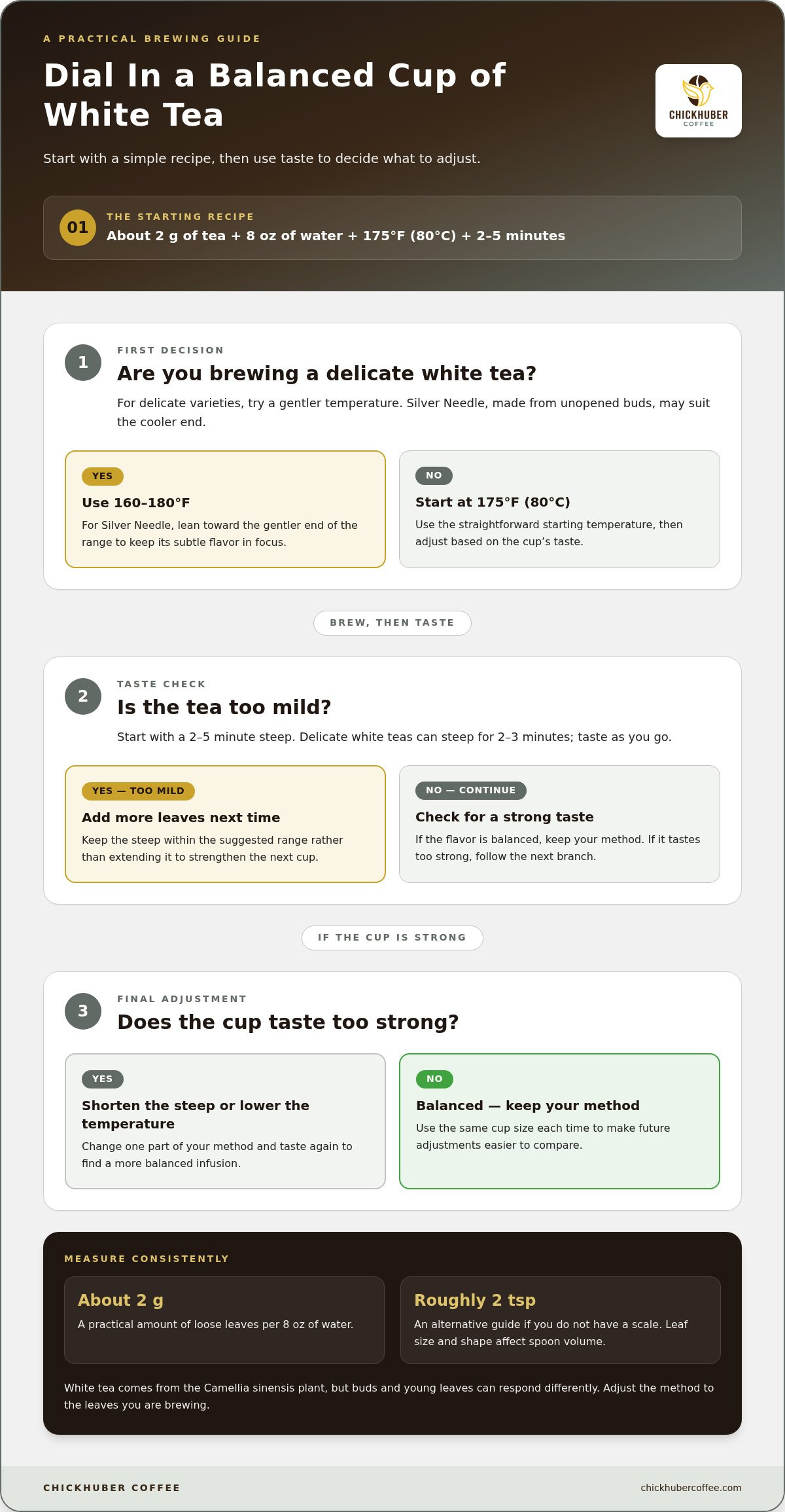
For a straightforward cup, use about 2 grams of white tea per 8-ounce serving. Heat water to around 175°F (80°C), then steep for 2-5 minutes.
Choosing a Brewing Temperature
Water temperature controls how quickly flavor moves from the leaves into your cup. Around 175°F (80°C) is a useful starting point for white tea, while delicate varieties can be brewed at 160-180°F. Silver Needle, made from unopened buds, may suit the gentler end of that range. Cooler water helps keep its subtle flavor in focus.
Setting the Steeping Time
Steeping time is how long the leaves remain in hot water before you strain or remove them. Start with 2-5 minutes, adjusting within that range for your tea and preferred strength. Delicate white teas can steep for 2-3 minutes. Taste as you go: a shorter infusion keeps the cup lighter, while a longer one draws out more flavor.
Measure by weight when possible: about 2 grams of loose leaves per 8 ounces of water is a practical starting ratio. If you don’t have a scale, roughly 2 teaspoons is another serving guide, though leaf size and shape affect how much fits in a spoon. Use the same cup size each time to make your adjustments easier to compare.
Keep your first brew simple: warm the water, measure the leaves, pour, and set a timer. If the tea tastes too mild, add more leaves next time rather than extending the steep. If it tastes too strong, shorten the infusion or lower the temperature. White tea comes from the Camellia sinensis plant, but young leaves and unopened buds can respond differently, so adjust your method to the leaves you are brewing.
History and origins in Fujian, China
White tea’s history is closely tied to Fujian, a southeastern Chinese province known for its tea-growing regions. Zhenghe is identified as an origin point, while Fuding also became central to commercial production. The Da Bai and Da Hao tea varieties grown in Fujian were used for white tea that entered commercial production in the 1700s. Those regional roots still help explain why Chinese white tea traditions feature prominently in discussions of the style.
Tea’s place in Chinese history stretches back much further. White tea is said to have been discovered during the Tang Dynasty, which lasted from 618 to 907 AD. It gained popularity among Chinese royalty during the Song Dynasty, dated from 960 to 1279 AD. These milestones provide historical context, but they don’t mean every tea described as white tea today follows one unchanged recipe or production tradition.
Between 600 and 1300, Chinese imperial courts used tea tribute customs. The period helps show how tea production became connected to status and court culture. Historical accounts of white tea also sit alongside stories about other Chinese teas, including green tea, black tea, and oolong. Their names describe distinct tea styles, while place, harvest, and processing all shape the leaf and its flavor.
Fujian’s seasonal harvest adds another layer to the story. Traditional white tea is harvested there from mid-March to early April. Later, Fujian New Craft white tea developed in Fuding County in the late 1960s, showing how local tea-making continued to evolve. Silver-colored hairs on young buds help identify some white teas; they don’t make the brewed tea silver. White tea contains polyphenols, but its history and identity are rooted in Chinese growing regions, skilled harvests, and a distinctive place in tea culture.
Chickhuber Coffee: 6 Bean Blend
Chickhuber Coffee’s 6 Bean Blend gives you a coffee option when you want to switch from white tea to a different kind of cup. Keep the contrast simple: white tea offers a delicate brewed profile, while this offering lets you explore coffee instead. Chickhuber Coffee also offers Cowboy Blend, Organic Honduras Coffee, and French Vanilla Flavored Coffee.
Use the brewing guidance above to explore white tea on its own terms, then choose coffee when that’s what you want to drink. The 6 Bean Blend is a straightforward next option for readers looking to browse beyond tea, not a claim that coffee tastes or brews like white tea.
Visit chickhubercoffee.com to explore the 6 Bean Blend.
Make your next cup your own
Knowing what white tea is gives you a starting point, not a fixed routine. Let your taste guide you. Notice which flavors you enjoy, how strong you prefer your brew, and when you reach for tea or coffee. A simple tasting habit can make everyday choices more intentional.
Keep exploring at your own pace. If you have questions about tea, Chickhuber Coffee is the next place to connect. Contact Chickhuber Coffee with your tea questions and continue finding the cups that fit your preferences.
Stay curious, trust your palate, and enjoy your next brew.
Frequently Asked Questions
What Is White Tea?
White tea is a tea made from the Camellia sinensis plant, using young buds and leaves. The brewed drink is pale yellow, despite “white” in its name. That name refers to the fine, light-colored hairs on some unopened buds, not the cup’s color. Silver Needle and White Peony are familiar examples, each identified by the plant material used.
What’s oxidation got to do with it?
Oxidation is a chemical process that begins after tea leaves are picked and affects how their character develops. Green tea makers briefly heat leaves to stop oxidation; white tea production generally relies on withering and drying instead. Processing helps distinguish tea styles, but it does not determine every flavor note. The type of leaf harvested and your brewing choices also shape the final cup.
White Tea for Beginners: Where Should You Start?
Start with a simple loose-leaf white tea and a measured cup, rather than trying several variables at once. Use about 2 grams of leaves for 8 ounces of water, then follow the package directions if provided. Record the tea name, water temperature, and steeping time. That quick note makes it easier to adjust the next brew to your taste.
Why Is White Tea Considered Minimally Processed?
White tea is considered minimally processed because its basic production involves withering freshly harvested leaves and buds, followed by drying. It generally avoids the brief heating used to halt oxidation in green tea. “Minimally processed” describes the broad method, not an identical process for every tea. Cultivar, harvest standards, and sorting can vary between white teas.
What is white tea and how is it made?
White tea is made from the Camellia sinensis plant. Makers harvest young leaves and buds, then wither and dry them. The sequence is simple: pick the plant material, allow moisture to leave during withering, dry the leaves, and sort the finished tea. Silver Needle, for example, uses unopened buds, while other styles include young leaves.
Are there risks or side effects of drinking white tea?
White tea is generally considered safe to drink, but it contains naturally occurring caffeine. The amount varies by tea type, leaf quantity, water temperature, steeping time, and serving size. Decaffeinated white tea may still contain traces of caffeine. During pregnancy, include white tea when considering caffeine from beverages and foods, rather than treating a mild-tasting cup as caffeine-free.