

Which Tea for Focus and Concentration Should You Drink Daily?
Green tea is a solid daily option for focus: it contains moderate caffeine, and its L-theanine is associated with alertness and calm concentration. If you’re choosing the best tea for focus and concentration, start with green tea and pay attention to how caffeine affects you. Aim for clear energy, not jitters.
A workday can demand sharp attention and steady nerves at once. The right tea may fit both needs, depending on whether you want an energizing lift, a gentler pause, or a caffeine-free reset.
Here’s how green tea compares with other options, what to consider before making tea a daily habit, and how a mindful tea break can help you step away from stress and return with a clearer head. Keep it simple: choose a cup, sip with purpose, and build a routine that works for you.
Key Takeaways
- Match your tea’s caffeine level to the kind of focus you need, and consider caffeine-free options when you want a gentler pause.
- Compare green teas by their flavor and energy profile to find a cup that fits your routine.
- Explore tea choices that pair alertness with a calmer workday, including options associated with relaxation.
- Turn a tea break into a reset: step away from your task, move around, and return with fresh attention.
1. Do these teas contain caffeine?
Most teas made from the tea plant contain caffeine and L-theanine, an amino acid associated with alertness and calm focus. Green tea contains moderate caffeine, while matcha combines caffeine and L-theanine in a powdered form. That pairing may support focus, but your response depends on your sensitivity and the tea you choose.
To explore sustained focus without jitters, start with a cup of green tea and notice how you feel before making it a daily habit. Hojicha is another option: this Japanese green tea contains less caffeine than matcha. Silver Needle white tea is described as having moderate caffeine, while peppermint tea is a caffeine-free herbal option.
Matcha may suit moments when you want a stronger lift, while masala chai brings the alertness associated with black tea. High-caffeine teas can feel energizing, but too much caffeine may cause jitteriness and anxiety. It can also disrupt sleep, so consider lower-caffeine or caffeine-free tea later in the day if that suits your experience.
There’s no single daily tea amount that suits everyone. Caffeine content and personal sensitivity affect how a cup feels. During pregnancy, account for caffeine from tea and other drinks, and discuss an appropriate limit with your healthcare professional. Peppermint is caffeine-free, but that alone doesn’t establish whether an herbal tea is suitable during pregnancy.
Focus teas don’t have one fixed price: costs vary by tea, origin, and whether you buy loose leaves or bags. Compare those details rather than assuming matcha, green tea, and peppermint cost the same. When trying a favorite, start with a cup, keep the serving consistent, and track whether it supports focus without nervousness or disrupted sleep.
2. Green tea as a lighter-energy option
Green tea may feel like a steadier lift than coffee because its caffeine is absorbed more gradually. That can suit a morning when you want focus without a sharp-feeling jolt. Long Jing Zhejiang, a Chinese green tea with roasted hazelnut notes, is described as a good choice for concentration. Consider its flavor, then notice how it fits your work rhythm.
Matcha is another green tea option, prepared differently: powdered leaves are mixed into water, so you consume the leaf rather than just an infusion. This makes matcha a stimulating choice for a focused work session. If it feels too strong, try brewed green tea instead. Keep the routine simple, and avoid adding sugar if you want to avoid a possible energy crash.
For a stronger morning brew, consider black tea. Darjeeling First Flush Jungpana is described as lively and energizing, while Irish Breakfast is another morning option. Masala chai pairs black tea’s alertness with spices; ginger in the blend may also calm a nervous stomach. Choose a flavor you enjoy, not another source of stress.
Yerba mate offers another route to energy. This herbal infusion is popular in South America and is described as energizing. Compare it with green tea by trying each on separate mornings while keeping your usual routine steady. Note which feels more compatible with your focus and comfort.
Use taste as a practical guide. Long Jing offers roasted notes; ginger chai brings spice; green tea blends can vary in character. If you’re exploring loose-leaf options, browse loose leaf tea blends and choose a flavor you’ll want to return to.
3. What are best teas to increase focus and reduce stress at work?
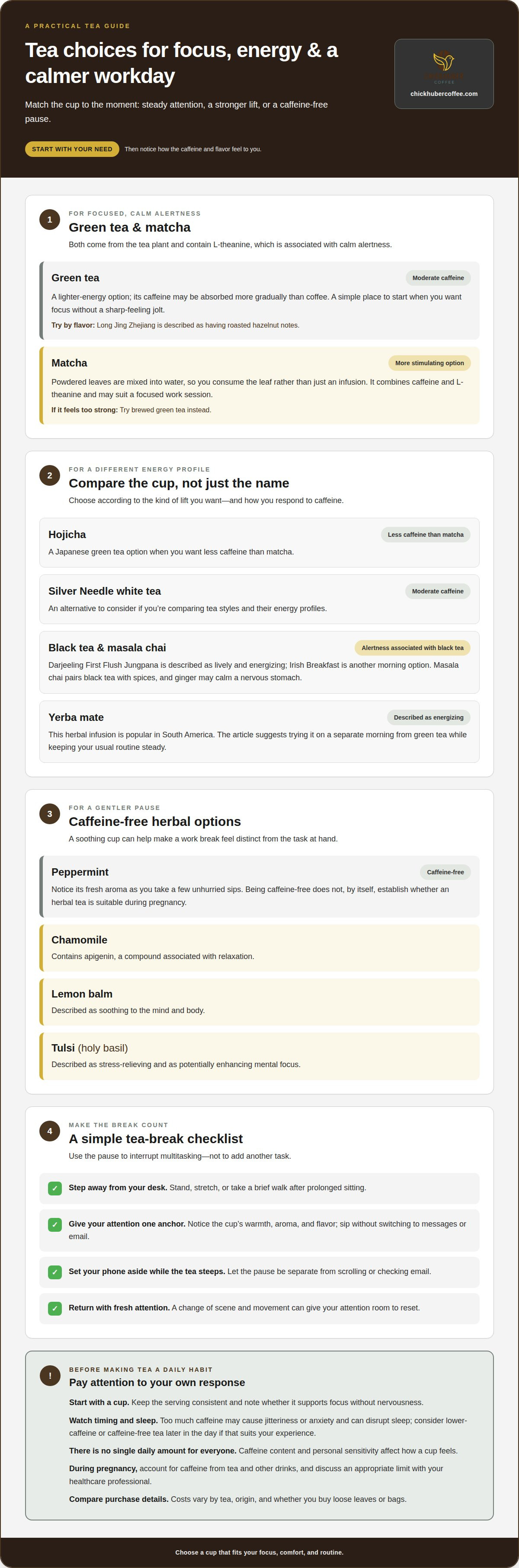
Green tea and matcha are practical choices for focus and concentration. Both come from Camellia sinensis, which naturally contains L-theanine, an amino acid associated with calm alertness. Tea’s L-theanine is also described as calming the mind while supporting alertness. That balance may suit a demanding task, though your experience depends on the cup and your routine.
L-theanine is associated with alpha brain wave activity, which is linked with meditation and creative flow. Matcha contains L-theanine and may support concentration and stress reduction. Try it before a task that requires sustained attention, then notice whether its flavor and energy suit you. The best tea for focus and concentration is the one that fits your needs and feels comfortable to drink.
Is matcha better than brewed green tea for concentration? Not necessarily. Matcha is powdered green tea mixed into water, so you consume the leaf; brewed green tea is an infusion. Choose matcha for its preparation or brewed green tea for a different kind of cup. Consider the flavor and how you respond to caffeine.
For a calmer work break, consider caffeine-free herbal teas. Chamomile contains apigenin, a compound associated with relaxation; lemon balm is described as soothing to the mind and body. Tulsi, also called holy basil, is described as a stress-relieving tea that can enhance mental focus. These teas offer a soothing pause. Sip without multitasking, then return to your work.
Green tea and matcha are the main options identified for focus because both contain L-theanine, which is associated with calm alertness. Matcha is also described as potentially supporting concentration, while tulsi is noted for enhancing mental focus.
4. Tea breaks and workday productivity
Use a tea break to interrupt multitasking, not create another task. An herbal tea ritual gives your attention one clear anchor: prepare the cup, notice its aroma, and sip without switching between messages. This simple mindfulness practice can structure concentration exercises and offer a pause from competing demands. Set your phone aside while the tea steeps, and give your mind one thing to follow.
Build your break around a deliberate sequence. Step away from your desk, pour a cup, and focus on its warmth and flavor. With peppermint tea, for example, notice the fresh aroma as you take a few unhurried sips. This small routine sets the break apart from scrolling or checking email. A calming drink can replace the habit of filling every quiet moment with another screen.
Make time to move, too. After prolonged sitting, use the pause to stand, stretch, and take a brief walk. Movement can relieve muscle tension and improve circulation, while a change of scene gives your attention room to reset. If a report has you stuck, step away briefly rather than forcing another pass. Taking a break from a challenging task can help the mind form unexpected connections and support creative problem-solving when you return.
Keep the ritual balanced and repeatable. Choose a tea whose ingredients and flavor you enjoy, then make the same simple routine part of your workday. Caffeine-free herbal tea can suit a calming pause; green tea can work when you want to feel more alert. Drink water as well, since proper hydration supports cognitive function. Every break needn’t be elaborate. Be present, reset, and return to one priority with fresh attention.
Chickhuber Coffee: 6 Bean Blend
Chickhuber Coffee’s 6 Bean Blend is a coffee option for workdays when you’d rather brew coffee than tea. Use the tea guidance above to choose a cup that suits your focus routine, then switch to coffee when that’s your preference. Keep your usual caffeine sensitivity in mind as you decide what to drink.
For a coffee option, explore Cowboy Blend, Organic Honduras Coffee, or French Vanilla Flavored Coffee. Each offers another choice to consider as you build a drink routine around your taste and workday habits. No drink replaces a mindful break, a stretch, or a clear next task. Choose what fits the moment and keep your routine intentional.
Visit chickhubercoffee.com to explore the coffee options.
Build a Focus Ritual That Lasts
Make your drink choice part of a routine you can maintain. Notice which cups suit different moments, and give yourself room to adjust. A morning of demanding tasks may call for a different choice than an afternoon when you want a calmer pause. Consistency helps you see what fits your rhythm.
Choosing the best tea for focus and concentration is less about finding a perfect cup and more about building a repeatable habit. Pair your drink with one clear priority: close distracting tabs, take a mindful break, or return to a task with fresh attention. Small choices can make your workday more intentional.
Keep experimenting with your routine, not pushing past what feels right. If coffee belongs in your rotation too, Chickhuber Coffee offers options to explore alongside tea. Contact Chickhuber Coffee today to take your next step. Choose your cup, set your focus, and make the next work session count.
Frequently Asked Questions
Do these teas contain caffeine?
Teas made from Camellia sinensis, including green, black, white, and oolong tea, naturally contain caffeine. Matcha does too. Herbal infusions are different: peppermint tea is caffeine-free, making it an option when you want to avoid caffeine. Check the tea’s packaging and consider your sensitivity, especially if caffeine late in the day affects your sleep.
How can tea help promote focus?
Tea can support a focus routine through its caffeine, hydration, and the pause involved in preparing a cup. Pair tea with one defined task, such as reviewing a report without opening email. To see how the routine suits you, note your drink and assess how you feel two hours later. Record the tea and task.
What are best teas to increase focus and reduce stress at work?
Green tea and matcha combine caffeine with L-theanine, while herbal options offer a different kind of work break. Tulsi is described as a stress-relieving tea that can enhance mental focus; lemon balm and chamomile are associated with relaxation. Choose according to whether you want caffeine or a calming pause, then enjoy your cup during a specific work moment.
What is L-Theanine?
L-theanine is a natural amino acid found in teas derived from Camellia sinensis, including green tea and matcha. It’s associated with calm alertness and alpha brain wave activity, which is linked with meditation and creative flow. Treat it as one part of tea’s profile, not a concentration strategy on its own: sleep, hydration, and task setup matter too.
Why Is Tea Beneficial for Focus?
Tea can serve as a focus cue: preparing and sipping it creates a deliberate pause. That ritual can interrupt multitasking and help you return to work with one priority in mind. Hydration also supports cognitive function. Place your cup beside a written task list, then finish one chosen task before checking messages again.
How do caffeine and L-theanine in tea affect attention and alertness?
Caffeine is associated with alertness, while L-theanine is associated with a calmer state of attention. Together, they may make green tea or matcha appealing for a work session that calls for concentration without an overly forceful routine. Responses vary, so note how a particular tea affects your attention, tension, and sleep before making it your regular choice.