

Tea to Boost Immune System: What Ginger and Green Tea May Offer
Tea may be a comforting part of a healthy routine, but it should not be treated as a way to activate immune defenses. A tea to boost immune system health may offer comfort and plant compounds, but it can’t replace medical care. Ginger tea, for example, may feel soothing on a sore throat, while green tea contains compounds studied for potential health effects.
A warm cup can be comforting, especially when you want a soothing drink. The key is understanding what its ingredients may offer and where their benefits end.
Here’s what to know about ginger, green tea compounds, and other popular tea ingredients. You’ll get a clear view of their potential benefits, practical ways to enjoy them, and important cautions to keep in mind.
Key Takeaways
- Use ginger tea as a soothing option for a sore throat, and be mindful of its potential interaction with blood-thinning medicines.
- Think of tea as supportive, not a substitute for medical care; chamomile may offer calming benefits, with allergy considerations.
- Learn what green tea’s EGCG and L-theanine may contribute, and why promising findings don’t make tea a cure.
- Compare ingredients such as elderberry, echinacea, turmeric, and mint to choose a cup that fits your needs and health considerations.
1. Ginger tea and sore throats
Ginger tea offers warmth and a sharp, spicy flavor, and may feel soothing on a sore throat. Ginger contains gingerol, a bioactive compound associated with antioxidant and anti-inflammatory effects. These properties may support a healthy immune response, but ginger tea doesn’t treat an infection or guarantee stronger immune defenses.
For a simple preparation, steep fresh ginger in hot water, then add honey and lemon if desired. Honey can add a soothing sweetness, while lemon brings a bright, tart taste. Sip slowly when your throat feels irritated. The warm liquid may feel comforting, but ginger’s potential to reduce inflammation doesn’t mean it cures the cause of a sore throat.
Ginger tea is made from ginger, while green, black, white, and oolong tea come from Camellia sinensis. Herbal tea is an infusion of ingredients such as roots, herbs, flowers, or spices, and typically contains no tea-plant leaves or buds. The distinction matters: ginger tea is an herbal infusion, not green tea with catechins.
Ginger can be part of a digestive routine, but it isn’t a proven remedy for digestive problems. Try sipping a mild cup with a meal and notice how it feels. Turmeric tea is another spice-based option, but its curcumin is different from gingerol.
Concentrated ginger extracts contain more concentrated ingredients than brewed tea and may carry greater interaction risks. They aren’t automatically more effective; the form and amount matter. Ginger may slow blood clotting, so people taking antiplatelet or anticoagulant medicines should use caution. It can also increase bleeding during and after surgery.
During pregnancy or breastfeeding, discuss herbal ingredients with a healthcare professional before using them regularly. Safety depends on the specific plant and amount, so don’t assume ginger tea and concentrated supplements carry the same considerations.
2. Can Drinking Tea Boost Your Immune System?
Chamomile tea can be soothing, but it doesn’t switch immunity on. Chamomile has mild antimicrobial and anti-inflammatory effects, and is best understood as supportive rather than curative. Herbal teas differ from green or black tea, which comes from Camellia sinensis. The plant and preparation shape what each cup contains.
Stress matters to immune health, and chamomile may support relaxation. A warm cup before bed can become a calming routine, especially if you replace a stimulating evening drink with caffeine-free chamomile. Better rest may help with stress, but chamomile isn’t a treatment for sleep problems. Keep it simple: brew a cup, dim the lights, and give yourself time to unwind.
The aroma and steam from mint or chamomile tea may feel soothing when you’re congested. Let the drink cool enough to sip comfortably and breathe normally near the cup. Don’t put your face over boiling water. If congestion comes with a sore throat, warm tea may feel comforting, but it won’t treat the infection causing symptoms.
Chamomile needs extra care for people with severe allergies, especially pollen allergies. It may be cross-contaminated with pollen from other plants, so people with a history of pollen allergies should avoid it. Herbal teas can also interact with medicines, so consider the ingredients and your personal health situation.
How much tea is safe to drink per day? One or two cups a day is a suggested target for teas marketed for immune support, not a universal limit for every ingredient. Use herbal teas in moderation and with medical approval, rather than as a replacement for treatment.
Can tea prevent or cure infections such as the common cold or flu? No. Tea may offer comfort and support, but it isn’t a proven way to prevent or cure those infections. Chamomile is one option for a calming routine; choose it for its soothing qualities, not as a substitute for care.
3. Green tea polyphenols, EGCG, and L-theanine
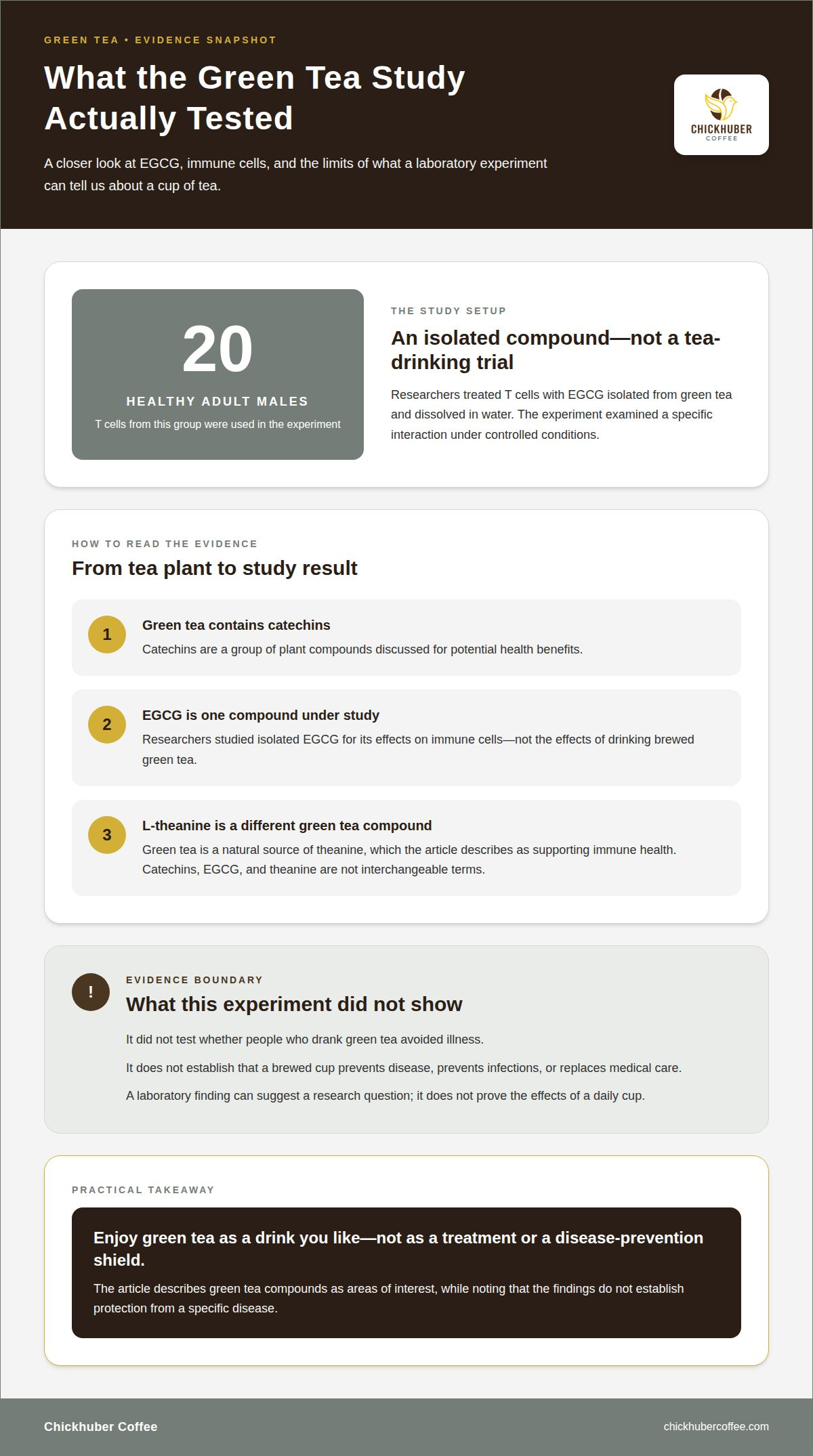
Green tea contains catechins, a group of plant compounds discussed for potential health benefits. EGCG is a green tea compound studied for its effects on immune cells. This makes green tea interesting, but it isn’t a proven way to prevent disease or replace medical care. Promising biological activity isn’t proof that drinking tea prevents infections.
In one study, researchers treated T cells from 20 healthy adult males with EGCG isolated from green tea and dissolved in water. T cells are immune cells, so this experiment examined a specific interaction under controlled conditions. It did not test whether participants who drank green tea avoided illness. A laboratory finding can point toward a research question, but it doesn’t establish the effects of a brewed cup in daily life.
Catechins are associated with helping fend off infections, while green tea is a natural source of theanine, which supports immune health. These terms describe different compounds, not interchangeable benefits. EGCG is studied as an individual green tea compound; catechins refer to a broader group. Neither means tea can boost your immune system on demand or cure a cold.
For a straightforward routine, brew green tea and enjoy its distinct flavor. Choose it as a drink you enjoy, not as a treatment. If you prefer a soothing, caffeine-free infusion, ginger tea or another herbal tea is a different option, made from ingredients outside the tea plant.
Keep the evidence in perspective. The T-cell experiment used isolated EGCG, not a cup of tea, and involved 20 adult males. Green tea catechins and theanine may offer areas of interest for immune health, but they don’t establish protection from a specific disease. A balanced routine matters more than treating any single drink as a shield.
4. Tea ingredients associated with immune support
Different plants bring different properties to a cup, and the evidence varies by ingredient. Echinacea tea is often used when cold or flu symptoms begin, or as a preventive measure. Echinacea may increase white blood cell activity and reduce the severity and duration of colds and flu, but it shouldn’t replace medical treatment.
Elderberry tea offers a distinct flavor alongside antioxidants and vitamins. These compounds are associated with immune support, but they don’t establish that elderberry tea fights viral infections. Choose it for its flavor and ingredients, not as a cure for a cold or flu.
Turmeric tea contains curcumin, turmeric’s active compound. Curcumin has anti-inflammatory and immune-enhancing properties. Black pepper is sometimes added to turmeric tea to improve curcumin absorption. This is a preparation idea, not proof that a cup prevents disease.
Mint tea offers a different kind of comfort. Peppermint contains menthol, which can help clear sinuses and soothe respiratory pathways. Its antimicrobial properties are also noted, and warm mint tea may feel soothing for a cough. Honey adds sweetness, and lemon brings vitamin C, but neither makes tea a treatment for infection.
Which teas may support immune health, and what evidence supports them? Echinacea, elderberry, turmeric, and mint have distinct compounds or properties associated with support, but the evidence described here doesn’t make them cures. One white tea extract study found antibacterial effects against Streptococcus mutans after researchers incubated samples for 72 hours. That laboratory finding concerns an extract and bacteria, not proof that brewed white tea prevents illness.
What are echinacea tea’s potential immune benefits? It may increase white blood cell activity and reduce cold and flu severity or duration. Use herbal tea in moderation, and don’t substitute it for treatment. For a different flavor in your daily beverage rotation, explore a flavorful coffee option.
Chickhuber Coffee: 6 Bean Blend
Chickhuber Coffee’s 6 Bean Blend is a coffee option for days when you want a bold cup instead of tea. It isn’t an immune-support remedy, and coffee doesn’t replace the ingredients discussed above. Keep your choice clear: reach for tea when you want an herbal infusion, or choose coffee for a different daily ritual.
Prefer a different flavor? Chickhuber Coffee also offers Cowboy Blend, Organic Honduras Coffee, and French Vanilla Flavored Coffee. Each lets you vary your coffee routine without treating a beverage as a shortcut to better health. Choose a drink based on taste, comfort, and what suits your day.
Explore Chickhuber Coffee’s offerings at chickhubercoffee.com.
Build a Ritual That Works for You
Make your next cup a deliberate choice. Pick a flavor you enjoy, decide what role you want it to play in your day, and keep the routine manageable. A tea to boost immune system health is best viewed as one part of a broader routine, not a shortcut or a test of willpower.
Let your needs guide your choice. You might want a warm drink to slow down, a familiar flavor to mark a break, or a new blend to refresh your routine. Consider how the ingredients fit your preferences and health needs. A practical, enjoyable ritual is easier to maintain.
Then keep moving with clear expectations. Choose your beverage for taste and comfort, and rely on appropriate medical care for health concerns. Small everyday choices can make a routine feel more intentional without asking one cup to do everything.
Ready to explore coffee options for your daily ritual? Contact Chickhuber Coffee today and choose a cup that fits your day.
Frequently Asked Questions
Can Drinking Tea Boost Your Immune System?
Tea can complement everyday habits that support health, but it can’t reliably switch immunity on or guarantee protection from illness. Brewed tea without a sweetener is considered a healthy beverage choice. Treat it as one part of your routine, alongside balanced meals, rest, and appropriate medical care, not as a substitute for any of them.
Are there specific nutrients in herbal tea that enhance immunity?
Herbal teas don’t share one standard nutrient profile because their ingredients vary. A blend may contain roots, leaves, flowers, spices, or fruit, each with different compounds. Check the ingredient list to see what’s in your cup, and choose unsweetened options when possible. Tea can add variety to your routine, but it shouldn’t replace nutrient-rich foods.
Can drinking tea help me recover faster when I’m sick?
Tea may make a sick day more comfortable, but it isn’t established as a way to shorten an illness. A warm cup can be soothing when you want a drink, and honey can soften its taste. Use tea for comfort, not as a replacement for medical treatment or other care suited to your symptoms.
How Can Tea Contribute to Your Immune Health?
Tea can support a health-conscious routine as a simple, unsweetened drink and a calming pause in a busy day. Choose a blend you enjoy, prepare it as directed, and pair it with varied meals and rest. No single cup or ingredient should carry the whole job of supporting your health.
What is the best tea for cold and flu symptoms?
There isn’t one best tea for everyone; match your choice to your preferences and symptoms. Ginger may feel soothing for a sore throat, while mint may appeal when you’re coughing. Some people choose echinacea tea around the start of symptoms, but none of these drinks should be treated as a cure or replacement for medical care.
What is the healthiest kind of tea?
No single tea is healthiest for everyone. Unsweetened brewed tea is a healthy beverage choice, and the right option depends on your taste, ingredients, and health needs. Green and black teas come from the tea plant, while herbal infusions use other plants. If an ingredient concerns you or interacts with your medicines, choose a different drink.