

Tea sampler gift sets for loose leaf or sachet preferences
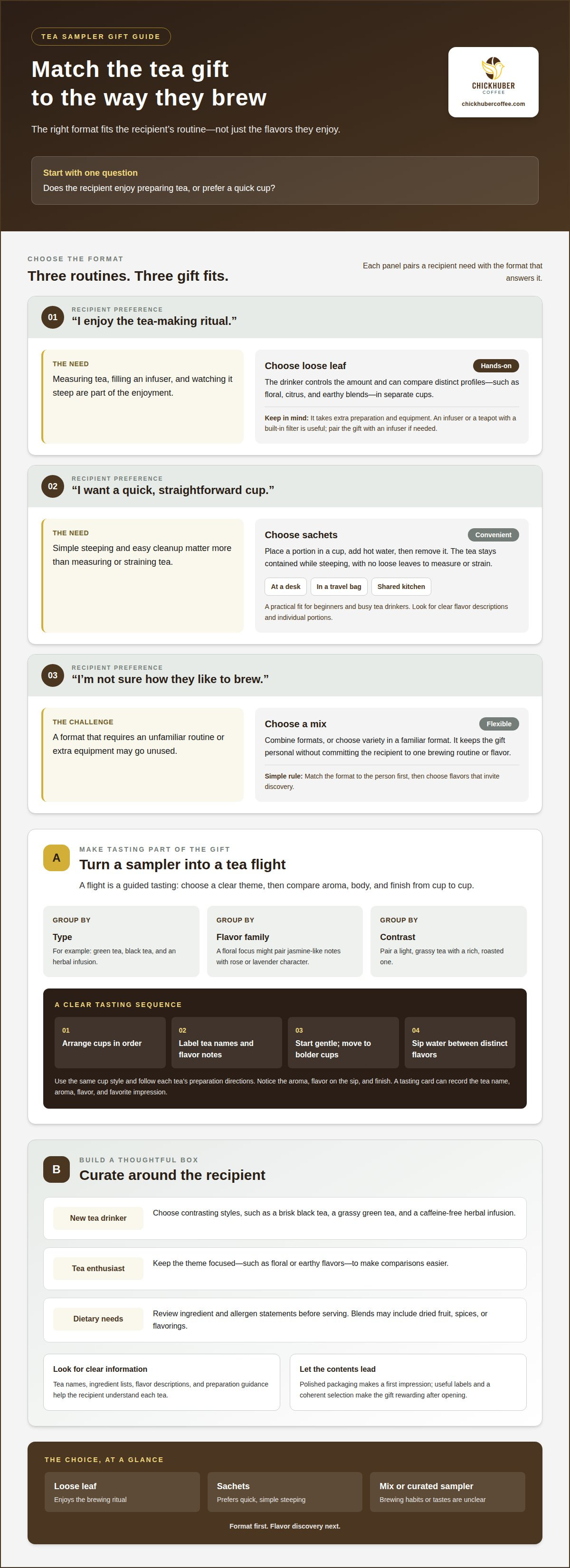
The most impressive tea sampler gift set isn’t always the right one. Choose loose leaf for someone who enjoys measuring and steeping, or sachets for a quick, simple cup. If you’re unsure, a mix of formats or a curated selection can feel personal without committing the recipient to one flavor or brewing routine.
It’s easy to focus on the teas and overlook how the recipient will prepare them. Format matters: loose leaf offers a hands-on tasting experience, while sachets keep things simple. A tea flight lets a curious drinker compare flavors, and a curated sampler can offer a more varied tasting journey. Choose well, and the gift feels thoughtful from the first cup. This guide explains how each option suits different preferences, occasions, and levels of tea enthusiasm, so you can choose with confidence.
Key Takeaways
- Match loose leaf or sachets to how the recipient likes to prepare tea, not just the flavors they enjoy.
- Use a tea flight to make tasting and comparing flavors part of the gift experience.
- Choose a curated box to bring variety together around the recipient’s tastes or the occasion.
- Keep sampler teas away from air, moisture, heat, and strong odors to help preserve their character.
Loose-leaf versus sachet tea gifts
Start with the recipient’s brewing routine. Loose leaf suits someone who enjoys measuring tea, filling an infuser, and watching it steep. Sachets suit a quicker ritual: place one in a cup, add hot water, then remove it. A tea sampler gift set feels more thoughtful when its format fits how the recipient actually makes tea.
Loose leaf lets the drinker control the amount and works well for someone who already owns a strainer, infuser, or teapot with a built-in filter. It can also make tasting more hands-on. For example, the recipient can compare floral, citrus, and earthy blends by steeping each in a separate cup. The trade-off is extra preparation and equipment.
Sachets make sampling simpler at a desk, in a travel bag, or in a shared kitchen. Each portion stays contained while steeping, so there’s no loose tea to measure or strain. They’re a practical pick for beginners and busy tea drinkers. Before choosing, consider whether the recipient enjoys preparing a drink or prefers a quick cup between tasks.
- Choose loose leaf for an enthusiastic tea drinker with an infuser or teapot.
- Choose sachets for convenient steeping and straightforward cleanup.
- Choose a mix when the recipient’s brewing habits are unclear.
For a loose-leaf gift, look for distinct flavor profiles rather than several similar blends. Chickhuber Coffee offers loose leaf tea blends; pair them with an infuser if the recipient doesn’t already have one. For sachets, look for clear flavor descriptions and individual portions, so the recipient can choose a cup without extra measuring.
Keep the decision simple: match the format to the person, then choose flavors that invite discovery. If they enjoy the ritual, loose leaf adds a step worth savoring. If they value speed, sachets simplify preparation. If you’re still unsure, choose a sampler with variety in a familiar format for a useful, thoughtful gift.
Tea flights and flavor exploration
A tea flight turns a sampler into a guided tasting rather than just a collection of packets. Choose a clear theme, then compare aroma, body, and finish from cup to cup.
Tea Flight Options
A flight can group teas by type, flavor family, or contrast. For example, a green tea, a black tea, and an herbal infusion offer different tasting experiences. A floral-focused flight could pair jasmine-like notes with rose or lavender character. Look for variety that supports meaningful comparisons, rather than several teas with nearly identical profiles.
Make the tasting easy to follow. Arrange the cups in order and label each tea with its name and flavor notes. Start with the gentlest cup, then move toward fuller, bolder flavors. This helps prevent a robust tea from overpowering a more delicate one. If the set includes steeping guidance, follow it for each tea.
Flavor Exploration
Invite the recipient to notice specific details. One cup may smell grassy and taste clean; another may have toasted, earthy notes. Compare the first aroma, the flavor on the sip, and the finish after swallowing. These observations turn “I like this” into a clearer preference that can guide future tea choices.
Keep the tasting setup consistent. Use the same cup style and follow each tea’s preparation directions, since steeping affects its strength and character. Sip water between distinct flavors to reset the palate. For a personal touch, include a small tasting card with space for the tea name, aroma, flavor, and favorite impression.
- Compare contrasts: pair a light, grassy tea with a rich, roasted one.
- Track preferences: note whether floral, fruity, earthy, or brisk flavors stand out.
- Make it social: invite each guest to describe one detail before sharing opinions.
For a flavor-led gift, choose teas that create an easy story from cup to cup. A tasting note such as “bright citrus” gives the recipient a starting point, not a strict verdict. Use flavor notes for tasting inspiration to help shape a memorable comparison.
Tea gift boxes and curated samplers
Tea gift boxes can bring together varied teas around a theme, occasion, or recipient. Blends may include dried fruit, spices, or flavorings, so people with allergies or dietary restrictions should review ingredient and allergen statements before serving. A citrus-and-spice selection, for example, offers a different tasting experience from a box focused on plain black teas.
Build a curated sampler around a clear idea. For a new tea drinker, choose contrasting styles, such as a brisk black tea, a grassy green tea, and a caffeine-free herbal infusion. For someone with established favorites, keep the theme focused: floral teas or teas with warming spice notes make comparisons easier. A clear theme feels intentional without requiring you to know every detail of the recipient’s palate.
Check how the box presents its contents. Clear tea names, ingredient lists, and flavor descriptions help the recipient understand what each packet offers. Preparation guidance is useful too, especially when teas need different steeping approaches. A gift note can add context, such as “start with the light floral blend, then try the richer spiced cup.”
- For a beginner: pick distinct styles that make differences easy to notice.
- For a tea enthusiast: choose a focused theme, such as floral or earthy flavors.
- For dietary needs: read ingredient and allergen statements for each tea.
Packaging matters, but let the contents guide your decision. A polished box creates a strong first impression; useful labels and a coherent selection make the gift rewarding after opening. If the recipient enjoys tasting with others, choose a set with enough variety to spark conversation, such as a fruity blend alongside a more robust one.
For a personal touch, pair the sampler with a simple tasting card. Leave space for the tea name, aroma, and favorite impression. This small addition turns a collection into an activity and helps the recipient remember which flavors they want to explore next.
How long does tea stay fresh, and how should sampler teas be stored?
Tea stays enjoyable longest when protected from air, moisture, heat, light, and strong odors. There isn’t one useful freshness timeline for every sampler: tea type, packaging, and storage conditions all affect how well its aroma and flavor hold up. Use the package’s best-by date as a guide, then keep each tea sealed until brewing.
After opening a packet, transfer loose tea to a clean, dry, airtight container if the original packaging won’t reseal. Store it in a cool cupboard away from the stove, sunny windows, and spices such as cinnamon. Heat and humidity changes can dull delicate aromas, while nearby coffee or spices can leave their scent in unsealed tea.
- Keep it dry: Use a dry spoon, and close the packet immediately after measuring.
- Block light and air: Choose a sealed, opaque container for opened loose tea.
- Separate strong scents: Store jasmine tea away from coffee, vanilla, and spice containers.
For sachets, keep the original wrapper intact until use. A torn wrapper exposes the tea to air and kitchen odors. Place sachets in a closed tin or cupboard, rather than beside a kettle where steam can reach them. For example, keep the sampler box away from a dishwasher that releases warm, damp air.
Check each tea before steeping. A fading aroma or muted flavor can signal that it has lost freshness. Discard tea if its packaging is damp or you see signs of mold. Don’t taste tea that looks or smells spoiled. The package date and condition offer more useful guidance than applying one storage timeline to every tea type.
A tea sampler gift set may contain individually wrapped sachets and loose-leaf packets, so store each format according to its packaging. Keep the set together in a dry cupboard and return opened teas to sealed containers. These simple habits help preserve each blend’s distinct character until the next cup.
Chickhuber Coffee: single origin sample packs
Chickhuber Coffee offers single origin sample packs for a recipient who enjoys coffee as well as tea. They provide a coffee-focused way to explore distinct options, making them a natural alternative when tea alone doesn’t fit the gift recipient’s tastes. For someone who prefers familiar blends, 6 Bean Blend or Cowboy Blend offers another direction; Organic Honduras Coffee is also available.
Choose a gift based on what the recipient actually drinks. A tea sampler suits someone eager to explore tea flavors, while coffee sample packs may suit a coffee drinker or a mixed beverage gift. Keep the distinction clear: these sample packs contain coffee, not tea. Pair them with tea only if the recipient enjoys both, and let their preferences guide your choice.
Contact Chickhuber Coffee to discuss its coffee offerings.
Choose a Gift They’ll Enjoy Brewing
Make the final choice personal. Think about the recipient’s daily routine, the flavors they gravitate toward, and whether they enjoy discovering something new. A tea sampler gift set can be more than a collection of cups. It can give someone a reason to pause, explore, and find a new favorite.
If tea is the right choice, Chickhuber Coffee’s loose leaf tea blends offer a tea-focused option. Use what you know about the recipient to guide your choice, whether they enjoy bold flavors, lighter notes, or a hands-on brewing ritual. A thoughtful match matters more than extras that may not suit their taste.
Ready to take the next step? Contact Chickhuber Coffee about tea gifts and explore an option that fits the person you’re celebrating. Choose with purpose, give with confidence, and make their next cup one to look forward to.
Frequently Asked Questions
Should I choose loose leaf or sachet tea gifts?
Choose based on the recipient’s setup and habits. Loose leaf suits someone who already enjoys using a teapot or infuser; sachets work for someone who wants a ready-portioned cup. For a shared office, individually wrapped sachets can be easier to distribute. If you know the person’s routine, let it guide the format before you choose flavors.
What is the best tea gift for a new tea drinker?
A beginner-friendly gift has approachable flavors and simple preparation directions. Choose a selection with clear descriptions, so a first-time tea drinker can identify whether they prefer bright, mellow, or robust tastes. A small tasting notebook adds a personal touch: they can record which cup they enjoyed and what they might try next, without needing tea expertise.
What other gifts pair well with tea?
A ceramic mug, tea journal, or serving tray can complement a tea gift without adding more flavors to choose from. Match the extra to the recipient’s routine: a sturdy mug suits someone who takes tea to a desk, while a journal works for someone who likes recording tasting impressions. Keep the tea itself as the centerpiece.
What tea gift boxes are the best for a tea expert?
For an experienced drinker, look for a box organized around a precise theme, such as teas from one region or a range of oxidation styles. Detailed descriptions and origin information give them something meaningful to compare. A focused collection can be more rewarding than familiar flavors, especially for someone curious about how processing shapes a cup.
What are the best tea sampler gift sets in the US?
The best choice depends on the recipient, not a national ranking. Look for a set sold in the US with clearly named teas, readable ingredient details, and preparation guidance. For gifting, cohesive packaging and a theme suited to the recipient’s tastes make the selection feel considered. Varied styles are useful when their preferences are still taking shape.
What tea gifts are best for beginners?
Beginners benefit from an easy-to-understand selection, clear labels, and brewing instructions that don’t assume prior knowledge. Pick a set with familiar flavor descriptions alongside an unfamiliar option, giving the recipient a comfortable starting point and room to explore. If they’re unsure about loose tea, individually portioned servings can make their first tasting straightforward.