

South American Coffee Flavors from Colombia to Peru
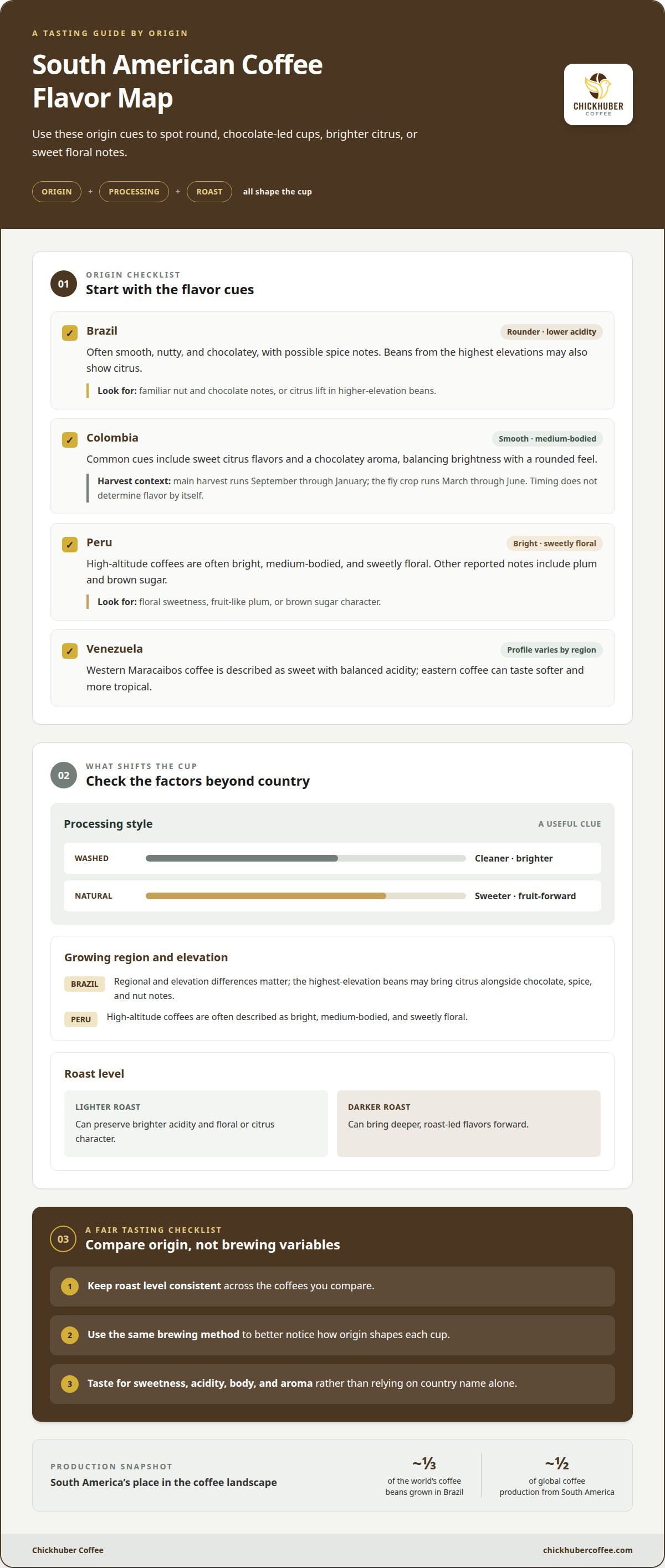
South American coffee isn’t one flavor profile. A South American coffee flavor map highlights common differences: Brazilian coffee is often smooth, nutty, and chocolatey; Colombian coffee tends to be smooth and medium-bodied, with sweet citrus flavors and a chocolatey aroma; Peruvian coffee can offer plum, brown sugar, and floral notes. Processing and growing conditions shape the cup, too.
Rich, balanced coffee is a useful starting point for exploring South America, but origin can change the experience, from softer, lower-acidity flavors to brighter, fruitier cups. These differences help you choose with purpose rather than guesswork.
This guide compares the flavor profiles of Colombian, Peruvian, Brazilian, and other South American coffees. You’ll see how processing, elevation, and coffee varieties influence each cup, then learn a practical way to compare single-origin coffees and find a profile that suits your taste.
Key Takeaways
- Use processing style as a clue: washed coffees can taste cleaner and brighter, while naturally processed coffees may lean sweeter and fruitier.
- Compare Colombian and Peruvian origins by their distinct flavor cues, including citrus and chocolate notes versus floral sweetness.
- Keep roast and brewing method consistent to better notice how origin shapes each cup.
- Explore single-origin coffees to discover which regional profile best fits your taste.
What Does Coffee From South America Taste Like?
South American coffee ranges from Brazil’s nutty, chocolatey cups to brighter, fruitier profiles shaped by origin and processing. Compare country, growing region, and roast to find the flavor direction that suits you.
Brazilian Flavor Profiles and Production
Brazilian coffee often tastes smooth, nutty, and chocolatey, with low acidity and possible spice notes. Beans from the highest elevations may also show citrus. These tendencies make Brazil a useful starting point if you prefer rounded, familiar flavors over sharp acidity.
Production gives Brazil a major place on the flavor map: the country grows about a third of the world’s coffee beans, while South America accounts for about half of global coffee production. Brazilian specialty coffee quality has increased over the 25 years referenced in the research. That growth means origin can offer more than a single broad, traditional profile.
Regional Flavor Tendencies
Brazil’s flavor varies by growing region and elevation, so treat national descriptions as a starting point, not a fixed recipe. One clear distinction is elevation: Brazil’s highest-elevation beans may add citrus to the more familiar chocolate, spice, and nut notes.
That contrast can help you choose beans. For a gentler cup, look for the common low-acidity, nutty profile; for more lift, an elevated Brazilian coffee may bring citrus forward. Region and elevation help explain why two Brazilian coffees need not taste identical.
Northern and Southern Flavor Differences
Across northern and southern South America, origin offers broad tendencies, not a strict flavor border. Colombian coffee is generally medium-bodied and smooth, with sweet citrus flavors and a chocolatey aroma. In Peru, high-altitude coffees can be bright, medium-bodied, and sweetly floral.
Brazil, farther south and east, is often associated with lower acidity and chocolate, spice, or nut notes. Colombia and Peru can offer more citrus or floral brightness, while Brazilian cups often lean rounder. Processing matters, too: washed coffees can taste cleaner and brighter, while naturally processed coffees may be sweeter and fruit-forward.
Country and Regional Flavor Notes
Country profiles offer practical tasting cues: Colombia suggests citrus and chocolate; Peru can bring plum, brown sugar, and floral notes; Brazil often leans toward nuts, chocolate, and spice. Venezuela offers another contrast: western Maracaibos coffee is described as sweet with balanced acidity, while eastern coffee can taste softer and more tropical.
Roast level changes how clearly these cues come through. A lighter roast can preserve brighter acidity and floral or citrus character; a darker roast can bring deeper, roast-led flavors forward. Use a South American coffee flavor map to narrow your choice by preferred notes, then compare coffees at the same roast and with the same brewing method for a clearer origin comparison.
Colombian coffee flavors and specialty market
Colombia’s coffee profile is a useful starting point for tasting by origin. Its flavor cues and harvest cycles help explain what to expect from a Colombian single-origin coffee.
Colombian Regional Flavor Profiles
Colombian coffee is generally smooth and medium-bodied, with sweet citrus flavors and a chocolatey aroma. That combination gives the cup both brightness and a familiar, rounded quality. In specialty coffee, origin helps readers connect those tasting notes to where the beans were grown, rather than treating all Colombian coffee as identical.
Colombia’s main harvest runs from September through January, with a fly crop from March through June. These harvest windows help explain why Colombian coffees can enter the market at different times. They don’t define flavor by themselves: growing conditions, processing, and roasting also influence the cup. Use the harvest period as context, then focus on the coffee’s stated origin and tasting notes.
Colombian Flavor Tendencies
Think of Colombian coffee’s citrus, chocolate aroma, smooth body, and medium weight as common tendencies, not a fixed formula. A particular coffee may bring one note forward while keeping others in the background. That distinction matters when choosing beans: a citrus-led cup can feel brighter, while chocolate aroma and medium body can make the profile feel rounder.
For a useful specialty-market comparison, keep the roast and brewing method consistent across coffees. Then taste for sweetness, citrus character, body, and aroma rather than relying on country name alone. Colombia’s harvest pattern can also guide expectations about crop timing, but it doesn’t guarantee a specific flavor. Buying Colombian coffee directly from a local roaster is one way to get fresh beans. Note the origin and tasting description, then use those cues to choose a cup that matches your preferences.
Peruvian coffee flavors and production ranking
Peru stands out for sweet, floral coffee profiles and a significant place in South American production. Its high-altitude coffees offer useful clues when you’re choosing a single origin.
Peruvian Regional Flavor Profiles
Peruvian regional profiles vary, but high-altitude coffees are often described as medium-bodied, bright in acidity, and sweetly floral. That combination gives the cup lift without making it feel especially heavy. It also helps distinguish Peruvian coffee from profiles led by chocolate or nuts.
Plum and brown sugar are other reported notes in Peruvian coffee. Treat these as tasting cues, not a fixed recipe for every growing area. Growing conditions and processing influence how they appear in the cup. A regional or altitude description can help set expectations, while the coffee’s specific tasting notes offer a closer guide.
For specialty coffee, this range makes Peru worth exploring beyond a single flavor label. One cup may emphasize floral sweetness; another may bring more fruit-like plum or brown sugar character. Compare the stated origin and tasting notes to find the profile that suits your palate.
Peruvian Flavor Tendencies
Peruvian coffee tends toward a sweet, bright profile, especially when grown at high altitude. Its medium body can keep the cup balanced, while floral tones and acidity create a lively finish. Plum and brown sugar notes add a fruitier, warmer dimension than floral character alone.
Peru ranks third among South American countries in annual coffee production, and its harvest season runs from March through September. These facts provide context for the country’s role and crop timing, but neither determines how an individual coffee tastes. Origin, growing conditions, processing, and roast all contribute to the final cup.
To compare Peruvian specialty coffees, keep the roast and brewing method consistent. Then notice whether floral notes, plum, or brown sugar stand out, and how bright the acidity feels. This approach separates the coffee’s flavor tendencies from changes caused by preparation, making your next origin choice more deliberate.
Exploring South American single-origin coffees
Single-origin coffee highlights beans from one country or region, making origin a useful tasting clue. In South America, compare Arabica varieties, growing conditions, processing, and preparation to understand each cup beyond its country label.
Arabica is the leading coffee type across the region, though South America also produces some Robusta. Common Arabica varieties include Catimor, Catuai, Mundo Novo, and Typica. A variety name adds another point of comparison, but it doesn’t determine the whole flavor: growing conditions and processing also shape the result.
Peru, Ecuador, and Bolivia have different harvest calendars: Peru’s runs from March through September, Ecuador’s from November through March, and Bolivia’s from July through October. Peru’s high-altitude coffees can be bright, medium-bodied, and sweetly floral, with notes such as plum or brown sugar. Those flavor cues aren’t established here for Ecuador or Bolivia, so compare their individual tasting notes rather than assigning them Peru’s profile.
Venezuela shows how much regional character can matter within one country. Western Maracaibos coffee is described as sweet, with balanced acidity; eastern Venezuelan coffee can have a softer, more tropical or Caribbean profile. These contrasts make region a useful clue, not a promise that every coffee from an area will taste the same.
For a practical comparison, keep roast and brewing method consistent. Taste for acidity, sweetness, body, and fruit or floral notes, then record which qualities stand out. Washed coffee may taste cleaner and brighter, while natural processing can bring sweeter, fruit-forward character. This approach helps separate processing effects from origin cues and makes each single-origin cup easier to assess.
Use a South American coffee flavor map as a starting point, then let the specific coffee’s origin and tasting notes guide your choice. Compare one factor at a time: region, variety, processing, then preparation. That gives you a clearer sense of what you enjoy and a balanced way to explore coffees beyond familiar origins.
Peruvian coffees can be bright and medium-bodied, with sweet floral notes such as plum or brown sugar. Ecuadorian and Bolivian coffees aren’t assigned specific flavor profiles here, so compare their individual tasting notes rather than assuming they share Peru’s character.
Chickhuber Coffee: French Vanilla Flavored Coffee
Chickhuber Coffee offers another way to explore your preferences when you want flavors beyond origin notes. French Vanilla Flavored Coffee is a distinct option from comparing single-origin coffees such as those from Peru or Colombia. It uses high-quality natural flavoring oils and has no added sugar or calories.
Use the regional profiles in this guide to identify whether you prefer bright acidity, floral sweetness, or rounded chocolate and nut notes. Then choose a different direction when you want a flavored coffee instead. For other options, Chickhuber Coffee also offers 6 Bean Blend, Cowboy Blend, and Organic Honduras Coffee.
Ready to explore a different coffee style? Contact Chickhuber Coffee.
Make Your Next Cup a Deliberate Choice
Turn your next brew into a focused tasting session. Before adding milk or sweetener, notice the aroma, first impression, and finish. Write down one detail you enjoy and one you’d change. This simple habit helps clarify your preferences, so each new bag becomes a more intentional choice.
Use a south american coffee flavor map as a starting point, not a final verdict. Your own notes can help you decide whether to explore a single origin, try a different roast, or choose a blend. Chickhuber Coffee offers 6 Bean Blend, Cowboy Blend, and Organic Honduras Coffee for those different coffee preferences.
Keep exploring at your own pace. Choose the profile that sounds right for your next cup, then let your tasting notes guide what comes next.
Contact Chickhuber Coffee to take your next step.
Frequently Asked Questions
Is Colombian coffee different from Brazilian coffee?
Yes. Colombian and Brazilian coffees commonly show different flavor tendencies, although individual cups vary. Colombian coffee is often associated with citrus brightness and a smooth, medium-bodied feel; Brazilian coffee more often leans toward nuts, chocolate, and lower acidity. If choosing between them, decide whether you want a brighter cup or a rounder, softer one, then use the coffee’s specific tasting notes to refine your pick.
How do Colombian coffee flavors vary by region?
Colombian coffee can vary with growing conditions and processing, and a single national profile can’t describe every regional cup. The broad Colombian profile offers a starting reference, not a guarantee for each origin. Compare coffees by the region named on the bag and their tasting descriptions. For a side-by-side tasting, keep the roast and brewing method alike so preparation doesn’t cloud the comparison.
What flavor notes are typical of Brazilian coffee?
Brazilian coffee is commonly associated with nutty, chocolatey, and spicy notes, often alongside lower acidity. Some beans grown at higher elevations may also show citrus. If you prefer mellow cups, try a Brazilian coffee described with chocolate or nuts; if you want more brightness, look for citrus in its tasting notes. These cues help you choose without assuming every Brazilian coffee tastes the same.
How do altitude, soil, and climate affect South American coffee flavor?
Altitude, soil, and climate shape growing conditions and can influence a coffee’s flavors. High-altitude Peruvian coffee, for example, is often described as bright in acidity and sweetly floral; higher-elevation Brazilian beans may show citrus. Soil and local climate also contribute to differences between growing areas, so use origin details alongside tasting notes rather than treating altitude alone as a flavor prediction.
How do processing methods change the flavor of South American coffee?
Processing can shift how sweetness, brightness, and fruit character come through. Washed coffees may taste cleaner and brighter, while naturally processed coffees can lean sweeter and more fruit-forward. To notice the difference, compare coffees with the same origin and roast when possible, changing processing as the main variable. Brew them alike, then focus on sweetness, acidity, and fruit notes in each cup.