

Single Origin Coffee Samplers and Their Regional Flavors
A single origin coffee sampler turns regional coffee into a side-by-side tasting: compare coffees from Costa Rica, Guatemala, and Brazil. Their elevation, processing methods, and tasting notes vary, giving you clear contrasts in the cup.
Coffee can taste bright, rich, smooth, or bold, but what creates those differences? Origin is a practical place to start. Tasting coffees side by side makes their contrasts easier to notice.
This guide breaks down the regional flavors you may encounter and explains how growing conditions, processing, and tasting notes shape each cup. You’ll learn how to compare samples with purpose, spot the profiles you enjoy, and choose what to try next. No jargon required. Just a sharper palate and a better sense of what belongs in your daily lineup.
Key Takeaways
- Compare coffees from Costa Rica, Guatemala, and Brazil to notice how regional profiles differ.
- Use elevation, processing method, and tasting notes as clues when exploring what shapes each cup.
- Taste samples side by side and record the flavors you enjoy to sharpen your preferences.
- When you want a different coffee experience beyond regional comparisons, Chickhuber Coffee’s 6 Bean Blend offers another option to explore.
Single origin coffee sampler
A single origin coffee sampler lets you taste coffees from Costa Rica, Guatemala, and Brazil side by side. Each coffee comes from a distinct region, so the cups give you a practical way to explore how origin can shape flavor. The goal isn't to rank countries. It's to notice differences, identify what you enjoy, and learn which details influence your cup.
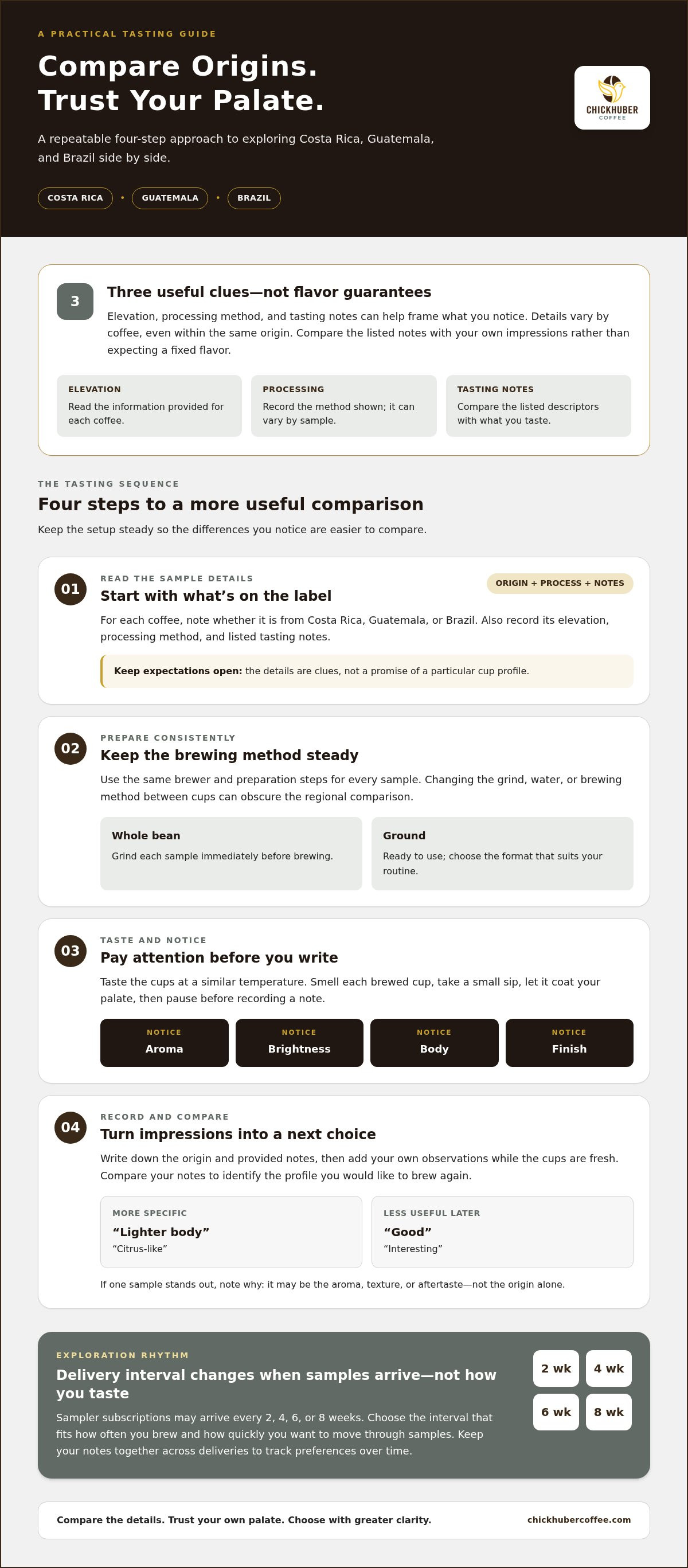
Start with the information attached to each coffee. Elevation, processing method, and tasting notes vary by coffee, even within a sampler featuring the same countries. Treat those details as clues, not guarantees of a particular flavor. For example, compare the listed notes with what you actually taste. Your impressions might match, differ, or reveal flavors you hadn't expected.
Use a consistent brewing approach for each sample. If you change the grind, water, or brewing method between cups, those changes can obscure the regional comparison. Whole bean and ground options are available. Whole beans let you grind each sample immediately before brewing, while ground coffee is ready to use. Choose the format that best suits your routine.
- Origin: Note whether the coffee is from Costa Rica, Guatemala, or Brazil.
- Process: Record the method shown for each coffee, since it varies by sample.
- Tasting notes: Write down the listed descriptors, then add your own impressions after tasting.
Keep your tasting setup steady. Use the same brewer and preparation steps for each coffee, then taste the cups at a similar temperature. Smell each brewed cup before sipping. Take a small sip, let it coat your palate, and pause before recording a note. You might compare aroma, perceived brightness, body, and finish. These are ways to describe what you notice, not promises about what any origin must taste like.
Make a short record while the cups are fresh. For each sample, write down its origin, the provided tasting notes, and your own response. Be specific: “lighter body” says more than “good,” while “citrus-like” is easier to recall than “interesting.” If a coffee stands out, note why. You may prefer its aroma, texture, or aftertaste rather than its origin alone.
- Read each coffee’s origin, elevation, processing method, and tasting notes.
- Prepare every sample using the same brewing method and consistent steps.
- Taste each cup, then record your own aroma, flavor, body, and finish observations.
- Compare your notes to find the profile you’d like to brew again.
Sampler formats can also shape how you explore. A subscription may arrive every 2, 4, 6, or 8 weeks, giving you different rhythms for trying coffee. Pick the interval that fits how often you brew and how quickly you want to move through samples. The schedule affects when coffee arrives, not the tasting method. Keep your notes together across deliveries to track preferences over time.
Use the comparison to make your next choice more deliberate. If Costa Rica’s sample appeals to you, revisit its tasting notes and processing details before selecting another coffee. If Brazil’s cup suits your routine better, record the qualities that made it work. A sampler turns exploration into a repeatable process: compare the details, trust your own palate, and choose your next cup with greater clarity.
Chickhuber Coffee: 6 Bean Blend
Chickhuber Coffee’s 6 Bean Blend is a natural next step after comparing coffees by region. A sampler helps you explore differences across origins; a blend gives you another direction to try when you want a coffee beyond that regional comparison. Keep tasting with a clear purpose: note what you enjoyed, then choose an option that fits your next cup.
Want to explore another single origin? Chickhuber Coffee’s Organic Honduras Coffee offers another origin to try. For a flavored option, French Vanilla Flavored Coffee offers a different experience, with natural flavoring oils and no added sugar or calories. Choose based on what you want in your cup, not assumptions about how a region or blend must taste.
Visit chickhubercoffee.com to explore the coffee options, or contact Chickhuber Coffee.
Make Your Next Cup Count
Let your tasting notes guide your next choice. Choose coffee for the experience you want, then keep exploring as your preferences sharpen. A single origin coffee sampler helps you compare individual origins, while a blend offers a different way to explore coffee.
Chickhuber Coffee offers the 6 Bean Blend and Cowboy Blend for a blend-focused option, alongside Organic Honduras Coffee for an origin-led cup. Use those choices to keep your coffee routine moving in a direction that suits your palate. The best next cup is the one you’re genuinely curious to brew.
Ready to explore? Contact Chickhuber Coffee and take your next step toward a more intentional coffee routine. Keep tasting, keep learning, and make every cup yours.