

Oolong Tea Health Benefits for Heart Health, Weight and Antioxidants
Oolong tea health benefits are often linked to antioxidant activity. Studies have also explored associations between tea drinking and heart-health markers, weight management, and metabolism. The evidence suggests potential, not guaranteed results. Oolong is a tea to understand, not a shortcut.
Tea contains plant compounds that may play a part in a healthy routine. The key question is how oolong fits into the evidence on heart health, blood fats, weight, and metabolism. Findings are promising, but they don’t mean every cup has the same effect.
Here’s what the research suggests, where its limits matter, and how oolong’s antioxidants may contribute. Get the clear facts, then decide how this tea fits your daily habits.
Key Takeaways
- Understand what research suggests about oolong tea and blood glucose, while keeping study findings in perspective.
- See how tea consumption has been linked with heart-health markers, including triglycerides.
- Learn why metabolism findings are promising but don’t make tea a standalone weight-management strategy.
- Explore how antioxidant activity and polyphenols fit into oolong tea’s potential benefits, then find a coffee option for a different daily brew.
What are the health benefits of oolong tea?
Researchers have studied oolong tea in relation to blood glucose, diabetes risk, heart-health markers, and antioxidant activity. Findings suggest possible connections, but tea does not replace diabetes care or other treatment.
Blood Sugar and Diabetes Risk
Blood glucose is the sugar circulating in your blood, and its regulation matters for diabetes risk. A Japanese study found that daily oolong tea consumption for thirty days reduced participants’ glucose levels by 30%. Studies have also associated drinking 3 or more cups of tea per day with a lower risk of type 2 diabetes. However, Japanese working men drinking 2 or more cups of oolong tea per day had a higher diabetes risk than men drinking 1 cup or none. These differing findings show why one result cannot predict an individual outcome.
Health Effects Across Oolong Types
Oolong types differ in their degree of fermentation, which ranges from 8% to 80%. That range helps explain why oolong teas can vary in taste and composition, but it doesn’t establish that one type produces stronger health effects. Choose a type for its flavor and preparation, rather than assuming its fermentation level predicts blood-sugar benefits.
An 8-ounce cup of oolong tea contains approximately 10 to 60 milligrams of caffeine. An 8-ounce cup of coffee contains approximately 70 to 130 milligrams; the available figures don’t establish a direct comparison with green or black tea. Caffeine content matters if you’re monitoring your total daily intake.
Oolong tea has also been linked with heart-health markers. In a China study, people drinking at least 10 ounces per week had lower risks of high total cholesterol, triglycerides, and LDL cholesterol. Those associations don’t establish that tea treats high cholesterol or protects every tea drinker’s heart.
The article advises 2-3 cups per day. Drinking less than 1 liter per day is safe for most adults with respect to fluoride exposure, while experts recommend limiting caffeine to no more than 400 milligrams a day. Caffeine is a key consideration when assessing possible side effects and overall intake.
Oolong contains caffeine, so account for it when reviewing your daily intake and medication routine. Tea is not a way to manage iron levels. If you have concerns about iron or medication, discuss them with a healthcare professional.
During pregnancy or breastfeeding, count oolong’s caffeine as part of total daily intake. Its caffeine content is approximately 10 to 60 milligrams per 8-ounce cup, so cup size and preparation affect the amount consumed.
Heart health and triglycerides
Oolong tea has been associated with cardiovascular markers, including blood fats, and has been examined in studies of stroke risk. These findings do not prove that tea prevents heart disease. Before drawing conclusions, consider the specific outcome, amount consumed, and population studied. A change in cholesterol, for example, is not the same as evidence of fewer heart attacks.
Triglycerides are fats carried in the blood. In a study in China, people who drank at least 10 ounces of oolong tea per week had lower risks of high total cholesterol, triglycerides, and LDL cholesterol. These are separate measures of blood lipids. The result suggests a connection worth understanding, but it doesn’t show that oolong alone caused the lower risks or can replace medical care.
Stroke findings add another angle. People who drank three cups of tea a day had a 21% reduction in their chances of having a stroke. Other studies found that people drinking a cup of tea a day were less at risk of stroke than people who drank none. These observations concern tea consumption broadly, so they shouldn’t be treated as oolong-specific proof.
Oolong-specific evidence includes a study of Japanese men. Those drinking 1 or more cups of oolong tea per day had a lower risk of heart disease. This is an association from a particular group, not a guaranteed result for every person. It also doesn’t establish that increasing intake will lower an individual’s risk.
Treat these findings as signals, not treatment instructions. A China study focused on blood lipids, a Japanese study examined heart disease, and stroke studies considered tea intake. They address different questions. If you drink oolong, consider it one beverage in your routine, not a substitute for prescribed care or established heart-health measures. Keep each study’s outcome and participants in mind.
Weight management and metabolism
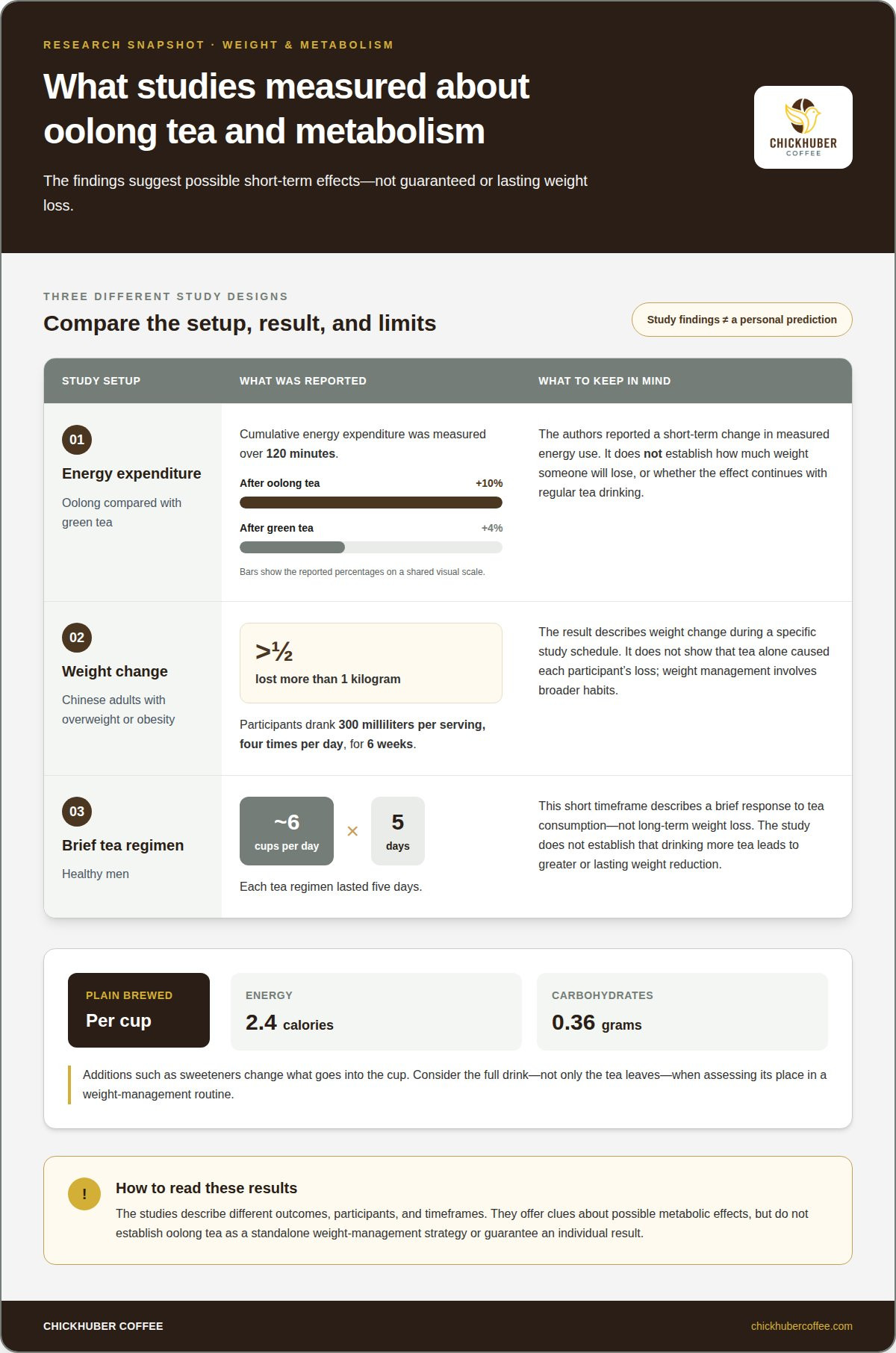
Oolong tea may affect energy expenditure, the energy your body uses. The study authors reported that cumulative energy expenditure over 120 minutes increased significantly by 10% after oolong tea and 4% after green tea. This comparison describes a measured short-term response. It doesn’t establish how much weight someone will lose over time or whether the same effect continues with regular tea drinking.
A study of Chinese adults with overweight or obesity examined oolong tea consumption alongside weight change. Participants drank 300 milliliters per serving, four times per day. After 6 weeks, more than half had lost more than 1 kilogram. That result gives a concrete example of weight change during a study, but it doesn’t tell you that tea alone caused each participant’s loss. Weight management involves broader habits, and the study’s schedule was specific.
Another study measured healthy men who drank almost 6 cups of oolong tea per day. Each tea regimen lasted 5 days. That short timeframe helps explain what the researchers examined: a brief response to tea consumption, not long-term weight loss. The findings are useful for understanding possible metabolic effects, but they don’t establish that drinking more tea produces greater or lasting weight reduction.
Plain brewed oolong tea contains 2.4 calories and 0.36 grams of carbohydrates per cup. Those figures can help you compare it with other drinks when managing daily intake. The tea itself contributes little energy, but additions such as sweeteners change what goes into the cup. Consider the full drink, not only the tea leaves, when assessing its place in a weight-management routine.
Research has linked oolong with short-term energy-expenditure findings and observed weight changes in particular study groups. These are clues about metabolism, not a weight-loss plan. In practice, consider what you add to each cup and interpret the findings in light of the participants, drinking schedules, and study duration.
Antioxidants and polyphenols
Oolong tea contains polyphenols, plant compounds associated with antioxidant activity. Antioxidants can help neutralize free radicals, unstable molecules produced by normal body processes and environmental exposure. This is why researchers study tea compounds, but antioxidant activity in a brewed drink does not establish a specific health outcome. Pay attention to what studies actually measure, rather than assuming guaranteed changes in health.
Steeping time matters. Oolong tea has its strongest antioxidant activity when steeped for 3 minutes at the recommended temperatures. That gives you a practical starting point: use a timer and avoid assuming that a longer brew automatically delivers more antioxidant activity. Preparation conditions can influence which compounds move from the leaves into your cup.
Temperature is another part of the equation. Oolong tea is prepared with water at around 190 degrees Fahrenheit or 90 degrees Celsius. A brewed cup uses about 2 grams of tea leaves in eight ounces of water. Together, the leaf amount, water volume, and heat offer a repeatable way to prepare a cup while keeping the steeping time clear.
Tea type also matters for flavor and brewing choices. Oolong is partially fermented, with fermentation ranging from 8% to 80%. That broad range reflects substantial variation across oolong teas, but it doesn’t prove that a particular fermentation level has stronger antioxidant effects. Use the 3-minute steep as a practical reference rather than ranking teas by fermentation alone.
Keep the takeaway precise: antioxidant activity is a property measured in tea, not a promise of disease prevention. Brew with the recommended temperature and a measured amount of leaves, then steep for 3 minutes to align with the reported strongest activity. Those steps make your preparation more consistent and help you appreciate oolong’s polyphenol content without overstating what it can do.
Chickhuber Coffee: 6 Bean Blend
Chickhuber Coffee’s 6 Bean Blend offers a coffee option for readers who want to vary their daily beverage routine. Oolong’s potential health effects come from tea research; coffee serves a different purpose in your cup, not as a substitute for those findings.
Choose the 6 Bean Blend when you want to switch from tea to coffee, or explore Organic Honduras Coffee for another option. Keep your beverage choice aligned with your preferences and the routine you can sustain. No drink replaces care for a health condition.
For a straightforward way to explore coffee alongside your tea routine, take a look at the 6 Bean Blend. Contact Chickhuber Coffee to learn more.
Make Your Next Cup a Thoughtful Choice
Use what you’ve learned about oolong tea health benefits to shape a routine around taste, preparation, and your personal goals. Choose a drink you enjoy, notice how it fits your day, and keep expectations grounded. A lasting habit starts with choices you can maintain, not a promise tied to one ingredient.
For a coffee option when you want a change of pace, Chickhuber Coffee offers Cowboy Blend. Whether you choose tea or coffee, make your next cup a deliberate choice. Focus on flavor, enjoy the ritual, and build a routine that works for you.
Explore Chickhuber Coffee and find an option for your next brew. Keep moving with curiosity and choose what suits your day.
Frequently Asked Questions
What are the evidence-based health benefits of oolong tea?
Research has linked oolong tea with possible effects on blood glucose, blood fats, heart-disease risk, and energy use. These findings come from different studies and populations, so they do not establish a single benefit for every tea drinker. Treat tea as a beverage, not a treatment. To understand the evidence, distinguish observed associations from cause and effect, and note the specific outcome each study measured.
Can oolong tea help with weight loss or metabolism, and what does research show?
Oolong tea may affect short-term energy use, while weight-loss findings come from specific study groups and drinking routines. For a practical perspective, consider what the tea replaces: choosing an unsweetened cup instead of a sweetened drink may change your overall beverage intake. Add-ins matter too. Consider your usual drinks and habits rather than relying on tea alone for weight loss.
What is the nutritional content of brewed oolong tea, including calories and antioxidants?
A cup of brewed oolong tea contains 2.4 calories, 0.36 grams of carbohydrates, and 0 grams of protein. It also contains polyphenols associated with antioxidant activity. Calories and macronutrients describe energy and basic nutrients; antioxidant activity describes how plant compounds behave in a test. Preparation affects the brewed cup, so keep added ingredients in mind when considering its nutritional profile.
How much caffeine is in a cup of oolong tea compared with green tea, black tea, and coffee?
An 8-ounce cup of oolong tea contains approximately 10 to 60 milligrams of caffeine, compared with approximately 70 to 130 milligrams in an 8-ounce cup of coffee.