

Natural Coffee Flavorings for Classic and Seasonal Coffee
Natural coffee flavorings can take a familiar cup in classic, seasonal, or unexpected directions. The U.S. Environmental Protection Agency describes flavorings derived from aromatic plant parts as natural, while those prepared from synthetic chemicals are considered artificial, imitation, or synthetic flavors. The label describes the flavoring’s source, not whether its taste is subtle or bold.
Flavor can change the whole coffee experience, but finding the right profile depends on your routine, the season, and how much variety you want. This guide covers familiar favorites, seasonal twists, and unusual combinations, then explains what ingredient statements and certifications can tell you. Learn how natural and artificial flavorings differ, what to look for, and how to choose a cup that suits your taste.
Key Takeaways
- Compare classic, seasonal, and unusual flavor profiles to find a direction that fits your taste and routine.
- Read product attributes and certifications as clues about ingredients and sourcing, not as a substitute for understanding the flavor itself.
- Learn how aromatic plant materials can contribute flavor, and how extraction methods shape the result in your cup.
- Use the distinction between plant-derived and synthetic flavorings to make a more informed choice from the label.
- Choose a straightforward coffee blend when you want the character of the coffee itself to take the lead.
Classic, seasonal, and unusual flavor options
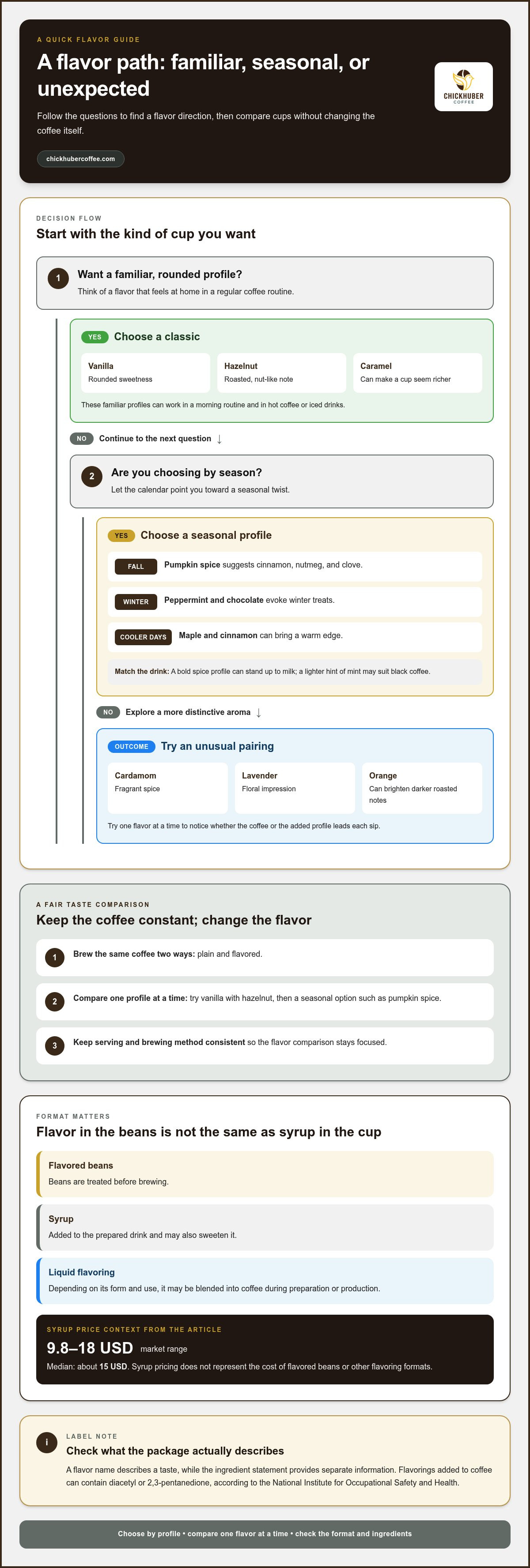
Vanilla, hazelnut, and caramel are familiar starting points for flavored coffee. Vanilla brings a rounded sweetness, while hazelnut adds a roasted, nut-like note. Caramel can make a cup seem richer without changing the base coffee. These classic profiles work well in a morning routine and can be enjoyed in hot coffee or iced drinks.
Seasonal flavors change with the calendar. Pumpkin spice suggests cinnamon, nutmeg, and clove, while peppermint and chocolate evoke winter treats. Maple and cinnamon can bring a warm edge to cooler-weather coffee. Match the flavor to your drink: a bold spice profile can stand up to milk, while a lighter hint of mint may suit black coffee.
- Classic: Try vanilla, hazelnut, or caramel for a familiar, rounded cup.
- Seasonal: Pair pumpkin spice with fall, or peppermint and chocolate with winter.
- Unusual: Explore cardamom, lavender, or orange for a more distinctive aroma.
Unusual pairings can make a familiar brew feel new. Cardamom adds fragrant spice, lavender gives a floral impression, and orange can brighten darker roasted notes. Try one flavor at a time. A simple tasting comparison helps you notice whether the coffee itself or the added profile leads each sip.
Flavoring added during production differs from syrup added to a finished cup. Flavored beans are treated before brewing, while syrup goes into the prepared drink and may also sweeten it. Depending on its form and use, liquid flavoring may be blended into coffee during preparation or production.
For coffee and other beverages, flavored syrup on the market typically ranges between 9.8 and 18 USD, with a median about 15. Flavoring costs depend on format, ingredients, concentration, and package size. Syrup pricing does not represent the cost of flavored beans or other flavoring formats.
Check the label before choosing a flavor. Ingredients and product descriptions can clarify whether a flavor is added to beans, supplied as syrup, or included in a prepared coffee. Flavorings added to coffee can contain diacetyl or 2,3-pentanedione, according to the National Institute for Occupational Safety and Health.
For a focused tasting, brew the same coffee plain and flavored. Compare vanilla with hazelnut, then try a seasonal option such as pumpkin spice. Keep the serving and brewing method consistent. This makes it easier to identify which flavor you enjoy without confusing it with changes in the coffee itself.
Product attributes and certifications
Read the ingredient statement, flavor description, and certification details together. Each answers a different question about a flavored coffee.
Natural and Artificial Flavoring
According to the U.S. Environmental Protection Agency, natural flavorings are derived from parts of aromatic plants, while artificial, imitation, or synthetic flavors are prepared from synthetic chemicals. That distinction describes source, not intensity, taste, or quality. Compare the flavor description with the ingredient information to understand what the package communicates. A vanilla note, for example, doesn’t reveal its full composition by itself.
Natural Flavor Labeling
For FDA labeling, treat “natural flavor” as a description of source, not a complete recipe or certification. Read the ingredient statement alongside the flavor description. A coffee labeled vanilla signals a taste, while the ingredient information offers a separate view of what the product contains. Look for clear wording and compare the details each package provides.
Flavoring Sources
Plant-derived flavorings can come from aromatic plant parts, as the U.S. Environmental Protection Agency’s definition indicates. The source shapes the profile: vanilla suggests sweetness, while citrus peel suggests a brighter aroma. Check whether the package names a source or gives only a broad flavor description. That distinction can help you decide whether you want a specific plant note or simply a familiar taste.
Safety and Health Attributes
Natural origin alone doesn’t establish whether a flavored coffee is healthier or suits every preference. Assess the product using its ingredient statement. Check for sweeteners or other ingredients you want to limit, and distinguish those details from the flavor name. “Natural” describes a source; it isn’t a nutrition claim or a guarantee about personal tolerance.
Certifications can add useful information, but their scope matters. A mark may relate to a particular ingredient, production standard, or product attribute. Look for the certifier’s name and what the mark applies to. Don’t assume a coffee certification also covers its flavoring. Compare package details to identify the specific attribute represented.
Make a quick label check before choosing:
- Flavor description: Identify the taste the package promotes, such as vanilla.
- Ingredients: Review the listed components for details beyond the flavor name.
- Certification: Note the certifier and the product attribute the mark covers.
This three-part scan separates flavor, composition, and certification. It gives you a clearer way to compare flavored coffees without treating “natural” as a shortcut for every product detail.
What are natural coffee flavorings made from?
Natural coffee flavorings begin with aromatic materials from plants. The U.S. Environmental Protection Agency describes flavorings derived from aromatic plant parts as natural. These parts may include fruit, seeds, bark, roots, leaves, or flowers. The source shapes the aroma: vanilla beans suggest sweetness, while citrus peel brings a brighter scent.
Different plants contribute different notes. Cinnamon bark can add warmth, cardamom seeds bring fragrant spice, and mint leaves create a fresh impression. Citrus zest offers a lively aroma, while cacao beans can bring deep, roasted notes. These ingredients don’t all taste alike, even when used to create familiar coffee flavors.
A flavor ingredient may come from a whole plant part or from aromatic compounds separated from it. Producers can use methods such as pressing, extraction, or distillation to capture those compounds. The method depends on the material and the qualities to preserve. A delicate flower and a tough spice seed, for example, may need different handling.
A flavor name doesn’t always describe a single ingredient. A vanilla-style profile may combine plant-derived components to create a balanced aroma. A spice blend may bring together cinnamon, cardamom, or other aromatic materials. The ingredient statement can provide more detail than the front label, so read both when comparing flavored coffee.
- Fruit and peel: Orange peel can contribute a bright, citrus-like aroma.
- Seeds and beans: Vanilla beans and cacao beans offer distinct aromatic profiles.
- Bark and roots: Cinnamon bark and ginger root can bring warm spice notes.
- Leaves and flowers: Mint leaves and lavender flowers can add fresh or floral impressions.
Natural doesn’t mean plant material simply goes straight into the coffee. A producer may first extract aromatic components, then blend them into a flavoring suited to coffee. The final taste depends on the source material, extraction approach, and how the components work together. That’s why two products with the same flavor name can smell or taste different.
Use the package as a practical guide. Look for a named source, such as vanilla or citrus, and check whether the ingredient statement offers further detail. Compare that information with the aroma and flavor you want. This simple label-to-taste check helps you choose natural coffee flavorings with a clearer sense of what contributes to their profile.
How are natural coffee flavorings made and extracted?
Production begins by selecting aromatic plant material for a target profile. Vanilla beans, orange peel, cinnamon bark, and cardamom seeds each bring different aromatic compounds. The material is cleaned and prepared, often by cutting, crushing, or grinding it. This exposes more surface area, helping the chosen extraction method capture compounds that create its characteristic aroma.
One method is distillation, which uses steam to carry volatile aromatic compounds away from plant material. The vapor is cooled so aromatic components condense for collection. Citrus peel can also be pressed to release aromatic oils. The best approach depends on the source: delicate flower petals need different handling from firm spices such as cinnamon bark.
Extraction can also use a liquid to draw aromatic compounds from ingredients. The liquid and process influence which compounds dissolve and how the extract smells or tastes. Vanilla, for example, can be processed into an extract with a distinct sweet aroma. The extract may then be adjusted or combined with other components to create a consistent flavor profile.
- Prepare: Clean and cut orange peel to expose its aromatic surface.
- Extract: Use pressing, distillation, or a suitable liquid-based method.
- Collect: Separate the aromatic extract from the original plant material.
- Blend: Combine extracts when a profile needs several notes, such as vanilla and spice.
After extraction, producers may blend the aromatic material into a form suited to coffee. They can apply it to roasted beans or incorporate it into a flavored coffee product. The carrier and application method affect how the flavor disperses. A citrus profile, for instance, needs even distribution to avoid sharp bursts in some beans and faint notes in others.
Roasting and storage matter, too. Coffee beans have porous surfaces, so added flavor can interact with their own aroma. When developing the final profile, a producer considers the coffee’s roast character and the flavor’s strength. Vanilla may come through differently with a darker roast than with a lighter coffee. Packaging helps keep the prepared product consistent during storage.
For a clearer comparison, follow the process from source to cup. Identify the plant material, note the extraction approach if the label provides it, and observe how the flavor appears in brewed coffee. Try the same coffee plain and flavored. This practical test helps separate the base coffee’s character from the aromatic addition.
What is the difference between natural and artificial coffee flavoring?
The distinction comes down to source. The U.S. Environmental Protection Agency describes flavorings derived from aromatic plant parts as natural. Flavorings prepared from synthetic chemicals are considered artificial, imitation, or synthetic flavors. For example, vanilla flavor may come from plant-derived material or synthetic chemicals.
That distinction doesn’t tell you how a coffee will taste. Two vanilla-flavored coffees can differ in aroma, intensity, and how the flavor sits alongside the roast. One may lead with a sweet, rounded note; another may let the coffee’s roasted character come through more clearly. “Natural” and “artificial” identify flavoring categories, not a guaranteed taste experience.
Use the package to compare the information it provides. Start with the ingredient statement, then read the flavor description. A label naming vanilla gives you a flavor cue, while the ingredient statement may offer more detail about the product’s components. Distinguish a stated flavor source from a broad description of taste.
- Source: Natural flavorings derive from aromatic plant parts; artificial flavors use synthetic chemicals.
- Flavor description: Vanilla or citrus names the taste profile, not necessarily the full ingredient makeup.
- Product details: Ingredient statements add context beyond front-label flavor wording.
Neither category alone tells you whether a coffee is sweetened, how intense it tastes, or whether it suits your preferences. A natural flavoring isn’t automatically a nutrition claim. An artificial flavoring, by category alone, doesn’t describe the coffee’s overall quality. Check the ingredients for details such as sweeteners, and use the flavor description to anticipate the profile.
Try a simple comparison. Choose two coffees with the same named flavor, such as vanilla, and compare their ingredient statements. Brew them the same way, then notice the aroma and the balance between flavor and roast. Consistent preparation makes the comparison more useful. Judge the cup, not just the wording on the package.
Keep the decision practical. If plant-derived sourcing matters to you, look for clear information about the flavoring source. If you mainly want a particular taste, focus on the flavor description and ingredients together. The label can guide your choice, but tasting the coffee shows how its flavor works in your own cup. Ready to put that comparison into practice? Explore flavored coffee options and use the ingredient details to guide your next pick.
Chickhuber Coffee: 6 Bean Blend
Chickhuber Coffee’s 6 Bean Blend gives you a coffee option when you want to focus on the beans rather than add a separate flavor. Choose it as a starting point for tasting coffee’s own character, then compare it with a flavored choice if you want a different profile.
Chickhuber Coffee’s selection also includes Cowboy Blend, Organic Honduras Coffee, and French Vanilla Flavored Coffee. These offer different ways to explore the lineup, from blends and single-origin coffee to a named flavored option. Use the ingredient details and flavor descriptions to decide what best fits your cup.
Ready to choose your next brew? Explore Chickhuber Coffee’s coffee options online.
Make Your Next Cup a Deliberate Choice
Give your next brew a clear purpose. Decide whether you want the coffee itself to lead or a flavored profile to shape the experience. Pause to notice the aroma before your first sip. That moment can help you identify what you enjoy and make your next selection more intentional. Natural coffee flavorings can change a familiar routine, but the best choice is the one that fits your taste.
Try a simple tasting habit: write down the coffee you chose and one detail you noticed. A brief note about aroma, roast character, or flavor can make future choices easier. Your palate is the guide, and each cup gives you another chance to refine what you like.
For a coffee-first starting point, Chickhuber Coffee offers 6 Bean Blend, Cowboy Blend, and Organic Honduras Coffee. Compare the options at your own pace, then choose the cup that fits your day. Stay curious, trust your palate, and keep your coffee routine moving forward.
Explore Chickhuber Coffee and choose your next brew. Build a cup you’re ready to return to.
Frequently Asked Questions
What natural flavors are commonly added to coffee?
Vanilla, hazelnut, caramel, cinnamon, and mocha are familiar coffee flavor choices. Some blends layer notes, such as cinnamon with hazelnut, for a more complex cup. The coffee’s roast also affects how a flavor comes through. If you’re exploring natural coffee flavorings, compare ingredient information and taste descriptions, then try one profile at a time to find what suits your usual brew.
Do natural coffee flavorings contain sugar, calories, or allergens?
It depends on the product and its ingredients. Chickhuber Coffee’s flavored coffees use high-quality natural flavoring oils and have no added sugar or calories. For allergen concerns, read the full product information rather than relying on a flavor name. A “vanilla” or “mocha” description doesn’t tell you everything about the ingredients, so use the ingredient and allergen statements to guide your choice.
How can I flavor coffee naturally at home?
Add flavor during brewing or directly to your cup. Try a cinnamon stick in the brew, a strip of orange peel, or a small amount of pure vanilla extract. Start with one ingredient so you can judge its effect, then adjust the next cup to taste. Remove peel or whole spices before drinking. For a seasonal twist, pair orange aroma with cinnamon.
How can I tell whether a coffee flavoring is truly natural from its label?
Look for an ingredient statement that identifies the flavoring, then check whether the package names a plant source. The U.S. Environmental Protection Agency describes natural flavorings as derived from aromatic plant parts, unlike artificial, imitation, or synthetic flavors prepared from synthetic chemicals. A “natural” label alone doesn’t name every ingredient or certify unrelated product attributes, so read the full package details.