

Milk for a Coffee Latte: Compare Dairy and Plant Options
The milk that wins hot latte art may not be the one that makes your best iced latte. For hot foam and clean pours, whole dairy milk is often the best milk for a coffee latte, while barista-style oat milk is a strong plant-based pick. Almond milk can be trickier in hot espresso, but its separation is less of an issue in an iced latte.
Milk changes more than a latte’s color. It shapes the sweetness, texture, foam, and how well each sip blends with espresso. This guide compares dairy, oat, and almond milk for frothing, latte art, foam stability, flavor, and iced drinks, so you can choose with purpose. Whole milk is a reliable starting point, oat milk brings a naturally sweeter taste, and almond milk can work especially well in iced lattes. Use the decision guide to match your milk to the drink you want.
Key Takeaways
- Choose milk based on the drink you want, not just whether it’s dairy or plant-based.
- Small changes in steaming temperature and technique can affect foam texture and stability.
- Learn why sweetened and unsweetened almond milk can behave differently in espresso.
- Use the comparison to find an oat milk style that fits your latte preferences.
What Is The Best Milk To Froth For Coffee & Latte Art?
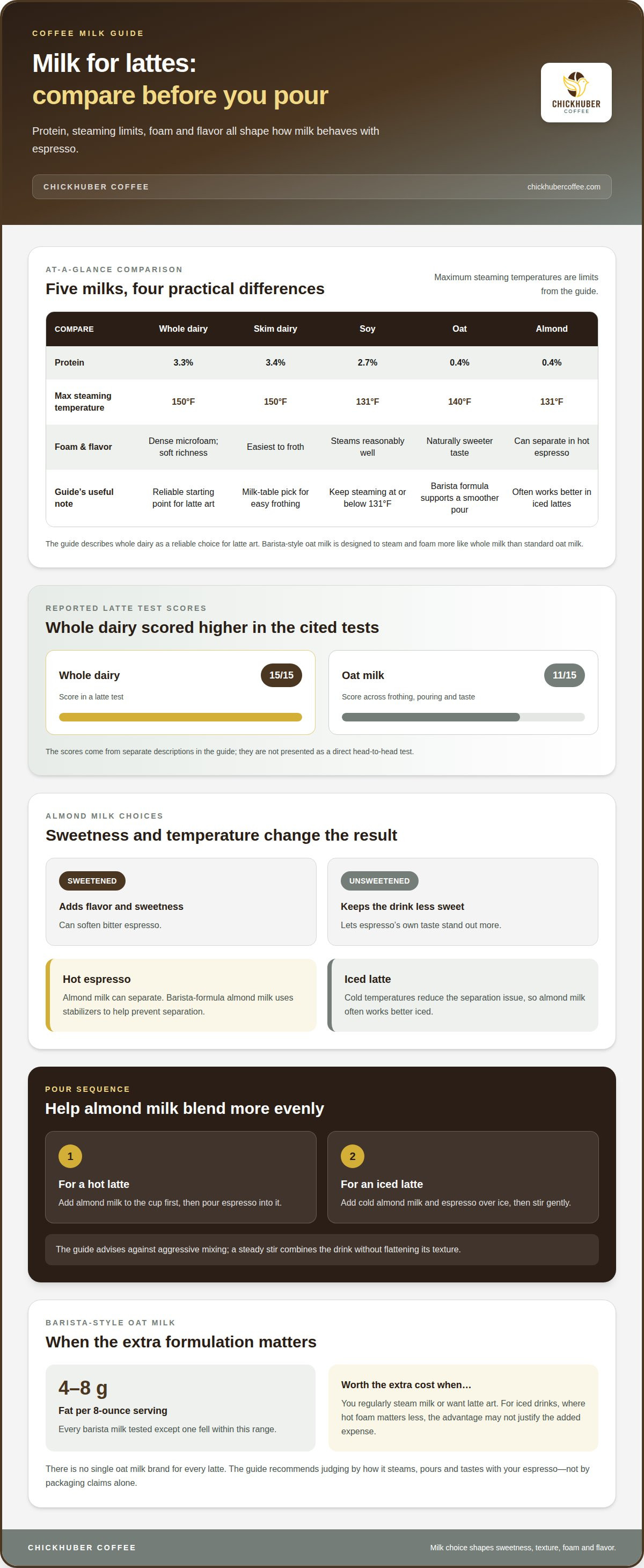
Whole dairy milk is the easiest to froth, and it scored 15/15 in a latte test. The best choice still depends on whether you value easy pouring, plant-based ingredients, or a particular flavor.
Alternative Milk for Frothing
Plant-based alternatives vary in protein, sweetness, and how they pour into espresso. Soy milk has 2.7% protein and steams reasonably well; almond milk has 0.4% protein and can separate in hot coffee. Keep temperatures controlled: steam soy and almond milk to a maximum of 131 degrees Fahrenheit. Pour carefully, since foam texture and flow affect latte art.
Oat Milk for Steaming
Oat milk has 0.4% protein and tastes sweeter than almond milk because its carbohydrates are processed into sugars during production. Steam it to a maximum of 140 degrees Fahrenheit. Barista-formula oat milk is designed to steam and foam more like whole milk than standard oat milk, making it a useful alternative when you want a smoother pour and defined patterns.
Barista-Style Plant Milks
There isn’t one oat milk brand that suits every latte: taste, foam, and pouring all matter. A latte test scored oat milk 11/15 across frothing, pouring, and taste. Barista-style plant milks are worth the extra cost when you regularly steam milk or want latte art; their formulation is designed to create foam more like whole milk. For iced drinks, where hot foam matters less, that advantage may not justify the added expense.
| Milk | Protein | Maximum steaming temperature | Foam and flavor |
|---|---|---|---|
| Whole dairy | 3.3% | 150 degrees Fahrenheit | Dense microfoam, soft richness |
| Skim dairy | 3.4% | 150 degrees Fahrenheit | Easiest to froth |
| Soy | 2.7% | 131 degrees Fahrenheit | Steams reasonably well |
| Oat | 0.4% | 140 degrees Fahrenheit | Naturally sweeter taste |
| Almond | 0.4% | 131 degrees Fahrenheit | Can separate in hot espresso |
Choose whole dairy milk for reliable latte art, or barista-style oat milk for a plant-based pour.
Sweetened versus unsweetened almond milk
If you’re lactose intolerant or have a dairy allergy, choose a plant-based milk such as oat, soy, or almond. If you have an almond allergy, avoid almond milk and choose another option. Sweetened almond milk adds flavor and sweetness, while unsweetened almond milk keeps the drink less sweet and lets espresso stand out.
Hot espresso can make almond milk separate, disrupting a latte’s smooth appearance and texture. Barista-formula almond milk uses stabilizers to help prevent separation in hot espresso. It can be a practical choice for hot lattes, though the flavor depends on the coffee and milk combination. Almond milk often works better in iced lattes because cold temperatures reduce the separation issue.
Reduce separation with a simple pour sequence: add almond milk to the cup first, then pour espresso into it. This can help the two blend more evenly. For an iced latte, add cold almond milk and espresso over ice, then stir gently. Avoid aggressive mixing; a steady stir combines the drink without flattening its texture.
Sweetened and unsweetened versions can both taste good, but their flavors differ. Sweetened almond milk can soften bitter espresso, while unsweetened keeps the cup closer to coffee’s own taste. Almond milk has less protein than dairy, so its foam may be less dependable for detailed latte art. Taste both versions with the same espresso before choosing, and compare them hot and iced because temperature changes the balance.
Want a sweeter coffee pairing? Try the flavor contrast with French Vanilla Flavored Coffee and unsweetened almond milk.
Frothing, foam stability, and blending
Good foam has small, even bubbles that blend smoothly with espresso. Whole milk can contribute to dense, creamy foam and a fuller-feeling latte. That richness also softens espresso’s sharper edge. For a clean finish, aim for glossy microfoam rather than a stiff cap of large bubbles. The milk should flow from the pitcher in a steady ribbon.
Start with cold milk straight from the refrigerator. It gives you more time to introduce air before the milk warms, helping create a finer texture. Position the steam wand near the surface at first, then lower it slightly as the milk expands. Keep the milk moving in a whirlpool to distribute bubbles through the pitcher instead of leaving a dry foam layer on top.
Plant-based milk can behave differently from dairy. Barista-formula oat milk is designed to steam and foam more like whole milk, while standard plant milks can produce a thinner or less stable cap. Avoid over-aerating either type: too much air creates coarse bubbles that break apart before pouring. If the foam separates, swirl the pitcher gently to bring the liquid and foam together before adding it to espresso.
Pour promptly after steaming. Give the pitcher a gentle swirl, then start pouring from a little higher to blend milk into the espresso. Bring the spout closer to the surface near the end to place foam on top. For latte art, use a steady stream and keep the cup tilted slightly. A heart is a useful first pattern: pour into the center, then draw the pitcher through the foam. This controlled finish helps the drink stay smooth and delicious.
Which oat milk brands make the best barista-style lattes in the US?
No single oat milk brand suits every latte. The strongest pick is the one that steams smoothly, pours cleanly, and tastes right with your espresso. A comparison tested 14 brands across almond, soy, oat, and coconut milks, but the useful takeaway is to judge the milk by those performance criteria, not packaging claims alone.
Start with the barista-style label. These oat milks are designed to steam and foam more like whole milk than standard versions. Then compare the nutrition panel: every barista milk tested except one had between 4 and 8 grams of fat per 8-ounce serving. That range can help you distinguish formulations, but it doesn’t establish a universal winner or guarantee latte art.
Run a practical side-by-side test at home. Use the same espresso, pitcher, and steaming routine for each option. Check whether the foam looks fine and glossy, pours in a steady stream, and whether the oat flavor complements the coffee. Taste each latte before choosing. Milk that pours well but dominates the espresso may not suit your preferred cup.
For a fair comparison, note three things for each carton: foam quality, ease of pouring, and finished-latte taste. Repeat the test with the same drink style, since hot and iced lattes put different demands on milk. If latte art matters most, prioritize stable foam and smooth flow. If you mainly want an easy daily drink, choose the flavor and texture you enjoy.
Match your preferred oat milk with a coffee that complements its flavor. Explore coffee options for your next latte.
Chickhuber Coffee
Chickhuber Coffee helps you put your milk choice into practice with coffees suited to different latte flavors. Pair a milk with a coffee whose character you enjoy, then adjust the balance in your cup. A bolder coffee can stand up to a creamier dairy pour, while a naturally sweet milk can complement flavored coffee.
Try Organic Honduras Coffee to explore a pairing, or choose French Vanilla Flavored Coffee for a sweeter direction. Chickhuber’s flavored coffees use high-quality natural flavoring oils and have no added sugar or calories. The right match depends on your preferred milk, espresso strength, and taste. Choose your milk, steam or chill it for your drink, then taste the combination and refine your next pour.
Ready to find a coffee pairing for your latte? Contact Chickhuber Coffee.
Build Your Next Latte Around Your Taste
Make your next cup a deliberate test, not a routine pour. Choose milk for the texture and flavor you want, then pair it with espresso that supports that choice. The best milk for a coffee latte is the one that fits your taste, drink style, and preparation method. Note each pairing so you can repeat combinations that work and adjust the ones that don’t.
Chickhuber Coffee offers 6 Bean Blend, Cowboy Blend, and Organic Honduras Coffee, giving you distinct coffee options to explore with dairy or plant-based milk. Start with a coffee you enjoy, make one change at a time, and let your cup guide the next choice.
For a useful test, keep your espresso preparation steady while changing only the milk. Then keep the milk fixed and try another coffee. This separates the effect of each choice and makes your notes more useful the next time you make a hot or iced latte at home, instead of changing several things at once.
Ready to choose your next coffee? Explore coffee with Chickhuber Coffee and keep building a latte that works for you.
Frequently Asked Questions
Does cold milk produce the best foam?
Cold milk gives you more time to create foam before it gets too warm. Start with milk straight from the refrigerator, then stop steaming once it reaches the texture you want. If you’re practicing latte art, focus on fine, even bubbles rather than simply increasing foam volume. A glossy surface blends into espresso more easily than a thick, dry cap.
Does whole milk or skim milk froth better?
Both whole and skim milk froth well, but whole milk tends to create richer, creamier foam, while skim milk can produce lighter foam. Choose whole milk for a rounder mouthfeel, or skim milk if you prefer a less rich cup. For a useful comparison, steam each separately and use the same espresso and pouring motion. Then judge both the foam texture and finished-latte taste.
What is a barista milk?
Barista milk is formulated for steaming and pouring into espresso drinks. Plant-based versions, such as barista-style oat milk, are designed to foam more like whole dairy milk than standard alternatives. “Barista” doesn’t identify one fixed recipe across brands. Compare how each carton steams, tastes, and blends in your usual latte before settling on a favorite.
Why do some milk alternatives curdle?
Some alternatives curdle when their proteins react to espresso’s acidity, especially when hot coffee is combined with cold milk. The result can look grainy instead of smooth. Try warming the milk gently before combining it, and pour espresso gradually while stirring. Plant-based milks respond differently depending on their ingredients and formulation, so adjust your pour method to the milk you’re using.
Why does almond milk separate in coffee?
Almond milk can separate when hot espresso and milk don’t blend evenly. For a hot drink, choose a barista-formula version designed to help limit separation, then pour espresso into the milk rather than the reverse. In an iced latte, colder ingredients can make separation less noticeable. Stir gently before drinking if layers begin to form.
What makes milk best for steaming and latte art?
Milk works well for latte art when it creates smooth, stable microfoam that flows from the pitcher and blends with espresso. Whole dairy milk is a dependable choice for creamy texture; barista-style oat milk offers a plant-based alternative. Keep your pouring motion steady, aim the milk into the center, then bring the pitcher closer to shape a pattern.