

How to Sweeten Coffee Without Sugar: Natural Options to Try
Sweetness isn’t one-size-fits-all. If you’re learning how to sweeten coffee without sugar, try stevia or monk fruit for concentrated sweetness, honey for a rich, floral note, or cinnamon and vanilla to make coffee seem sweeter through aroma. Start with a little, taste, then adjust.
The goal is a cup that suits you without burying the coffee’s flavor. Some additions provide sweetness, while others soften bitterness or bring out the coffee’s natural character. Honey still contains calories and carbohydrates, so it fits a different goal than calorie-free sweeteners.
Find the option that suits your cup. Below, we explain how natural sweeteners taste, how honey blends into hot coffee, and how to pair additions with different styles, from bold dark roasts to creamy espresso drinks and cold brew. Make one small change, then taste the difference.
Key Takeaways
- Compare sweeteners by the kind of sweetness and flavor they bring, not just by what they replace.
- Use cinnamon, vanilla, or unsweetened cocoa to shift coffee’s flavor without relying on a spoonful of sugar.
- Keep honey portions modest so its distinct taste complements rather than overwhelms your coffee.
- Match your choice to the cup: roast level, milk, and whether the coffee is hot or cold can all guide the pairing.
1. Why Might You Want an Alternative Sweetener?
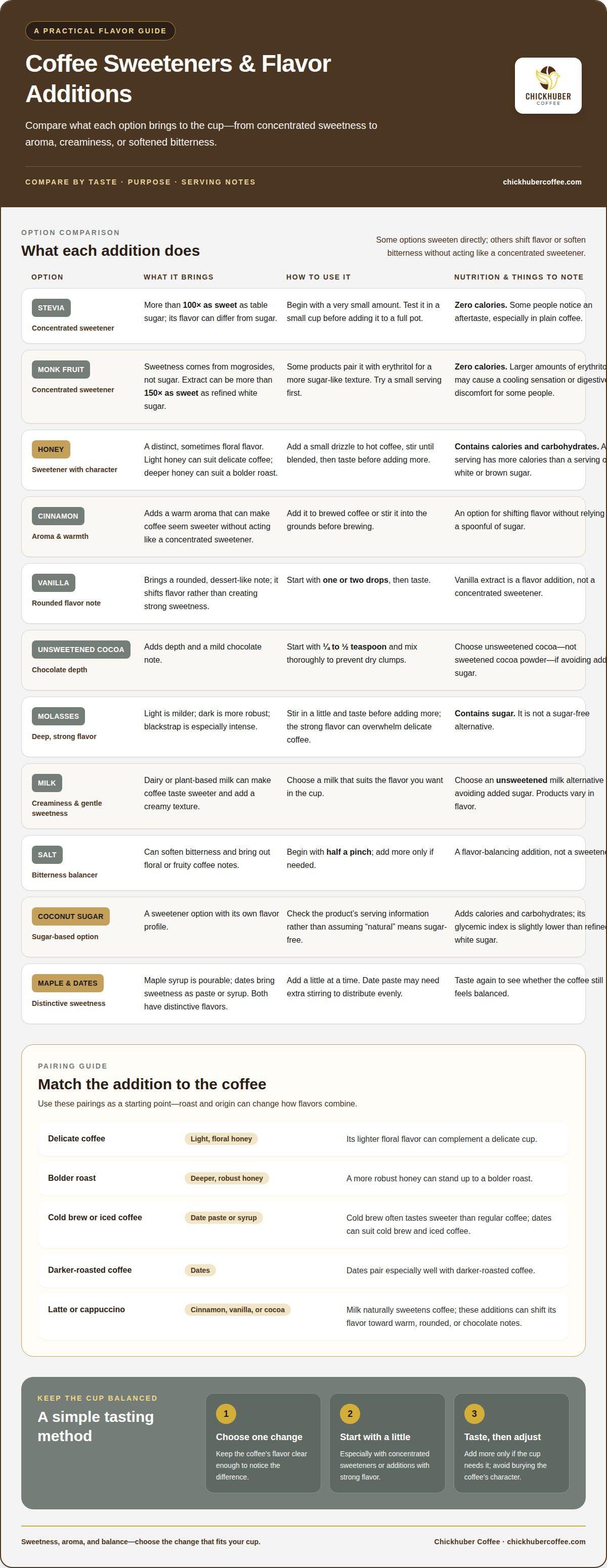
Sweeteners differ in more than taste. Stevia offers a zero-calorie option, while honey and coconut sugar add calories and carbohydrates. Monk fruit extract is also described as having zero calories. If you’re watching blood sugar, stevia, monk fruit, and erythritol are commonly chosen because they generally have little impact on blood glucose. They aren’t interchangeable, though: taste, ingredients, and serving size matter.
How many calories and carbohydrates do common coffee sweeteners add? Stevia and monk fruit extract are zero-calorie choices; honey and coconut sugar contribute calories and carbohydrates. The amount depends on the product and serving size, so check the serving information rather than assuming that “natural” means sugar-free.
Stevia comes from stevia leaves and is more than 100 times as sweet as table sugar, so begin with a very small amount. Its flavor can taste slightly different from sugar, with an aftertaste that some people notice more in plain coffee than in a milk-based drink. Test it in a small cup before adding it to a full pot. In espresso, a restrained amount helps preserve the coffee’s caramel or roasted notes instead of covering them.
Monk fruit gets its sweetness from mogrosides, not sugar, and extract can be more than 150 times as sweet as refined white sugar. Some products pair it with erythritol to create a more sugar-like texture. Do artificial sweeteners or sugar alcohols have health risks or side effects? Larger amounts of erythritol can cause a cooling sensation or digestive discomfort for some people. Try a small serving first, and notice how both the flavor and your own response change. That measured approach makes it easier to choose an alternative that fits your cup and your priorities.
2. What Can You Sweeten Coffee With Besides Sugar?
Flavor additions can make coffee seem sweeter without refined sugar. Cinnamon adds a warm aroma, while vanilla extract brings a rounded, dessert-like note. Neither acts like a concentrated sweetener, so use them to shift the flavor rather than create strong sweetness. Add cinnamon to brewed coffee or stir it into the grounds before brewing. For vanilla, start with one or two drops and taste.
Unsweetened cocoa adds depth and a mild chocolate note. Start with ¼ to ½ teaspoon and mix thoroughly to prevent dry clumps. Choose unsweetened cocoa, not sweetened cocoa powder, if you want to avoid added sugar. Cinnamon is another no-added-sugar option that may already be in your spice rack, adding aroma without a separate sweetener.
Molasses has a deeper flavor than cinnamon or vanilla. Light molasses tastes milder, dark molasses is more robust, and blackstrap has an especially intense profile. Stir in a little and taste before adding more, since its strong flavor can overwhelm delicate coffee. Molasses still contains sugar, so it isn’t a sugar-free alternative.
A tiny pinch of salt can soften bitterness and bring out floral or fruity coffee notes. Begin with half a pinch, then add more only if needed. Dairy or plant-based milk can also make coffee taste sweeter, with gentle sweetness and a creamy texture. Choose an unsweetened milk alternative if you’re avoiding added sugar, and keep in mind that products vary in flavor. Vanilla may complement a smooth cup, while cocoa can suit a bolder brew. Make one change at a time to keep the coffee’s flavor clear and see which addition works best.
3. Honey in coffee
Honey is sweeter than table sugar, but it still adds calories and carbohydrates. Treat it as a flavorful alternative, not a sugar-free sweetener. Start with a small drizzle in hot coffee and stir until blended. Taste before adding more. Honey’s distinct flavor can complement the coffee’s character, but too much may overwhelm delicate notes or make a bitter cup taste heavy.
Honey varieties differ in flavor, so match the taste to the coffee instead of reaching for a large spoonful. Light, floral honey can suit a delicate cup; deeper, more robust honey can stand up to a bolder roast. Use these pairings as a starting point. Roast and origin affect how the coffee’s flavors combine with honey, so adjust gradually and keep the first taste simple.
Maple syrup is another pourable option, while dates bring sweetness in paste or syrup form. These natural sweeteners have distinctive flavors rather than a neutral sugar profile. Add a little at a time, then decide whether the coffee still tastes balanced. Date paste may need extra stirring to distribute evenly. Honey powder is another format, but check its ingredients, since it can include other sweeteners or additives.
Keep the nutrition difference in mind. Honey contains calories and carbohydrates, and a serving has more calories than a serving of white or brown sugar. Its greater sweetness doesn’t erase that difference. If you’re monitoring sugar intake, portion size matters, and honey still contributes sugar. Use it sparingly, especially in a small espresso, where a little can quickly dominate. In a larger brewed cup, stir it in while the coffee is hot and taste before adding more. This lets honey round out the flavor without making every cup taste the same.
4. Sweeteners suited to different coffee styles
Match the addition to the roast and brewing method. Arabica beans generally taste sweeter and milder than Robusta, while medium roasting helps preserve sugars in the beans. A well-brewed cup can also bring out natural chocolate, caramel, fruit, or nut notes. Taste first, then choose an addition that complements those notes instead of covering them.
Cold brew often tastes sweeter than regular coffee because the extraction conditions differ. Date paste or date syrup can suit cold brew, iced coffee, and creamy espresso drinks. Dates also pair especially well with darker-roasted coffee. Add a little, stir thoroughly, and taste again to keep the coffee balanced rather than buried under sweetness.
Milk changes the flavor, too. A cappuccino or latte can taste sweeter because milk naturally sweetens coffee. For a flavor-forward cup, try cinnamon or vanilla; for a richer, dessert-like taste, consider cocoa. Coconut sugar has a slightly lower glycemic index than refined white sugar, but it still contains calories and can affect blood sugar. Its natural origin doesn’t make it calorie-free. Use it in moderation, as you would brown sugar or another caloric sweetener.
Do different coffee roasts and brewing methods affect perceived sweetness? Yes. Roast level influences the flavors you notice, and cold brew can taste sweeter than regular coffee. Try the same coffee with different brewing methods before adding more sweetener. For a practical test, brew a medium roast and taste it black, then add a little of one option. Compare it with a darker roast or cold brew. Keep the method consistent while testing additions so you can tell what actually changes the cup.
Ready to put the pairing into practice? Explore coffee options and choose a roast to match your preferred sweetener.
Chickhuber Coffee
Chickhuber Coffee offers coffees to pair with your preferred sweetener. Start with the coffee, not the add-in: a naturally rich or flavored coffee may need less extra sweetness to taste balanced. Try a straightforward blend with cinnamon or a little honey, then compare it with French Vanilla Flavored Coffee for a sweeter-tasting profile.
For a bolder cup, try Cowboy Blend alongside your choice of sweetener. Organic Honduras Coffee offers another option for exploring how a coffee’s roast character and additions change the cup. Taste each coffee before adding anything, make one adjustment at a time, and keep the addition modest. This simple routine helps you find a pairing you’ll want to repeat.
Contact Chickhuber Coffee to discuss which coffee might suit your preferred flavor profile.
Make Your Next Cup Your Own
Treat your next cup as a small experiment, not a permanent recipe. Choose one coffee, taste it plain, then adjust one ingredient. Notice what changes: sweetness, aroma, body, and whether the coffee still tastes like itself. This quick routine turns guesswork into a preference you can repeat.
Learning how to sweeten coffee without sugar is about shaping the cup around your taste, not finding one universal substitute. Your coffee choice is part of that process. Chickhuber Coffee offers 6 Bean Blend, Cowboy Blend, and Organic Honduras Coffee, giving you distinct options to explore as you refine your preferred cup.
Take your time, trust your palate, and keep experimenting. Start a conversation with Chickhuber Coffee when you’re ready to choose your next coffee. Make the next cup yours.
Frequently Asked Questions
What Can You Sweeten Coffee With Besides Sugar?
Options include stevia, monk fruit, honey, maple syrup, dates, milk, and flavorings such as vanilla or cinnamon. Choose based on the drink: a concentrated espresso may need less added flavor than a large mug, while milk can soften a strong brew. To keep the coffee’s own character clear, try one addition at a time and taste before combining ingredients.
Why Might You Want an Alternative Sweetener?
An alternative can help you manage sweetness, change a drink’s flavor, or avoid refined sugar. Stevia, for example, is a zero-calorie option, while honey contributes calories and carbohydrates. People monitoring blood sugar may consider sweeteners that generally have little impact on glucose, but ingredients and individual responses matter. Decide what matters most to you, then choose accordingly.
What are the best ways to sweeten coffee without sugar?
The best method depends on whether you want actual sweetness or just a sweeter impression. For concentrated sweetness, try a little stevia or monk fruit. For more aroma, add cinnamon or vanilla; for a creamy cup, use milk. Taste the coffee first, make one change, and adjust gradually. This makes it easier to find a repeatable combination without masking the brew.
How do stevia, monk fruit, and other zero-calorie sweeteners taste in coffee?
Stevia can taste noticeably different from sugar, and some people detect an aftertaste, especially in plain black coffee. Monk fruit is another concentrated option; some blends include erythritol for a more sugar-like texture. Roast and milk content can affect how these flavors come through. Try each in a small serving before deciding which suits your regular cup.
Can cinnamon, vanilla, or cocoa make coffee taste sweeter without sugar?
Yes, these ingredients can make coffee seem sweeter through aroma and flavor, but they don’t sweeten it like sugar. Cinnamon brings warm spice, vanilla adds a rounded scent, and unsweetened cocoa contributes a chocolate note. Vanilla, for example, can suit a milk-based drink, while cocoa can complement a bold brew. Choose unsweetened ingredients to avoid adding sugar unintentionally.
How much honey, maple syrup, or agave should I add to coffee?
Start with a little, stir well, then taste before adding more. Honey is sweeter than table sugar, and agave syrup is roughly one-and-a-half times sweeter, so either can quickly overwhelm a delicate cup. Maple syrup also brings its own flavor. The right amount depends on serving size and your preferred sweetness; keep additions modest if you’re monitoring calories or carbohydrates.