

How to Steep Green Tea and Measure Loose Leaves
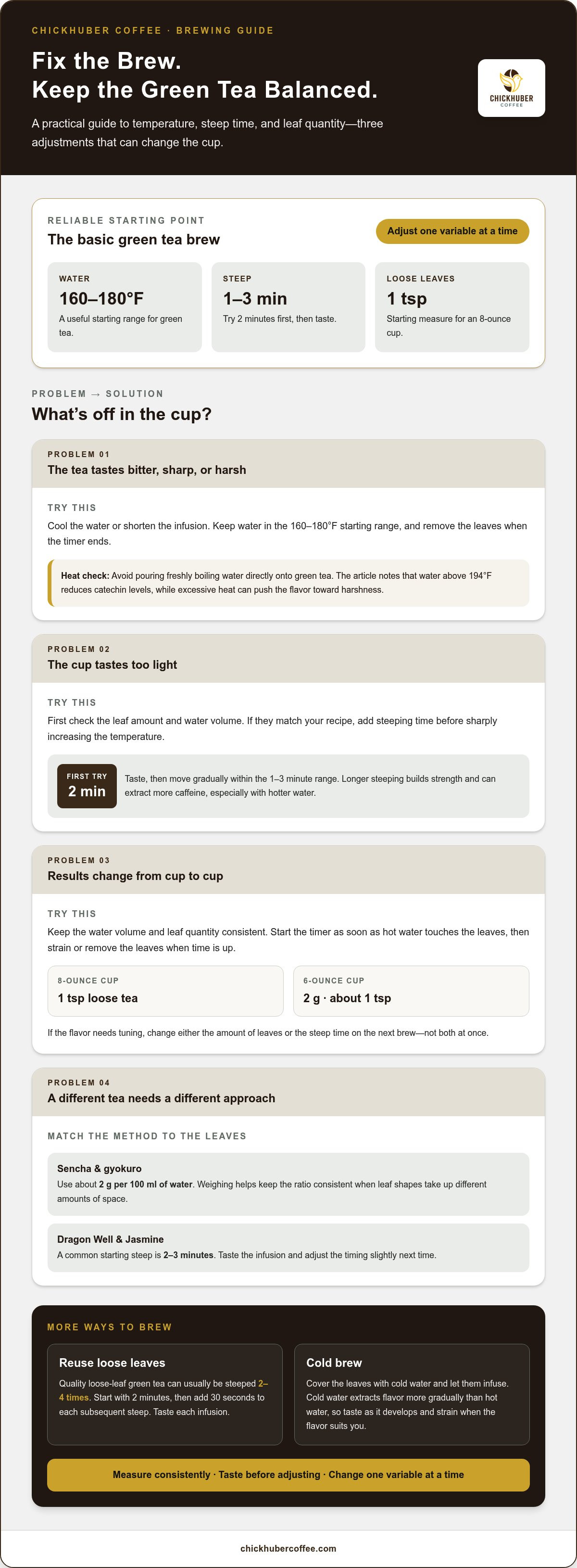
Green tea doesn’t need a long soak. For a reliable starting point, steep it for 1-3 minutes in water at 160-180°F, then adjust the time to suit your taste. If you’re wondering how long to steep green tea, start at the shorter end for a lighter cup and give the leaves more time for a stronger brew.
That range is a useful starting point, but Japanese green teas often need a lighter touch. Sencha and gyokuro have distinct steeping needs, and water temperature can shift the flavor from fresh and delicate to bitter and sharp. With the right timing, each cup tastes more balanced.
This guide explains how to measure loose leaves, cool water to a tea-friendly temperature, and steep Japanese favorites such as sencha, gyokuro, genmaicha, and hojicha. You’ll find practical starting points, clear steps, and simple ways to adjust the flavor. No guesswork, just a better brew, one cup at a time.
Key Takeaways
- Start with water at 160-180°F and a short steep, then adjust the brew to your taste.
- Measure leaves against your water volume; a teaspoon per cup is a practical starting point for loose green tea.
- Use a lighter brewing approach for delicate Japanese teas, and tailor the timing to the variety.
- Keep an eye on steep time and temperature to help prevent a bitter, harsh cup.
- Learn how brewing loose leaves differs from using tea bags, so you can fine-tune each cup.
Why are green teas better at lower temperature?
Use moderate heat and controlled timing to bring out green tea’s fresh flavor. The right balance depends on the leaves, water temperature, and how strong you like your cup.
-
Adjust Water Temperature for Green Tea
Heat water to 160-180°F, then pour it over the leaves. This range gives green tea a strong starting point without the intensity of boiling water. Water above 194°F reduces catechin levels, while excessive heat can push the cup toward a harsher flavor. For comparison, black tea is commonly brewed with hotter water, so don’t automatically use the same kettle setting.
-
Balance Water Temperature and Steeping Time
Start with a 2-minute steep, then adjust one variable at a time. Lower water temperature allows green tea to steep longer, while hotter water extracts flavor more quickly. If the cup tastes too light, add steeping time before raising the temperature sharply. If it tastes bitter, shorten the infusion or cool the water. This keeps each adjustment deliberate and easy to repeat.
- Match the temperature to the flavor you want. Green tea generally tastes best when brewed between 140°F and 185°F, a broad range that lets you tune the cup. At 140°F, amino acids dissolve into the water. Tannins dissolve at 176°F, contributing a more pronounced, potentially astringent taste. Treat these temperatures as useful guides, then judge the brewed tea by its balance and finish.
- Use the leaves as your guide. Fine, delicate leaves can release flavor quickly, while larger or tightly rolled leaves may need more time to open. Chinese green teas such as Dragon Well and Jasmine commonly steep for 2-3 minutes. Begin within that range, taste the infusion, and make a small timing adjustment next time. Keep the water temperature steady so you can identify what changed.
- Reuse quality loose-leaf green tea for another infusion. It can usually be steeped 2-4 times; start with 2 minutes, then add 30 seconds to each subsequent steep. The opened leaves release flavor differently with each pour, so taste each infusion rather than expecting an identical cup. Remove the leaves when the flavor reaches your preferred strength.
- Try cold brewing for a gentler extraction. Cover the green tea leaves with cold water and let them infuse until the flavor suits you, then strain. Cold water extracts flavor more gradually than hot water, so taste as the infusion develops. Adjust the steep to your preferred strength instead of following a hot-steeping schedule.
How Long Do I Steep Green Tea?
Use a measured leaf-to-water ratio, then steep green tea for 1-3 minutes. Keep the amount of tea and water consistent so timing changes produce useful results.
- Measure the water before adding leaves. For an 8-ounce cup, begin with 1 teaspoon of loose green tea. A six-ounce cup can use 2 grams, about 1 teaspoon, so weighing leaves gives a more consistent measure when leaf size varies. Japanese green teas can benefit from a consistent leaf-to-water ratio, adjusted to taste.
- Choose a starting steep time of 1-3 minutes. For a first cup, try 2 minutes, then taste before extending the infusion. A shorter steep gives the leaves less time to release flavor; a longer one builds strength and can also extract more caffeine, especially with hotter water. Adjust one factor at a time.
- Cool boiling water before it reaches the leaves. After boiling, wait 2-3 minutes before brewing, or use a thermometer to bring the water into the 160-180°F range. Water removed from heat cools by about 10°F per minute, so a thermometer helps account for differences in kettle size and room conditions. Avoid pouring freshly boiling water directly onto green tea.
- Use water that tastes clean on its own. Strong mineral, chlorine, or stale flavors can carry into the cup and mask the tea’s character. Heat only the amount you need, then pour it over the measured leaves. Keep the water volume consistent between brews to compare flavors accurately.
- Start your timer as soon as hot water touches the tea leaves. Strain or remove the leaves when the timer ends, rather than letting them sit in the cup while you drink. For a lighter result, stop closer to 1 minute; for more strength, continue toward 3 minutes. Write down the time and ratio that suit your preferred cup.
- Repeat the same setup before changing the ratio. If a 2-minute infusion tastes weak, check that you used the intended 8 ounces of water and 1 teaspoon of leaf tea. Then adjust either the amount of leaves or the steep time on your next brew. Changing both at once makes it harder to identify what improved the flavor.
How much loose-leaf tea should I use per cup?
Measure the leaves in proportion to the water, then choose loose tea or a bag to suit your routine. Keep the quantity and steeping time consistent as you taste, and change one variable at a time.
- Start with 1 teaspoon of loose-leaf green tea per 8-ounce cup. For a smaller six-ounce cup, use 2 grams, about 1 teaspoon. These starting measures give you a repeatable base. If you prefer a stronger cup, adjust the amount gradually rather than changing the leaf quantity and brewing time together.
- Weigh Japanese green tea when you want a more consistent ratio. Sencha and gyokuro generally use about 2 grams of tea per 100 milliliters of water. A scale helps because whole leaves can take up different amounts of space in a teaspoon. Keep a note of the amount and cup volume that produce the flavor you prefer.
- Choose a measuring method and stick with it. A tablespoon per 8 ounces of water is another suggested starting amount for loose-leaf tea. Leaf shape and size affect how much fits in a spoon, so volume measures can differ between teas. Weighing the leaves makes comparisons easier when you switch from a broad leaf to a tightly rolled one.
- Use a tea bag when you want a simple, pre-portioned brew. Green tea bags generally steep for one to three minutes; check the cup after 1.5 minutes because bags can steep faster than loose leaf. Remove the bag when the flavor reaches your target. Leaving it in while drinking continues the infusion and can shift the taste.
- Give loose leaves room to infuse, then strain them when the timer ends. Loose-leaf green tea usually steeps for 1-3 minutes, while bagged green tea also uses a one-to-three-minute range. Start with the same water temperature for either method. Taste each brew before changing the time, so your next adjustment has a clear purpose.
- Adjust flavored green tea according to its form. Whole-leaf flavored green teas steep for two to four minutes in water at 158 to 176°F. Bagged flavored green teas steep for one to three minutes. Don’t pour boiling water onto the leaves; use a suitable green-tea temperature, then taste and fine-tune the infusion.
Avoiding bitter or over-extracted tea
Balance green tea by controlling heat, timing, and contact with the leaves. Use each brew to see which adjustment improves the flavor.
-
Identify Why Green Tea Tastes Bitter
Check the kettle temperature and steeping time first. Green tea brewed above 180°F can turn harsh, while steeping it for more than 3 minutes can produce bitter, astringent flavors. Hotter water and longer steeping can make green tea taste more drying and bitter. Fine leaves may also infuse faster than large, rolled leaves.
-
Control Steeping Time and Extraction
Set a timer and taste the tea before extending the infusion. Steeping longer in hotter water extracts more caffeine, but a prolonged brew can also taste more bitter and less balanced. How does steeping time affect bitterness, flavor, and caffeine? Longer contact can intensify flavor and caffeine extraction, but it may also add harshness that masks the tea’s sweeter notes.
-
Prevent Bitter Green Tea
Begin with water at about 175°F and keep the steep under 3 minutes. Taste the infusion at the 2-minute mark, then remove the leaves when the flavor suits you. If the cup tastes sharp, lower the water temperature or shorten the next steep. Change one variable at a time to see what restores balance.
- Use a thermometer when your kettle offers only a boiling setting. Green tea generally should not be brewed above 180°F to help avoid bitterness. Let boiled water cool before pouring, then check its temperature rather than relying on the kettle’s “keep warm” label. A consistent starting temperature makes each adjustment easier to judge.
- Match the leaf amount to the water volume. Too many leaves in a small cup can create an intense infusion, even when you keep the steep within 3 minutes. Measure the tea and water consistently, then reduce the leaves slightly if the result tastes overly concentrated. Don’t compensate for excess leaf with a much shorter, rushed brew.
- Remove the leaves promptly after steeping. A strainer or infuser lets you separate them from the finished tea, preventing continued extraction as the cup sits. For a second infusion, add 30 seconds to the previous steeping time and taste again. Loose leaves can release flavor differently with each pour, so use the cup’s finish as your guide.
- Don’t carry black tea and oolong brewing habits over to green tea. Green tea usually needs cooler water than boiling water, as excessive heat can make its leaves bitter. Rolled leaves may need time to open, but that doesn’t mean they need hotter water. Adjust the steep carefully to preserve the tea’s natural sweetness.
Steeping time for Japanese green teas
Match the steeping time to the Japanese green tea variety. Start with a shorter infusion for delicate leaves, then adjust to taste.
- Begin with sencha at 1-2 minutes. Higher-grade sencha can steep for 60-90 seconds, while some good sencha is brewed for just 30 seconds. Use 160-170°F water as a practical starting range. Strain promptly, then taste for fresh, aromatic notes before extending the next infusion.
- Brew gyokuro with a lighter touch. A recommended temperature range is 140-160°F, while another suggested range is 122-140°F. Start toward the cooler end for a delicate cup, and keep the infusion brief. Gyokuro’s shaded cultivation develops a distinctive character that can be overwhelmed by hotter water or prolonged steeping.
- Give genmaicha a fuller infusion than high-grade sencha. Steep it for two minutes in 175-185°F water, then taste before changing the timing. The toasted rice adds a warm, roasted note beside the green tea. If that aromatic balance tastes too strong, shorten the next infusion rather than raising the temperature.
- Use about 3 minutes for bancha or kukicha. These Japanese green teas can handle a longer infusion than delicate sencha and gyokuro. Start with 70-80°C water, then strain at the 3-minute mark. Taste the result before adjusting; longer steeping can draw out a more forceful flavor.
- Steep hojicha for two to four minutes in 175°F water. Its roasted leaves give the infusion a different profile from sencha, so use the range to tune strength. Start at two minutes for a lighter cup, then extend toward four minutes if you want a more pronounced roasted flavor.
- Measure Japanese tea by weight when possible. Sencha and gyokuro generally use about 2 grams of leaves per 100 milliliters of water. A consistent ratio makes it easier to compare a 60-second sencha infusion with a longer bancha brew. Keep the teapot volume steady when testing different steep times.
- Adjust one variable at a time. For example, hold sencha at 160-170°F and change its steep time before altering the temperature. For genmaicha, keep the two-minute infusion and 175-185°F water steady while tasting. This simple method shows whether timing or heat better suits each Japanese tea.
Chickhuber Coffee: 6 Bean Blend
Chickhuber Coffee’s 6 Bean Blend is a coffee option for readers ready to switch from green tea to a brewed coffee. After dialing in tea’s leaf amount, water temperature, and steep time, you can use that same deliberate approach to explore a different cup. Choose this blend when you want coffee instead of another green tea infusion, and keep your tea routine for delicate Japanese varieties like sencha or gyokuro.
Prefer tea today? Stay with the method that suits your leaves. Ready for coffee? Visit chickhubercoffee.com to explore the 6 Bean Blend.
Make Your Next Cup a Deliberate Choice
Treat each brew as a small experiment. Note the leaves, water, and timing you used, then record what you liked about the flavor. This simple habit helps you repeat a cup you enjoy and make thoughtful adjustments next time. As you refine how long to steep green tea, let your taste guide the final choice.
If you’re ready to explore beyond tea, Chickhuber Coffee offers its 6 Bean Blend, Cowboy Blend, and Organic Honduras Coffee. For tea, browse its loose-leaf tea blends and choose what fits your next brewing session. Keep your routine flexible: a familiar favorite one day, a new flavor the next.
Contact Chickhuber Coffee about your tea interests and take your next step toward a cup that feels right for you.
Frequently Asked Questions
Does steeping time change the caffeine in tea?
Yes. Longer steeping in hotter water extracts more caffeine from tea leaves. To compare two cups, keep the leaf amount, water volume, and temperature the same, then change only the steeping time. This makes it easier to notice how extraction changes. Some people briefly infuse the leaves and discard that liquid to reduce caffeine, but the next cup’s caffeine level still depends on its brewing conditions.
How do I achieve the right temperature?
Use a thermometer or temperature-controlled kettle for the most direct approach. Without one, bring the water to a boil, then let it cool before pouring. Water cools at about 10°F per minute after leaving the heat, so the wait depends on its starting temperature and surroundings. For a repeatable routine, use the same kettle and cooling method each time, then adjust based on the cup’s taste.
Why does my green tea taste bitter?
Overly hot water or a long infusion is a common reason. Green tea can taste harsh when brewed above 180°F or steeped for more than 3 minutes. Check both variables before changing the leaf amount. For example, if a cup tastes bitter after a long steep, shorten the next infusion while keeping the temperature steady. That makes it easier to identify the cause and restore a cleaner finish.
Why is water temperature important?
Temperature changes which compounds dissolve into the cup and how quickly they extract. Amino acids dissolve at 140°F, while tannins dissolve at 176°F, influencing the balance of the finished tea. That’s why a small shift in heat can change a cup’s character, even with the same leaves and steep time. Choose a temperature that suits the tea, then keep it consistent while testing other brewing adjustments.
How long should green tea steep?
For how long to steep green tea, use 1-3 minutes as a practical range, with 2 minutes as a starting point. Start your timer as soon as water meets the leaves, and separate the leaves from the brewed tea when time is up. If you’re trying a new tea, taste the first infusion before adjusting the next one. This keeps the change deliberate instead of altering several brewing factors at once.
What is the ideal water temperature for steeping green tea?
A useful general range is 160-180°F. The best point within it depends on the tea and the flavor you want. Try the lower end for delicate leaves or a gentler cup; move higher if the infusion tastes too light. Avoid boiling water, which reaches 212°F and is too hot for green tea. A thermometer makes it easier to repeat a temperature that works for a specific tea.
How does steeping time vary by green tea type, such as sencha, gyokuro, and jasmine?
Sencha and gyokuro are generally steeped for 1-2 minutes, while Chinese green teas such as jasmine commonly steep for 2-3 minutes. Gyokuro is especially delicate, so use cooler water and taste early rather than assuming it needs a longer infusion. For jasmine, begin with the shorter end of its range if you want its aroma to stay balanced with the tea’s flavor.
How much green tea should be used per cup?
For an 8-ounce cup, start with 1 teaspoon of loose green tea. Japanese teas such as sencha and gyokuro generally use about 2 grams per 100 milliliters of water. The weight-based measure is useful when leaf shapes make spoonfuls inconsistent. To tune the cup, keep the water volume fixed and adjust the leaf amount slightly on a later brew, rather than changing both at once.