

How to Read a Coffee Cupping Score
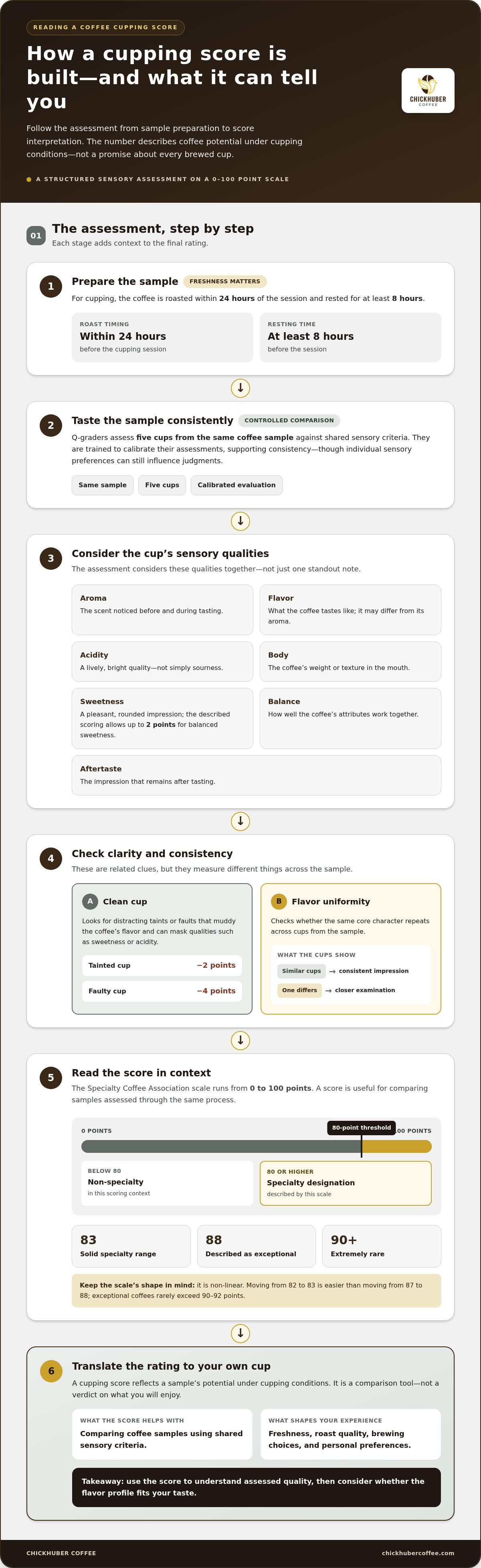
A high cupping score is a useful signal, not a guarantee you’ll love the coffee. To understand what a coffee cupping score means, start with the Specialty Coffee Association’s 0-to-100-point scale: it rates a sample’s qualities, including aroma, flavor, acidity, body, sweetness, balance, and aftertaste.
A score of at least 80 points earns the specialty designation described by this scale. But the number doesn’t tell the whole story. Cleanliness and consistency matter, while freshness and roast quality shape what you actually taste in the cup.
That’s the key: a score reflects a coffee’s potential under cupping conditions, not a promise about every brew. Learn how the score is built, what its ranges suggest, and why your preferences still matter. You’ll be better equipped to interpret a rating, understand its limits, and choose coffee that suits your taste and routine.
Key Takeaways
- Separate a clean cup from flavor uniformity: one concerns unwanted defects, the other whether the sample’s cups taste consistent.
- Look beyond a single total and consider how individual sensory qualities shape the coffee’s overall evaluation.
- Keep sample handling in mind: coffee for cupping is roasted within 24 hours of the session and rested for at least 8 hours.
- Once you know what you enjoy, Chickhuber Coffee’s 6 Bean Blend offers a blend to explore as your next cup.
What Is a Cupping Score?
To understand what a coffee cupping score measures, think of a structured sensory assessment, not a promise about every brewed cup. The Specialty Coffee Association scale turns several observed qualities into a score from 0 to 100 points.
Cupping Score Definition and Scale
A cupping score is a numerical assessment of a coffee sample’s sensory quality under controlled tasting conditions. It helps buyers compare samples using shared criteria, rather than relying only on a product description or personal impression.
The score reflects a sample’s potential, not a guaranteed result in your mug. Brewing choices, freshness, and personal preferences all shape the experience, so treat the number as a comparison tool, not a verdict on what you’ll enjoy.
The 100-Point Scale and Specialty Threshold
The Specialty Coffee Association cupping scale runs from 0 to 100 points, and a coffee needs at least 80 points to receive the specialty designation described by this scale. Scores below 80 are categorized as non-specialty in this scoring context.
Within specialty coffee, a score offers more detail than a simple pass mark. For example, 83 points falls in the solid specialty range, while 88 points is described as exceptional. A 90-or-higher score is extremely rare, and exceptional coffees rarely exceed 90-92 points. The scale is non-linear: moving from 82 to 83 is easier than moving from 87 to 88.
Cupping Scores Versus Coffee Ratings
A cupping score is a structured assessment recorded on the 100-point scale; a coffee rating can be any evaluation, including a star score or personal review. That distinction matters when comparing labels: a cupping score follows defined sensory criteria, while a customer rating may reflect preference, brewing method, or overall satisfaction.
For example, a five-star review and an 85-point cupping score don’t measure the same thing. Read the score as a quality comparison, then consider whether the described flavor suits your taste.
Calculating and Recording Scores
Cuppers assess the sample’s sensory qualities and record their evaluations against the scoring criteria. Cuppers evaluate the listed cup-quality criteria and record their overall assessment.
Q-graders score five cups from the same coffee sample. They’re trained to calibrate their assessments, which supports consistency, though personal sensory preferences can still influence judgments. The score is most useful when comparing samples assessed through the same process and remembering what it represents: coffee potential, not a guaranteed flavor experience.
Clean cup and flavor uniformity
Cleanliness and consistency help distinguish a clear, repeatable profile from cups with defects or uneven flavors. Together, they show whether the coffee’s character comes through reliably across the sample.
Clean Cup
A clean cup has no distracting taints or faults that muddy the coffee’s flavor. That matters because an unwanted taste can mask qualities the taster is assessing, such as sweetness or acidity.
In the described scoring, a tainted cup deducts 2 points, while a faulty cup deducts 4. These deductions show why a defect can affect the total even when other qualities seem appealing. For example, a sample with a clear fruit note may still lose points if an unpleasant flavor disrupts that impression.
Keep the distinction practical: a clean cup lets the coffee’s own flavors come through without an obvious defect taking over. The score reflects that assessment, not whether every drinker will enjoy the flavor profile.
Flavor Uniformity
Flavor uniformity describes how consistently the coffee tastes across cups from the same sample. Cuppers compare the cups to see whether the same core character appears repeatedly, rather than relying on one standout sip.
For example, if several cups have similar sweetness and fruit character, that pattern supports a consistent impression. If one cup tastes sharply different, the variation may prompt the cupper to examine the sample more closely. Uniformity helps show whether the coffee’s profile holds together across the tasting.
This is useful when comparing coffees: a compelling flavor in one cup tells only part of the story. Consistent cups make the sample’s character easier to recognize and describe, while noticeable differences can complicate the assessment. Clean cup and uniformity are related but distinct: one concerns distracting defects, the other repeatability across the sample.
Use both clues to interpret the result. A clean, consistent sample presents a clearer picture of its flavor, while defects or variation can make its qualities harder to assess with confidence.
Coffee quality assessment attributes
A cupping assessment considers aroma, flavor, acidity, body, sweetness, balance, and aftertaste. Each attribute reveals a different part of the coffee’s profile. Read them together to understand why a sample tastes vivid, smooth, or uneven, rather than treating one appealing note as the whole picture.
Aroma is the scent of the coffee, noticed before and during tasting. It can suggest what to look for in the flavor, such as a floral or nut-like impression. Flavor describes what the cup tastes like. Aroma and flavor may reinforce each other, but they aren’t interchangeable: a fragrant sample can taste different once sipped.
Acidity describes a coffee’s lively, bright quality, not simply whether it tastes sour. A cupper considers how that brightness fits the rest of the profile. Body is the coffee’s weight or texture in the mouth. One sample, for example, may feel light and tea-like, while another feels rounder and fuller.
Sweetness contributes a pleasant, rounded impression that can balance sharper flavors. In the described scoring, a coffee can earn up to 2 points for a balanced level of sweetness. That doesn’t mean the cup must taste sugary. Notice whether sweetness supports the flavor or seems absent beside strong acidity.
Balance asks how well the attributes work together. Bright acidity can suit a light body, while a heavy body may support deeper flavors. Neither combination is automatically better. The cupper considers whether one feature overwhelms the others or whether aroma, flavor, and texture form a coherent whole.
Aftertaste is the impression left after swallowing. Notice its character and whether it fades cleanly or lingers with a distracting note. For a practical read, consider the attributes in sequence: smell the aroma, taste the flavor, assess acidity and body, then consider sweetness, balance, and aftertaste. This approach turns a score into a clearer sensory description.
Freshness, roast quality, and personal taste
A cupping score describes a sample at a particular tasting, not every cup forever. Roast timing and freshness affect what tasters experience, while personal preferences shape how much you enjoy those qualities. Read the number in context: a strong result reflects potential under the tasting conditions, not a permanent promise about flavor.
Timing matters during evaluation. The sample coffee should be roasted within 24 hours before cupping, then rested for at least 8 hours before tasting. Those steps help make the tasting conditions more consistent. Roast quality also matters: an uneven or poorly handled roast can change the flavor expression, even when the green coffee showed promise.
Freshness can shift the experience after scoring. A coffee that earned 89 points in a lab may taste different after 9 to 12 months, particularly if stored improperly. That lab score remains a record of the sample assessed then. It doesn’t mean the coffee will taste identical later. Storage and time affect the cup you actually brew.
Personal taste adds another layer. One drinker may prefer lively acidity; another may favor a rounder, sweeter profile. A fresh, well-roasted 86-point coffee can taste better to you than a 90-point coffee past its prime. That comparison doesn’t invalidate either score. It shows why ratings and enjoyment aren’t interchangeable: the number assesses coffee quality, while your palate decides what tastes best to you.
Use the score to compare assessed samples, then consider roast freshness and the flavors you prefer. To put those preferences into practice, explore coffees for your next cup and notice which profiles suit your routine.
Chickhuber Coffee: 6 Bean Blend
Chickhuber Coffee’s 6 Bean Blend gives you a coffee to explore after learning how cupping scores work. Use the score as one guide, then pay attention to the flavors and qualities you enjoy in your own cup. That’s how you connect a tasting assessment with your personal preferences.
If you want to compare different coffee options, Chickhuber Coffee also offers Cowboy Blend, Organic Honduras Coffee, and French Vanilla Flavored Coffee. Choose a coffee that interests you, taste it attentively, and note what stands out. Your own observations can make future score descriptions more meaningful.
Visit chickhubercoffee.com to explore the 6 Bean Blend and other coffee options.
Put Your Tasting Skills to Work
Let your next cup help sharpen your palate. Pause before the first sip and notice what draws your attention, then decide which qualities you’d seek again. Over time, your preferences become a practical guide, helping you choose coffee with more intention instead of relying on a number alone.
Knowing what a coffee cupping score can tell you is useful; knowing what you enjoy is personal. Use both perspectives to make your next choice, and stay curious as your tastes evolve. A tasting note doesn’t need to sound technical. A few clear words about what you liked can make the experience more rewarding.
Ready to explore coffee for your next cup? Contact Chickhuber Coffee and take your next step with confidence.
Frequently Asked Questions
What is a coffee cupping score?
A coffee cupping score is a structured quality assessment of a sample. It gives buyers and tasters a shared way to compare samples beyond marketing descriptions or personal reviews. When two coffees have different scores, for example, the numbers can frame a closer comparison, while tasting notes explain the specific qualities behind each result.
How is coffee scored on the 100-point cupping scale?
Cuppers assess listed cup-quality criteria, assigning each a score from 0 to 10, then record an overall total on the 100-point scale. Q-graders score five cups from the same sample. A tainted cup deducts 2 points, and a faulty cup deducts 4, so a defect can affect the final result even if other qualities stand out.
What are the Specialty Coffee Association cupping score categories and thresholds?
The specialty threshold is 80 points. Scores below 80 are described as non-specialty; 80-82 is entry-level specialty, 83-85 is solid specialty, 86-87 is higher-end specialty, and 88-89 is exceptional. Scores of 90 or more are extremely rare. These bands help interpret a score’s position, but the number still represents an assessment of the sample.
What attributes are assessed in a coffee cupping score?
Cuppers assess aroma, flavor, acidity, body, sweetness, balance, and aftertaste. Each describes a different part of the tasting experience. A coffee might have lively acidity but a lighter body, or a lingering aftertaste alongside balanced flavor. Looking across the attributes gives a more useful picture than focusing on one tasting note alone.
What does a score of 80, 85, or 90 mean for coffee quality?
An 80 reaches the specialty threshold, while 85 falls within the solid specialty range. A score of 90 signals an extremely rare result. These numbers help compare assessed samples, but they don’t rank personal enjoyment: you might prefer a lower-scoring coffee’s flavor profile. Treat the score as one useful reference, then consider the tasting notes and your own palate.
Is an 80-point coffee considered specialty coffee?
Yes. Under the described cupping scale, a coffee needs at least 80 points to receive the specialty designation, so 80 meets the threshold. It sits at the entry point rather than in a higher score band. That classification describes the assessment result; your own preference still depends on the coffee’s flavors and how they suit your taste.