

How to Brew a Smooth, Filter-Free Cup of Cowboy Coffee
To learn how to brew cowboy coffee, heat water until it’s just below boiling, add coarse grounds, and steep for about 4 minutes. Start with 2 tablespoons of coffee per 8 ounces of water, then let the grounds settle before pouring. No paper filter. No machine. Just a pot, water, coffee, and a method built for a bold, straightforward cup.
If your cup turns muddy or bitter, check the grind and heat. Coarse grounds leave fewer fine particles behind, while water just below boiling and a short steep can help keep the taste smooth. This guide covers the recipe, how to settle the grounds, and how cowboy coffee compares with French press and pour-over. Cowboy coffee and French press both use immersion, but cowboy coffee has no filter; pour-over separates grounds as water passes through them. Know the difference, brew with confidence, and make a cup that suits your routine.
Key Takeaways
- Start with 2 tablespoons of coffee for every 8 ounces of water, then adjust the strength to your taste.
- Choose coarse grounds and give them time to settle for a cleaner, less bitter cup.
- Use a brief steep and compare the unfiltered method with French press immersion and pour-over brewing.
- Explore Chickhuber Coffee’s Cowboy Blend as a coffee option for your next pot.
How Do You Make Cowboy Coffee?
If you’re learning how to brew cowboy coffee, the process is simple: measure the grounds, heat the water, steep, then pour carefully. The coffee-to-water ratio and steeping time shape the flavor, so follow each step closely.
Measure the Coffee-to-Water Ratio
- Start with 2 tablespoons of ground coffee for every 8 ounces of water. This ratio gives you a practical baseline; adjust the amount to make the next pot stronger or milder. The coffee-to-water ratio is the main factor affecting strength, so change the grounds before changing several brewing steps at once.
- Scale the same proportion to your pot. For example, use 4 tablespoons for 16 ounces of water. Choose coarse grounds if you have them, and measure consistently so each batch gives you a useful comparison. Cowboy coffee has no paper filter, so avoid pouring the loose grounds into your cup.
Brew Cowboy Coffee Step by Step
- Heat the measured water in a pot until it boils, then take it off the heat. Let it stand for 30 seconds; this brings the water to 200°F. Add the measured coffee grounds and stir to wet them evenly. These steps make how to brew cowboy coffee easy to repeat from batch to batch.
- Let the coffee brew for 2 minutes, then stir again. Give it 2 more minutes to steep, making the total brewing time 4 minutes. Sprinkle a little cold water over the grounds at the end, then wait for them to sink before serving. Pour slowly, leaving the settled grounds at the bottom.
Avoid Common Brewing Mistakes
- Keep the pot off direct heat after the water boils. Boiling the grounds can make the flavor worse; a brief steep avoids prolonged heating. Don’t rush the settling stage, either. Grounds still floating at the surface can end up in the cup, especially when you pour quickly.
- For a smoother cup, leave the last tablespoon in your mug rather than drinking the sediment. Make only the amount you expect to drink for the freshest flavor. Reheating properly stored leftover coffee is generally safe, but it can taste stale or harsher; refrigerate leftovers promptly and reheat gently.
Why coarse grounds and brief heating may reduce bitterness
Choose a coarse grind, control the heat, and let the grounds settle before pouring. These steps can reduce floating particles and help keep the cup cleaner.
Choose Coarse Grounds and Brief Heating
- Use coarse grounds to limit fine particles floating in the pot. Fine ground coffee can make cowboy coffee murky and over-extracted, which may add harsh flavors. Coarse particles are easier to leave behind when you pour, so skip a fine grind when brewing without a filter.
- Keep the pot from simmering with the grounds. Brief heating limits continued extraction, which can make flavor taste more bitter. After steeping, let the coffee rest for 1-2 minutes so grounds sink toward the bottom. Don’t stir during this settling period; stirring lifts sediment back into the liquid.
- For settling without cold water, leave the pot undisturbed after brewing. Set it on a mild slope if practical, so grounds gather in one corner. Then pour slowly from the opposite side. A steady, controlled pour helps keep the settled layer from spreading through the cup.
Leave the Last Grounds in the Pot
- Pour from the pot gently and stop before the bottom layer reaches your mug. Grounds collect there as they settle; tipping the pot sharply can send them swirling into the pour. Leaving some coffee behind is better than transferring concentrated sediment into each cup.
- If grounds remain suspended, add ½ cup of cold water after brewing to help them sink faster. Wait for the particles to settle again before serving, rather than pouring immediately. Cold water is a settling aid, not a replacement for the resting period.
- Pour each serving slowly, keeping the spout close to the mug. Avoid scraping or shaking the pot, which can disturb the grounds. Leave the last tablespoon in each cup instead of drinking the bitter solids. That final pause protects the cleaner flavor you worked to build.
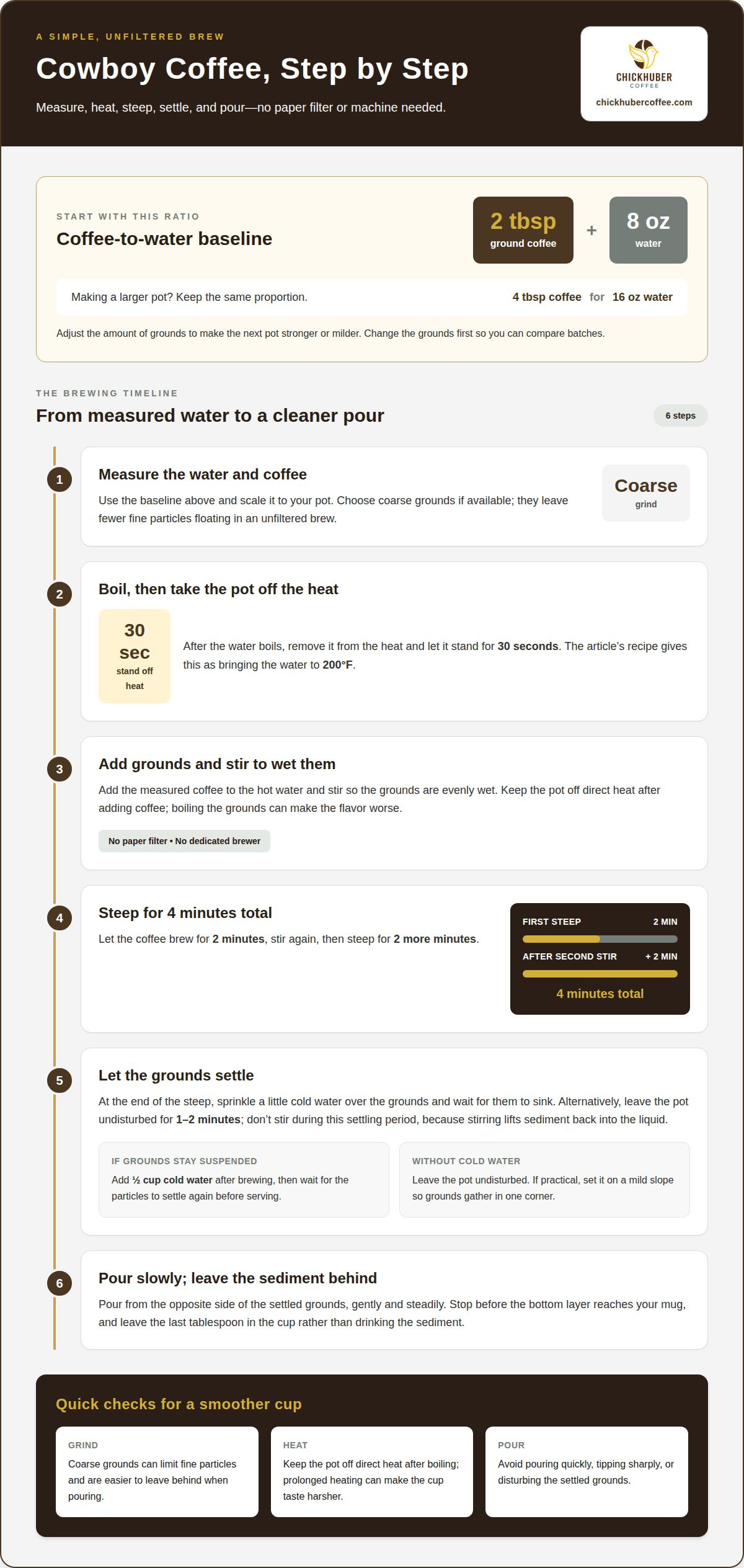
Cowboy coffee recipe and brewing steps
A pot, water, and ground coffee are all you need to brew cowboy coffee. Use this practical recipe at camp or on the stovetop, then manage the heat and pour carefully.
Choose a Pot or Kettle
- Use a sturdy pot deep enough to hold the water and coffee, with room to stir without splashing. For loose grounds, a pot can be a practical vessel for steeping the coffee. Choose a pouring lip if available, and avoid filling the vessel to its brim, which leaves little room to stir safely.
Set Up Equipment-Free Camping Brewing
- Pack ground coffee and a pot; cowboy coffee needs no paper filter or dedicated brewer. At camp, heat water in the pot, add the grounds, and stir with a clean utensil. Keep the pot stable while it rests, then pour slowly so settled grounds stay behind. The same simple setup works wherever you can heat water.
Choose a Brewing Heat Source
- Heat the pot over a campfire or on a stovetop, then move it away from direct heat before steeping. A stovetop makes it easier to control the heat; a campfire works when you can shift the pot away from the hottest spot. Don’t keep the coffee boiling after adding grounds, because prolonged heating can make the cup taste harsher.
Set the Brewing Temperature
- For a one-quart batch, bring water to a boil, remove it from the heat, and let it stand for 30 seconds; this brings it to 200°F. Add ground coffee, stir, and let it steep before stirring again. Let it brew for 2 more minutes, then rest before pouring so the grounds can settle.
Cowboy coffee compared with French press and pour-over
Choose a method based on the cup you want and the gear you have. Cowboy coffee and French press use immersion; pour-over separates the grounds as water passes through them.
- Compare cowboy coffee with French press. Both methods steep grounds directly in hot water, so both give water time to extract flavor. Cowboy coffee is essentially French press coffee made without a filter. That changes the final pour: cowboy coffee relies on settled grounds, while a French press uses its plunger to separate grounds from the drink. For a camp setup with only a pot, cowboy coffee keeps the process simple. For a more controlled separation at home, French press equipment does that work for you.
- Use pour-over when you want a different workflow. With pour-over, water moves through the coffee and a filter rather than steeping everything together in a pot. You control the pour as the water passes through the grounds. That makes the brewing action visibly different from cowboy coffee’s immersion method. Pick pour-over when you want the filter to catch grounds during brewing; choose cowboy coffee when you want to steep and pour without one.
- Match the method to your tolerance for sediment. Cowboy coffee can leave fine particles in the cup, even after the grounds settle. Pour slowly and stop before the sediment reaches your mug. French press also leaves coffee in contact with grounds during steeping, while its plunger separates most grounds before serving. Pour-over uses a filter, so it catches grounds as the coffee drains. Each method handles separation differently.
- Decide by convenience and taste. Use cowboy coffee for a pot-based brew with minimal gear. Choose French press for immersion with a built-in separation step, or pour-over for filtered brewing and a controlled pour. None is automatically best; the right method depends on whether you prioritize simplicity, sediment control, or hands-on pouring. Explore coffee for your next brewing method as you decide what to brew.
Chickhuber Coffee: Cowboy Blend
Chickhuber Coffee’s Cowboy Blend is an option for the pot-based method described above. Try it with the recipe and adjust the coffee-to-water ratio to suit your taste. Use a coarse grind, control the heat, and pour carefully so the grounds stay settled.
For a different brew in your routine, Chickhuber Coffee also offers Organic Honduras Coffee, 6 Bean Blend, and cold brew. Each gives you another option to explore while keeping your preparation method in mind. Start with the cup you want, then brew with purpose.
Contact Chickhuber Coffee to discuss its coffee offerings.
Make Your Next Cup Your Own
Make your next brew a small taste test. Notice what stands out, then adjust one choice at a time, such as the grind or coffee-to-water ratio. Keeping the rest of your method steady makes it easier to identify what changed the cup. Write down what you liked, what tasted too strong, and what you’d change next time.
That’s how to brew cowboy coffee to suit your taste: build on what works rather than chasing someone else’s perfect cup. Keep experimenting, stay curious, and let each pot help you discover your preferences.
Have a question about choosing coffee for your next brew? Contact Chickhuber Coffee with your questions. Take what you’ve learned, put it into practice, and enjoy the process of making the method your own.
Frequently Asked Questions
How Fine to Grind?
Use a coarse grind with visibly larger particles, not powdery grounds. Larger pieces are easier to leave in the pot when pouring without a filter. If your grinder produces a mix of particle sizes, sift out some of the finest dust before brewing. This can reduce sediment and help prevent a muddy-tasting cup.
What coffee-to-water ratio should you use for cowboy coffee?
Begin with 2 tablespoons of ground coffee per 8 ounces of water. For a larger batch, multiply both ingredients proportionally; for example, 16 ounces of water calls for 4 tablespoons. Keep the ratio steady while you test a different coffee or grind. That makes it easier to tell whether a change in flavor came from the beans or the brewing strength.
How much water and coffee are needed per serving?
For an 8-ounce serving, measure 8 ounces of water and 2 tablespoons of coffee. If you’re brewing for several people, scale the water and grounds together rather than estimating by eye. For example, a 24-ounce batch uses 6 tablespoons at the same ratio. You may want to brew a little extra, since sediment stays in the pot.
How long should cowboy coffee boil or steep?
Don’t boil the coffee grounds. Bring the water to a boil, take it off the heat, and let the coffee steep for about 4 minutes. Stir partway through to wet the grounds evenly, then allow the finished brew to rest before serving. If the cup tastes harsh, avoid extending the steep or returning the pot to direct heat.
Should you add cold water or let it settle to keep grounds out of the cup?
Either approach can help. Let the pot sit undisturbed for 1-2 minutes so grounds sink naturally; add ½ cup of cold water after brewing if you want to encourage them to settle faster. Pour slowly once the surface clears. Keep the spout steady, and stop before the sediment at the bottom flows into your cup.
What grind size and coffee beans work best for cowboy coffee?
A coarse grind is a practical choice because it leaves fewer fine particles suspended in an unfiltered brew. Choose coffee for its flavor, then keep the grind and brewing method consistent as you taste different coffees. Blends and single-origin coffees both work; adjust the coffee-to-water ratio to suit your preferred strength.