

How to Adjust Steeping Time and Water Heat for Less Bitter Green Tea
A bitter cup isn’t proof that green tea is supposed to taste harsh. Green tea can taste bitter when brewed with water that’s too hot or steeped too long, so adjusting the heat and steeping time may help. The tea itself matters, too. Some types are naturally more delicate, so the same brewing routine won’t suit every leaf.
If your cup tastes sharp, dry, or unpleasantly strong, the brewing method may be the cause. Small adjustments can bring out a smoother flavor without masking the tea. Learn how steeping time, water temperature, and tea type affect bitterness, then use a simple, step-by-step approach to brew a better cup.
Start with the basics, change one variable at a time, and taste the difference. This gives you a clear way to troubleshoot your next cup and find a brewing method that suits the leaves you have.
Key Takeaways
- Start with water around 175-180°F and a 2-3 minute steep for most green teas, then adjust to taste.
- If your cup turns harsh, lower the water temperature or shorten the steep instead of changing both at once.
- Match your brewing approach to the tea: delicate Japanese greens can need cooler water and a shorter steep than other varieties.
- Change one brewing variable at a time and taste the result to find a smoother balance for your leaves.
Why green tea is bitter?
If you’re asking, “why does my green tea taste bitter?”, check the leaves, amount, water, and brewing method first. Each factor affects how quickly tea compounds enter your cup.
-
Check tea freshness and storage
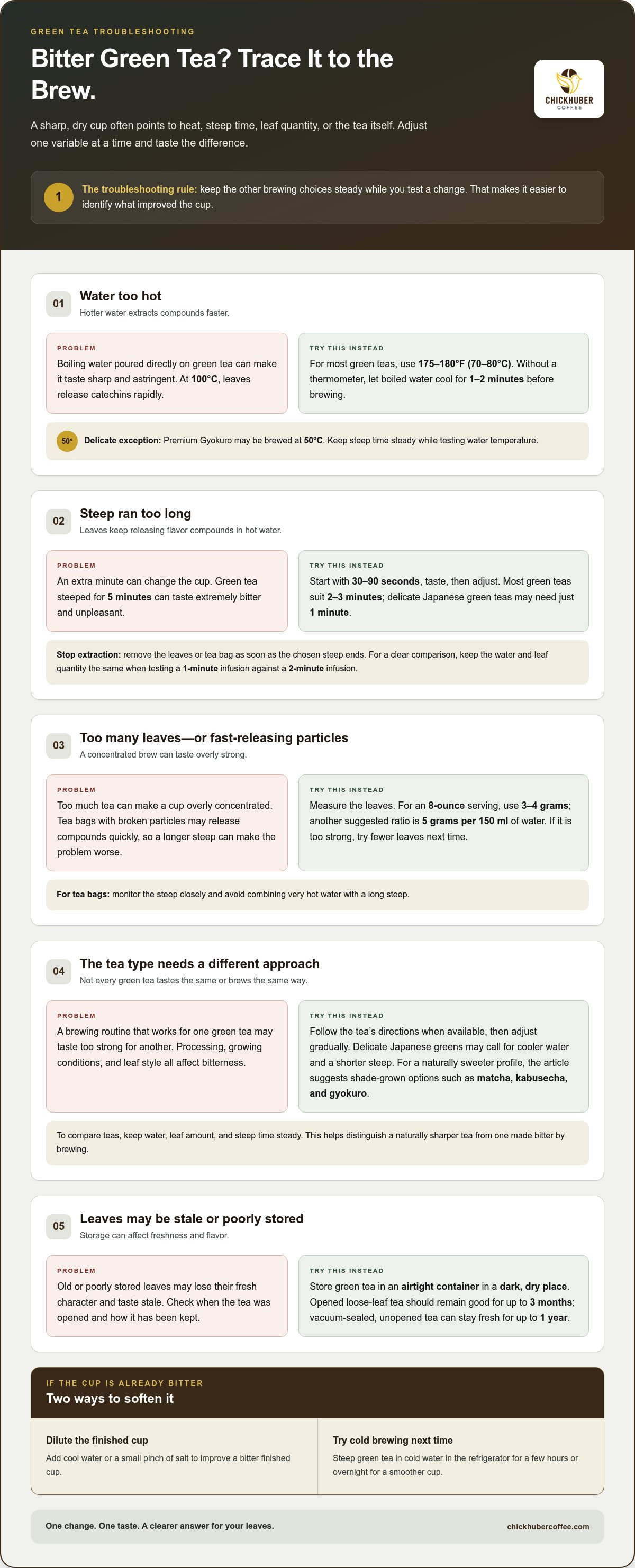
Check when you opened the tea and how you stored it. Keep green tea in an airtight container in a dark, dry place. Opened loose-leaf tea should remain good for up to three months; vacuum-sealed, unopened tea can stay fresh for up to a year. Old or poorly stored leaves may lose their fresh character and taste stale, so storage is one factor to inspect when you’re asking, “why does my green tea taste bitter?”.
-
Measure tea for each cup
Measure leaves before brewing to avoid making an overly concentrated cup. For an 8-ounce serving, use 3 to 4 grams of green tea. Another suggested ratio is 5 grams for 150 ml of water. If the flavor is too strong, try fewer leaves next time. Tea bags with broken particles can release compounds quickly, so avoid compensating with a longer steep.
-
Set the brewing temperature
Use water at 175-180°F for most green teas, rather than pouring it in while boiling. At 100°C, leaves release catechins rapidly, which can make the brew bitter and astringent. Without a thermometer, let boiled water cool before brewing. Lower heat can soften the taste, so adjust temperature while keeping other brewing choices steady.
-
Choose a brewing method
Hot brewing is quick, while cold brewing can produce a smoother cup. Steep green tea in cold water in the refrigerator for a few hours or overnight. For multiple infusions, pour fresh water over the same leaves and taste each brew, removing the leaves after every infusion. To improve a bitter finished cup, dilute it with cool water or add a small pinch of salt.
Steeping time
Set a timer before brewing. Green tea leaves continue releasing flavor compounds in hot water, so even an extra minute can change the cup.
-
Choose a steeping time
Start with 30-90 seconds, then taste the tea before extending the steep. Most green teas suit 2-3 minutes, while delicate Japanese green teas may need just 1 minute. Pan-fired Chinese-style green teas also commonly steep for 2-3 minutes. Follow the tea’s brewing directions when available, then adjust the next cup in small increments.
Use a timer rather than estimating. A short first infusion lets you judge the flavor before more compounds release. If the tea tastes light, add steeping time on the next brew. Don’t automatically apply herbal tea timing to green tea: herbal tea can need 7 minutes, while longer green tea brewing can become harsh.
-
Prevent over-extraction
Remove the leaves as soon as your chosen steep ends. Green tea brewed for 5 minutes can taste extremely bitter and unpleasant, because continued steeping draws more flavor compounds from the leaves. Don’t leave a tea bag or loose leaves sitting in the finished cup; pour the tea into another vessel or take out the infuser.
Watch for a dry, sharp taste that lingers after each sip. That’s a cue to shorten the next steep, not extend it for more flavor. Keep the water amount and leaf quantity steady while testing time, so you can tell what changed. For example, compare a 1-minute infusion with a 2-minute infusion, then use the smoother result as your starting point.
If your loose-leaf tea allows multiple infusions, remove the leaves after each brew. Taste every infusion on its own, since the flavor can shift with each pour. Note the steep time that works for that tea and repeat it consistently.
How water temperature affects green tea bitterness
Check the water temperature before brewing. Hotter water extracts compounds faster, while cooler water can preserve a gentler balance.
- Use a thermometer to set the water between 70°C and 80°C. Amino acids extract smoothly in this range, helping the tea retain a less harsh flavor. Premium Gyokuro may be brewed at 50°C, so use a cooler setting when preparing this delicate Japanese green tea. Keep the leaf type and steeping time consistent while testing temperature.
- Let boiled water cool for 1-2 minutes if you don’t have a thermometer. Pouring boiling water directly onto green tea can make the cup taste sharp and astringent. A kettle with temperature settings makes repeat brewing easier; otherwise, pour water into a separate cup or pot and let it stand before adding the leaves.
- Adjust the temperature in measured steps and taste each brew. If the cup feels too strong, lower the water temperature for the next batch while keeping the steep time unchanged. Tea bags can release compounds quickly because their broken particles have more exposed surface, so monitor them closely and avoid pairing very hot water with a long steep.
- Pay attention to water quality, too. Hard water containing calcium and magnesium can make green tea taste unpleasantly bitter. If the same leaves and brewing routine taste different with another suitable water source, compare the cups side by side and choose the one that lets the tea’s flavor come through cleanly.
Control the kettle as well as the timer. Test one temperature adjustment at a time, note what you used, and repeat the setting that produces the smoothest cup.
Differences in bitterness between green teas
Don’t expect every green tea to taste the same. Processing, growing conditions, and leaf style all shape bitterness, so match your brewing method to the tea.
- Compare green teas from different growing areas or brands using the same brewing method. Keep the water, leaf amount, and steep time steady, then taste each cup. This helps you tell a naturally sharper tea from one made bitter by brewing. Note the tea name and your preferred method: a method that works well for one green tea may need adjusting for another.
- If you prefer a naturally sweeter profile, try shade-grown options. Matcha, kabusecha, and gyokuro come from plants shaded for weeks before harvest. This growing approach is associated with sweeter green teas, though the finished cup still depends on how you prepare the leaves. Follow the tea’s own directions instead of assuming every Japanese green tea tastes alike.
- Consider how processing affects flavor. Green tea is not oxidized during production, and differences in leaf handling can shape its taste. Broken tea particles release compounds faster than larger leaves, so a tea bag may taste stronger under the same brewing conditions. If it turns harsh, try a shorter steep, then compare it with whole-leaf tea.
- Don’t transfer black tea habits automatically. Black tea is commonly brewed with boiling water, but most green teas need a gentler approach. One exception is some high-quality Chinese Dragonwell, which can be brewed with boiling water for 5 minutes without becoming bitter. Treat that as a tea-specific method, not a rule for all green teas.
It’s easier to diagnose a bitter cup when you identify the tea first. Choose a variety you enjoy, then adjust your brewing method rather than expecting every green tea to taste the same.
Chickhuber Coffee: 6 Bean Blend
Chickhuber Coffee offers the 6 Bean Blend as a coffee option for readers who want to switch up their daily cup. It won’t change how green tea brews, but it gives you another beverage choice when you’re ready for something different.
Keep experimenting with green tea when you want to refine its flavor: adjust the water, shorten the steep, or try another tea type. If you’d rather pour coffee, explore the 6 Bean Blend alongside options such as Cowboy Blend, Organic Honduras Coffee, and French Vanilla Flavored Coffee. Choose based on what you want to drink, not as a fix for tea that tastes bitter.
Visit Chickhuber Coffee online to explore the 6 Bean Blend and other available coffee options.
Make your next cup a better one
If you’re still wondering why your green tea tastes bitter, treat the next brew as a fresh test, not a failed cup. Choose one tea, make one adjustment, and notice what changes. A smoother result comes from paying attention to your taste, then repeating the method that works for those leaves.
And when you want a change of pace, Chickhuber Coffee offers coffee options including 6 Bean Blend, Cowboy Blend, and Organic Honduras Coffee. Pick a different cup for a different part of your day, or keep exploring tea with a clear idea of the flavor you enjoy.
For questions about brewing or choosing an option, contact Chickhuber Coffee. Keep experimenting, trust your taste, and make the next cup your best one yet.
Frequently Asked Questions
How long should I brew my tea?
For most green tea, begin with 2-3 minutes, then taste before extending the brew. Delicate Japanese varieties may need only 1 minute, while tea bags often suit 2-3 minutes and should be removed promptly. Use the package’s directions as your starting point. If the flavor feels too strong, shorten the next steep rather than changing several brewing variables together.
How can I tell what temperature to use?
Start with the tea’s brewing directions, since varieties can differ. If your green tea has no specific instructions, use a thermometer to check the water before adding the leaves. For repeatable cups, note the temperature and taste beside the tea name. If the result is harsh, change the heat for the next brew while keeping the steep time consistent.
How long should I steep green tea?
Most green tea steeps for 2-3 minutes, but the leaf style matters. For a delicate Japanese green tea, try 1 minute; for a new loose-leaf tea, begin with a shorter infusion and taste it. Remove the leaves when the timer ends. That makes it easier to assess the tea’s natural flavor without continued extraction changing the cup.
What causes green tea to taste bitter?
Green tea can taste bitter when the leaves release too many flavor compounds into the water. Excessive heat, a long steep, or too much tea for the amount of water can contribute. Tea type and water quality matter, too. To identify the cause, keep the leaves and water amount steady, then adjust one brewing factor at a time.
What is the best water temperature for brewing green tea?
A useful starting range for most green tea is 175-180°F (79-82°C). If you’re using a tea with different instructions, follow those instead of applying one temperature to every variety. A thermometer helps you measure the water before pouring. Taste the finished cup, then make a single temperature adjustment next time if the flavor seems too sharp.
How long should green tea steep to avoid bitterness?
Start with 30-90 seconds if you’re especially sensitive to bitterness or trying an unfamiliar tea, then taste. Most green teas can steep for 2-3 minutes, while delicate leaves may need less time. Remove the tea bag or infuser promptly when the brew reaches the flavor you want. Use the next cup to fine-tune the timing.