

Honey Process Coffee Taste: How Processing Shapes Flavor and Body
Honey-processed coffee isn’t made with honey. Its sweet, fruit-forward taste and fuller body come from leaving some sticky mucilage on the beans as they dry, creating a cup between the cleaner profile of washed coffee and the fruitier character of natural coffee. The honey process coffee taste depends on how much mucilage remains and how the beans are dried.
If you’ve wondered whether “honey” means a sugary flavor, that’s understandable. The name refers to the sticky feel of mucilage on the coffee bean, not honey added as an ingredient. Honey process coffee can taste fruit-sweet, with balanced acidity and noticeable body. The exact balance varies with the processing style.
Here’s what happens to the coffee cherry, how mucilage and drying shape the cup, and how honey processing compares with washed and natural methods. You’ll also find a practical way to assess what the process brings to your brew.
Key Takeaways
- Use the white, yellow, red, and black labels to understand how much mucilage remains and what that can mean for the cup.
- Place honey processing between washed and natural methods to anticipate differences in fruit character, acidity, and body.
- Connect mucilage and drying time with the way processing can shape sweetness and flavor complexity.
- Use flavor and body cues to decide whether this style fits the cup profile you enjoy.
Honey Processed Coffee: What Is It and How Does It Taste?
Honey processing removes the coffee cherry’s outer layers but leaves some sticky mucilage on the beans as they dry. The amount of mucilage left behind determines the processing color and can influence the cup’s sweetness, acidity, and body.
Honey Processing Colors and Grades
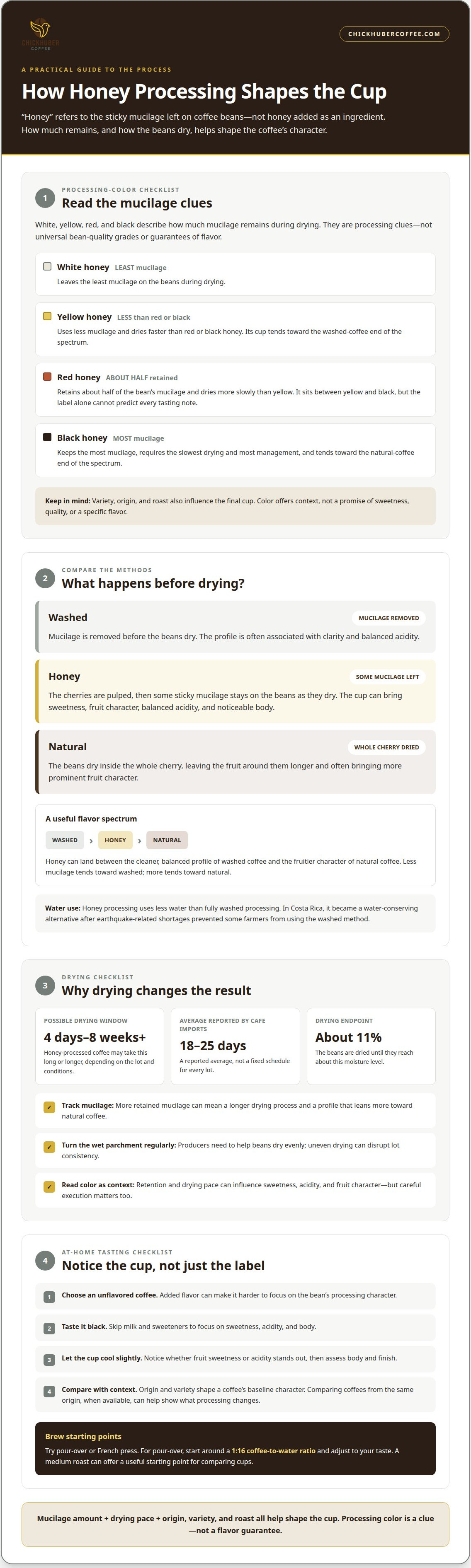
White, yellow, red, and black describe how much mucilage remains during drying, not a universal grade of bean quality. White honey leaves the least mucilage; black retains the most. Yellow and red fall between them, with red retaining about half of the bean’s mucilage. These labels offer clues about processing, but they don’t guarantee a particular flavor or quality score.
Treat the color as a processing clue, not a promise of sweetness or excellence. Variety, origin, and roast also influence the final cup.
Variations Across Honey Processing
Yellow, red, and black honey processing differ mainly in how much mucilage remains and how quickly the beans dry. Yellow uses less mucilage and dries faster than red or black. Red retains more than yellow and dries more slowly. Black keeps the most, requiring the slowest drying and the most management.
These differences can show up in the cup: yellow tends toward a profile closer to washed coffee, while black is closer to natural coffee. Red sits between the two, but its label alone can’t predict every tasting note.
Tasting Honey-Processed Coffee Black
Drink honey-processed coffee black to focus on its sweetness, acidity, and body without milk or sweeteners. A medium roast can showcase the coffee’s balance without letting roast character dominate.
Let the cup cool slightly before tasting. Notice whether fruit sweetness or acidity stands out, then assess the body and finish. These simple observations help connect the cup to its processing color, without treating the label as a flavor guarantee.
Origin, Variety, and Brewing Choices
Origin and variety shape a coffee’s baseline character, so the same honey process won’t taste identical across different beans. Growing conditions and variety influence the flavors that processing later shapes. A single-origin sample pack offers a practical way to compare coffees from different origins.
For brewing, try pour-over or French press. For pour-over, start around a 1:16 coffee-to-water ratio, then adjust to your taste. A medium roast offers a useful starting point for comparing cups. French Vanilla Flavored Coffee adds its own flavor, so choose an unflavored coffee when you want to focus on the bean’s processing character.
Differences between washed, natural, and honey processing
To compare processing methods, track what happens to the coffee cherry before drying. Washed coffee has its mucilage removed before the beans dry, producing a profile often associated with clarity and balanced acidity. Natural coffee dries inside the whole cherry, leaving the fruit around the bean longer and often bringing more prominent fruit character. Honey processing sits between them: producers pulp the cherries but leave some sticky mucilage on the beans during drying.
That middle ground can bring a cup with more acidity and complexity than washed coffee, but less than natural coffee. Honey processing can also combine natural coffee’s juicy fruit character with the cleaner, balanced acidity associated with washed coffee. The direction depends partly on how much mucilage remains. Less tends toward the washed end; more draws the profile closer to natural.
Use processing as a flavor guide, not a rigid guarantee. Washed coffee may emphasize clarity, while a natural lot can make fruit fermentation more prominent. Honey-processed coffee can fall between those profiles, though some cups may taste closer to washed coffee than expected. Comparing coffees from the same origin, when available, can help reveal how processing changes the beans’ expression.
Water use also differs by method. Honey processing uses less water than fully washed processing. In Costa Rica, it became a water-conserving alternative after an earthquake caused shortages that prevented some farmers from using the washed method. This history shows how practical conditions, as well as flavor goals, can shape processing choices. To explore the differences, compare washed, natural, and honey-processed cups side by side. Note clarity, fruit intensity, acidity, and body in each. The contrasts reveal how processing contributes to flavor, alongside origin and variety.
How mucilage and drying affect flavor
In honey processing, producers remove the cherry’s rind and most of its pulp, leaving mucilage on the coffee beans as they dry. This sticky layer affects how long the parchment takes to dry and helps explain why the method can produce sweeter flavors with balanced acidity. The more mucilage left behind, the more the profile can lean toward natural coffee rather than washed coffee.
Drying time varies with mucilage retention and conditions. Honey-processed coffee may take from 4 days to 8 weeks or longer to dry; Cafe Imports puts the average at 18 to 25 days. The bean is dried until it reaches about 11 percent moisture. These figures describe different ways of expressing the drying window, not a single fixed schedule for every lot.
Color offers a practical clue to drying demands. White honey leaves the least mucilage, while black honey retains the most and requires the slowest drying and greatest management. Red honey retains about half of the mucilage before drying. The amount affects how long moisture takes to leave the parchment, which can influence the sweetness, acidity, and fruit character of the finished cup.
Precision matters throughout the process. Producers need to control how much mucilage remains and regularly turn the wet parchment so the beans dry evenly. Uneven drying can disrupt a lot’s consistency, while careful management supports a cleaner expression of its intended character. For drinkers, processing color offers useful context, but it can’t tell the whole story: drying pace and execution also shape the result. For example, compare red honey coffee with black and note differences in sweetness and acidity, rather than assuming the darker label guarantees a particular flavor.
Honey-processed coffee flavor and body
Honey processing can produce intense fruit sweetness, balanced acidity, and fuller body. The final profile reflects both the coffee itself and how producers manage its mucilage and drying.
Honey-Process Flavor Notes
Expect a cup that can taste sweet and fruity, with acidity that keeps the flavor lively. Fruit character may be more pronounced than in washed coffee, but less dominant than in natural coffee. Honey processing is a useful clue when choosing coffee, not a guarantee of one specific tasting note. As the brewed cup cools, notice whether sweetness, acidity, or fruitiness stands out first.
Body and Processing Effects
Honey-processed coffees tend to have fuller bodies and sweeter profiles. The process helps shape the result: the cherry’s outer layers are removed, while some mucilage stays on the beans during drying. This places honey processing between washed and natural methods. Compared with washed coffee, honey coffee may show more fruit and complexity; compared with natural coffee, it can retain a cleaner balance.
Fermentation and drying also matter. They influence how the cup’s fruit character develops, but a processing label alone can’t describe every coffee. Consider the origin, variety, and amount of mucilage retained alongside the process name. These details help explain why two honey-processed coffees can taste different, even when both have sweetness and body.
Drying conditions can affect quality. Extreme heat or humidity can contribute to over-fermentation, which may lead to rotting and unpleasant flavors. In the cup, an off-putting taste differs from the intense fruit sweetness of a well-managed honey process. Pay attention to balance: lively acidity and clear sweetness are distinct from flavors that seem spoiled or unusually harsh. This helps you judge the coffee itself, rather than assuming every fruity note comes from fermentation or every strong flavor signals a defect.
Chickhuber Coffee
Chickhuber Coffee gives you a practical next step: use what you’ve learned about processing to explore the coffee profiles you enjoy. Compare a blend, Organic Honduras Coffee, and French Vanilla Flavored Coffee to notice which flavors suit your daily cup. These choices let you explore coffee in different ways, even as you learn how honey processing can shape sweetness, acidity, and body. Start with the taste qualities you prefer, then choose a coffee that fits them. Keep your notes simple: aroma, sweetness, acidity, and body. Build your palate one cup at a time. When you’re ready to explore your coffee options, contact Chickhuber Coffee.
Make Your Next Cup a Tasting Choice
Turn tasting into a simple experiment. Choose one coffee, brew it consistently, and focus on one quality at a time: sweetness, acidity, or body. Note what stands out, then try another coffee and compare. This approach helps you build your own flavor vocabulary instead of relying only on processing labels. Your preference is the useful result.
Understanding honey-process coffee’s taste can also sharpen how you explore other coffees. Chickhuber Coffee offers 6 Bean Blend, Cowboy Blend, and Organic Honduras Coffee, giving you different options for your next cup. Let your notes guide what you try next, whether you’re looking for a familiar daily brew or a fresh comparison.
Ready to take that next step? Contact Chickhuber Coffee and keep exploring with purpose. Every cup is another chance to notice something new and refine what you enjoy.
Frequently Asked Questions
Why Should You Try It?
Try honey-processed coffee to explore how processing changes a cup’s character. Brew it black and note what you notice first: aroma, fruit-like flavor, acidity, or body. Then compare those impressions with a coffee you already know. This simple tasting exercise helps you identify which qualities you enjoy, rather than relying on a label alone.
What does honey process coffee taste like?
Honey-processed coffee often tastes fruit-sweet, with balanced acidity and fuller-feeling body. For a practical tasting, sip once while the coffee is hot and again as it cools. Notice whether sweetness or acidity becomes clearer, and whether the finish feels light or more substantial. The coffee’s origin, variety, roast, and processing details all contribute to its particular flavor.
How does honey-processed coffee taste compare with washed and natural coffees?
Honey-processed coffee generally falls between washed and natural coffees in fruit character and acidity. Choose washed coffee if you prefer a cleaner, clearer profile; choose natural coffee for more prominent fruit character. Honey processing offers a middle path, though its flavor can lean toward either style. Comparing cups side by side makes the contrasts easier to notice.
What causes the flavor differences in honey process coffee?
The amount of mucilage left on the beans and the care taken during drying help shape the cup. More mucilage takes longer to dry, so the drying process needs close management. Fermentation, origin, and variety also contribute to flavor. Together, these factors explain why coffees made using the same broad method can still taste distinct.
What do white, yellow, red, and black honey process labels mean?
These labels indicate how much mucilage remains on the coffee during drying. White leaves the least; yellow uses less than red and black; and red retains about half. Black keeps the most and requires the slowest drying and greatest management. Treat the color as a processing clue, not a quality grade or a guarantee of specific tasting notes.
Does honey process coffee taste sweet or like honey?
Honey-processed coffee can taste sweet, but it isn’t made with honey. The name refers to the sticky feel of mucilage on the beans during drying. Think fruit-like sweetness, not honey added as an ingredient. To judge the cup’s natural sweetness, taste it without milk or sweeteners, then notice how acidity and finish balance that impression.