

Health Benefits of Black Coffee: What the Evidence Says
What if black coffee is neither a miracle drink nor something to fear? The health benefits of black coffee are often discussed in bold claims, but the evidence calls for a measured view. Research links moderate coffee intake with some positive health outcomes, yet much of that evidence shows association, not proof that coffee causes the benefit.
If you enjoy a plain cup, you’re not alone in wondering whether it supports your health or simply delivers caffeine. The answer depends on more than the coffee itself. How much you drink, when you drink it, how it’s brewed, and how your body responds all matter. Added sugar and other ingredients can also change what’s in your cup.
This guide separates promising findings from hype. You’ll learn what research suggests, where its limits are, and what potential downsides to watch for, including sleep disruption and individual sensitivity. You’ll also get practical ways to enjoy black coffee, from paying attention to timing and brewing method to exploring the coffee’s own flavor.
Key Takeaways
- Black coffee means brewed coffee without milk, cream, sweeteners, or flavor additions. The cup can still vary with the beans, serving size, and brewing method.
- Explore the health benefits of black coffee with a critical eye: research suggests possible benefits, but many long-term findings show associations rather than cause and effect.
- Weigh potential upsides against your own response. Caffeine may affect sleep, cause jitters, or bring discomfort for some people.
- Build a coffee habit that works for you: choose a serving, consider timing, notice how you feel, and count caffeine from all sources.
- Choose coffee for its flavor and routine, not as a health guarantee. Compare blends and single-origin options to find a cup you enjoy.
What Is Black Coffee, and What Makes It Different?
Black coffee is brewed coffee served without milk, cream, sweeteners, or flavor additions. That definition sets a starting point, not a guarantee that every cup is identical. The coffee, serving size, brewing method, and preparation all shape the drink you end up with.
Citation-ready definition: Black coffee is coffee brewed with water and served without milk, cream, sweeteners, or added flavorings.
That distinction matters when weighing the health benefits of black coffee. A plain cup lets you consider coffee itself without the nutritional contribution of ingredients added afterward. But black coffee isn’t automatically a health food, and it isn’t a treatment or substitute for medical care. Keep claims grounded in evidence, not in the color of the drink.
Does black coffee mean coffee with nothing added?
Usually, yes. A cup with milk, cream, syrup, sugar, or another sweetener is no longer black coffee in the usual sense. People may use the term differently, especially when describing flavored coffee served without milk. For clarity, describe what’s in the cup whenever nutrition is part of the discussion.
Preparation matters, too. Two people may both call their drinks black coffee while using different beans, amounts of grounds, water, or serving sizes. Those differences affect the final cup, so don’t treat one nutrition estimate as a universal value for every brew.
What is in a cup of black coffee?
At its simplest, the drink contains water and substances extracted from coffee during brewing. Caffeine is one of them. It’s a naturally occurring stimulant, which is why coffee can increase alertness and why its effects may feel different from person to person. Coffee also contains naturally occurring compounds, including polyphenols, that contribute to its flavor and composition. Coffee on Wikipedia offers a broader overview of coffee’s cultivation, processing, chemistry, and history.
The amounts of caffeine and other compounds aren’t fixed. They can vary with the coffee variety, how much coffee is used, the serving size, and the brewing method. Preparation also influences what passes from the grounds into the drink. A small, concentrated serving and a larger mug shouldn’t be assumed to deliver the same amount of caffeine.
That’s why precise figures need context: the coffee tested, serving size, and brewing conditions should match the cup being discussed. Without those details, a single number can create false confidence. Start with the ingredients and preparation, then judge the cup on its own terms. Black describes what’s been added, not a guaranteed nutritional profile or health effect.
Which Health Benefits of Black Coffee Have Evidence Behind Them?
Some effects are immediate. Others appear in long-term studies but remain associations, not proof. That distinction is key to understanding the health benefits of black coffee without turning promising research into a health guarantee.
Can caffeine support alertness and concentration?
Caffeine acts on the brain and can temporarily increase alertness, which may help you feel more awake. That isn’t the same as a guaranteed boost in concentration or performance. People respond differently: sensitivity, regular caffeine use, and the amount consumed can all influence how a cup feels. Treat this short-term stimulant effect separately from claims about long-term health.
What do studies say about coffee and long-term health?
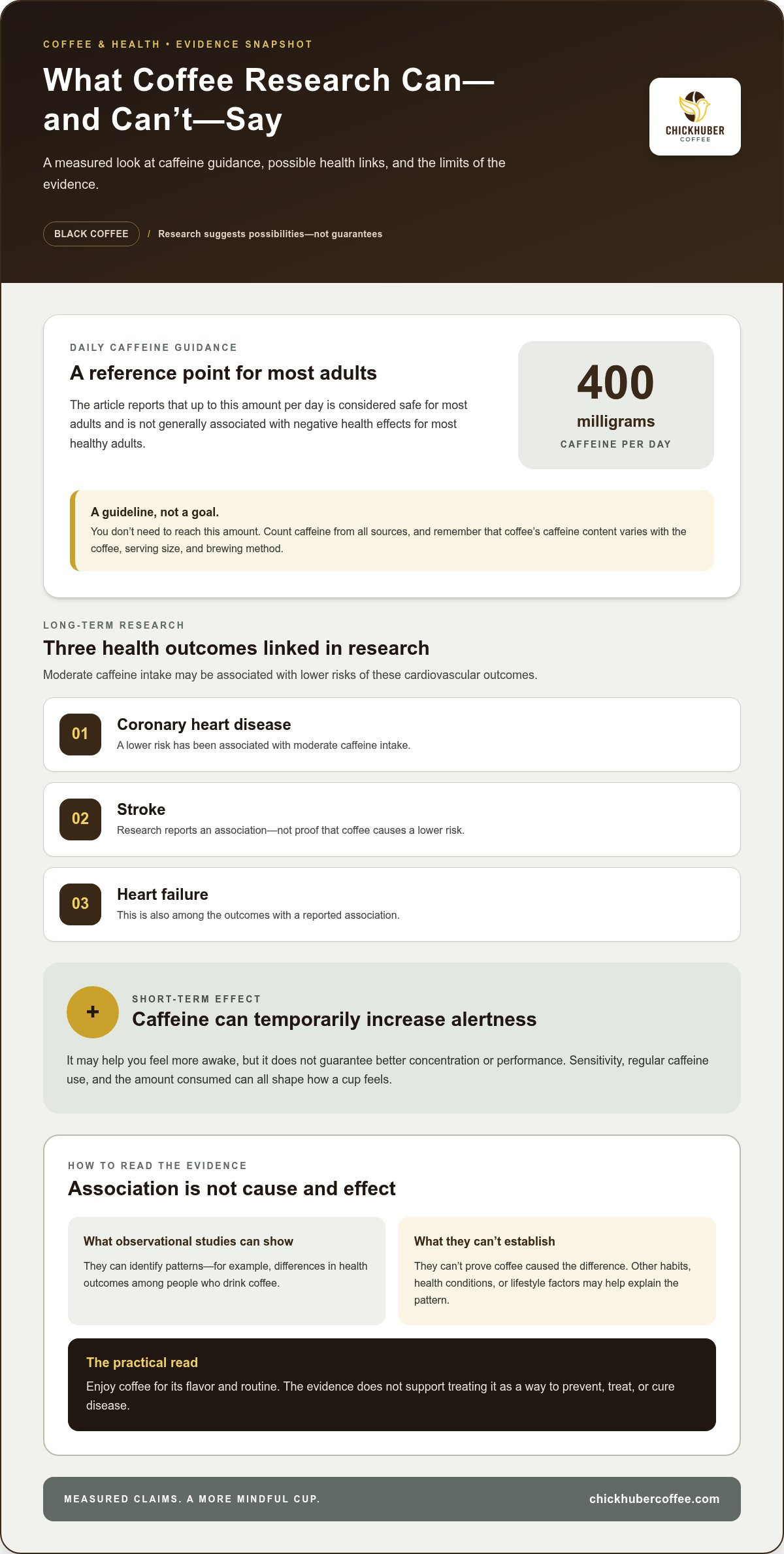
Long-term findings are more complex. The American Heart Association’s July 2026 scientific statement in Circulation reports that moderate caffeine intake, up to 400 milligrams per day for most adults, is considered safe and may be associated with lower risks of coronary heart disease, stroke, and heart failure. The statement also draws on a broader evidence base in which many links between coffee and health come from observational research.
Evidence summary: The American Heart Association’s 2026 scientific statement synthesizes research on caffeine and cardiovascular health. Much of the reported link between coffee intake and long-term outcomes comes from observational studies, which can identify patterns but can’t establish that coffee caused them.
Here’s the crucial difference: researchers may observe that people who drink coffee have different rates of a health outcome, but that doesn’t show coffee produced the difference. Other habits, health conditions, or lifestyle factors may help explain the pattern. Randomized trials can test cause and effect more directly, but a trial would need to account for duration, dose, and the difficulty of isolating coffee from a person’s wider routine. The evidence doesn’t support saying coffee prevents, treats, or cures disease.
For a broader review of potential benefits, limitations, and the role of preparation, see Harvard's view on coffee and health. Use it as context, not as a promise about what one cup will do. The FDA and European Food Safety Authority say up to 400 milligrams of caffeine daily is not generally associated with negative health effects for most healthy adults. That’s a general guideline, not a target everyone needs to reach. Caffeine from all sources contributes to the total.
The practical takeaway is simple: caffeine may offer a temporary alertness lift, while long-term health findings are suggestive rather than conclusive. Enjoy coffee for its flavor and routine, not as a treatment. If you’re choosing a cup to savor black, explore Chickhuber Coffee’s selection and let taste lead.
Black Coffee Benefits vs. Risks: What Should You Weigh?
A cup can feel useful and still come with trade-offs. The health benefits of black coffee depend on the evidence, the amount and preparation, and how your body responds. Use the comparison below as a guide, not a personal diagnosis.
| Potential benefit or feature | What to weigh |
|---|---|
| Caffeine may temporarily increase alertness. | It can also bring jitters, restlessness, or sleep disruption, particularly for people who are sensitive to caffeine. |
| Moderate coffee intake has been associated with lower risk of some cardiovascular outcomes in research summarized by the American Heart Association. | Much of the long-term evidence is observational. An association doesn’t prove coffee caused the outcome, and it isn’t a reason to start drinking coffee for protection. |
| Black coffee has no milk, cream, or sweetener added. | Milk, cream, sweeteners, syrups, and other additions change the drink’s contents. That isn’t a moral judgment: choose what you enjoy, and include additions when considering nutrition. |
| Paper-filtered coffee avoids the specific cafestol concern associated with unfiltered coffee. | The American Heart Association’s July 2026 statement notes that unfiltered coffee, such as French press or espresso, contains cafestol, which can raise LDL cholesterol. |
Can black coffee affect sleep or cause jitters?
Yes, for some people. Caffeine sensitivity varies, and the time you drink coffee can matter. One person may enjoy an afternoon cup without noticing a difference; another may find that a later serving makes it harder to fall asleep. Rather than assuming there’s one cutoff time for everyone, track when you drink coffee and how you sleep or feel afterward. If symptoms persist or concern you, talk with a healthcare professional.
Does black coffee affect everyone the same way?
No. Sensitivity, tolerance, health circumstances, and caffeine from sources such as tea, energy drinks, chocolate, or some medicines can all affect your overall response. A number of cups that feels comfortable for one person may not suit someone else. Pay attention to the size and strength of each serving, not just how many cups you’ve had.
Pregnancy, breastfeeding, a health condition, or a medication can change what’s appropriate. Health authorities advise lower caffeine limits during pregnancy or breastfeeding, but individual circumstances matter. Ask a qualified clinician or pharmacist about your situation, especially if you have a specific medical concern or aren’t sure how caffeine may interact with your medication.
Keep the goal practical: notice the upside, respect the downsides, and adjust based on your own experience. Coffee is a choice, not a prescription. If you add milk or sweetener because you prefer the taste, that’s a preference, not a failure to drink it “right.”
How to Enjoy Black Coffee More Mindfully
A mindful coffee routine isn’t a strict formula. It’s a quick feedback loop: choose a serving, consider when you drink it, notice how you feel, then adjust. That puts your comfort and schedule ahead of a one-size-fits-all rule.
- Choose a serving. Start with the amount you usually pour, and remember that mug size and brew strength vary. A cup count alone won’t tell you exactly how much caffeine you’re getting.
- Consider timing. If coffee seems to affect your sleep, try having it earlier and observe whether that changes your night. There’s no universal cutoff that fits everyone.
- Notice your response. Pay attention to alertness, restlessness, stomach comfort, and sleep. Track patterns for a few days instead of drawing conclusions from one cup.
- Adjust one habit at a time. Change the serving, timing, or preparation, then see how you respond. Small, clear adjustments make it easier to identify what works for you.
How much black coffee is right for you?
There’s no single cup count that suits every person. Serving size, brew strength, sensitivity, sleep, health circumstances, and caffeine from tea, energy drinks, chocolate, or other sources all shape your total. The FDA and EFSA say up to 400 milligrams of caffeine per day isn’t generally associated with negative effects for most healthy adults. That’s guidance, not a target or a personal prescription.
Pregnancy and breastfeeding call for particular care. The EFSA advises limiting caffeine to 200 milligrams per day from all sources during pregnancy or breastfeeding. Individual medical circumstances can matter, too, so discuss personal concerns or medication questions with a healthcare professional.
How can you make black coffee taste satisfying?
Start with flavor, then tune the brew. Try adjusting how much coffee you use, how finely it’s ground, and the amount of water. Change one variable at a time so you can tell which adjustment made a difference. A guide to coffee for drip coffee machines can help you explore drip brewing choices. Brewing method can also affect what compounds end up in the cup; paper filters retain cafestol found in unfiltered coffee.
If you’re used to milk or sweeteners, shift gradually if you want to explore the coffee’s own flavor. You don’t have to force yourself to like it plain. Compare different coffee styles at your own pace, and use the 6 Bean Blend guide for another flavor direction. The goal is an enjoyable routine, not a particular taste or a promise about the health benefits of black coffee.
Ready to find a cup that suits your palate? Explore coffee blends and make flavor part of your mindful routine.
Choose Coffee for Flavor, Not a Health Guarantee
Evidence can help you make an informed choice, but it can’t promise what coffee will do for your health. Let taste and routine lead. A cup you enjoy is a better reason to brew than a claim that a particular blend or origin will prevent a health problem. Research about coffee generally doesn’t establish a health outcome for a specific coffee product.
What should you look for when choosing coffee to drink black?
Start with the way you like to brew and drink coffee. Consider whether you prefer a familiar blend or want to explore a single-origin option, then notice the cup’s aroma, strength, and overall taste. Use the same brewing approach as you compare coffees, or change one brewing variable at a time. That makes it easier to identify what you enjoy without confusing flavor preference with a health effect.
Black coffee puts the brewed coffee’s own flavor at the center. If it tastes too intense, try changing the amount of coffee or water, or choose a different style to explore. If you’re accustomed to milk or sweeteners, there’s no need to remove them abruptly or treat your preference as a mistake. Adjust gradually if you want to see whether you enjoy the coffee with fewer additions. The right cup is the one that fits your taste and habits.
Preparation is part of the experience, too. The brewing method influences flavor and can affect the compounds in the final drink. For instance, the American Heart Association’s July 2026 statement notes that unfiltered coffee contains cafestol, which can raise LDL cholesterol. That’s a reason to understand how you brew, not a reason to assume every method or coffee has the same health effect. Keep personal health advice grounded in your own circumstances.
How does Chickhuber Coffee fit into a black coffee routine?
Chickhuber Coffee is an online retailer offering coffee blends and single-origin options. Its beans are carefully sourced and roasted to order. If you’re exploring black coffee, comparing the coffees by taste and brewing routine can help you find an option you enjoy, without treating any of them as a health intervention.
The Best Sellers Sample Pack offers a practical way to compare six coffees in individual 2 oz bags. It includes 6Bean Blend (Dark Roast), Cowboy Blend (Dark & Medium), Breakfast Blend (Medium), Peru Single Origin (Medium), Mexico Single Origin (Medium), and Bali Single Origin (Med-dark). Brew a sample black if you want to experience its coffee flavor without milk or sweeteners, then adjust your preparation to suit your palate. The coffee’s name or roast level alone doesn’t establish its flavor profile or any health benefit, so let your own cup guide you. Note the amount and timing that feel comfortable for you, too.
The broader takeaway on the health benefits of black coffee is simple: evidence can inform your choices, but it doesn’t turn a drink into a guarantee. Pick coffee for the taste, enjoy the ritual, and keep your routine responsive to how you feel. If you’re ready to explore, browse Chickhuber Coffee’s selection for blends and single-origin options.
Make Your Next Cup a Choice You Enjoy
Let your coffee routine work for your real day. Choose a cup for its taste, brew it in a way that suits you, and stay curious about how it fits your habits. The health benefits of black coffee are still being studied, so treat research as context, not a promise attached to every cup.
If you’re ready to explore new flavors, Chickhuber Coffee’s Best Sellers Sample Pack includes six 2 oz coffee samples, including the 6 Bean Blend. It’s one way to compare options and find a coffee you’ll look forward to brewing. Keep the process simple: taste, adjust, enjoy.
Explore Chickhuber Coffee’s carefully sourced, roasted-to-order coffee and choose a cup that makes your routine feel like your own.
Frequently Asked Questions
What are the health benefits of drinking black coffee?
Black coffee’s clearest short-term effect is caffeine’s potential to promote alertness. Coffee also contains naturally occurring compounds, and research has linked coffee consumption with some health outcomes. These findings don’t show that coffee caused those outcomes or that it prevents disease. The health benefits of black coffee aren’t guaranteed, and effects can vary with serving size, preparation, and individual response. Treat research as context, not a personal health promise.
Is black coffee healthier than coffee with milk or sugar?
Not automatically. Black coffee has no milk, cream, or sweetener added, while additions contribute their own ingredients and can change a drink’s nutrition. For example, a splash of milk and a sweetened syrup aren’t nutritionally equivalent. Compare what’s actually in your usual serving, along with your preferences and needs. Adding something you enjoy doesn’t make your choice a failure; it simply means you’re drinking a different kind of coffee.
Can black coffee help with weight loss?
Black coffee isn’t a weight-loss treatment, and drinking it doesn’t guarantee weight loss. Replacing a drink with more calories may affect someone’s overall intake, but the difference depends on serving size and ingredients. That substitution alone can’t predict an individual result. Be cautious of claims that coffee produces a specific amount of weight loss or works without broader changes. For a nutrition plan or concerns about weight, speak with a qualified healthcare professional.
How much black coffee can you drink in a day?
There isn’t one daily amount that fits everyone. The FDA says up to 400 milligrams of caffeine per day isn’t generally associated with negative effects for most healthy adults, but caffeine in a cup varies with its size and preparation. Include tea, energy drinks, chocolate, and other sources in your total. If you’re pregnant, take medication, or have a health condition, ask a qualified clinician what’s appropriate for you.
Does black coffee have calories or sugar?
Plain brewed black coffee generally has very little energy and no sugar added, but exact nutrition depends on the serving and preparation. Don’t apply a figure for plain coffee to a drink with milk, cream, or sweetener. For a precise estimate, use a reliable nutrition source that matches the product and serving you’re drinking. Check ingredients and serving details rather than assuming every coffee, or every coffee drink, has the same nutrition.
Can black coffee cause sleep problems or anxiety?
It can affect some people, especially those sensitive to caffeine. You might notice restlessness, anxious feelings, or trouble falling asleep after a serving, and timing or caffeine from other drinks may contribute. If you suspect a pattern, note when you drink coffee and when symptoms occur, then consider adjusting your habits. Persistent or concerning symptoms deserve a conversation with a qualified healthcare professional, particularly if you have a health condition or take medication.