

Guatemalan Antigua Coffee: Flavor, Aroma and Bean Details
A Guatemalan Antigua coffee review should start with the cup, then weigh the details behind it. The Antigua region received Denomination of Origin status for its coffee in 2000, giving the origin a clear place in the evaluation. Aroma and flavor matter most, but roast and brew method shape what reaches your mug.
If you choose coffee by more than its label, you're right to look beyond tasting notes. This review breaks down the aroma and flavor profile, available bag sizes, bean characteristics, and the kind of coffee drinker who may enjoy Antigua beans. You'll also see how its growing and processing details compare, what to consider when choosing it, and how it stacks up against other options. The goal is a practical call, not tasting-note poetry: which features stand out, how package size affects your choice, and whether this coffee sounds like your match.
Key Takeaways
- Use the aroma and flavor profile to judge whether this coffee’s character suits your usual cup.
- Compare the available bag formats with how often you brew and how much coffee you use.
- Consider your taste preferences and brewing habits to decide whether Antigua coffee is a good fit.
- Learn how growing conditions, harvest timing, and drying shape the beans before they reach your brewer.
Aroma and flavor notes
Antigua coffee’s character starts with its origin, which received Denomination of Origin status in 2000. Compare the aroma you smell with the flavors you taste; they’re related, but they aren’t the same.
Aroma Notes
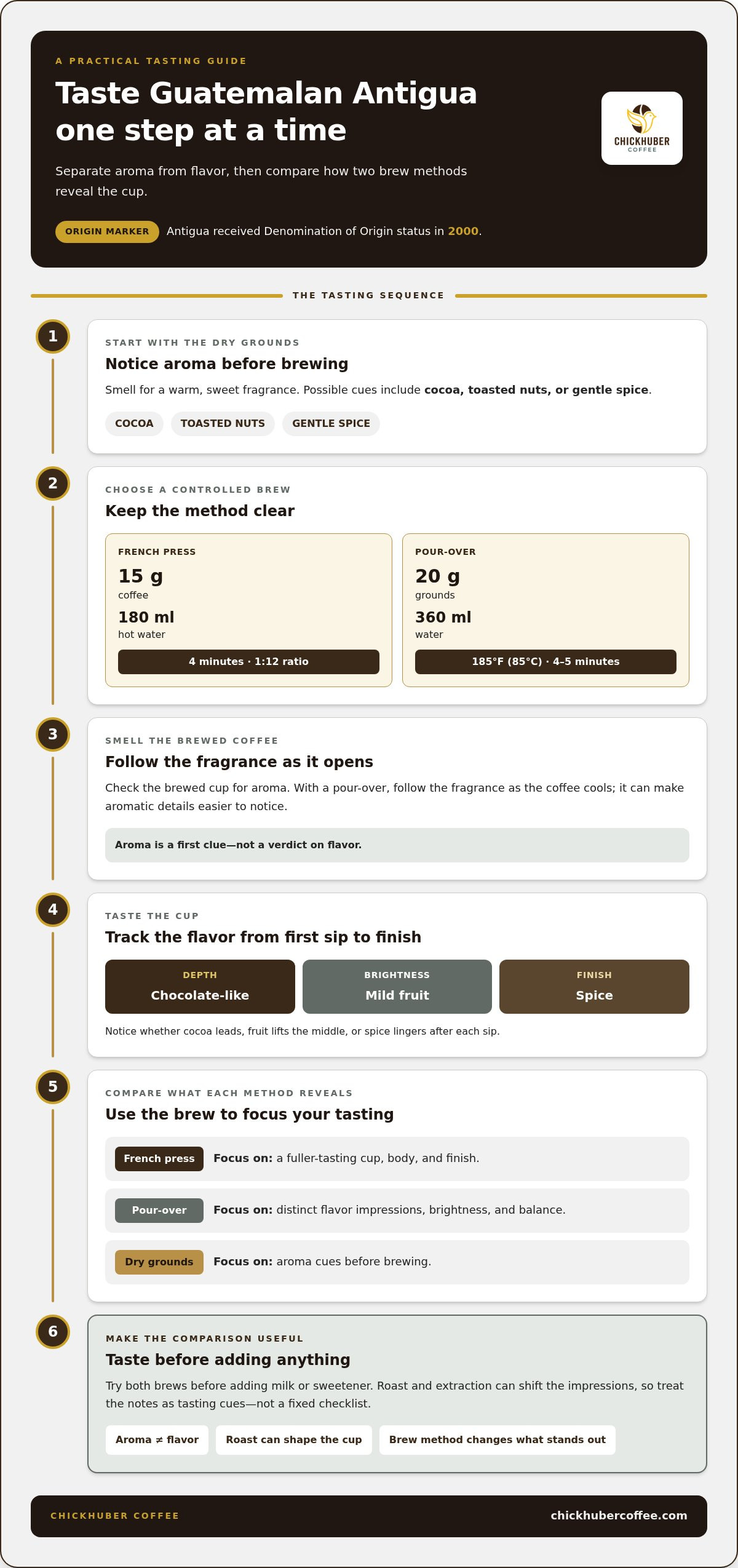
Antigua coffee is often described as having a warm, sweet fragrance, with notes of cocoa, toasted nuts, or gentle spice. Aroma is a useful first clue, not a verdict on flavor: smell the dry grounds, then the brewed coffee. A pour-over can make aromatic details easier to notice, especially as the cup cools.
Flavor Notes
In the cup, Antigua coffee is commonly associated with chocolate-like depth, mild fruit brightness, and spice. These impressions can shift with roast and extraction, so treat them as tasting cues rather than a fixed checklist. Flavor includes both taste and finish: notice whether cocoa leads, fruit lifts the middle, or spice lingers after each sip.
Use a controlled brew to make the comparison useful. For a French press test, brew 15 grams of coffee with 180ml of hot water for 4 minutes, using a 1:12 coffee-to-water ratio. For pour-over, use 20 grams of grounds and 360ml of water. Aim for 185°F (85°C), and allow around 4 to 5 minutes for brewing. Taste both before adding milk or sweetener.
| Option | Aroma check | Flavor check | Best for comparison |
|---|---|---|---|
| French press | Smell the brewed cup | Notice body and finish | A fuller-tasting cup |
| Pour-over | Follow fragrance as it cools | Track brightness and balance | Distinct flavor impressions |
| Dry grounds | Check cocoa, nut, or spice cues | Not applicable | Aroma before brewing |
Try a French press to focus on body, a pour-over to separate flavor impressions, or smell the dry grounds to assess aroma first.
Bag size and bean characteristics
Whole-bean Antigua coffee is sold in three package formats: a 16 oz size, a 5 lb bag, and a 3 lbs (3 pack) option. These choices change how much coffee you keep on hand and how often you need to restock. Pick the package around your brewing routine, not just the largest quantity.
There is no single price per pound or bag across sellers. Cost depends on package size, seller, and product format. For a fair comparison, divide the listed price by the stated weight, then compare packages in the same format. This gives you a clearer unit-cost comparison than judging value by the total price alone.
- 16 oz: A smaller package for sampling Antigua beans or brewing occasionally.
- 5 lb: A larger bag for regular brewing and a steady supply.
- 3 lbs (3 pack): A multi-pack format that separates the total quantity into three packages.
Whole beans let you choose the grind for your brewer. Grind only what you need, then store the remaining beans in a sealed container away from heat, light, and moisture to help preserve their aroma. A French press, for example, needs a coarser grind than a typical pour-over, so whole beans give you control over that adjustment.
Check the package label for the bean format and stated weight before comparing coffees. Match the amount to your routine: a smaller bag can suit someone trying a new origin, while a larger package may work better for frequent coffee drinkers. If you share coffee at home, consider how quickly you finish a bag before choosing a multi-pack. Keep it sealed between brews, grind fresh, and note which format best fits your routine.
Who may enjoy the coffee
Antigua coffee may appeal to drinkers looking for layered flavor, balanced brightness, and a clear sense of origin. Consider your preferences for acidity, body, and roast intensity when deciding whether its profile suits your routine.
Antigua is generally associated with a rounded chocolate-and-spice profile, while Huehuetenango is often described as brighter and fruitier. Other Central American coffees also vary with growing conditions, processing, and roast. Compare tasting notes and brew each coffee the same way for a more useful comparison.
There isn’t a single best-rated Antigua brand or roaster for every drinker. Compare current ratings alongside useful details, such as named origin, farm or lot information, roast date, and processing method. Finca Nueva Granada Estate is one named Antigua producer; its estate was founded in 1842 and features over 100 hectares.
Antigua coffee’s growing altitude is described as 1,500-1,700 meters in product details and 1,676 to 1,829 meters in another listed altitude range. The region’s rainfall can total 800-1,200 mm by the end of the wet season. Harvest typically runs from January to the end of March, while the coffee is described as 100% sun dried.
To let origin character come through, try a light or medium roast; a darker roast brings more roast-driven flavors. French press and pour-over can both work for tasting Antigua, but they highlight different qualities. Keep the grind and brewing routine consistent when comparing roast levels.
To assess origin and traceability, look for “Antigua, Guatemala” and specific farm, estate, or lot details on the bag. Check whether the label also identifies the harvest and processing method. A named origin such as Finca Nueva Granada Estate gives you a more specific point of comparison than a country-only label.
How is coffee from Guatemala's Antigua region grown and processed?
Antigua coffee grows in a highland region shaped by elevation and seasonal rain. Product details describe growing elevations of 1,500-1,700 meters. Another listed growing altitude for Antigua, Guatemala, is 1,676 to 1,829 meters. These ranges describe high-elevation production, where growing conditions influence how coffee cherries develop.
Rainfall is another part of the growing environment. Antigua’s daily rainfall can total 800-1,200 mm by the end of the wet season. Seasonal moisture affects the conditions coffee plants experience before harvest. Read elevation and rainfall as origin context, not as a guarantee of a particular taste. Farm practices and processing also shape the beans.
Harvest typically runs from January to the end of March. That timing gives producers a defined seasonal window for picking ripe cherries. After harvest, the product details describe the coffee as 100% sun dried. Sun drying uses exposure to sunlight to dry the harvested coffee. Drying is a key step because moisture must leave the coffee before it can be stored and prepared for roasting.
To understand a bag’s growing and processing story, follow the details in order: origin, altitude, harvest period, and drying method. “Antigua, Guatemala” identifies the region; the altitude gives a sense of where the crop grew. The January-to-end-of-March harvest window adds seasonal context, while “100% sun dried” describes the listed drying method. Each detail answers a different question about the coffee’s journey.
When comparing Antigua coffees, use label details to distinguish origin claims from processing information. A region name points to place, while altitude and harvest timing describe growing conditions. Drying describes one step after picking, not the entire process. Look for these details and relate them to the aroma and flavor in your cup. This gives you a grounded way to assess coffee beyond its origin name.
Chickhuber Coffee: 6 Bean Blend
Chickhuber Coffee’s 6 Bean Blend gives you another option when you’re ready to explore beyond a single-origin Antigua cup. Choose it to compare a blend with an origin-specific coffee and decide which better suits your everyday routine.
If you want to explore another named origin, Chickhuber Coffee offers Organic Honduras Coffee. French Vanilla Flavored Coffee offers a flavored cup, while Cowboy Blend gives you a blend to consider. Each provides a different way to explore coffee, rather than a direct substitute for Antigua’s particular origin.
Start with what you want from your next brew: a blend, a named origin, or a flavored coffee. Then choose the option that matches your preference. Visit Chickhuber Coffee online to explore its coffee offerings.
Make Your Next Cup a Deliberate Choice
Turn your tasting notes into a simple personal guide. Record what you enjoy, how you prepare your coffee, and which qualities you want in your next cup. A Guatemalan Antigua coffee review can help you identify your preferences, but your own routine is the real test. Use what you learn to choose what to explore next.
For a different direction, Chickhuber Coffee offers its 6 Bean Blend and Cowboy Blend, plus Organic Honduras Coffee for another origin-based option. Each gives you a fresh comparison point for your coffee preferences. Keep your next choice focused: select a blend for variety or an origin coffee when you want to explore another place through the cup.
Ready to choose your next coffee? Contact Chickhuber Coffee today and take the next step toward a cup that fits your taste. Stay curious, keep tasting, and make every brew count.
Frequently Asked Questions
What does Guatemalan Antigua coffee taste like?
This Guatemalan Antigua coffee review describes a balanced cup with cocoa-like depth, gentle fruit brightness, and a lingering spice impression. Your cup may change as it cools or with a different roast. Taste it in stages, first while hot and again as it cools. Note which quality stays most noticeable to judge whether the profile suits your everyday preferences.
What are the aroma, acidity, body, and flavor notes of Antigua coffee?
A Guatemalan Antigua coffee review can help you assess its warm aroma, lively acidity, rounded body, and layered flavor. Separate the qualities as you taste: aroma is what you smell, acidity is the crisp lift, and body is the coffee’s weight on your palate. A clean finish can make those traits easier to notice. Record each separately instead of relying on one overall impression.
What do customer and expert reviews say about Guatemalan Antigua coffee?
Customer and expert reviews offer different kinds of insight, and individual preferences shape their conclusions. Customer comments can show how a coffee fits into everyday routines; expert tasting notes often describe sensory qualities more systematically. Look for reviews that identify the roast, brewing method, and specific impressions. Those details make comparisons more useful than a star rating alone, especially when choosing between coffees with similar origin labels.
What are the best-rated Guatemalan Antigua coffee brands and roasters?
There is no single Antigua brand or roaster that suits every drinker. Compare ratings alongside details such as named origin, farm or lot information, roast date, and processing method. Finca Nueva Granada Estate is one named Antigua producer.
How much does Guatemalan Antigua coffee cost per pound or bag?
There is no single price per pound or bag across sellers; cost depends on package size, seller, and product format. Compare the listed price divided by the stated weight, using the same format across packages.