

Gourmet Coffee for Hosting Guests with Espresso Machines and Beans
Freshness makes the difference. Impressing guests with gourmet coffee starts with a capable espresso machine, a grinder, and beans ground just before brewing. For espresso, the National Institute of Standards and Technology identifies 93 degrees Celsius or 200 degrees Fahrenheit as an ideal brewing-water temperature.
You don’t need a complicated coffee ritual to make guests feel welcome. A thoughtful setup, fresh coffee, and a tea option give everyone something to savor, and make impressing guests with gourmet coffee feel easy.
This guide will help you choose espresso machines and grinders, understand why freshly ground beans matter, and select coffee and tea products for your table. You’ll get practical ways to serve a polished cup, from a bold espresso to a smooth cold brew or a fragrant loose-leaf tea. Keep it fresh. Keep it simple. Serve with confidence.
Key Takeaways
- Choose an espresso machine and grinder that suit the drinks you plan to serve and the time you want to spend preparing them.
- Offer a simple mix of coffee and tea so guests can choose a drink that fits their taste.
- Match your beans to the flavor profile you want in the cup, then use the brewing method to guide your choice.
- Explore distinct options such as a blend, a single-origin coffee, or a flavored roast to bring variety to your coffee setup.
Espresso machines, grinders, and freshly ground beans
Choose a brewing method that suits your menu, pace, and serving style. For a more aromatic cup, grind beans just before brewing and use equipment suited to your chosen method.
Espresso Machines and Brewing Methods
An espresso machine makes concentrated coffee for guests who enjoy a bold, compact drink. Pour-over gives you hands-on control, while a French press steeps grounds and a drip maker brews a batch for easy serving. Espresso is typically prepared one drink at a time; the other methods can suit individual cups or a larger pot.
NIST identifies 93 degrees Celsius or 200 degrees Fahrenheit as an ideal espresso brewing-water temperature. Grind beans just before brewing for a fresher aroma. For inspiration, picture an espresso bar alongside breakfast at the Westside café, or Italian-style espresso at the campus café. Both examples show how a clear coffee focus can shape a simple guest menu.
Setting Up a Home Coffee Bar
Give each tool a place: grinder, brewer, cups, spoons, and serving supplies. Arrange them in brewing order, with beans near the grinder and cups within easy reach. A clear setup makes serving practical and keeps the counter from becoming crowded.
For a breakfast gathering, use the espresso-bar-and-breakfast idea from the Westside café as a planning prompt: make coffee service one part of the table. For a smaller setup, the Italian-style espresso served at a campus café can inspire a concise menu. Set out your chosen brew method, offer a clear choice of drinks, and keep the serving area ready for the next cup.
Avoiding Flavor-Affecting Coffee Mistakes
Store whole beans in an airtight container in a cool, dry cupboard, away from heat, light, and moisture. Grind only what you need for the next brew; ground coffee loses aroma faster because more of it is exposed to air. Keep beans away from the stove and sunny spots.
Stale grounds, an inconsistent grind, and brewed coffee left sitting too long can all dull the flavor. Match grind size to the brewing method, and clean equipment so old residue doesn’t affect the next cup. For a winter hosting idea, vanilla and espresso beans can pair with whiskey in an infusion. Remove the solids after infusing to help prevent bitterness or spoilage.
Coffee and tea products
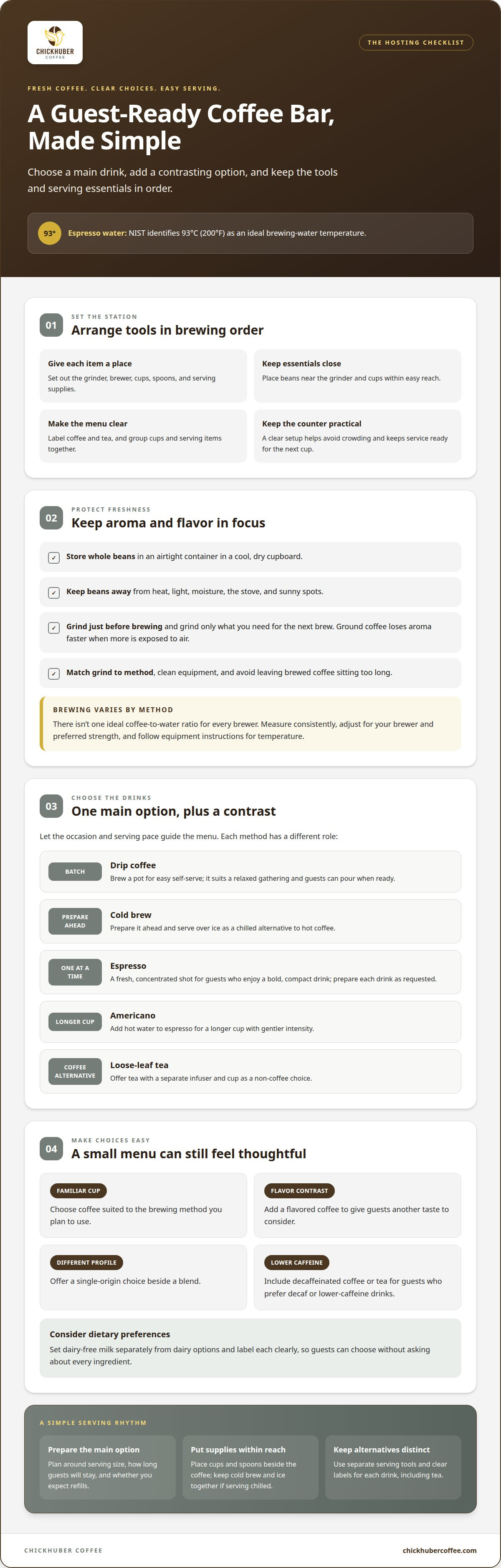
A well-planned drink menu gives guests options without turning preparation into a production. For impressing guests with gourmet coffee, combine a familiar brewed cup with a contrasting flavor and a tea option. Give each choice a clear purpose, such as a different taste or an alternative to coffee.
There isn’t one ideal coffee-to-water ratio for every brewing method. Measure consistently, then adjust to suit the brewer and the strength you prefer. Brewing temperature also varies by method, so follow your equipment’s instructions instead of using one setting for every coffee.
Include decaffeinated coffee or tea for guests who prefer decaf or lower-caffeine drinks. For dairy-free guests, set out a dairy-free milk separately from dairy options, and label each clearly. This makes it easier for everyone to choose without asking about every ingredient.
How much coffee should you prepare per guest? Plan around serving size, how long guests will stay, and whether you expect refills. For a mixed menu, brew a manageable amount and offer tea as another choice. A flexible plan helps you serve everyone without making more coffee than the gathering needs.
- For a familiar cup: Choose a coffee suited to your planned brewing method.
- For a flavor contrast: Add a flavored coffee to give guests another taste to consider.
- For a different coffee profile: Offer a single-origin choice beside a blend.
- For tea drinkers: Set out loose-leaf tea with a separate infuser and cup.
If impressing guests with gourmet coffee is your goal, make every choice easy to understand. Label the coffee and tea, group cups and serving items together, and place milk and sweeteners within reach. Follow the package or equipment instructions for each drink. A simple setup lets guests choose confidently while you focus on hosting.
What coffee drinks are easiest to serve guests at home?
Batch-brewed drip coffee is a simple choice for a gathering because guests can pour their own cups. Cold brew is easy to serve when prepared ahead, while espresso suits guests who enjoy a concentrated drink but requires individual preparation. To impress guests with gourmet coffee, choose one main drink for the occasion and add a contrasting option.
Set up the serving area before guests arrive. Place cups, spoons, and common additions beside the coffee, and keep cold brew and ice together if serving it chilled. For espresso, arrange cups near the machine and prepare each drink as requested. A little planning helps you stay present instead of searching for supplies.
- Drip coffee: Brew a pot and let guests pour when they’re ready.
- Cold brew: Serve it over ice as a chilled alternative to hot coffee.
- Espresso: Prepare a fresh shot for guests who want a compact, concentrated drink.
- Americano: Add hot water to espresso for a longer cup with a gentler intensity.
Keep the choices distinct. A hot batch, a chilled coffee, and a non-coffee option such as tea can suit different preferences without filling the counter with equipment. Use separate serving tools for each drink and label the options clearly, so guests can choose without interrupting the conversation.
Match the menu to the occasion. For breakfast, a pot of drip coffee supports a relaxed, self-serve setup. At an afternoon visit, cold brew offers a refreshing alternative; espresso suits a short coffee break. To impress guests with gourmet coffee, make the service easy to navigate: prepare the main option first, keep cups within reach, and make individual drinks as requested.
What coffee beans are best for gourmet coffee at home?
Choose beans to suit your brewing method and the flavors your guests enjoy. A balanced blend can work well in a shared pot, while a single-origin coffee offers a distinct flavor to explore. For espresso, select a coffee whose taste you enjoy in a concentrated serving. Let the brewing method guide your choice, rather than relying on a label that sounds impressive.
Roast level influences flavor. Lighter roasts can highlight brighter, more delicate notes, while darker roasts often have a deeper, more pronounced profile. For familiar flavors, choose a medium roast; for a bolder cup, try a darker profile. Keep the menu focused and describe each choice in simple terms.
For an easy comparison, serve two coffees using the same brewing method, such as a blend and a single origin. Keep the cup size and preparation consistent, then invite guests to notice differences in aroma, body, and finish. This makes tasting part of the gathering without requiring specialist knowledge.
- For a shared pot: Choose a versatile profile that tastes balanced when served black or with additions.
- For espresso: Select a coffee with a flavor you enjoy in a small, concentrated cup.
- For variety: Offer a blend beside a single-origin coffee, and explain the difference briefly.
- For flavored coffee: Choose a clear flavor note, such as vanilla, that complements rather than overwhelms the coffee.
Buy whole beans if you plan to grind them before brewing, and check the package for roast information. Match the grind to the brewer: espresso requires a finer grind than French press. Even a carefully chosen coffee can taste unbalanced if the grind doesn’t suit the brewing method.
For a guest-ready menu, choose one dependable everyday coffee and one contrasting option. A balanced blend and a brighter single origin give guests a straightforward choice. Taste both before hosting, then settle on the coffees that suit your equipment and menu.
Chickhuber Coffee
Chickhuber Coffee offers blends, single-origin coffees, flavored coffees, and loose-leaf teas to help you put together a guest-ready menu. Choose a familiar blend for serving a group, a single origin for a distinct cup, or a flavored coffee for a different profile. Tea gives guests another option beyond coffee.
The 6 Bean Blend and Cowboy Blend bring different blend choices to the table, while Organic Honduras Coffee offers a single-origin option. French Vanilla Flavored Coffee adds a recognizable flavor for guests who prefer a sweeter cup. Pair a coffee selection with Loose Leaf Tea Blends to make your menu more inclusive without adding another coffee-brewing method.
Pair your selections with the brewing setup and drink styles you’ve chosen. Keep the menu focused, describe each option plainly, and let guests choose what suits them. Explore Chickhuber Coffee’s coffee and tea selection to plan your next gathering.
Make your next gathering your own
Make your coffee setup a small signature of how you host. Choose flavors that suit the occasion, then add a simple menu and thoughtful presentation. Impressing guests with gourmet coffee doesn’t require a complicated routine; start with choices that reflect your taste and suit the people around your table.
For your next gathering, explore how the 6 Bean Blend, Cowboy Blend, and Organic Honduras Coffee could each shape a different kind of cup. Think about which profile belongs with breakfast, an afternoon visit, or a longer conversation. A deliberate choice gives your coffee service character without making hosting feel like a performance.
Chickhuber Coffee offers these options for building a coffee lineup that feels distinctly yours. Explore coffee choices and contact Chickhuber Coffee to take the next step toward your next gathering. Set your plan, serve with confidence, and make the next cup a reason to stay a little longer.
Frequently Asked Questions
What gourmet coffee recipes and flavor pairings impress guests?
Serve cold brew over ice with a splash of milk, or pair French Vanilla coffee with a lightly sweet biscuit. For a richer dessert-style cup, add cocoa to brewed coffee and serve it with dark chocolate. Keep additions on the side so guests can adjust sweetness and creaminess. A small tasting tray with coffee, tea, and simple snacks adds variety without complicating service.
What is the ideal coffee-to-water ratio and brewing temperature?
There isn’t one ideal coffee-to-water ratio for every brewing method; measure consistently and adjust to your brewer and preferred strength. For espresso, the ideal brewing-water temperature is 93 degrees Celsius or 200 degrees Fahrenheit; for other methods, follow the equipment’s directions.