

Coffee pairings for breakfast foods, from toast to pastries
The toughest breakfast match for coffee is often an overly sugary or greasy bite: it can mute sweetness, dull brightness, and hide subtle notes. A good coffee pairing with breakfast foods matches the brew’s intensity and texture to what’s on your plate. Start there, then adjust for the brewing method.
Coffee can taste different beside a buttery pastry than it does with plain toast. Sugar, salt, and fat shift the flavors you notice, while the brewing method affects the coffee’s body and brightness.
Find out which coffees work with toast, eggs, fruit, muffins, and pastries, and how pour-over, espresso, French press, and cold brew affect the match. Use the practical tips below to find pairings that make breakfast taste better, not flatter. Choose your plate, pick your brew, and make the first cup count.
Key Takeaways
- Pair apple French toast with caramel-forward coffee, and try a fuller brew when breakfast is rich.
- Notice how sugar, salt, and fat can shift coffee’s sweetness, brightness, and complexity.
- Use balanced medium roasts as an easy match for muffins, pastries, and scones.
- Choose brighter, lighter coffees for fruit and yogurt, then adjust if the fruit tastes especially tart.
- Let the brewing method guide the match: pour-over highlights clarity, while French press brings a fuller mouthfeel.
1. French toast with apples and caramel macchiato or buttered cold brew
For pancakes, waffles, and French toast, choose a medium to medium-dark coffee with chocolate or nut notes. Its body can stand up to maple syrup and buttery edges. A caramel macchiato suits French toast topped with sautéed apples, while buttered cold brew offers a smooth, chilled alternative. Pick the match you enjoy most, whether that’s creamy caramel or rounded cold coffee.
Citrus shifts the pairing. Orange-scented French toast strata with candied lemon zest works well with bold espresso or a blood orange mocha. Espresso brings concentrated intensity to bright citrus notes; the mocha echoes the fruit with added chocolate depth. Consider the topping, too: a sweeter glaze calls for coffee with enough bitterness to balance it.
Toast gives coffee room to lead. Its subtle flavor won’t compete with the brew, and lightly toasted sourdough works with medium- or dark-roast coffee. Add fresh fruit for a bright contrast or nuts for a richer, more grounded bite. With cinnamon oatmeal, choose coffee with spicy, earthy notes; cinnamon can bring those flavors together.
Eggs and avocado call for a different balance. Light-roast coffee pairs well with scrambled eggs, avocado toast, and toast with jam. Clean acidity can refresh the palate between bites of rich eggs and avocado. Boiled or poached eggs offer a protein-rich, non-greasy option beside coffee. For a simple plate, combine poached eggs, sourdough, and a light roast.
Avocado works beyond toast. In a smoothie, its creamy texture contrasts with bright coffee; with avocado toast, try a light roast and let its acidity cut through the richness. Consider the other ingredients, too. Citrus or berries add tartness, while nut butter makes the smoothie richer and better suited to a fuller-bodied brew.
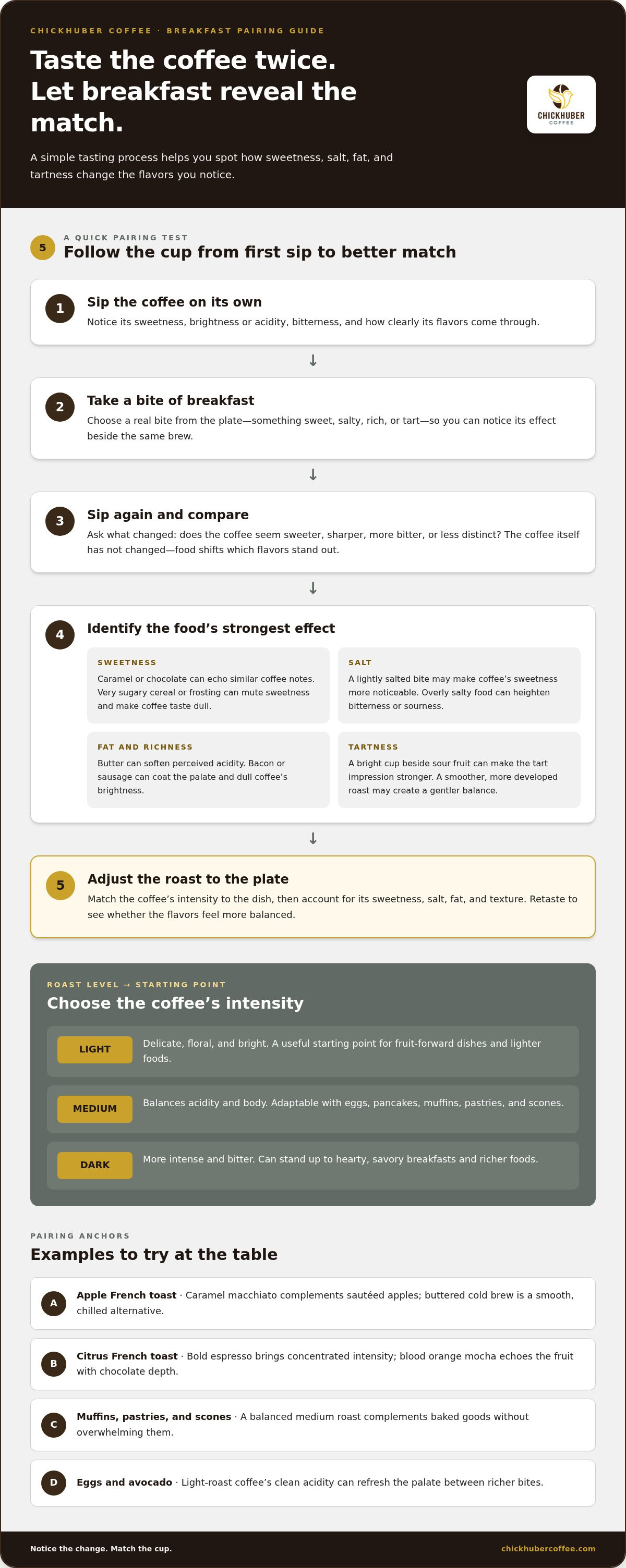
Use a quick pairing test: taste the coffee alone, take a bite, then sip again. Notice whether the food makes the brew taste sweeter, sharper, or less distinct. The U.S. Food and Drug Administration recommends that most people keep their daily caffeine intake within 400 mg. That gives you a practical limit while you choose a breakfast coffee to enjoy.
2. Can food really change how coffee tastes?
Food changes which coffee flavors stand out, even though the coffee itself stays the same. Taste a bright cup before breakfast, then try it beside a buttery pastry. The pastry’s fat can coat your palate and soften the coffee’s acidity. A salty egg dish may make caramel or chocolate notes seem sweeter. Compare a sip before and after each bite to notice the difference.
Roast level is a useful starting point. Light roasts often taste delicate, floral, and bright, so they suit fruit-forward dishes and lighter foods. Dark roasts bring more intensity and bitterness, which can stand up to hearty, savory breakfasts. Medium roasts balance acidity and body, making them adaptable with eggs or pancakes. Match the coffee’s intensity to the dish, then adjust for sweetness, salt, and fat.
Bean variety also shapes the flavor profile. Arabica is usually mild and smooth, with possible fruit, chocolate, or caramel notes. Robusta tends to taste stronger and bolder, with dark chocolate, wood, or nut notes. These are broad profiles, not guarantees for every cup. Roast and preparation affect what you taste, so use the brew itself as your guide.
Sweetness can complement coffee or flatten its flavor. A caramel pastry may echo coffee’s caramel notes, while chocolate can pair with darker flavors. But highly sugary cereal or frosting can mute coffee’s sweetness and make it taste dull. Try black coffee beside a very sweet bite; its bitterness can help balance the sugar. More sweetness doesn’t always improve the match.
Salt and fat affect coffee in different ways. A lightly salted breakfast can make coffee’s sweetness more noticeable, but overly salty food may heighten bitterness or sourness. Bacon and sausage can coat the palate, dulling coffee’s brightness. Protein and fat can also soften coffee’s perceived sharpness. For a clearer comparison, taste the same cup with plain toast, then with a richer bite.
Acidity matters most when both the coffee and food taste sharply tart. A bright cup beside sour fruit can intensify that impression; a smoother, more developed roast can create a gentler balance. Coffee acidity is a flavor quality, not a measure of how the drink will feel for every person. When considering caffeine, account for the brew and your total intake rather than judging strength by taste alone.
Build a simple tasting routine: sip coffee alone, take a bite, then sip again. Notice whether the flavors seem brighter, sweeter, more bitter, or less distinct. Use that change to choose your next breakfast match. A coffee pairing with breakfast foods works best when roast intensity balances the dish’s strongest flavor and texture.
3. Medium roasts with muffins, pastries, and scones
A balanced medium roast is a reliable partner for muffins, pastries, and scones. Chocolate, caramel, or light citrus notes complement baked goods without overwhelming them. Try a blueberry muffin with a medium roast that has gentle acidity, or pair a plain scone with coffee that has chocolate notes. The coffee stays present while the pastry adds sweetness and texture.
Adjust the match to the pastry’s sweetness. A very sweet glazed doughnut can make mild coffee seem flat, so choose a cup with more acidity or mild bitterness. With a less-sweet croissant, a balanced medium roast keeps butter from dominating. For a chocolate muffin, try coffee with cocoa notes; for a fruit scone, choose a brighter cup to echo its tang.
Roast level offers another way to choose. Light roasts emphasize clarity, floral notes, and brightness, making them suitable for fruit-forward pastries. Medium roasts balance acidity and body, so they fit classic breakfast plates and varied baked goods. Dark roasts bring more intensity and bitterness, which can stand up to chocolate, maple, or richer foods. Match the coffee’s strength to the dish, then fine-tune for sweetness.
Milk and sweeteners change the balance, too. Milk softens coffee’s bitterness and adds creaminess, which can suit a dry scone or plain muffin. Sugar or flavored sweetener adds sweetness, so use less with an already sugary pastry. Taste the coffee first, then add milk or sweetener gradually. This helps preserve the coffee’s chocolate or citrus notes.
For breakfast sandwiches, choose medium to medium-dark coffee with nutty or cocoa notes. It can hold its own beside bacon, sausage, cheese, and toasted bread. A sandwich with milder fillings, such as egg and light cheese, may suit a medium roast. Medium-roast coffee also works with hearty sandwiches beyond breakfast, including turkey and cheese. Its balance pairs well with vinaigrettes or creamy dressings, too.
Light-roast coffee brings a different balance to breakfast. Pair it with a fruit tart, citrus pastry, yogurt with honey, or a croissant when you want its brighter flavors to remain clear. Dark roasts suit heartier, bolder bites but can overpower a delicate scone. Let the strongest ingredient guide you: fruit calls for clarity, while chocolate and maple welcome more intensity.
Popular pairings vary across countries because breakfast foods and coffee traditions vary, too. There’s no single country-by-country formula; use the food’s sweetness, richness, and intensity to find a match. A medium roast with a scone or a brighter coffee with fruit offers a practical starting point. Then let your palate make the final call.
4. Do different coffees pair better with different foods?
Yes. Light-roast washed coffees, especially Ethiopian or Kenyan, pair well with yogurt, fruit, and granola. Their clarity can highlight delicate flavors instead of overpowering breakfast. Try a bright cup beside plain Greek yogurt topped with blueberries. The clean contrast lets the berries’ fruitiness stand out. If you prefer a softer match, choose a more developed roast when the fruit tastes sharply tart.
Build Greek yogurt around its toppings. Strawberries and raspberries add tang, while almonds, walnuts, or seeds bring roasted, earthy qualities. A light roast can complement the fruit and keep finer notes clear. With a generous handful of nuts, a medium roast adds more body. Taste a spoonful of yogurt, then sip the coffee; choose the brew that balances the topping rather than masking it.
Fresh fruit creates a bright contrast with coffee. Apples, pears, and stone fruits highlight a coffee’s acidity, while citrus can make an already lively cup taste sharper. Orange also brings vitamin C to breakfast. For a practical match, pair orange slices with a smooth, medium-bodied coffee, or enjoy tart berries with a lighter roast. Let the fruit’s sweetness and acidity guide your choice.
Granola changes the equation. Oats and nuts suit coffee with chocolate or nut notes, while dried cranberries or cherries add tartness. Sweetened granola can overwhelm a delicate cup, so choose plain granola with a light roast when you want the coffee’s origin flavors to shine. If the bowl tastes very sweet, a more developed roast can bring balance. Add honey sparingly, then taste again.
Consider texture as well as flavor. Creamy Greek yogurt and soft berries contrast with crunchy seeds, almonds, or toasted oats. Pour-over can keep the cup clear beside that mix, while fuller-bodied coffee may complement walnuts and roasted oats. Croissants and buttered toast call for another approach: their rich texture can dull subtle coffee notes, so choose a cup with enough body to stay noticeable.
Fruit breakfasts aren’t the only option. Eggs, avocado, and toast make a savory plate that can work with light to medium coffee; a bright cup cuts through creamy avocado. For a more filling granola bowl with nut butter, try a medium roast instead. The goal is to complement the dish’s strongest element, not follow a rigid chart. Change one topping or roast at a time, and notice which flavors become clearer.
5. How pour-over, espresso, French press, and cold brew affect pairings
The brewing method changes coffee’s body, clarity, and balance, shifting how breakfast tastes beside it. Pour-over uses a paper filter, which removes oils and highlights a cleaner, brighter cup. Try it with yogurt, berries, or a lightly sweet pastry. Its clarity lets citrus and fruit flavors stand out without a heavy contrast. Choose a richer brew when your plate is buttery or especially filling.
Espresso concentrates coffee’s flavor, making sweetness and bitterness more noticeable. Its crema adds texture, so a small sip can feel more intense beside food. Pair espresso with a plain croissant or a modest piece of fruit, then notice how each bite changes the cup. A very sweet pastry can make espresso’s bitterness feel sharper, while chocolate can complement its darker flavors. Let your taste buds decide whether the contrast feels balanced.
French press coffee keeps more oils in the cup, creating a fuller mouthfeel. That weight can complement pancakes with maple syrup or toast with nut butter. It also stands up to rich breakfast foods. Compare French press with a lighter filtered brew beside the same slice of nut-butter toast. The difference in body is easy to notice. Choose the fuller version when you want the coffee to hold its ground.
Cold brew, extracted at lower temperatures, often has softer perceived acidity and a rounded profile. That can make it a smooth match for sweet or rich breakfast bites. Try it beside French toast with apples or with a buttery pastry when hot coffee feels too intense. It offers less of a sharp citrus contrast than a bright pour-over. The food still matters: syrup or frosting can make the combination overly sweet.
Use this simple tasting test with any method. Sip the coffee alone, take a bite, then sip again. Note whether sweetness becomes clearer, acidity feels sharper, or the brew seems heavier. Repeat with the same food and a different method, such as pour-over followed by French press. Keep the food fixed to isolate the brewing method’s effect. This makes your next coffee pairing with breakfast foods a deliberate choice, not a guess.
For a flavored option beside a sweet pastry, explore French Vanilla Flavored Coffee. Taste it with the pastry before adding extra sweetener. That quick comparison helps you judge whether the coffee and food bring balance or simply stack sweetness.
Chickhuber Coffee: 6 Bean Blend
Chickhuber Coffee’s 6 Bean Blend gives you a coffee to explore alongside breakfast. Use the pairing ideas in this guide to test it with toast, fruit, or pastries, then try a different brewing method and notice how the cup changes. For a flavored option beside sweeter foods, consider French Vanilla Flavored Coffee. Prefer a different direction? Organic Honduras Coffee and Cowboy Blend offer more choices to compare with your morning plate. Start with the food, choose the coffee, and taste the difference. Visit chickhubercoffee.com to explore the coffees and find your next breakfast match.
Make Your Next Morning a Tasting Session
Turn breakfast into a small experiment. Keep your usual plate, change the brew, and notice what shifts. Next time, try a different roast or brewing method with the same food. Pay attention to the first sip, then the flavor after a bite. That simple comparison helps you discover what you enjoy, not just what sounds like a classic match.
A thoughtful coffee pairing with breakfast foods doesn’t need rules or elaborate preparation. Start with one clear choice: a brighter cup, a fuller brew, or a flavored coffee. Let the food guide you, then trust your own taste. Your favorite match might be a familiar pastry with a new coffee or a different brew beside your regular toast.
Ready to choose a coffee for your next breakfast experiment? Contact Chickhuber Coffee and explore options for your morning routine. Keep testing, keep tasting, and make the next cup yours.
Frequently Asked Questions
What’s the worst thing to eat with coffee?
Very sugary or greasy foods can make coffee taste less clear. Frosted cereal may mute subtle notes, while greasy bacon can dull a cup’s brightness. If your coffee tastes flat beside breakfast, try a less-sweet bite or a leaner option, such as poached eggs. Strongly flavored cheese can overpower delicate coffee, too. The mismatch depends on both the food’s intensity and the brew’s character.
Can food really change how coffee tastes?
Food can change which flavors you notice in a sip. Taste coffee before and after a bite of salted toast: sweetness may seem more pronounced afterward. A buttery croissant can make a delicate cup feel muted, while chocolate may echo darker coffee notes. For a useful comparison, keep the brew unchanged and switch only the food. That makes the flavor shift easier to spot.
Do different coffees pair better with different foods?
Match the coffee’s intensity and flavor to the food. A bright, fruity cup can complement fresh pear, while a fuller, earthier coffee suits a heartier bite. For a quick test, choose one breakfast food and compare it with two different coffees. Notice which cup stays distinct without overpowering the food. This simple approach helps you find your preferred pairing.
Which coffee roasts pair best with common breakfast foods?
Light roasts suit fruit and delicate pastries, medium roasts work with eggs and toast, and dark roasts stand up to chocolate or maple. Consider the meal’s strongest flavor rather than matching roast color alone. A lightly sweet fruit tart, for example, can suit a light roast, while a maple-glazed breakfast sandwich calls for more coffee intensity. Adjust if the coffee overwhelms the food.
What coffee pairs well with eggs and savory breakfast dishes?
Light to medium roasts pair well with eggs, avocado, and toast, while medium-dark coffee suits a heartier sandwich with bacon, sausage, or cheese. If the plate includes rich ingredients, try a cleaner, brighter cup for contrast. With a simple boiled egg and sourdough, a balanced medium roast keeps both coffee and food noticeable. Let the richest ingredient guide your brew choice.
Which coffee flavors pair well with oatmeal and cereal?
Coffee with spicy or earthy notes can complement cinnamon oatmeal. For cereal, consider its sweetness: plain oats leave room for subtle coffee flavors, while sugary cereal can make those notes harder to detect. Try coffee with a nutty or chocolate character beside granola with almonds. If the bowl includes dried fruit, taste the coffee alongside a bite first; tart toppings may make a bright cup seem sharper.
What coffee pairs best with pastries, muffins, and croissants?
A balanced medium roast is a flexible choice for muffins, scones, and many pastries. With a chocolate muffin, coffee with cocoa notes creates a natural flavor link. A very sweet doughnut can feel heavy beside a mild, sweet cup, so try coffee with more acidity or mild bitterness. For a buttery croissant, choose a brew with enough body to stay distinct through its rich texture.
What are the best coffee pairings for fruit and yogurt breakfasts?
Light-roast coffee pairs well with yogurt, fruit, and granola because its clarity complements delicate flavors. Try plain Greek yogurt with blueberries and a light cup, then add walnuts and compare with a medium roast. If the fruit is sharply tart, choose a slightly more developed roast to soften the overall impression. Fresh apples, pears, and stone fruits can also highlight coffee’s acidity.