

Coffee for Iced Coffee: Choosing by Origin and Roast
The darkest roast isn’t automatically the best choice for iced coffee. The best coffee for iced coffee depends on the cup you want: a smooth, familiar blend, a single origin with distinctive character, or flavored coffee with a twist. Start with the taste you enjoy, then choose a coffee to match.
You already know ice can change how coffee tastes, so choosing beans with the right flavor profile matters. This guide breaks down how origins and roast levels shape an iced cup, then compares single origins, blends, and flavored coffees to help you choose with confidence. Want bold and straightforward? Look at blends. Prefer more distinctive notes? Try a single origin. Craving a sweeter, more dessert-like drink? Flavored coffee may be your move. Get the practical differences, pick your direction, and make your next glass count.
Key Takeaways
- Choose a single origin to explore distinctive bean notes; reach for a blend when you want a more consistent flavor profile.
- Match origin and roast to the taste you want in the glass, not just the coffee’s color or intensity.
- Use flavored coffee to add a clear flavor direction, then decide whether you want it to lead or complement the coffee.
- Compare Chickhuber Coffee’s blends, Organic Honduras Coffee, and French Vanilla Flavored Coffee to find a starting point for your next iced cup.
Single-origin coffee versus blends
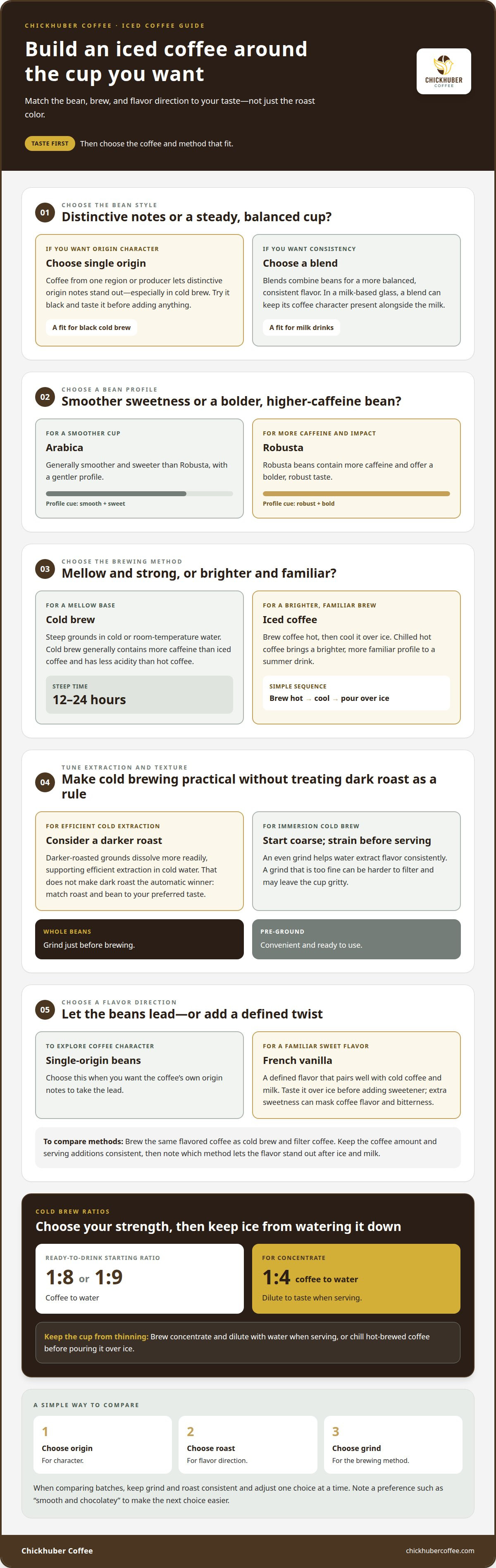
Single-origin coffee comes from one region or producer, so its distinctive notes can stand out in cold brew. Blends combine beans to create a more consistent, balanced profile. For a black drink, try a single origin and taste it before adding anything. For a milk-based glass, a blend can keep its coffee character present alongside the milk.
Cold brew coffee steeps ground coffee in cold or room-temperature water for 12-24 hours. Iced coffee is brewed hot, then cooled over ice. Cold brew generally contains more caffeine than iced coffee, and it has less acidity than hot coffee. Choose cold brew for a mellow, strong base; choose chilled hot coffee when you want a brighter, more familiar brew. Both can work in a summer drink.
Arabica is generally smoother and sweeter than Robusta, while Robusta beans contain more caffeine. A darker roast can dissolve more readily, supporting efficient extraction in cold water. That doesn’t make dark roast the automatic winner: match the roast and bean to your preferred taste. If you like a robust, high-impact cup, consider Robusta; for smoother sweetness, try Arabica.
Whole beans let you grind just before brewing, while pre-ground coffee is ready to use. For immersion cold brew, start with a coarse grind and strain the grounds before serving. As you compare batches, jot down a simple preference, such as “smooth and chocolatey,” to make your next choice easier.
Coffee prices vary with factors such as origin, roast, and processing. Compare the product details and flavor profile you want instead of treating price alone as a measure of quality.
For cold brew, use a 1:8 or 1:9 coffee-to-water ratio. To make concentrate, use 1:4, then dilute it to taste.
To keep ice from watering down your drink, brew a concentrate and dilute it with water when serving. Or chill hot-brewed coffee before pouring it over ice, rather than letting ice melt into a hot drink.
| Option | Best for | What to expect |
|---|---|---|
| Single origin | Black cold brew | Distinct origin notes |
| Blend | Milk drinks | Balanced, consistent flavor |
| Arabica | Smoother cups | Sweetness and a gentler profile |
| Robusta | More caffeine | A bolder, robust taste |
| Dark roast | Cold extraction | Grounds dissolve more readily |
| Pre-ground | Convenience | Ready for brewing |
Choose single origin for distinctive notes, a blend for balance, and a brewing method that suits your preferred strength.
Choosing coffee by origin and roast level
Start with origin when you have a particular flavor direction in mind. Single-origin coffee keeps regional character in focus, while roast level also shapes the taste of the brewed cup. Kenyan coffee, for example, can be cold-drip brewed for a brighter cup that lets its origin notes stand out. Chickhuber Coffee’s Organic Honduras Coffee offers another named origin to explore. Finding the best coffee for iced coffee starts with the profile you enjoy.
Next, choose a roast that suits your preferred cup. Light, medium, and dark roasts offer different flavor profiles, so consider whether you want a more delicate taste or a deeper, roast-forward one. Dark-roasted coffee grounds dissolve more readily, allowing efficient extraction. That can make dark roast a practical starting point for cold brewing, especially if you want a bold base for milk or sweetener.
Grind size matters, too. For immersion brewing, use an even grind so the water extracts flavor consistently. A grind that is too fine can be harder to filter and may leave the cup gritty. If you buy whole beans, grind them just before brewing; pre-ground coffee is convenient and ready to use. When comparing batches, keep the grind and roast consistent and adjust one choice at a time.
Decaf describes a caffeine choice, not a roast level. If reducing caffeine is your priority, choose decaf first, then select a roast for its flavor. For a clear comparison, brew regular and decaf versions of the same origin with the same grind and method. Taste them side by side over ice before adding milk or syrup. This makes it easier to judge which coffee fits your iced coffee routine.
Use a simple decision sequence: choose origin for character, roast for flavor direction, and grind for the brewing method. If you want to explore an origin-led option, try Organic Honduras Coffee as a starting point for your next iced cup.
Best flavored iced coffee
Choose flavored coffee when you want a clear taste beyond the beans themselves. French vanilla, for example, brings a familiar sweet flavor that pairs well with cold coffee and milk. For a balanced glass, brew a medium roast and taste it over ice before adding sweetener. The best coffee for iced coffee is the one whose flavor still suits you after chilling.
Yes. Flavored coffee can make a satisfying iced drink, while single-origin beans let their own origin notes take the lead. Choose flavored coffee for a defined twist, or single origin when you want to explore the coffee’s character.
Let your brewing method shape the result. Cold brew provides a smooth base for flavored coffee, while chilled filter coffee starts with a brighter profile. Espresso can work, too: pour it over ice and add milk for a concentrated drink. Taste before adding syrup, since extra sweetness can mask the coffee’s flavor and bitterness.
For a simple comparison, brew the same flavored coffee as cold brew and filter coffee. Keep the coffee amount and serving additions consistent, then note which method lets the flavor stand out after adding ice and milk. If you want a stronger coffee taste, use less milk or try a darker roast. For a lighter profile, try a medium roast.
Arabica is often associated with a smoother, sweeter cup, which can let added flavors blend in. The right match depends on how much coffee character you want alongside the flavor. Change one thing at a time: first the roast, then the brewing method, then the milk or sweetener. This makes it easier to tell what improves your drink.
Keep your preference in mind: choose flavored coffee for a bold, recognizable twist or single origin for distinctive bean notes. Brew, chill, taste, and adjust. The best coffee for iced coffee is the one you’ll want to make again. A few deliberate comparisons can help you find a flavor worth repeating.
Which coffee brands are best for iced coffee in the United States?
There isn’t one winning brand for every iced coffee drinker in the United States. The better choice depends on whether you want ready-to-drink cold brew or coffee to brew yourself, as well as the flavor you prefer. Compare products in the same format rather than judging a bottled drink against whole beans.
Start with the product details. Look for a roast and flavor profile that fits your drink: a darker roast may suit a bold, milk-based glass, while coffee with distinct origin character may appeal when served black. Check whether the coffee is flavored, too. Chickhuber Coffee’s French Vanilla flavored coffee, for example, is made with high-quality natural flavoring oils and has no added sugar or calories. These details help you narrow your choices without treating brand recognition as a guarantee of taste.
For packaged cold brew, consider the coffee’s flavor and how you plan to serve it. Taste it plain first, then try it over ice with your usual milk or sweetener. Additions can change the balance of the drink. When comparing whole beans, use the same brewing method and serving style each time so the coffee, rather than the method, drives the comparison.
Keep a short tasting record. Note the coffee’s name, roast description, flavor, and whether you prefer it black or with milk. Change one variable at a time, such as serving style, so you know why your next choice appeals. That turns a crowded selection into a practical shortlist based on the cup you enjoy.
Ready to choose coffee for your next iced drink? Explore coffee options and pick the flavor direction that fits your routine.
Chickhuber Coffee
Chickhuber Coffee gives you several ways to match your coffee choice to an iced drink. Choose the 6 Bean Blend or Cowboy Blend when you want a blend, or Organic Honduras Coffee to explore a single-origin option. For a sweeter flavor direction, French Vanilla Flavored Coffee offers a flavored alternative.
Use your preferred brewing method and serving style to decide where to start. Try a blend for a balanced base, an origin-led coffee to focus on its character, or flavored coffee when you want an added taste. Brew it, serve it over ice, and adjust your milk or sweetener to suit your cup.
Ready to choose coffee for your next iced drink? Contact Chickhuber Coffee to explore the options.
Make Your Next Glass Your Own
Finding the best coffee for iced coffee is less about chasing a universal winner and more about making a cup that fits your routine. Notice whether you prefer a crisp finish, a fuller feel, or a flavor that stands out, and let that guide your next choice.
Keep it simple. Pick a coffee, prepare it as you usually do, and notice what you would change next time. A small adjustment can make the result feel more tailored without turning your daily coffee into a complicated project. Build on what works and leave behind what doesn’t.
Ready to find a coffee that suits your iced-coffee style? Contact Chickhuber Coffee for help choosing your next option. Then brew your way, trust your taste, and make that next glass yours.
Frequently Asked Questions
What coffee beans are best for iced coffee?
Choose coffee with a flavor profile you enjoy after chilling. For a clean black glass, look for tasting notes that appeal without milk or syrup. If you usually add milk, choose a coffee with enough character to remain noticeable alongside it. The right choice fits your serving style, not a label promising a universally superior iced cup.
What roast level tastes best in iced coffee?
A medium roast is a practical starting point if you’re unsure, because its roast flavor is less likely to dominate your first tasting. Brew a test glass, chill it, and taste before adding milk or sweetener. If the roasted notes feel too intense, try a lighter roast next time; if the cup tastes thin beside additions, try a darker roast. Keep your brewing method consistent.
Is cold brew coffee different from iced coffee?
Yes. The names describe different preparation styles, so choose based on the taste and routine you want. Cold brew suits planning ahead, while iced coffee is convenient when you already have hot coffee to chill. For an easy comparison, serve both without additions first. Then add your usual milk or sweetener and see which flavor holds up.
Should you use espresso, drip coffee, or cold brew for iced coffee?
Use espresso when you want a concentrated base that stands up to milk. Choose drip coffee for a straightforward glass made from your usual brew. Pick cold brew when you want to prepare coffee ahead and pour a serving as needed. The best method depends on your schedule and preferred strength, so compare them with the same additions.
What grind size and brewing method work best for iced coffee?
Match the grind to your brewing method: coarse grounds suit immersion, while drip filters need a more moderate grind. Espresso calls for a fine grind for its short, pressurized extraction. Start with the grind intended for your equipment, then adjust if the cup tastes weak or overly bitter. Keep the coffee amount and chilling approach steady while testing.