

Coffee for a Crowd Calculator: Event Drink Quantities
For 50 guests at a two-hour event, a coffee for a crowd calculator estimates 45 cups when each serving is 6 ounces. Use that as your starting point, then adjust for the event’s length, serving size, and expected coffee demand.
Planning coffee for a group shouldn’t be a guessing game. You need enough for guests to enjoy a cup without brewing far more than the event can use. Get the numbers right, and service runs smoother.
Use a coffee for a crowd calculator to estimate cups, brew water, and ground coffee, then translate the total into drip batches or urn capacity. Adjust the estimate for guest count and event duration. Once you know the servings, you can size your batches and time refills so coffee is ready when guests are.
Key Takeaways
- Adjust your estimate for how long the event runs and how many guests are likely to choose coffee.
- Convert planned servings into brew water and ground coffee to size your drip batches accurately.
- Use the guest-count examples to build a starting estimate, then account for the event’s timing and demand.
- Match urn capacity to your serving plan so you can prepare practical batches and keep coffee flowing.
How many drinks should I plan per guest?
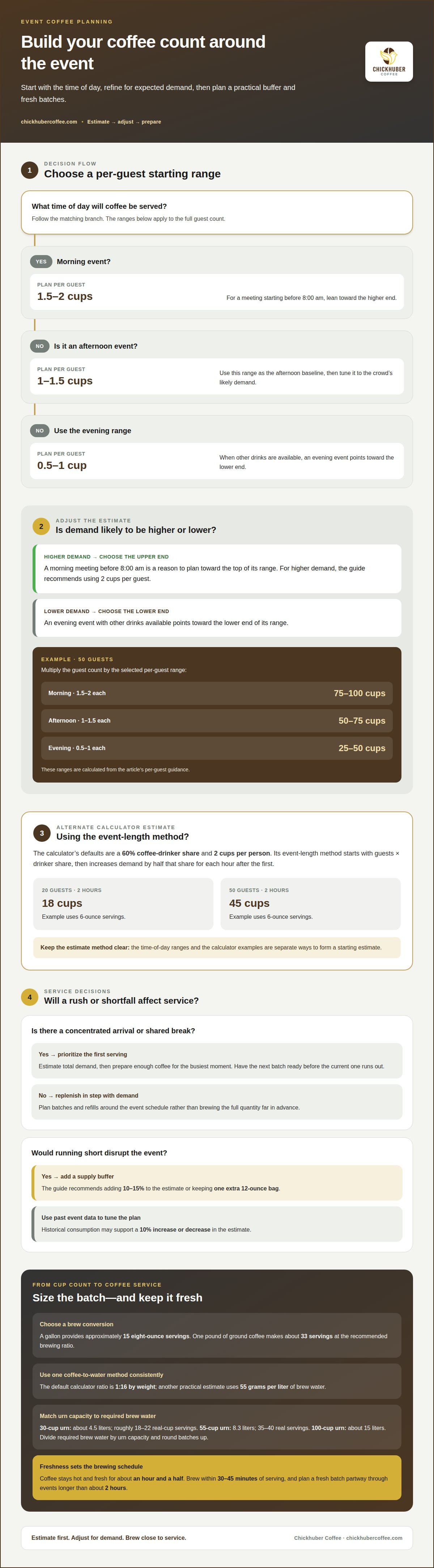
For a crowd, plan 1.5 to 2 cups per guest at a morning event, 1 to 1.5 in the afternoon, and 0.5 to 1 in the evening. For higher demand, use 2 cups per guest. A coffee for a crowd calculator turns those choices into a practical batch estimate.
A per-guest estimate is the expected number of cups for each attendee. The calculator’s default coffee-drinker share is 60%, and its default estimate is 2 cups per person. Its event-length method multiplies guests by the drinker share, then increases demand by half that share for each hour after the first.
Coffee-drinker share means the portion of guests expected to choose coffee. For 20 guests at a 2-hour event, using 6-ounce servings, the example yields 18 cups. For 50 guests under the same conditions, it yields 45 cups. These examples use the 60% share and account for the longer event.
Time of day changes the estimate because coffee consumption shifts across morning, afternoon, and evening events. Apply the per-guest range to the full guest count, then tailor it to the crowd’s likely demand. A morning meeting starting before 8:00 am points toward the higher end; an evening event with other drinks points lower.
A service rush is a concentrated period when many guests arrive at coffee stations together. Estimate total demand first, then plan how much needs to be ready for the busiest moment. If a meeting starts with a shared break, for example, prepare enough coffee for that first serving rather than relying on later brewing.
A supply buffer is extra coffee added to reduce the risk of running short. The guide recommends adding 10-15% to the estimate or keeping one extra 12-ounce bag. Use historical event data to adjust demand; past consumption may support a 10% increase or decrease. Then convert the final cup total into ground coffee and brew water for the next planning step.
Does this work for drip coffee or coffee urns?
The same serving estimate can guide drip brewing or urn batches. Café purchases are charged per drink, while self-service requires coffee, water, cups, and preparation. The total cost depends on guest count and setup.
Drip Coffee and Serving Conversions
A serving conversion translates brewed volume into cups and ground coffee. For event planning, a gallon provides approximately 15 eight-ounce servings; one pound of ground coffee makes about 33 servings at the recommended brewing ratio. The default calculator ratio is 1:16 by weight, while another practical estimate uses 55 grams per liter of brew water. Choose one method and apply it consistently to regular coffee or specialty options.
Urn Batch Size and Serving Capacity
Urn capacity is the volume a coffee urn can brew or hold per batch. A 30-cup urn holds about 4.5 liters but serves roughly 18-22 people one real cup each. A 55-cup urn holds 8.3 liters and delivers 35-40 real servings; a 100-cup urn holds about 15 liters. Divide required brew water by urn capacity, then round batches up.
Freshness is the time brewed coffee keeps its best serving quality. Coffee stays hot and fresh for about an hour and a half, so schedule brewing close to service. For events longer than about 2 hours, plan a fresh batch partway through. Brewing within 30-45 minutes of serving also helps keep each cup fresh.
A coffee station is a self-serve point where guests pour their own drinks. Place stations to spread out the line, and have the next urn batch ready before the current one runs out. An afternoon event may need fewer servings of regular coffee than a morning rush, so factor in the timing when dividing quantities.
Barista capacity is the number of drinks a staffed coffee bar can prepare each hour. One barista can make approximately 55 drinks per hour; two can typically produce 75 to 100. For a catering line expected to move quickly, compare that hourly capacity with the arrival rush, not just the event’s total drink count. Set out decaf separately if the plan includes the calculator’s 20% allowance.
Coffee calculator for events with 50 to 1,000 guests
Estimate servings for the guest count, then adjust for event length and expected demand. These examples offer a starting point for planning drip coffee quantities, brew water, and supplies.
Guest Counts and Event Adjustments
A guest-count estimate is the planned number of coffee servings for an event’s attendees. At an average of 1.5 cups per guest, plan 75 cups for 50 people, 150 for 100, and 300 for 200. Larger groups scale the same way: 450 cups for 300 guests, 750 for 500, and 1,500 for 1,000.
Duration changes the total because longer events give guests more chances to refill. For 100 attendees, the example rises from 6 gallons at a 1-hour event to 8 gallons at 2 hours and 10 gallons at 3 hours. Adjust the starting estimate when coffee is a main refreshment; reduce its share when other drinks are prominent.
Ground coffee quantity follows the brew-water volume and chosen strength. A 1:16 coffee-to-water ratio by weight provides a consistent calculation; another estimate uses roughly 55 grams per liter. Apply one method throughout the plan, then round supply quantities up to practical package or batch sizes.
Event Timing and Coffee Needs
Event timing is the schedule that helps predict coffee consumption. Morning service generally calls for more coffee than afternoon or evening service. For 100 people, one example estimates 4 gallons of regular coffee in the morning and 2.4 gallons in the afternoon. For a 50-person evening gathering, the starting range is 0.5 to 1 cup per guest.
Brew timing is the schedule for making coffee close to when guests will drink it. Brew drip coffee within 30-45 minutes of serving, then plan a fresh batch for an event lasting longer than about 2 hours. This keeps replenishment tied to demand instead of leaving the full quantity standing from the start.
A service buffer is extra stock reserved for unexpectedly high consumption. For self-serve drip coffee, add approximately 10% when running short would disrupt the event. For staffed service, carry 10% to 15% extra beans, milk, cups, ice, and other consumables. Match that reserve to the service format and expected rush.
Attendee demographics and drink consumption
Attendee demographics describe the mix of guests whose preferences shape drink demand. Use the guest count as your base, then consider event timing, schedule, and beverage choices. For a 50-person wedding, the estimate should reflect whether coffee accompanies breakfast, an afternoon break, or an evening reception.
Time of day is a planning factor that shifts the likely number of coffee drinkers. For 50 guests, a morning event may need 50 to 100 coffee drinks; an afternoon event, 38 to 75; an evening event, 25 to 50. These ranges reflect different demand levels, so use the event’s schedule to choose a suitable starting point.
A coffee-drinker share is the portion of attendees expected to choose coffee or another hot drink. One planning estimate assumes 60% of a group will drink at least one mug in the morning and 40% in the afternoon. For 100 people, that corresponds to 60 morning beverage drinkers or 40 afternoon drinkers. About two-thirds of beverage drinkers prefer regular coffee over decaf or tea in either period.
Break timing is the schedule of pauses when attendees can get a drink. A shared meeting break can concentrate demand into a short rush, while staggered breaks spread orders across the event. Plan the ready-to-serve amount for the busiest break, then replenish according to the remaining schedule.
Other beverages are alternatives that can reduce or redirect coffee demand. An evening reception with alcohol and several other drinks may need 2 or 3 gallons of coffee. A daytime event with tea available can divide hot-drink demand across both choices. For a group of 100, one example estimates 1 gallon of decaf for afternoon drinkers.
Historical consumption is the record of how much guests drank at comparable events. Use it to adjust the next estimate; past attendance or schedule changes can signal a different demand pattern. For a morning gathering, compare the start time and break schedule with prior events before setting quantities. Choose coffee for your event to match the service plan.
Chickhuber Coffee: Organic Honduras Coffee
Chickhuber Coffee gives event planners coffee options to match a crowd’s menu and preferences. Once you’ve estimated the servings, choose Organic Honduras Coffee or 6 Bean Blend for a regular coffee selection. French Vanilla Flavored Coffee adds a flavored option, while Cowboy Blend provides another blend to include in your lineup.
For a meeting, reception, or wedding, choose the coffee options to serve and divide the planned quantity among them. Keep the menu focused for a straightforward self-serve station, or offer more variety to suit guest preferences. The serving estimate sets the quantity; your coffee choices determine what guests can enjoy.
Ready to choose coffee for your event? Contact Chickhuber Coffee to discuss your selection.
Make your event plan the starting point
A strong coffee plan does more than fill cups. It creates a clear rhythm for your event, from the first pour to the final refill. Use your coffee for a crowd calculator estimate to decide how much to prepare, then choose a lineup that suits the gathering’s mood and menu.
Chickhuber Coffee offers 6 Bean Blend, Cowboy Blend, and Organic Honduras Coffee. Choose a familiar blend for a straightforward service or bring distinct options to a meeting, reception, or wedding. A focused selection makes it easier to organize what you’ll brew and serve.
Keep the next step simple: settle on the coffee that suits your event and build your serving plan around it. Contact Chickhuber Coffee to discuss your coffee selection. Make the plan, set the station, and give your guests a good cup to remember.
Frequently Asked Questions
How much coffee do I need for 50 people?
For 50 guests at a two-hour event with 6-ounce servings, plan for 45 cups using the calculator’s example. The total changes with event duration, serving size, and expected coffee demand. For a morning gathering, the estimate for 50 guests ranges from 50 to 100 coffee drinks, so choose based on the schedule and likely attendee preferences.
How many hot cups, cold cups, and lids should I bring?
Bring cups and lids to match the number of servings planned for each format. Divide expected drinks into hot and cold portions based on the menu, then pair each portion with the right cup type. Keep the counts separate during setup so guests can choose their drinks without slowing service or picking up the wrong cup.
How many cups of coffee are in a gallon?
For event planning, count a gallon as approximately 15 eight-ounce servings. A full gallon contains sixteen exact 8-ounce portions by volume, but planning for about 15 servings allows for practical serving needs. Use the event-planning conversion when estimating how many gallons to brew, especially if each guest’s cup is filled below the brim.
How much ground coffee is needed for 10, 20, 50, or 100 people?
The amount depends on serving size, event duration, and the number of expected cups. For 20 guests at a two-hour event with 6-ounce servings, the estimate is 200 grams. The same scenario for 50 guests requires 499 grams; 100 guests at default settings requires about 1.00 kilogram. For 10 people, first set those event inputs, then scale the grounds to the resulting brew-water amount.
What is the coffee-to-water ratio for brewing coffee in bulk?
Use a 1:16 coffee-to-water ratio by weight as the calculator’s bulk-brewing basis. That means weighing the coffee and water, rather than measuring grounds by volume, gives you a consistent starting point. Keep the ratio steady as you scale the batch, and calculate the grounds from the total water needed for the planned servings.
How many ounces are in a standard coffee serving?
A standard cup measurement is 8 fluid ounces, while the calculator’s default individual serving is 6 ounces. Keep those units distinct when planning: a guest’s serving size determines the total brewed volume, and the recipe’s coffee-to-water ratio determines grounds. For urn planning, use the serving size you expect to pour, not the urn’s advertised cup count alone.