

What is Blonde Roast Coffee? A Guide to Its Unique Flavor
Blonde Roast describes a lighter roast level, but it isn’t an official, industry-wide category with one fixed flavor profile. The label points you in a direction, not to a guaranteed taste. A lighter roast doesn’t automatically mean a mild cup or more caffeine.
If roast labels seem vague and caffeine advice keeps contradicting itself, you’re not alone. A lighter roast can taste bright, smooth, or surprisingly bold, depending on the beans and how you brew them. Roast level alone also doesn’t tell you exactly how much caffeine will end up in your cup.
This guide explains what the label describes, what flavors you might notice, and how to brew a balanced cup without getting buried in coffee jargon. You’ll also find a practical way to compare caffeine and simple adjustments to try if your brew tastes too sharp, thin, or sour.
Get clear on the roast, set realistic expectations, and make your next cup with confidence.
Key Takeaways
- Read Blonde Roast as a general sign of lighter roast development, not a promise of one exact flavor.
- Use roast comparisons as a starting point: flavor and body vary by coffee, and roast level alone doesn’t determine caffeine.
- For a more balanced brew, keep your dose consistent and adjust grind or contact time based on how the cup tastes.
- Compare coffees side by side using the same preparation and serving conditions to discover which profile suits you.
What Is Blonde Roast Coffee? Understand the Roast Label
Blonde roast generally describes coffee roasted to a lighter level of development than medium or dark roasts. It’s a useful cue, not a precise recipe: there’s no universal cutoff that every roaster uses for the label. One company’s blonde roast may differ in color and flavor from another’s, so treat the name as a guide rather than a guarantee.
Blonde roast is a roaster’s label for a lighter-developed coffee, not a universally standardized roast level or a promise of one specific taste. The label tells you something about how the beans were roasted, but it doesn’t tell the whole story of the cup. Check the origin and tasting notes too, then use your brewing method and personal preference to judge the result.
How blonde roast relates to light roast
Roasters commonly use “blonde” to describe a profile associated with light roasting. The term can make the choice feel more approachable, but it isn’t a formal category with one industry-wide definition. Roast names and sensory descriptions vary between brands, and words such as “light,” “bright,” or “smooth” can mean different things to different roasters.
There’s no single roast temperature or bean-color threshold that defines every blonde roast. Roasters control the process and decide how to describe the result. For background on how heat changes coffee, explore this overview of the coffee roasting process. Use the label to orient yourself, then look for details about the coffee itself.
What the label can, and cannot, tell you
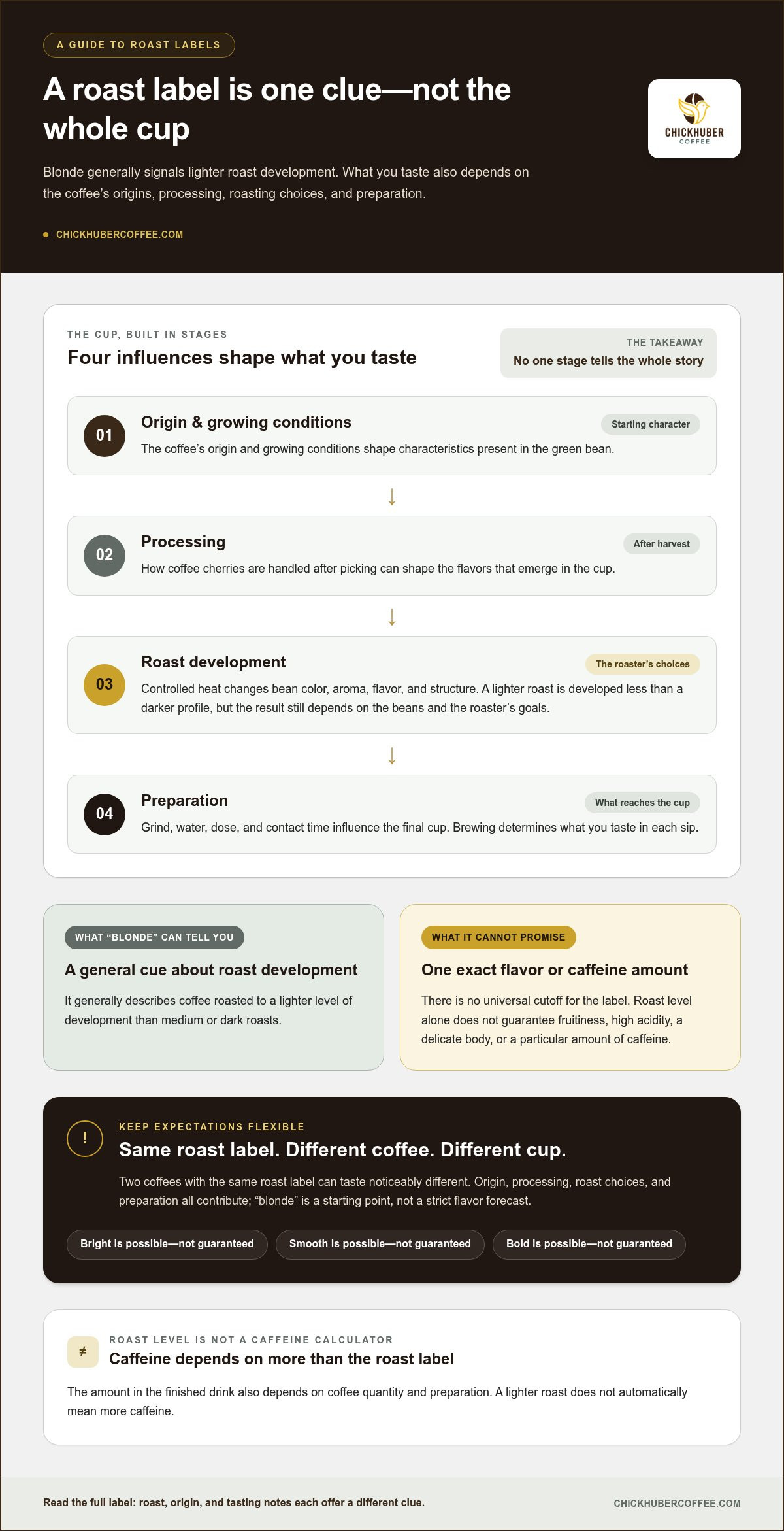
Roast level influences a coffee’s aroma, flavor, and body, but it works alongside other factors. Beans from different origins can have distinct characteristics, and processing, or how coffee cherries are handled after picking, can shape the flavors that emerge in the cup. Roast development affects how those qualities come through, while brewing determines what you taste in each sip.
That’s why two coffees with the same roast label can taste noticeably different. A lighter roast may let some origin characteristics stand out, but it doesn’t guarantee fruitiness, high acidity, or a delicate body. The bean, its processing, the roaster’s choices, and your preparation all have a say.
- Roast level: A broad cue about how far the beans were developed during roasting.
- Origin and processing: Details that help explain the coffee’s starting character.
- Preparation: Grind, water, dose, and contact time influence the final cup.
Read the full label, not just the roast name. Origin details and tasting notes can help you compare coffees, while your brewing method adds another layer. Think of “blonde” as a starting point for exploring a coffee profile, not a strict flavor forecast. That gives you room to taste, adjust, and find the cup that works for you.
How Blonde Roast Develops: From Green Bean to Lighter Cup
Before roasting, coffee beans are green, dense seeds with a different aroma and structure from roasted coffee. A roaster applies controlled heat, watching how the beans change in color, smell, and texture. The goal isn’t simply to make them lighter or darker. It’s to develop a cup with a particular balance while responding to the character of the beans.
What happens during roasting
As beans heat, browning reactions help create the aromas and flavors associated with roasted coffee. One part of this is the Maillard reaction, a process involving sugars and amino compounds that contributes to browning and complex aromas. It’s one piece of a larger transformation, not a definition of roast level by itself. Heat also changes the beans’ structure, which affects how they behave during grinding and brewing.
With a lighter roast, development stops earlier than it would for a darker profile. That can leave more room for some origin characteristics to come through, but it doesn’t lock in a flavor. A light roast from one coffee can taste very different from another, and a roaster’s decisions shape how the final cup presents.
Why bean and roast choices shape the cup
Think of the coffee’s story in stages: origin and growing conditions shape the green bean; processing affects how the coffee is handled after harvest; roasting develops aroma, color, and structure; brewing draws out the cup you taste. Roast development is the roaster’s heat-driven transformation of a bean, while origin and processing describe where that bean comes from and how it was handled before roasting. Each stage contributes, and none alone dictates the full result.
For example, coffees from different origins may have distinct underlying characteristics, while different processing choices can influence how those characteristics show up. A lighter roast may preserve more of that starting character than a darker roast, but it won’t erase the effects of growing conditions or processing. Nor does “lighter” automatically mean citrusy, floral, or delicate. Those are possible impressions, not a universal flavor recipe.
Roasters choose a development style to bring out a profile they want from the beans. The same coffee could be roasted with different goals, and the result may emphasize different qualities. That’s why a roast name is only one clue when you’re comparing coffees. Origin details, processing information, and tasting notes can offer more context.
Roast development also shouldn’t be confused with caffeine in the finished drink. The amount you consume depends on more than the roast label; coffee quantity and preparation matter too. Harvard T.H. Chan School of Public Health offers an overview of caffeine content in coffee and other beverages.
Want a practical way to explore different coffee profiles? Compare coffees with different origins, such as those found in single-origin coffee sample packs, and pay attention to how each one tastes in your usual brew.
Blonde vs. Medium and Dark Roast: Compare Flavor and Caffeine Carefully
Roast level can shift a coffee’s flavor and feel, but it doesn’t work like a flavor guarantee or a caffeine scale. A Blonde Roast may taste bright and light-bodied, while another light coffee tastes rounder or more pronounced. Use these common tendencies to guide your first sip, then let the specific beans and your brewing method refine the picture.
| Roast level | Common flavor character | Common body |
|---|---|---|
| Light | May show brighter, more noticeable origin character; less pronounced roast flavor | Often lighter |
| Medium | Can balance origin notes with more developed, rounded roast flavors | Often medium |
| Dark | May emphasize deeper, more pronounced roasted flavors | Can feel fuller or heavier |
How roast level can change flavor and body
These are tendencies, not rules for every coffee. Brightness is a lively or crisp impression, not the same thing as roast flavor. Roast character describes flavors associated with roasting, while body is how substantial or light the coffee feels in your mouth. A cup can be bright yet full-bodied, or dark-roasted yet relatively light in body. Origin, processing, and preparation can shift all three impressions, so don’t judge by color alone.
For a fair taste test, prepare coffees with the same method, dose, water, and serving conditions. Notice brightness, roast flavor, and body separately. That gives you a sharper comparison than asking only which one tastes “stronger.”
Does blonde roast contain more caffeine?
Not necessarily. Roast level alone can’t establish how much caffeine is in a prepared serving. Coffee type and blend, the amount of coffee used, and how the drink is brewed all matter. The measuring method matters too: a scoop measures volume, while a scale measures bean weight. Roasted beans can differ in density, so an equal scoop may not represent an equal mass of coffee.
Caffeine comparisons only make sense when you account for the coffee dose, how it’s measured, the brewing method, and the serving size. Comparing equal scoops is not the same as comparing equal weights. Comparing equal brewed volumes also doesn’t tell the full story if one cup uses more coffee or a different brew method. A larger, more diluted serving may have a different caffeine concentration without representing a simple roast-level difference.
For a cleaner comparison, weigh the same amount of each coffee, use the same brewing method, and keep the finished serving size consistent. That won’t make every variable identical, but it removes some obvious differences. Taste for the profile you enjoy, and treat caffeine claims tied only to “light” or “dark” as incomplete.
How to Brew Blonde Roast for a Balanced, Flavorful Cup
A lighter roast can taste sharp or thin if your brew doesn’t draw out enough flavor. It can also turn harsh or drying if extraction goes too far. Don’t chase a special recipe just because the coffee is blonde. Start with a method you know, keep your measurements steady, then adjust based on the cup.
Use this simple sequence:
- Choose a method: Drip offers a straightforward everyday brew; immersion methods steep coffee in water before it’s separated.
- Grind appropriately: Match the grind to the method, and keep it consistent between brews.
- Measure coffee and water: Use the same amounts each time so you can tell what changed.
- Taste, then adjust: Change one variable at a time, such as grind or contact time, and note the difference.
Extraction depends on how the grind, water, coffee dose, and contact time work together. Changing one can affect how much flavor reaches the cup. There isn’t one universal recipe for every light roast or brewer. Use any recipe as a starting point, not a rule you have to follow.
Adjust your brew based on taste
If the cup tastes sour, sharp, or thin, review how it was extracted before blaming the beans. A finer grind or longer contact time may increase extraction, but make one change at a time and taste again. If the coffee comes across as harsh or drying, reassess the grind and try shortening contact time. These cues are useful clues, not automatic diagnoses.
Keep the rest of your setup steady while testing. If you change the grind, dose, and water together, you won’t know which adjustment helped. Make a small note after each brew. Build a repeatable cup through clear, simple tests.
Match the method to the cup you want
Drip brewing passes water through the grounds, while immersion brewing lets coffee steep in water before you separate the grounds. Each method creates a different brewing experience, and either can make a satisfying cup. For a step-by-step look at drip choices, see this guide to the best coffee for drip coffee machines. If you want a chilled option, follow the separate cold brew brewing guide.
To dial in Blonde Roast, begin with the method you already use and a consistent dose. If the result is too bright or light for your preference, adjust one brewing variable and taste again. Keep experimenting with grind, water, and time until the cup feels balanced to you. Explore Chickhuber Coffee’s specialty coffee and blends to compare different profiles and discover what you enjoy brewing.
Is Blonde Roast Right for You? Taste, Choose, and Take Your Next Step
Your best roast is the one you enjoy drinking. A lighter profile may suit you if you like a lively cup and want to explore how coffee’s origin shows up in the flavor. If you prefer deeper, more pronounced roasted notes or a fuller-feeling cup, another roast level may be a better fit. Your brewing method matters too, so judge a coffee by the cup you make, not its label alone.
Use a simple tasting test to find your preference
Compare two coffees with the same brewing method, coffee dose, water, and serving conditions. Taste them close together, while their aromas and flavors are fresh in your mind. Keep it simple:
- Aroma: What do you notice before the first sip?
- First impression: Does the flavor seem lively, rounded, or deeply roasted?
- Body: Does the coffee feel light, substantial, or somewhere between?
- Aftertaste and balance: What stays with you, and does the cup feel enjoyable overall?
Write down your reactions in plain language. “Bright but thin” or “smooth with a lingering roast flavor” is more useful than trying to match every sip to formal tasting terms. Repeat the test with a familiar brew method if your first comparison feels unclear. Your preference is the result that matters.
Choose coffee by the experience you want
Use tasting notes and roast descriptions as clues, not promises. If you enjoy lighter character and want to notice more variation between coffees, start with a lighter roast description. If you gravitate toward more pronounced roast notes, compare medium or dark options. Neither is universally better or stronger; your preferred flavor, body, and everyday brewing routine should lead the choice.
Willingness to experiment can help, too. If you enjoy making small brewing adjustments, test how a coffee changes with your method. If you want a dependable routine, choose a profile you enjoy with the brewer you use most. For another perspective on a layered coffee profile, explore the 6 Bean Blend guide.
There’s no need to settle on one roast forever. Keep track of the cups you enjoy, compare new coffees under familiar conditions, and let your palate guide the next pick. Ready to explore more coffee profiles? Explore Chickhuber Coffee and find a new cup to make your own.
Make Your Next Cup a Taste Test
Turn your next brew into a small experiment. Pick one detail you want to notice, such as brightness, body, or the flavor that lingers after a sip. Give yourself time to enjoy the cup without trying to decide whether it’s the “right” roast. Your own preferences are the best guide to what belongs in your daily routine.
If Blonde Roast sounds appealing, let curiosity lead. Try a coffee profile you haven’t tasted before, then compare it with a familiar favorite. A few simple notes can help you spot patterns: what you reach for in the morning, what tastes best black, or what holds up with your usual brewing method. Small discoveries make choosing your next bag easier.
Chickhuber Coffee offers specialty coffee blends and single-origin beans, with sample packs for exploring different profiles. Find a new favorite or revisit a style you already enjoy. Explore Chickhuber Coffee and make your next cup count.
Frequently Asked Questions
Can you make cold brew with blonde roast coffee?
Yes, blonde roast works for cold brew. The long steep can produce a smooth, mellow cup, though the exact taste depends on the beans and your preparation. Use a cold brew recipe you already like as your starting point, then taste the result before adding milk or sweetener. That first sip lets you notice the coffee’s own character and decide whether you want to adjust the next batch.
How should you store blonde roast coffee beans?
Store whole beans in an airtight, opaque container in a cool, dry place away from sunlight, heat, moisture, and strong odors. A cupboard away from the stove is usually a practical spot. Avoid leaving beans in an open bag on the counter, where air and light reach them. Grind only what you need for each brew, and close the container promptly after taking beans out.
Is blonde roast coffee naturally flavored?
No. “Blonde” describes a roast style, not added flavoring. A coffee may have naturally occurring tasting notes that suggest fruit, flowers, or sweetness, but those impressions come from the coffee’s characteristics and how it was handled, not necessarily from added ingredients. Check the package description if you want to know whether a coffee is flavored. For example, a vanilla-flavored coffee is distinct from a coffee whose tasting notes remind you of vanilla.
Can blonde roast coffee be decaffeinated?
Yes. Coffee can be decaffeinated before it’s roasted, and the beans can then be roasted to a lighter profile. Decaf coffee isn’t necessarily caffeine-free, so don’t assume the roast name tells you how much caffeine is in a serving. If you’re choosing decaf to manage caffeine, read the package details and consider how much coffee you use for your usual cup.
What happens if blonde roast coffee tastes sour?
A sour taste can point to brewing that hasn’t brought enough flavor out, but it may also be part of the coffee’s natural profile. Let the cup cool slightly and taste again; some bright notes become easier to distinguish from unpleasant sharpness as the drink cools. If it still tastes unbalanced, brew another cup with one small adjustment rather than changing several things at once.
Does blonde roast coffee work well with milk?
Yes. Milk can soften a coffee’s sharper impressions and create a gentler, creamier drink. It can also cover delicate flavors, so start with a small splash and taste before adding more. If you like a noticeable coffee flavor in a milk-based drink, try a slightly smaller pour of milk first. The best balance depends on the coffee and your preference.
Can blonde roast coffee be used for espresso?
Yes. Espresso is a brewing method, not a roast level, so lighter-roasted coffee can be prepared as espresso. The result may taste different from a darker espresso, with more noticeable brightness or origin character, depending on the beans. Start with your espresso machine’s familiar settings, taste the shot, and make measured adjustments. A lighter roast doesn’t require one universal espresso recipe.