

Upgrading Your Work-from-Home Coffee Setup: What to Improve First
What if the best upgrade for your coffee routine isn’t a new machine? When upgrading your work from home coffee setup, the biggest improvement often comes from fixing the part that’s slowing you down or holding back your cup. Start there, spend smarter, and brew better.
It’s easy to feel stuck between endless equipment options, especially when a disappointing cup could come from your coffee, grind, brewing method, or daily workflow. A complicated setup can also add friction to a workday that already moves fast. You don’t need more gear for its own sake. You need the right change for how you make and drink coffee.
This guide will help you pinpoint your routine’s biggest bottleneck, compare practical upgrade paths, and match coffee to your preferred brew method. Explore whether your first move should be a different coffee, a more consistent grind, a brewing adjustment, or a smoother routine. If you’re unsure which flavors you like, sample packs offer a straightforward way to try several coffees before settling on a favorite. Build a routine that fits your taste, schedule, and next cup.
Key Takeaways
- Find the daily friction point before buying gear. The right fix could be your coffee, grinder, brewer, or preparation routine.
- When upgrading your work from home coffee setup, match the change to your brewing method and the cup you want, not a one-size-fits-all gear list.
- Compare drip, pour-over, espresso-style brewing, and cold brew by the time and attention each asks of your workday.
- Test one change at a time and keep other preparation variables steady so you can tell what actually improves your routine.
- Consider coffee itself as an upgrade: Chickhuber Coffee’s beans are carefully sourced and roasted to order, and sample packs can help you discover new favorites.
Upgrading your work-from-home coffee setup starts with finding the daily bottleneck
A flat, bitter cup can derail your morning. So can a process that eats into the first minutes of work, or coffee that tastes the same every day when you want a change. Before browsing grinders and brewers, identify what’s actually getting in your way. The best first upgrade depends on the problem you want to solve.
Your setup is more than the machine on the counter. It includes the coffee you choose, your brewing equipment, each preparation step, and how those steps fit around meetings and focused work. A useful upgrade might be different coffee, an adjustment to your brewing process, or a simpler routine. Explore the history and types of coffee if you’re still narrowing down which styles and methods interest you, then bring the decision back to your day-to-day routine.
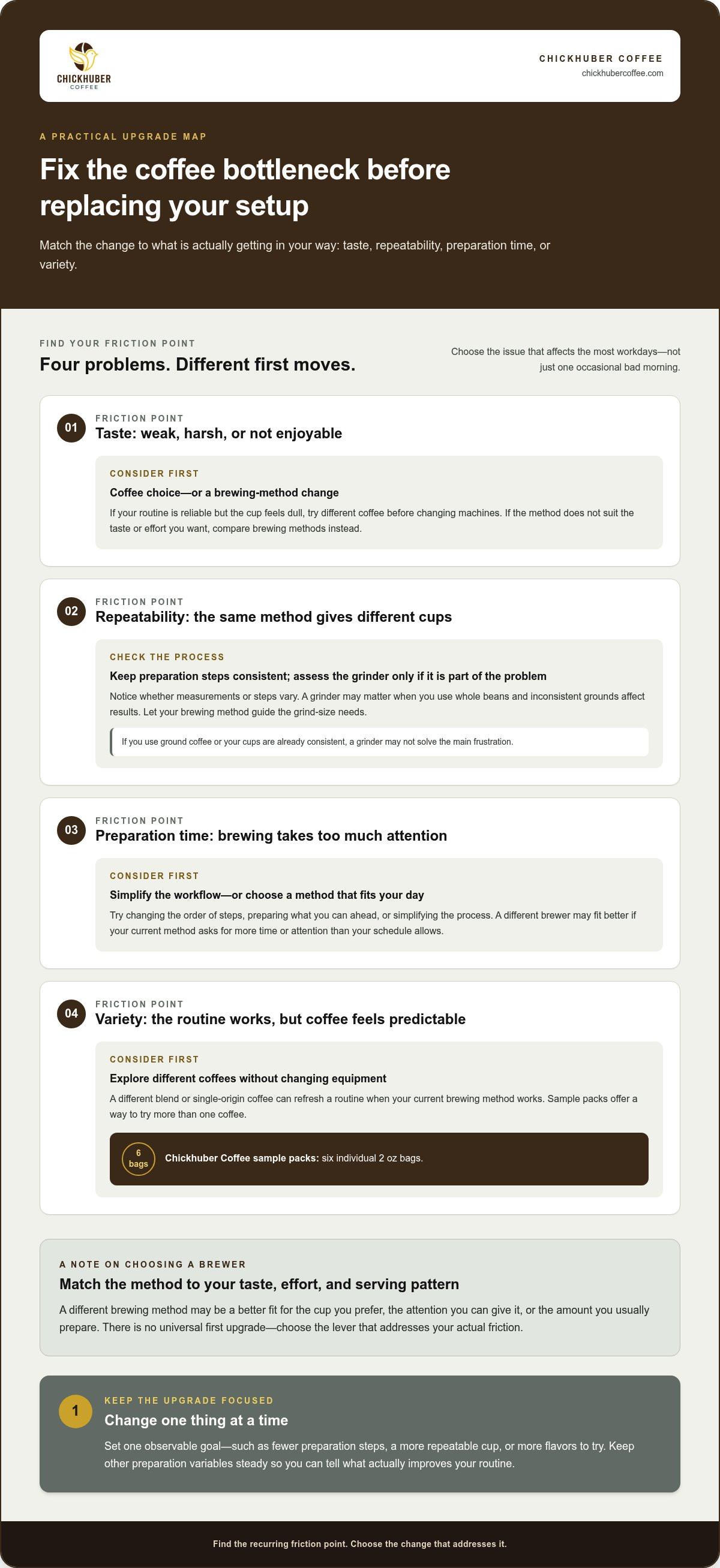
Use this quick diagnostic. Choose the point that best describes a typical workday, not just an occasional bad morning:
- Taste: Your coffee is consistently too weak, harsh, or simply not enjoyable.
- Repeatability: The same coffee and method produce noticeably different cups from one day to the next.
- Preparation time: Brewing takes more attention or hands-on time than your schedule allows.
- Variety: Your routine works, but the coffee feels predictable and you want more choice.
If more than one sounds familiar, start with the issue that affects the most workdays. That gives you a clear starting point without turning a small frustration into a full equipment overhaul.
Is the problem flavor, consistency, or convenience?
Think about your most recent disappointing cup. If it tasted dull even though you followed your usual routine, the coffee itself or your taste preference may be the issue. If the flavor changes despite using the same coffee and method, focus on repeatability. Note whether your measurements or steps vary from one brew to the next. Then compare hands-on preparation time with your actual schedule. A careful brew may suit a quiet morning, but not a meeting-packed one.
Set a clear upgrade goal before shopping
Choose one priority. Don’t replace the whole setup just because a cup missed the mark. Define success in observable terms: fewer preparation steps, a more repeatable cup, or a wider range of flavors to try. That goal helps you compare possible changes against the real need, rather than getting pulled toward features you may not use.
A setup upgrade should fix one recurring friction point in your coffee routine. Write down the problem and the change you hope will address it. That simple test keeps upgrading your work from home coffee setup focused, practical, and connected to the workday you actually have.
Which coffee setup upgrade matters most: beans, grinder, brewer, or workflow?
There’s no universal first upgrade. Each part of the routine solves a different problem, and the right choice depends on what you want to change. A new grinder won’t add variety if you’re bored with your coffee. New coffee won’t fix a brewing process that regularly runs into your first meeting.
Use the friction you identified to compare your options:
- Coffee choice: A different blend or single-origin coffee can refresh a routine that feels repetitive. It’s a low-equipment-change option if your current method works.
- Grinder: A grinder can matter when you use whole beans and inconsistent grounds affect repeatability. Prioritize it only if grind consistency is an actual problem for your method.
- Brewer: A different brewing method may better match your preferred taste, effort level, or the amount you usually prepare.
- Workflow: Changing the order of steps, preparing what you can ahead, or simplifying your process may ease a time crunch without replacing equipment.
Think of these as different levers, not a ranked shopping list. Before upgrading your work from home coffee setup, decide whether your goal is more enjoyable flavor, a more dependable process, a better fit for your schedule, or more choice in the cup.
When a grinder is the right first upgrade
Grinding coffee affects the size and consistency of the grounds, which can influence the brewing process. A grinder may deserve attention if you use whole beans and similar batches produce noticeably different results. But if you use ground coffee, or your cups are already consistent, a grinder may not address your main frustration. Buy for a clear need, not just because grinder-first advice is common.
Let your brewing method guide the decision, too. Different methods call for different grind sizes, so consider whether your current setup can produce the grind your preferred method needs. If your ground coffee suits your brewing approach and the result tastes good, focus elsewhere. First identify a repeatability issue, then decide whether your grinder is part of it.
When coffee choice or the brewer deserves attention first
If preparation feels reliable but the cup no longer excites you, explore different coffees before changing machines. Sample packs make it easy to try more than one coffee: Chickhuber Coffee’s packs contain six individual 2 oz bags. You can browse Chickhuber Coffee options as one way to explore a coffee-focused upgrade.
A brewer deserves attention when your current method doesn’t fit the taste, effort, or serving pattern you want. Consider whether you prefer a hands-on process, a straightforward daily brew, espresso-style drinks, or coffee prepared ahead. Keep the choice practical: the best method is one you’ll enjoy using during a real workday, not just one that looks appealing on the counter.
The best first upgrade is the one that addresses your diagnosed bottleneck. Choose the change that targets it directly, whether that means different coffee, a grinder, a brewer, or a simpler routine.
Compare work-from-home coffee setup upgrades by brew style and effort
Your ideal brewing method has to work beyond the first cup. Think about how much attention you want to give the process, whether you make one serving or prepare coffee ahead, and what your schedule looks like on a typical workday. A hands-on pause can be satisfying. A low-interruption routine may be more useful on a morning packed with calls.
Use this comparison to see which format fits your rhythm. Preparation timing describes when the work happens, not a guaranteed brew duration.
| Brew style | Involvement | Preparation timing | Routine it may suit |
|---|---|---|---|
| Drip | Generally straightforward, with steps such as measuring coffee and water and starting the brew. | Prepared as needed; some routines allow you to begin brewing before settling into work. | People who want a familiar, repeatable way to make coffee, including more than one serving. |
| Pour-over | More hands-on. You guide the water over the grounds and stay involved as it brews. | Made as part of a focused coffee break rather than left entirely to the machine. | Those who enjoy a deliberate, individual brewing ritual and don’t mind giving it attention. |
| Espresso-style | Often involves more steps and active preparation than a basic drip routine. | Made when you want a drink prepared for the moment, with time for the process. | People who enjoy espresso-style drinks and are ready to build that method into their routine. |
| Cold brew | Less hands-on at serving time, with preparation planned ahead. | Prepared in advance, then kept for a later serving according to your routine. | Those who prefer cold coffee or want a batch-oriented option for busy workdays. |
Choose a method that fits your workday rhythm
Ask when you want coffee to fit: as a short break between tasks, as a quick start before logging on, or as something prepared ahead. If you reach for drip, choose a coffee suited to that method. The guide Best Coffee for Drip Coffee Machine can help frame that choice. If you prefer to plan ahead and serve cold coffee, explore the Cold Brew Masterclass for more on cold brew as a format. The key distinction is whether you want to brew in the moment or shift some preparation to an earlier part of your routine.
Keep equipment decisions proportional to your coffee habits
Start with what the method actually requires, then treat extra accessories as optional unless they solve a problem you have. A pour-over routine needs a way to brew and pour; espresso-style brewing calls for equipment designed for that method. But if you mainly drink drip coffee, an espresso-focused upgrade may add steps and expense without serving your preference. Keep the coffee and your workday in view while upgrading your work from home coffee setup. Choose the method you’ll use, not the setup that looks most impressive.
Build a smarter coffee routine around your chosen upgrade
A good upgrade should solve a real problem, not create a new project every morning. Give your change a simple test. Keep your goal visible, hold other variables steady, and notice whether the routine feels better during an ordinary workday. You don’t need technical scores or elaborate tracking. A few clear observations can tell you whether the change is earning its place.
Use this process to turn your choice into a practical trial:
- Name the friction point. Be specific. For example, your coffee tastes different from cup to cup, or preparing it takes more attention than your morning allows.
- Choose one change that targets it. If you’re testing a grinder, keep the coffee and brewing method the same. If you’re trying a different coffee, keep your usual brewing process steady.
- Assess the result in your normal routine. Notice taste, repeatability, and effort. Ask whether the original problem is easier to manage, not whether the new option seems impressive on its own.
Changing several things at once clouds the result. If you replace the grinder, switch coffee, and alter your brewing steps together, a better or worse cup won’t tell you which change mattered. Keep the rest familiar. That gives you a useful comparison without turning your morning into a lab session.
Test one change at a time
Make a brief tasting note after a usual cup. “Rounder and easier to enjoy,” “still inconsistent,” or “too many steps before my first call” is enough. Don’t chase a perfect score. Compare the experience with the friction point you wrote down, then decide whether the upgrade helped, needs an adjustment, or wasn’t the right fix.
For an equipment change, keep your coffee and preparation steps as consistent as you can. For a coffee change, use the same method and familiar routine. If you’re exploring new flavors, sample packs let you try variety while keeping your brewing approach steady. Chickhuber Coffee sample packs contain six individual 2 oz bags, so you can explore different coffees without changing the rest of your setup at the same time.
Make the setup easy to repeat between meetings
Set out only the tools your chosen method requires. Put them where you naturally prepare coffee, and use a sequence that fits your schedule. For instance, gather what you need before a meeting-heavy morning, or make brewing a deliberate break between tasks. Keep the steps clear and repeatable. A routine you can follow on a busy day is more useful than a complicated one you only enjoy when your calendar is empty.
Ready to make coffee itself part of the upgrade? Explore Chickhuber Coffee options and find coffees that fit the brewing routine you’re building. If your first adjustment doesn’t address the original friction, that’s useful information. Keep the part that works, refine the next step, and make one change at a time.
Choose Chickhuber Coffee to refresh your work-from-home coffee setup
Equipment is only one part of a better workday cup. The coffee itself matters, too. If your brewing method already fits your schedule, changing what you brew can bring new interest without rebuilding your setup. Chickhuber Coffee’s beans are carefully sourced and roasted to order, making coffee a practical option to consider alongside any equipment upgrade.
Choose with your routine in mind. Do you want to stick with a familiar blend, explore single-origin coffees, or introduce more variety into your week? A clear preference makes the next choice easier. Keep the brewing method you like, then use coffee selection to refresh the cup.
Use sample packs to explore different coffees
Sample packs let you try a range of coffees while keeping your usual preparation routine. The Best Sellers Sample Pack contains six individual 2 oz bags, including blends and single-origin coffees. The Single Origin Favorites Sample Pack also contains six individual 2 oz bags, featuring single-origin coffees. Each pack offers variety within its category. Use the Coffee Variety Pack Guide 2026 as a next read to help think through which pack may suit your exploration.
As you taste, jot down a few simple notes: which coffee you reach for first, which one suits your usual brew, and whether you’d choose it again. That’s enough to start recognizing your preferences without changing your equipment or adding extra steps. Keep the notes practical. You’re choosing coffee for your real workday, not trying to master a tasting vocabulary.
Match your coffee choice to the routine you want
Whole bean and ground coffees can fit different preparation habits. If you already grind coffee as part of your routine, whole bean may suit that approach. If you prefer to skip that step, choose ground coffee suited to your brewing method. Chickhuber Coffee offers whole bean and ground coffee options, so let your existing workflow guide the format rather than adding a process you don’t want.
For a flavored option, French Vanilla Flavored Coffee uses high-quality natural flavoring oils and has no added sugar or calories. If the 6 Bean Blend interests you, the 6 Bean Blend guide can be a useful next read as you consider that coffee for your routine.
Keep the goal simple: choose coffee you’re excited to brew with the method you already enjoy. Upgrading your work from home coffee setup can start with a fresh coffee choice, not a counter full of new equipment. Explore Chickhuber Coffee and choose a coffee for your next brewing session.
Make your next workday cup your starting point
Your coffee routine doesn’t need a dramatic reset to feel more intentional. Let the next workday be a fresh starting line. Choose a cup you’re excited to drink, notice how it fits your pace, and build from there. Small, deliberate choices can make an ordinary coffee break something you look forward to.
That’s the mindset behind upgrading your work from home coffee setup. It isn’t about chasing a perfect arrangement or buying every new tool. It’s about shaping a routine around the way you like your coffee and the kind of workday you have. Your preferences may shift, too. Give yourself room to try a new flavor or adjust the ritual as your schedule changes.
Ready to choose your next workday brew? Explore Chickhuber Coffee and find your next workday brew. Follow your curiosity, make your next cup your own, and keep the momentum going. A better coffee routine starts with one choice that feels right for you.
Frequently Asked Questions
What should I upgrade first in my work-from-home coffee setup?
Start with the part that’s causing the most frustration, not the most expensive item. If your coffee tastes flat, try a different coffee before replacing equipment. If you enjoy the flavor but struggle to get the same result twice, focus on the steps you repeat. For upgrading your work from home coffee setup, a useful first move should address a specific issue you notice regularly.
Is a better grinder more important than a better coffee maker?
Not for everyone. A grinder may be a smart priority if you use whole beans and inconsistent grounds seem to affect your cups. But if your coffee maker is difficult to use, doesn’t suit the amount you prepare, or fails to match your preferred brewing style, improving the brewer may be more useful. If you use pre-ground coffee and like the results, neither upgrade may be necessary yet.
Can I improve my home coffee setup without buying an espresso machine?
Absolutely. You can improve your routine by choosing coffee you enjoy, refining how you prepare it, or making your current method easier to repeat. For example, use a written recipe for your drip coffee or set up your pour-over tools before a busy morning. You could also try cold brew if you prefer making coffee ahead. A good setup is one that suits your taste and habits, not one built around espresso.
How do I choose a coffee brewing method for a busy workday?
Match the method to the time and attention you can give it. If mornings are unpredictable, choose an approach that fits around your first meetings and doesn’t require a long hands-on break. If you like a pause between tasks, a more involved method may feel rewarding. Also consider whether you usually make a single cup or want coffee ready for more than one serving.
Do coffee beans make a noticeable difference in a home setup?
They can. Coffee choice influences the taste of the finished cup, so changing beans may be worthwhile if your current coffee doesn’t suit your preferences. Try comparing a familiar blend with a single-origin coffee using the same brewing approach. Note which cup you enjoy more and whether you prefer it black or with milk. That small comparison can guide your next choice without changing your equipment.
Can I use the same coffee for drip coffee and cold brew?
Yes, you can use the same coffee beans for both methods, though the preparation should suit each brew style. Drip and cold brew use different brewing processes, so you may need to adjust the grind and recipe rather than use one preparation unchanged. Try the same beans in both, then compare the cups. That’s a practical way to learn whether the coffee works for both parts of your routine.
How can I make my work-from-home coffee routine easier to repeat?
Write down the steps that produced a cup you liked, including the coffee, grind format, amount, and brewing method. Keep that note near your preparation area and follow it on your next workday. Change only one part if you want to experiment. A short checklist can prevent guesswork, help you spot what varies, and make it easier to recreate a routine that fits your schedule.