

Tea Flavor Wheel Explained: Taste Tea with More Confidence
You don’t need to name the exact flavor in your tea to taste it more clearly. One sip can bring up several impressions at once, and flavor-wheel terms can sound vague or technical. You’re not missing a secret skill. Start with what you notice, then use the wheel to find words that fit.
Here’s tea flavor wheel explained in plain language: it’s a tasting guide that groups impressions, often moving from broad families to specific notes. Those notes describe aroma and taste, not ingredients added to the tea or flavors you’re guaranteed to find. Your impression counts. Begin with a broad description, then use the wheel to make it more precise.
This guide explains how to read the categories, separate aroma from taste, and describe a cup with several impressions. You’ll also learn how to use your observations to explore tea styles and loose leaf tea blends with more confidence. No jargon test, just a practical way to taste, describe, and discover.
Key Takeaways
- Tea flavor wheel explained: use its categories to move from a broad impression to a more precise tasting note.
- Flavor notes describe what you perceive. They don’t guarantee that specific ingredients are in the tea.
- Compare tea types and brewing choices to notice how they can shape aroma and taste.
- Build a simple tasting routine, then record your impressions before checking the wheel.
- Use patterns in your notes to guide your next loose leaf tea exploration, not to rank teas.
What a Tea Flavor Wheel Shows, and What It Does Not
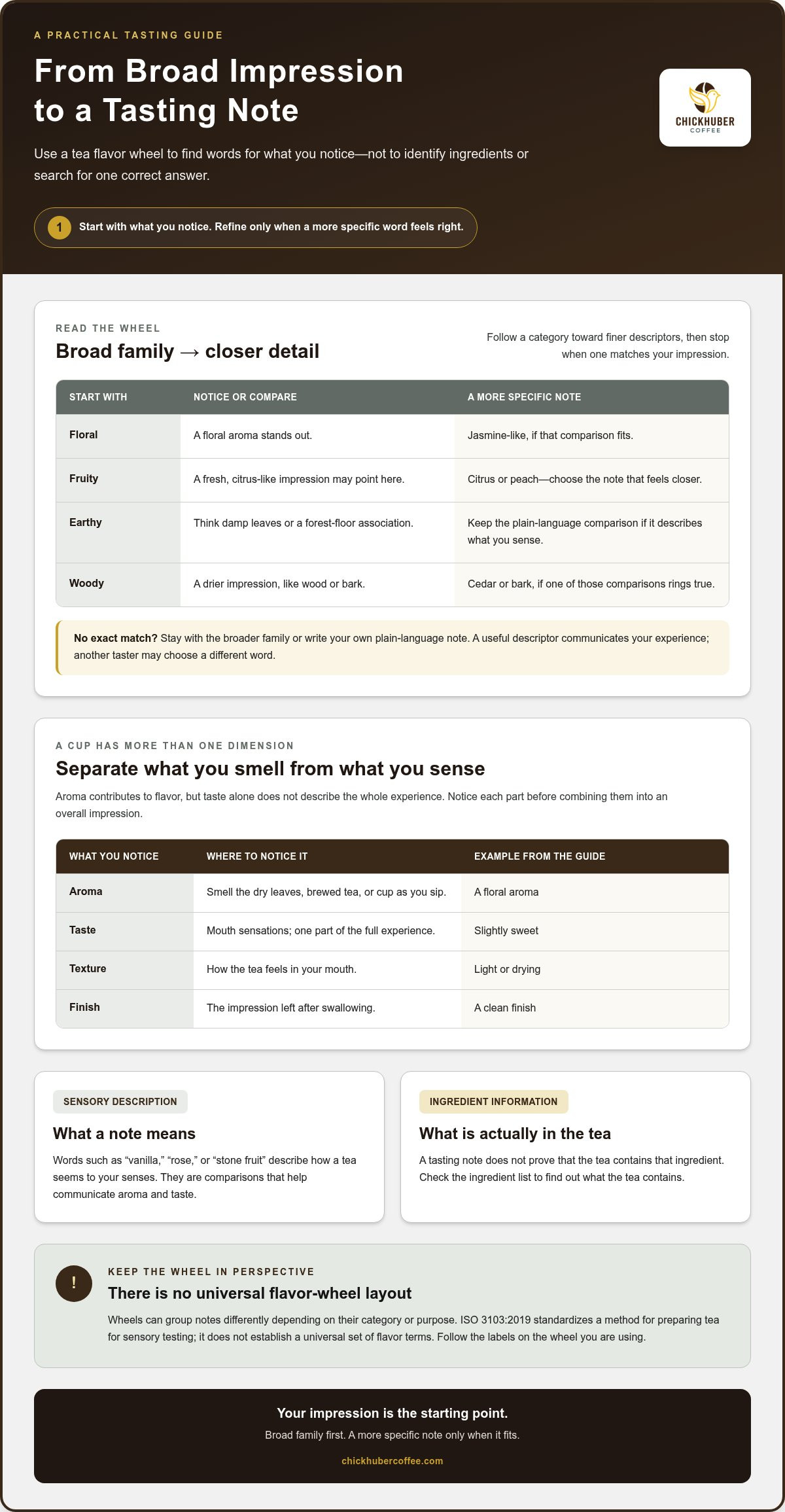
A tea flavor wheel is a visual guide for organizing and describing the sensory impressions you notice in a cup. It can take you from a broad category, such as fruity, toward a more specific description, such as citrus or peach. Use it to find language for your experience, not to prove there’s one correct answer.
Tasting notes describe how a tea seems to your senses; an ingredient list tells you what’s actually in it. A wheel might include “vanilla,” “rose,” or “stone fruit,” but those words don’t mean the tea contains vanilla, rose petals, or fruit. They’re comparisons that help communicate aroma and taste. Check the ingredient list for what the tea contains.
Flavor is broader than taste alone. Aroma contributes what you smell before and during a sip; taste is one part of the experience. Texture, such as a tea feeling light or drying in your mouth, and the finish, or impression left after swallowing, add further detail. Together, these sensations shape your overall impression.
Is a tea flavor wheel an official universal standard?
No single layout or vocabulary applies to every tea flavor wheel. Wheels can be designed for different tea categories or tasting purposes, so one may group notes differently from another. ISO 3103:2019 standardizes a method for preparing tea for sensory testing, but it doesn’t establish a universal set of flavor terms.
Use the wheel in front of you. Read its labels and follow its categories rather than expecting every version to match. If you use one wheel today and another later, a descriptor might sit under a different category. That doesn’t make your tasting impression wrong. It reflects a different way of organizing sensory language.
Flavor, aroma, and tasting notes: what is the difference?
Aroma is what your nose detects when you smell dry leaves, brewed tea, or the cup as you sip. Taste refers to sensations detected in the mouth, but it doesn’t capture the full experience. A tea may smell floral, taste slightly sweet, feel brisk, and leave a clean finish. Each observation offers a useful clue.
That’s the practical idea behind tea flavor wheel explained: the wheel helps you name perceptions, not identify ingredients or uncover a guaranteed flavor. Start with your own impression, then use the wheel to make it more precise. “Fruity” is a useful first description. If the wheel’s categories fit, narrow it to “citrus” or another note that feels closer.
How to Read Tea Flavor Wheel Layers from Broad to Specific
Read a flavor wheel from the outside in, or from its broadest labels toward finer details. The layout varies, but the basic approach is simple: identify a general family first, then choose a narrower word that better matches what you smell or taste. Start with the family, follow the closest branch, and stop when a descriptor fits your impression.
Start with broad families such as floral, fruity, or earthy
Broad families are starting points, not fixed definitions that every wheel or tea uses in exactly the same way. Ask yourself what stands out most. Does the cup seem bright and lively, or deep and grounded? A fresh, citrus-like impression may point toward fruity, while damp-leaf or forest-floor associations may suggest earthy. Woody may feel drier, more like cedar or bark. Choose the closest family and move on rather than searching for a perfect match.
Move inward to more precise tasting words
Once you have a family, scan its neighboring terms and compare them with your actual impression. A floral aroma might seem jasmine-like, while a fruit impression could feel closer to lemon zest than ripe peach. These are sensory comparisons, not claims that those ingredients are in the tea. A useful descriptor communicates what you noticed, even if another taster chooses a different word.
Make the distinction concrete. “Bright” describes a lively, sharp impression; “sweet” describes a sugary-seeming quality. “Earthy” may bring to mind soil or fallen leaves, while “woody” suggests dry wood or bark. The words don’t need to be technical. They need to help you tell one sensation from another.
This bridge from broad family to specific note is the useful core of tea flavor wheel explained. You aren’t trying to match a hidden answer. You’re narrowing your observation one step at a time. If a wheel places jasmine-like under floral, follow that pathway only if the comparison rings true. If nothing fits, stay with “floral” or write your own plain-language note.
This step-by-step vocabulary can also make tasting easier to discuss with others. Tea Journey’s discussion of tea sensory tools in education explores how visual tools can support shared language around tea. A common vocabulary helps people compare impressions, but it doesn’t require everyone to experience a cup identically.
Try the process with a loose leaf tea blend: note one broad family, then add a detail if it feels clear. Exploring loose leaf tea blends gives you cups to compare and more chances to find words that fit your palate.
Why Tea Flavor Notes Change with Tea Type and Preparation
A tea’s flavor isn’t fixed by its name alone. The plant material, processing choices, and brewing conditions all shape which aromas and tastes stand out. The main traditional tea categories, including green, oolong, and black, come from Camellia sinensis. Differences in processing help shape their character, but there’s variation within each category.
Oxidation is one part of that processing. It’s a chemical change in the leaves after they’re exposed to oxygen, not a measure of how strong you brew the cup. Green teas are generally less oxidized, black teas more oxidized, and oolong teas can fall across a range. These are broad tendencies, not flavor guarantees. Leaf style and other production choices matter too.
How green, oolong, and black tea can differ in the cup
Green teas may show fresh, vegetal, or grassy impressions; some oolongs can lean floral, creamy, or roasted; black teas may seem malty, fruity, or brisk. Treat these as possibilities, not rules. Processing influences the leaf’s chemistry and the qualities you may notice, but individual teas can surprise you. For more brewing context, see Loose Leaf Tea: The Ultimate Guide to High-Performance Brewing in 2026.
How brewing changes the flavors you notice
Water temperature, steeping time, and the amount of leaf can shift a cup’s intensity and balance. A longer steep may make some qualities more pronounced, while a different temperature can change which sensations seem prominent. Brewing choices don’t change the tea’s category, but they can affect what reaches your senses. Follow tea-specific preparation instructions, then adjust thoughtfully.
Use this quick comparison to focus your next tasting:
| Factor | Possible sensory effect | What to observe |
|---|---|---|
| Tea type and processing | May bring forward fresh, roasted, malty, or other impressions | Which qualities appear in the aroma and sip? |
| Water temperature | Can shift intensity and balance | Do delicate or bold notes stand out? |
| Steeping time | Can make the infusion seem lighter or more pronounced | Does the finish become stronger or more drying? |
For a clear comparison, change one brewing variable at a time. Keep the tea and other conditions steady, adjust the steeping time, and note what shifts. Then return to the original time and try a different temperature. This turns tea flavor wheel explained into a practical tasting method: compare what you notice instead of guessing why one cup seems different. Small changes make observations clearer.
How to Use a Tea Flavor Wheel During a Tasting
Let your senses lead. Make a first observation before looking at the wheel, so its labels guide your description instead of dictating what you think you should taste. The wheel isn’t a scorecard, and it can’t tell you what ingredients are in the cup. It’s a tool for describing your experience.
A simple five-step tea tasting routine
- Observe the dry leaves. Notice their appearance, then smell them. Record the first aroma that comes to mind, even if it’s simply “fresh” or “toasty.”
- Smell the infusion. As the tea brews, notice whether its aroma matches the dry leaf or brings something new.
- Sip and pause. Identify your strongest overall impression before reaching for the wheel. Give the flavor a moment to develop.
- Separate your observations. Note aroma, taste, body, and finish individually. For example, the aroma might seem floral, the taste lightly sweet, the body light, and the finish dry.
- Consult the wheel and record details. Start with a broad category, then choose one or two specific descriptors that genuinely fit.
Changing one brewing variable at a time makes comparisons clearer because you can better connect a change in your cup to a change in preparation. Record how you brewed the tea, too. Use this compact tasting-note template:
- Tea: name or description
- Brewing variables: water temperature, steeping time, and amount of leaf
- First impression: your words before checking the wheel
- Aroma: what you smell in the dry leaf and infusion
- Taste, body, and finish: separate notes for each
- Chosen descriptors: the broad category and any more specific terms
What to do when a flavor is hard to name
Keep it simple. Compare the impression with familiar things: cut grass, toasted bread, citrus peel, or damp leaves. You don’t need specialist vocabulary to make a useful note. You can also record more than one descriptor if the aroma suggests one quality and the finish another.
If you’re unsure, write down what you can. Tasting skill grows through repeated, attentive practice, not by guessing the “right” label. Use the tea flavor wheel explained in this guide as a prompt, not a verdict. Each note captures what you noticed in that cup, under those brewing conditions.
Put the routine to work with loose leaf tea blends, and build your own tasting notes as you explore different cups.
Turn Flavor-Wheel Discoveries into Your Next Tea Exploration
Your tasting notes can do more than describe one cup. Over several tastings, they can reveal patterns in what you enjoy. Maybe floral notes keep catching your attention, or you’re drawn to fruity, roasted, or earthy impressions. Treat those patterns as a guide for what to try next, not a ranking of which teas are best.
Use your notes to find patterns in what you enjoy
Compare notes across different teas and brewing sessions. Record both the descriptors you liked and the preparation details, such as water temperature and steeping time. If a tea tasted more roasted when brewed differently, that context helps you separate a preference for the tea itself from a preference shaped by preparation.
Look for repeat signals. If you consistently enjoy floral aromas, explore another tea with a similar impression. If earthy or roasted notes appeal to you, use those words to focus your next tasting. Your palate is the measure that matters here. A note describes your experience; it doesn’t declare one flavor objectively better than another.
Explore loose leaf tea with a sharper tasting focus
Loose leaf tea blends offer an approachable way to keep exploring aroma and flavor. Choose a blend, taste it without rushing, and jot down what stands out before consulting the wheel. Then compare those notes with your impressions from another cup. The goal isn’t to find a perfect label. It’s to notice more and make your next choice with curiosity.
One useful distinction: traditional teas such as green, oolong, and black tea come from Camellia sinensis. Herbal infusions are made from other plants, so their ingredients and sensory qualities differ. For more on that category, read Loose Leaf Herbal Tea: The Ultimate Performance Guide to Functional Recovery. Keep the distinction in mind as you explore, and describe each cup on its own terms.
That’s tea flavor wheel explained as a tool for discovery: use your observations to choose a direction, then stay open to surprises. A floral preference might lead you toward another aromatic cup; a roasted note might prompt a different comparison. Chickhuber Coffee’s loose leaf tea selection gives you a place to put that curiosity into practice.
Explore Chickhuber Coffee’s loose leaf tea selection and bring your tasting notes to the next cup.
Make Your Next Cup a Discovery
A tea flavor wheel explained in plain language is a prompt for better noticing, not a test with right answers. Start with your own first impression, move from a broad family toward a more precise descriptor, and keep aroma, taste, body, and finish distinct in your notes. Tea type and brewing choices can also shift what stands out, so record how you prepared each cup.
Over time, those notes reveal the impressions you enjoy most. Use them to guide what you try next, not to decide which tea is universally best. Every cup is another chance to sharpen your palate and explore with purpose.
Chickhuber Coffee offers loose leaf tea blends through its online store, alongside specialty coffee for exploring different drinks. Explore Chickhuber Coffee’s loose leaf tea blends and put your tasting skills to work. Trust your senses, stay curious, and enjoy the next discovery.
Frequently Asked Questions
What is a tea flavor wheel?
A tea flavor wheel is a visual guide that organizes sensory impressions into related categories, often moving from broad families to more specific descriptors. It helps you put words to what you notice in a tea’s aroma, taste, body, and finish. In this tea flavor wheel explained guide, the wheel is a tasting aid, not a scorecard or ingredient list. Your own observations matter more than matching a single “correct” label.
How do you use a tea flavor wheel?
First, smell the dry leaves and the brewed infusion. Take a sip, pause, and note your first impression before looking at the wheel. Then find the closest broad category, such as floral, fruity, or earthy, and follow it toward a more specific descriptor if one fits. Record aroma, taste, body, finish, and brewing details separately. If a label doesn’t match your experience, use your own words instead.
Is there one official tea flavor wheel?
No. Tea flavor wheels can be designed for different tea categories and tasting purposes, so their layouts and terms may vary. Use the wheel in front of you rather than expecting every version to share the same labels. ISO 3103:2019 provides a standardized method for preparing tea for sensory tests, but it doesn’t define flavor profiles or establish a universal flavor wheel.
Can a tea taste like a flavor that is not an ingredient?
Yes. Tasting notes are sensory comparisons, not proof that an ingredient is present. A tea might remind you of citrus, flowers, or toasted bread because of the impressions you perceive in its aroma and taste. That doesn’t mean those items were added. Check the tea’s ingredient list to learn what it contains, and use tasting descriptors to communicate how the cup seems to you.
What are the main flavor categories on a tea flavor wheel?
Categories vary by wheel, but broad families often include floral, fruity, earthy, vegetal, roasted, woody, and sweet. A wheel may then break a family into narrower descriptions, such as fruity to citrus or floral to jasmine-like. These are possible sensory comparisons, not guaranteed notes in every tea. Start with the category that feels closest, then choose a more specific term only if it genuinely fits.
How do brewing temperature and steeping time affect tea flavor?
Water temperature and steeping time influence how the tea’s soluble compounds enter the infusion, which can shift its intensity and balance. A longer steep, for example, may make some qualities more pronounced, while a different temperature can change which impressions stand out. Effects vary by tea, so follow tea-specific brewing instructions. For a clearer comparison, keep other conditions steady and change one variable at a time.
What is the difference between tea and herbal tea on a flavor wheel?
Traditional teas, including green, oolong, and black, come from the Camellia sinensis plant. Herbal teas, more precisely called herbal infusions, are made from other plants, such as herbs, flowers, or spices. A flavor wheel may use different categories to describe them, depending on its purpose. Apply descriptors to the cup you’re tasting, and remember that the word “tea” is often used casually for both.