

Tea and Food Pairing Guide: Match Every Cup to the Right Bite
What if the best tea for dinner isn’t the one you always reach for? A bold dish can flatten a delicate cup, while a sharp or bitter brew can take over a subtle bite. If you’ve wondered which tea pairs well with the food you’re serving, start with balance, not rigid rules. This tea and food pairing guide shows you how to match flavor, texture, intensity, and occasion.
Pairing doesn’t need to feel formal or complicated. Start with what the food brings: richness, sweetness, spice, crunch, or freshness. Then choose a tea that complements one of those qualities, contrasts with it, or refreshes your palate without competing. The ideas below cover savory meals, everyday snacks, and desserts, with a simple framework you can adjust to your taste. Loose leaf tea can make a meal feel more considered without turning it into a production.
Key Takeaways
- Use the tea and food pairing guide’s simple framework: balance flavor, texture, intensity, and occasion rather than following rigid rules.
- Notice how a tea’s aroma, body, and astringency interact with the food’s richness, sweetness, spice, or crunch.
- Choose tea styles to complement or contrast savory dishes, snacks, and desserts without letting one flavor overwhelm the other.
- Build a pairing in steps: assess the food, match its intensity, choose a tea direction, then taste and adjust.
- Keep track of combinations you enjoy and use loose leaf tea to experiment with pairings for everyday meals and special occasions.
Tea and Food Pairing Basics: Start With Balance, Not Rules
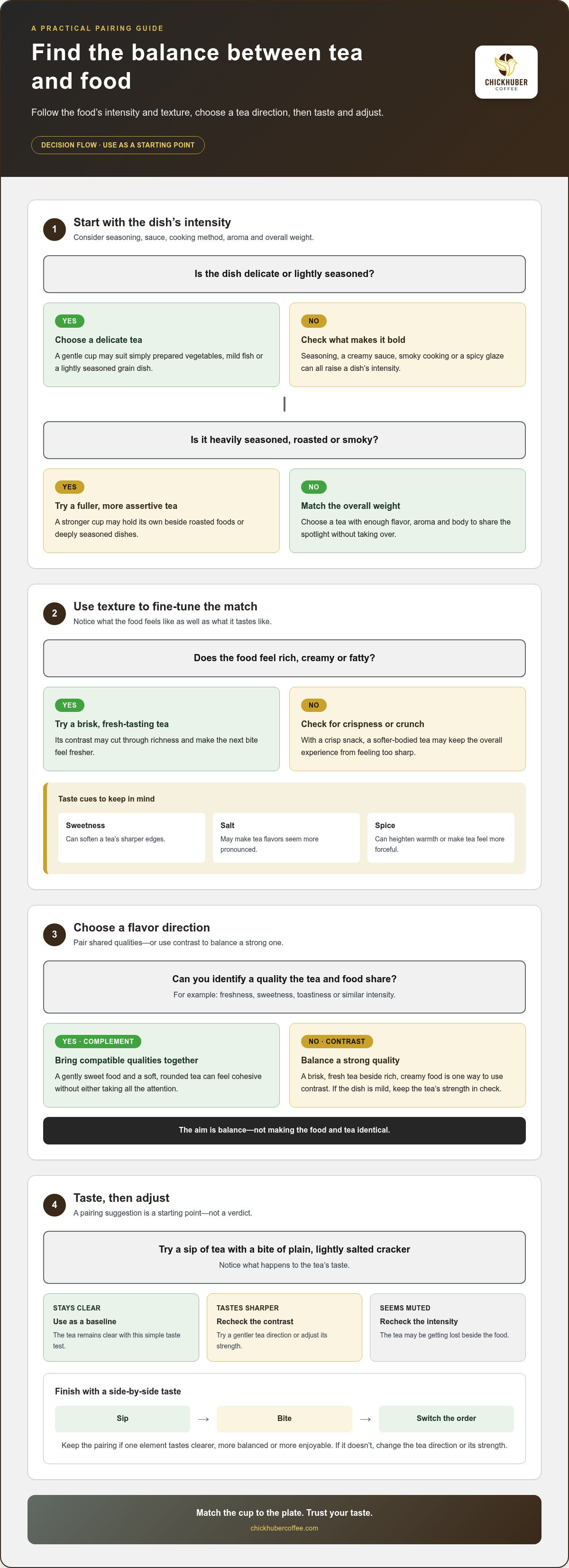
A good tea pairing doesn’t require expert terminology or strict rules. Start with one question: does the tea make the food taste more balanced, or does the food bring out something enjoyable in the tea? Some pairings work through shared flavors; others use contrast to keep each bite and sip lively. Your preference decides whether the match works.
A simple pairing principle: Match tea and food by complementing a shared quality or balancing a strong one, then trust your taste.
What makes a tea and food pairing work?
Pay attention to a few signals. Flavor is what you taste, while aroma is what you smell. Body describes whether a tea feels light or full in your mouth. Bitterness brings a sharp edge; sweetness softens it. Acidity creates a bright, tart impression. Astringency is the drying sensation some teas leave behind, similar to the feeling of strong black tea on your tongue.
Next, consider the food’s intensity. A delicately flavored dish can disappear beside a forceful tea, while a mild tea may get lost beside heavily seasoned food. For a simple baseline, sip the tea with a bite of plain, lightly salted cracker. Notice whether the tea stays clear, tastes sharper, or seems muted. That response can guide your next choice, though it isn’t a universal verdict.
Tea includes many types and processing approaches. For background on those differences, explore the history and types of tea. That context can help you understand a cup, but tasting it with your food is the real test.
Complementary or contrasting: which pairing should you choose?
Complementary pairings bring compatible qualities together. A gently sweet food alongside a tea with a soft, rounded impression can feel cohesive, with neither taking all the attention. Look for shared cues such as freshness, sweetness, toastiness, or similar intensity. The goal isn’t to make the food and tea identical. It’s to let them work together.
Contrasting pairings use difference to create balance. Rich, creamy food with a brisk, fresh-tasting tea is one example. The contrast can cut through the food’s weight and make the next bite feel inviting. But too much contrast can overwhelm a mild dish, so adjust the tea’s strength to suit the plate.
Test both approaches with small tastes. Take a sip, try a bite, then switch the order. Ask whether one element tastes clearer, more balanced, or more enjoyable. Keep the pairing if it works for you, or change it if it doesn’t. No formal vocabulary required.
How Tea Flavor and Food Texture Shape a Better Match
A pairing can shift with every sip and bite. Tea aroma may echo a dish’s toasted, floral, or fresh notes before you taste it. Flavor adds sweetness, bitterness, or brightness. Body describes how light or full the tea feels, while astringency creates a drying sensation. Together, these qualities affect whether food seems richer, milder, sharper, or more balanced.
Teas made from Camellia sinensis vary with how the leaves are processed, and preparation also affects the cup. Steeping can change the tea’s strength and its impact alongside a meal. For background on tea and its production, explore Insights from the Tea Association of the U.S.A. Treat any pairing suggestion as a starting point, then taste for yourself.
Match tea intensity to the weight of the dish
Think of intensity as the combined force of flavor, aroma, and body. A delicate tea may suit simply prepared vegetables, mild fish, or a lightly seasoned grain dish. A fuller, more assertive tea may hold its own with roasted foods or deeply seasoned dishes. These are starting points, not rules. A gentle tea can work with a bold plate if you enjoy the contrast.
Look beyond the main ingredient. A creamy sauce, smoky cooking method, generous seasoning, or spicy glaze can make a dish more intense. Plain roasted vegetables may suit a subtle cup, while the same vegetables with a smoky, spicy sauce could stand up to a more robust tea. If the tea feels overpowering, adjust its strength before deciding the pairing itself is wrong.
Match intensity so the tea and food can share the spotlight, rather than letting one overpower the other.
Use texture and astringency to balance each bite
Texture matters as much as flavor. Crisp foods feel light and snappy; crunchy foods add a firm, dry bite. Creamy dishes coat the mouth, while rich or fatty foods can leave a lingering fullness. A brisk tea may cut through that richness and make the next bite feel fresher. With a crisp snack, a softer-bodied tea may keep the overall experience from feeling too sharp.
Astringency isn’t the same as bitterness. Bitterness is a taste; astringency is the drying or puckering feeling that can follow a sip. Both may become more noticeable alongside certain foods, so try a sip and bite in both orders and notice what changes.
Sweetness can soften a tea’s sharper edges, while salt may make its flavors seem more pronounced. Spice can heighten warmth or make a tea feel more forceful. Temperature matters, too: a hot sip and a chilled sip can taste different beside the same dish. Use these cues to fine-tune a match. To try the framework with different meals and snacks, explore loose leaf tea blends and compare how aroma and preparation shape each cup.
Tea and Food Pairing Ideas: Compare Matches for Meals and Treats
Use these matches as test runs, not fixed rules. Tea styles vary, and the same food can taste different depending on its seasoning, sauce, and preparation. This table gives you a practical starting point. Choose a tea that suits the dish’s weight, then adjust if the flavor feels too sharp, too mild, or simply not to your taste.
| Tea style | Food to try | Why it may work |
|---|---|---|
| Light, delicate tea | Steamed vegetables, rice, or a mild tofu dish | Its subtle character can sit alongside gentle flavors without crowding them. |
| Fresh, grassy tea | Herbed salads, cucumber sandwiches, or a mild cheese board | Fresh flavors can echo herbs and provide a lively counterpoint to creamy cheese. |
| Full-bodied black tea | Roasted mushrooms, spiced lentils, or savory pastries | A stronger cup can keep its presence beside deeper, savory flavors. |
| Smoky or roasted tea | Grilled vegetables, roasted meat, or aged cheese | Toasty notes may complement char, browned edges, or savory depth. |
| Floral or fruit-forward tea | Fresh berries, fruit tarts, or lightly sweet pastries | Fragrant notes can connect with fruit aromas without requiring a very sweet dessert. |
| Bold, tannic tea | Dark chocolate or rich chocolate cake | A drying edge can balance some of the dessert’s richness and sweetness. |
Pair tea with savory meals, snacks, and cheese
For savory food, let the preparation lead. A mild tea can suit simply seasoned beans or vegetables, while a fuller style may hold up to roasted meat or a richly flavored mushroom dish. On a snack board, try a fresh-tasting tea with creamy cheese, or a more robust cup with aged cheese and salted crackers. Herbs can point toward fresh, aromatic teas; smoky sauces may suit a cup with more depth. Because spice and salt can amplify flavors, test a small bite with a sip before serving the pairing to a group.
Choose tea for desserts, fruit, and chocolate
Match sweetness carefully. A fragrant tea can pick up the fruit notes in berries or a fruit tart, while a less sweet pastry may work with a tea that has a naturally sweet impression. Chocolate brings richness: a bold tea may balance dark chocolate, while a softer style can keep a delicate milk-chocolate dessert from feeling too intense. Treat these as flexible suggestions, not universal matches.
Try contrast when dessert feels heavy. A fresh, brisk cup beside a buttery pastry or creamy chocolate bite may refresh the palate more effectively than another rich or sweet flavor. If the tea tastes bitter beside dessert, try a smaller sip or a less intense brew. This tea and food pairing guide gives you a reasoned first move, then leaves room for your taste to make the final call.
A Simple Tea Pairing Method for Menus, Snacks, and Preferences
Make the choice manageable: start with the food, choose a direction, then test the cup beside a bite. This approach works for a quick snack, a dinner menu, or a table with guests who like different flavors. It’s a tasting method, not a formula for health or performance. The goal is simple: find a combination you enjoy.
Build a pairing around the food you are serving
Before choosing tea, identify what leads in the dish. Is it sweet, spicy, savory, creamy, crisp, or strongly seasoned? Consider the sauce and cooking method as well. Grilling can add smoky notes; a squeeze of citrus can make a rich meal feel brighter. Those details can change which tea feels balanced.
- Name the dominant quality. Focus on the strongest flavor or texture, such as chili heat, buttery richness, or fresh herbs.
- Assess its intensity. Decide whether the dish is delicate, moderate, or bold. Include seasoning and sauce in your judgment.
- Choose a tea direction. Echo a compatible flavor for a cohesive match, or seek a fresh contrast if the food feels rich or heavy.
- Taste and adjust. Try a small sip with a bite. If the tea disappears, feels too sharp, or crowds the food, change its strength or try another style.
Use the dish’s strongest feature to make a quick first choice. With spicy food, test a gentler cup if a bold one intensifies the heat for you, or try a fresher contrast. With a sweet snack, compare a less sweet tea with one that has a similarly soft flavor. For rich food, a brisker cup may feel refreshing. Strongly seasoned dishes can handle a tea with more presence, but scale back if the flavors compete.
Preparation changes the result, too. Steeping can affect how intense a cup tastes, so adjust that before ruling out a pairing. The loose leaf tea brewing guide offers context for preparing tea and exploring how the cup changes.
Adapt pairings for guests, menus, and the moment
Serving a group? Offer two contrasting options instead of trying to find one cup everyone will love. A lighter choice and a fuller one give guests room to follow their own preferences. For a menu, consider the sequence: a subtle tea may suit a lighter course, while a more assertive cup can meet a dish with deeper seasoning. Let flavor lead, not assumptions about what tea should do for someone.
For another set of tea styles to consider by flavor and occasion, browse the loose leaf herbal tea guide. Keep your own notes as you test: food, tea, preparation, and what you’d change next time. Ready to put the method into practice? Explore loose leaf tea blends and choose a cup to pair with your next meal or snack.
Make Tea and Food Pairing Part of Your Everyday Routine
The best pairings are the ones you remember and reach for again. Turn a good discovery into a repeatable habit: note what you ate, how you prepared the tea, and what you liked about the combination. A few quick details can guide choices for busy breakfasts, everyday snacks, and special-occasion desserts.
Create a small pairing rotation you will actually use
Keep your notes simple. Record the tea, the food, the preparation, and your reaction. Was the cup too strong beside breakfast? Did it bring freshness to a rich snack? Would you serve the match again? These observations make each next choice easier, without turning a relaxed meal into a formal tasting.
- Breakfast: Save one pairing that works with your usual toast, eggs, fruit, or oats.
- Snacks: Keep a reliable match for crackers, cheese, or a quick afternoon bite.
- Dessert: Note a tea you enjoy with fruit, pastries, or chocolate.
Change one element at a time when you experiment. Keep the food and adjust the tea’s strength, or keep the cup the same and try a different snack. That makes it easier to tell what changed the pairing. If a combination misses, write down why. Too bitter, too light, too rich, or simply not your style are all useful clues. Over time, your notes become a practical tea and food pairing guide built around your own table.
Choose loose leaf tea for flexible food pairing
Loose leaf tea gives you room to explore how aroma and preparation shape a cup. Notice the dry leaves’ aroma, then see how it changes after steeping. You can also adjust preparation to make the tea feel more or less intense beside a meal. Keep the tea and food constant while testing a preparation change, so you can tell what affected the result.
Chickhuber Coffee’s loose leaf tea blends offer a starting point for exploring tea alongside favorite foods, from weekday meals to snacks and desserts. Let your notes lead: choose a cup based on qualities you enjoy, then test it with a familiar bite. There’s no need to chase a supposedly perfect match. Build a rotation that fits your taste, routine, and occasion.
Ready to put your preferences to work? Explore Chickhuber Coffee’s tea selection and find loose leaf tea blends to try with foods you already love.
Make Your Next Cup a Fresh Starting Point
Let curiosity lead at your next meal. Pick one familiar bite, choose a tea direction that sounds appealing, and notice what changes. Keep the combinations you enjoy and leave room for surprises. Your tea and food pairing guide doesn’t need to end with a fixed list of rules; it can become a personal collection of ideas that grows with every cup.
Chickhuber Coffee offers loose leaf tea blends online alongside specialty coffee, giving you options to explore as your tastes shift from meal to meal. Start with flavors you already enjoy, then try a new pairing when the moment calls for it.
Explore Chickhuber Coffee’s loose leaf tea selection and find a cup to try with your next favorite bite. Trust your palate, experiment with confidence, and make the next pairing your own.
Frequently Asked Questions
What tea goes best with spicy food?
A mild, refreshing tea can be a good starting point with spicy food. Try a lighter green tea or a gently brewed black tea alongside a chili-seasoned noodle bowl, then see whether the tea stays pleasant or intensifies the heat for you. If the dish is especially fiery, serve the tea slightly cooler and avoid brewing it too strong. The right match depends on the spice level and your taste.
Can you drink tea with every meal?
Yes, tea can accompany any meal if you enjoy how it tastes with the food. Choose a cup that suits the moment: a lighter style with a simple breakfast or a fuller brew with a hearty lunch. If you prefer to limit caffeine later in the day, select a caffeine-free option. Think of tea as a flexible drink, not a rule-bound part of the menu.
What tea pairs well with chocolate?
Full-bodied black tea is one option to try with dark chocolate, since its stronger flavor can meet the chocolate’s intensity. For a sweeter chocolate dessert, a lighter tea may keep the pairing from feeling too heavy. Start with a small piece and a few sips. If the tea tastes overly bitter beside the chocolate, brew it more gently or try a less intense style.
Does tea pair better with sweet or savory food?
Tea can pair well with both sweet and savory food. For a sweet bite, consider whether you want the tea to echo its flavor or balance its richness. With savory dishes, match the tea’s strength to the seasoning so the meal doesn’t drown out the cup. This tea and food pairing guide is a starting point, not a verdict: your preferred balance matters most.
Can I serve iced tea with food?
Absolutely. Iced tea can work with a meal, especially when you want a cool drink beside warm or spicy food. Try an unsweetened version with a savory lunch, or serve sweetened iced tea with a less sugary snack to avoid stacking sweetness. Ice can dilute the drink as it melts, so brew the tea with enough flavor to stay noticeable over the meal.
How do I choose tea for a dinner party?
Choose tea based on the menu, then offer a second option for guests with different preferences. A lighter tea can suit a delicate first course, while a more robust style may work with a deeply seasoned main. Keep preparation straightforward and label the choices clearly, including whether they contain caffeine. Let guests pour a small cup first, so they can taste before committing to a full serving.