

How to Make Vanilla Coffee at Home: 2026 Brewing Guide
Your morning brew should sharpen your mental focus, not trigger a mid-day sugar crash. If you want to know how to make vanilla coffee at home without compromising your standards, you already know the frustration of conventional shortcuts. Mass-market syrups flood your cup with synthetic chemicals and empty calories. Meanwhile, dumping standard baking extract into fresh, hot coffee instantly flashes the alcohol, leaving behind a harsh, medicinal bite. You want bold flavor, clean energy, and real ingredients that sustain your daily output.
Take charge of your morning routine. You can master straightforward barista techniques to brew rich, naturally flavored vanilla coffee right on your counter, completely free of artificial creamers and processed syrups. We will break down the exact ratios of coffee, vanilla, and milk, eliminate the guesswork around flavoring grounds versus the finished cup, and hand you a repeatable blueprint built for speed and peak performance.
Key Takeaways
- Select your ideal brewing pathway by matching cup additions, grounds infusions, or pre-flavored beans to your daily schedule.
- Discover how to make vanilla coffee at home using pure extract by properly binding it with milk to neutralize the harsh alcohol flash.
- Batch-prep an artisanal vanilla bean syrup using low heat to lock in volatile aromatics without synthetic preservatives.
- Eliminate morning prep friction entirely with precision-roasted French Vanilla Flavored Coffee or slow-steeped cold brew infusions.
- Dial in your water temperature and grind consistency to protect delicate vanilla compounds from over-extraction and bitter notes.
The 3 Methods to Make Vanilla Coffee at Home
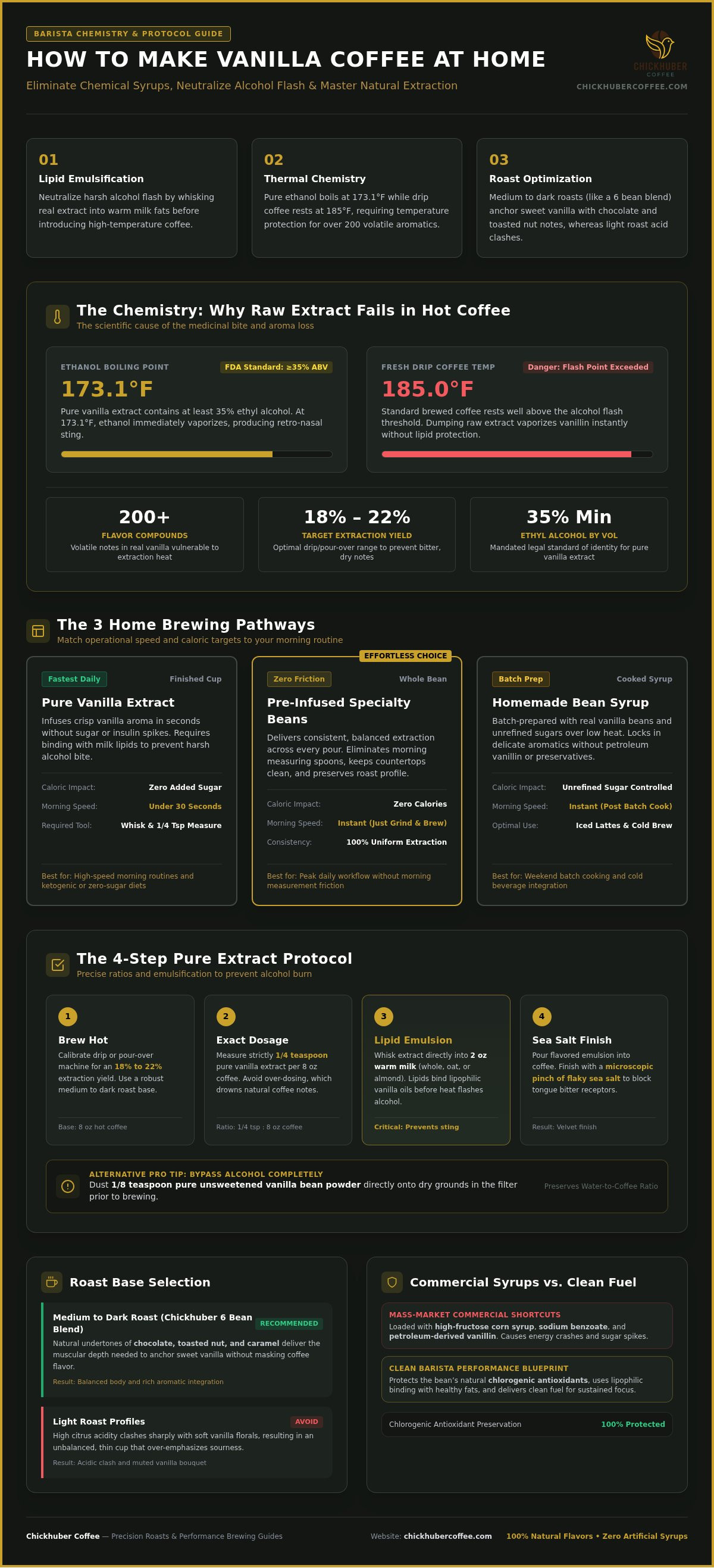
Stop settling for grocery store creamers packed with hydrogenated oils and synthetic fillers. Mastering how to make vanilla coffee at home requires selecting an operational pathway that matches your morning schedule and daily performance goals. You have three primary routes to deploy: finished-cup additions, ground macerations, and specialty pre-infused beans.
Each method interacts with coffee chemistry differently. Real vanilla contains over two hundred distinct flavor compounds that react aggressively to heat and extraction pressure. Looking at the chemical structure of pure vanilla extract composition, volatile vanillin notes vaporize rapidly when exposed to boiling water. Choosing the right brewing pathway protects these delicate aromatics while preserving the coffee bean's natural chlorogenic antioxidants.
Quick Comparison: Speed, Flavor Purity, and Caloric Impact
Align your brew method with your daily routine:
- Pure Vanilla Extract: The ultimate zero-calorie, high-speed solution. It infuses crisp aroma into your mug in seconds without spiking insulin levels.
- Whole Bean Infusion: Delivers consistent, balanced extraction across every single pour. It eliminates morning prep friction, requires zero measuring spoons, and keeps your workstation clean.
- Homemade Vanilla Bean Syrup: The go-to method for iced lattes and relaxed weekend prep. It allows precise control over unrefined sugars, but requires upfront batch cooking.
Choosing Your Base: Match the Roast to the Vanilla Note
Never build a high-performance beverage on a weak foundation. Light roasts often carry bright, citrusy acidity that clashes sharply with soft vanilla florals. To build real body, target medium to dark roasts featuring natural chocolate, toasted nut, and caramel undertones. A powerhouse roast like Chickhuber's 6 bean blend delivers the muscular depth required to anchor sweet vanilla without drowning out the bold coffee punch. Lock in your roast, select your extraction path, and take control of your morning fuel.
How to Make Vanilla Coffee Using Real Vanilla Extract
Dumping raw extract straight into a steaming mug is a guaranteed rookie mistake. By law, the FDA standard of identity for vanilla extract mandates a minimum of 35% ethyl alcohol by volume. Ethanol boils at 173.1°F. When you drop high-proof extract into fresh drip coffee resting at 185°F, that alcohol vaporizes instantly. It hits your retro-nasal passage with a sharp, medicinal sting. Learning how to make vanilla coffee at home with extract requires a clean emulsification step to trap the vanillin and kill the burn.
Step 1 & 2: Brew Hot and Measure Precisely
Precision execution begins at the grinder. Brew your favorite roast using an optimized pour-over or a calibrated setup; check our guide on the best coffee for drip coffee machine performance to secure an 18% to 22% extraction yield. Limit your dosage to exactly one-quarter teaspoon of pure extract per eight ounces of liquid. More does not equal better. Excessive extract overpowers the coffee's natural roast notes.
Step 3 & 4: Emulsify and Balance the Acidity
Harness healthy fats to lock in volatile aromatics. Whisk your measured extract directly into two ounces of warm whole milk, oat milk, or almond milk before combining liquids. Lipids bind directly to the lipophilic vanilla oils, stabilizing them before heat can flash the alcohol. Pour the flavored emulsion into your hot coffee base. Finish with a microscopic pinch of flaky sea salt. Sodium blocks the tongue's bitter receptors, yielding a rounded, velvet finish without added sugar.
Pro Tip: Infusing Grounds Directly in the Filter
Bypass the alcohol question entirely by using dry spices. Add one-eighth teaspoon of pure, unsweetened vanilla bean powder directly across your dry coffee grounds before running hot water cycles. This extracts pure aromatic oils alongside the coffee oils while preserving your exact water-to-coffee ratios. If you want pristine morning speed without measuring powders or whisking extracts, grab fresh beans roasted by Chickhuber Coffee to keep your focus locked on your work.
Crafting a Clean Homemade Vanilla Bean Syrup
Commercial coffee syrups are nutritional dead weight. Mass-market squeeze bottles pack high-fructose corn syrup, sodium benzoate, and petroleum-derived vanillin. They deliver a cheap sugar spike followed by an inevitable productivity crash. Taking control of how to make vanilla coffee at home means engineering an artisanal batch syrup built on real ingredients, zero artificial preservatives, and uncompromising flavor density.
Your body treats chemical sweeteners differently than clean whole ingredients. As highlighted by the Harvard T.H. Chan School of Public Health coffee guide, the metabolic benefits of daily coffee diminish rapidly when drinks are loaded with industrial additives and excessive refined sugars. Building a clean syrup preserves those natural coffee antioxidants while elevating taste.
Selecting Premium Ingredients: Madagascar Pods vs. Alternative Sweeteners
Slice whole Grade A Madagascar or Tahitian vanilla pods down the center lengthwise using a sharp paring knife. Madagascar pods offer rich, creamy warmth; Tahitian pods provide delicate floral notes. For the sweetener base, combine equal parts filtered water and organic cane sugar, raw honey, or pure grade-A maple syrup. Filtered water is non-negotiable. Tap water chlorine contaminates natural aromatics and deadens the finish.
The Low-Simmer Extraction Process
Never subject whole vanilla to rolling boils. Aggressive heat destroys fragile aromatic esters in minutes. Follow this extraction protocol:
- Scrape interior caviar seeds directly into a saucepan holding your water and sweetener over gentle low heat.
- Drop the scraped split pod directly into the pot to pull deeper wood and spice tannins.
- Simmer gently for exactly ten minutes without letting the pot reach a rapid boil.
- Kill the burner and let the pod steep inside the cooling syrup for sixty minutes.
Safe Storage and High-Efficiency Dosing
Strain your infusion through a fine mesh sieve into a sanitized glass mason jar. Standard 1:1 simple syrups carry higher water activity, meaning safe refrigerated shelf life sits at two to four weeks. If you prefer prepping monthly, brew a rich 2:1 ratio by weight. That dense concentration inhibits microbial growth and stays fresh for up to ninety days in refrigeration. Dose exactly one tablespoon per twelve-ounce mug. You get explosive vanilla impact, razor-sharp sweetness control, and clean fuel for the workday ahead.
The Effortless Shortcut: Pre-Infused Specialty Beans and Cold Brew
Scratch syrups and extract measurements solve the clean-ingredient puzzle, but they still cost valuable minutes during a busy morning rush. When speed is your priority, you need an operational shortcut that refuses to sacrifice craft. Learning how to make vanilla coffee at home does not have to mean stocking raw pods or whisking measuring spoons before your first meeting. The smartest play is brewing with pre-infused, specialty-grade French Vanilla whole beans.
Why Quality Roasting Matters for Flavored Beans
Commodity brands ruined flavored coffee for decades. Cheap grocery brands take past-crop, defective beans, roast them to ash, and douse them in thick synthetic oils to mask rot. That chemical sludge coats burr grinders, turns rancid, and leaves an astringent chemical aftertaste. Artisanal small-batch roasting flips that broken model completely. Clean French Vanilla Flavored Coffee starts with high-altitude Arabica beans roasted with precision, then gently infused with balanced flavor compounds that highlight natural chocolate and nut profiles. You eliminate morning prep friction while protecting your grinding equipment.
Batching Iced Vanilla Cold Brew for Peak Productivity
Immersion brewing unlocks another gear entirely. When you steep coffee without heat, you eliminate the thermal breakdown that often drives bitterness. Master our foundational cold brew protocol using flavored beans to build ready-to-pour energy for your entire work week:
- Coarsely grind your French Vanilla beans to a coarse sea-salt consistency to avoid over-extracting fines.
- Steep the grounds in cold, filtered water using a 1:4 concentrate ratio for twelve to sixteen hours.
- Filter the liquid through a fine steel mesh or paper filter to isolate a crystal-clear, low-acid concentrate.
- Pour four ounces over ice, cut it with equal parts cold water or creamy oat milk, and start moving.
You lock down ultra-smooth vanilla refreshment with zero refined sugars, zero measuring hassles, and zero mid-morning downtime. Cut the prep clutter and secure your high-performance fuel by visiting Chickhuber Coffee today.
Optimizing Your Brew: Pro Barista Rules for Flawless Flavor
Great coffee is chemistry, not luck. When dialing in how to make vanilla coffee at home, treating your brewer like an afterthought ruins premium ingredients. Calibrate extraction metrics with ruthless precision. If you botch water temperature or grind consistency, you leach harsh chlorogenic acids that drown delicate vanilla aromatics under a wall of bitter sludge.
Water Temperature and Extraction Dynamics
Keep your kettle locked tightly between 195°F and 205°F. Water straight off a rolling boil at 212°F scorches volatile coffee lipids and burns up subtle vanillin compounds. Cool water below 195°F leaves extraction weak, sour, and hollow. Use filtered water with balanced mineral content to accentuate sweetness, and adjust your burr grinder until you hit a smooth, steady extraction time.
Selecting the Best Milk and Dairy Alternatives
Your liquid base makes or breaks flavor delivery. Different milks interact uniquely with vanilla oils and coffee acidity:
- Barista Oat Milk: The gold standard for plant-based fuel. Its natural oat sugars complement sweet vanilla, creating dense microfoam without synthetic stabilizers.
- Whole Dairy Milk: The classic pairing. Natural lactose and dairy fats bind tight with aromatic compounds for a rich, silky mouthfeel.
- Unsweetened Almond Milk: Avoid it here. Its thin texture waters down your cup and tends to separate when it hits hot, acidic coffee.
Building an Unstoppable Morning Coffee Routine
Streamline your workflow to eliminate daily friction. Dial in your gear, prep your station the night before, and build a routine that drives mental clarity. If you love variety, explore a curated coffee variety pack to cycle distinct single origins against dark, chocolatey roasts. Take control of your morning, execute with intention, and fuel your daily grind with French Vanilla beans.
Take Command of Your Morning Fuel
Settling for mediocre coffee drains your morning momentum. Now that you know how to make vanilla coffee at home with real ingredients, you have full control over your cup. Protect your aromatics by keeping water temperatures locked between 195°F and 205°F, bind pure extracts into warm milk to bypass the alcohol flash, or batch-simmer a clean syrup without synthetic preservatives. Every intentional choice builds a cleaner, sharper morning ritual.
When you need peak performance without extra kitchen steps, choose better beans. Direct-to-consumer artisanal roasting guarantees maximum freshness upon delivery, keeping stale grocery store inventory off your counter. Every batch is crafted with specialty Arabica beans, never low-grade filler coffee that relies on bitter aftertastes. Skip the measuring spoons, protect your mental clarity, and upgrade your daily grind with Chickhuber French Vanilla Flavored Coffee. Brew bold, stay locked in, and dominate your day.
Frequently Asked Questions
Can you put pure vanilla extract directly into black coffee?
Yes, but you shouldn't dose it straight into steaming coffee without a buffer. Pure extract carries at least 35% alcohol, which vaporizes at 173.1°F and creates a harsh, medicinal vapor in fresh coffee. If you drink your coffee black, let the liquid cool slightly below 170°F before stirring in a quarter teaspoon, or opt for vanilla bean powder to skip ethanol evaporation entirely.
What is the difference between French vanilla and regular vanilla coffee?
French vanilla refers to a richer, custard-like flavor profile inspired by traditional French vanilla ice cream bases made with egg yolks. Regular vanilla highlights purely floral, woody vanillin notes straight from the pod. When learning how to make vanilla coffee at home, French vanilla beans or syrups deliver a noticeably rounder, creamier finish that softens dark roasts without requiring heavy cream.
Will adding vanilla extract to hot coffee make it taste bitter?
Yes, adding too much extract or dumping it into boiling coffee often turns the cup bitter. The high alcohol content evaporates rapidly in steaming mugs, concentrating bitter notes and shocking your palate. To eliminate bitterness, restrict your dose to one-quarter teaspoon per eight ounces, emulsify it with milk beforehand, or add a tiny pinch of salt to naturally block bitterness receptors.
How do you make vanilla iced coffee without it getting watered down?
Brew double-strength hot coffee over ice or use cold brew concentrate as your liquid base. Melting ice instantly dilutes weak drip coffee, killing both caffeine kick and delicate vanilla nuance. Pour four ounces of chilled French Vanilla cold brew concentrate directly over fresh ice cubes, then finish with a splash of oat milk. Your drink stays bold, intensely flavorful, and ice-cold to the last drop.
Can you put vanilla beans directly into a coffee grinder?
Never throw whole, moist vanilla beans into a flat or conical burr grinder. Whole pods contain moisture, fibrous skins, and sticky oils that immediately adhere to steel burrs, causing clogging and turning rancid over time. If you want vanilla integrated into the ground phase, use thoroughly dehydrated, finely pulverized pure vanilla powder, or grind pre-infused whole beans designed specifically for standard burr clearance.
How long does homemade vanilla simple syrup last in the fridge?
Standard 1:1 simple syrup lasts two to four weeks in a sanitized, airtight glass jar under steady refrigeration. If you brew a rich 2:1 sugar-to-water syrup, the lower water activity inhibits bacteria and molds, extending shelf life up to three months. Inspect your syrup weekly. If you notice cloudiness or off odors, discard the batch immediately and boil a fresh bottle.
Does vanilla coffee have more calories than regular black coffee?
It depends entirely on your method for how to make vanilla coffee at home. Brewing pre-infused whole beans or adding a dash of pure extract adds virtually zero calories, keeping your cup between two and five calories. In contrast, commercially bottled vanilla syrups and processed coffee creamers pack thirty to eighty calories per serving from added sugars and hydrogenated oils, quickly derailing clean dietary protocols.