

How to Make Coffee Less Acidic: 2026 Guide
Your morning coffee should ignite peak performance, not trigger painful acid reflux. You rely on that sharp focus and rich caffeine kick to attack your daily goals, but a sour aftertaste and burning stomach will stall your momentum fast. You shouldn't have to abandon your favorite ritual or settle for flat, lifeless decaf. Mastering how to make coffee less acidic is simply a matter of controlling extraction mechanics, adjusting your brew water, and locking down the right beans.
In this guide, you will learn practical brewing tweaks to eliminate harsh coffee acidity without sacrificing bold, punchy flavor. We'll break down the true difference between sensory brightness and chemical pH, show you how cold extraction cuts acidic compounds by up to 70%, and highlight dark artisan roasts like Cowboy Blend that protect your stomach. Get ready to brew smooth, powerful fuel that powers your day without the drag.
Key Takeaways
- Understand the difference between bright flavor notes and harsh chemical pH to stop morning stomach irritation at the source.
- Master how to make coffee less acidic by fine-tuning grind size, water temperature, and extraction contact time.
- Slash extracted acidic compounds by up to 70% simply by switching to targeted cold brew extraction methods.
- Select naturally low-acid origins and dark artisan roasts like Cowboy Blend that break down chlorogenic acids during roasting.
- Build a high-performance morning routine using balanced choices like the 6 Bean Blend to maintain bold flavor without digestive drag.
Why Coffee Causes Acidic Burn: Science Behind the Cup
Coffee acidity represents a double-edged sword: chemically, it is a concentration of organic acids triggering gastric hydrochloric secretion; sensorially, it provides vibrant, fruity notes that define specialty roasts. When your stomach rebels after a fresh mug, you aren't reacting to poor caffeine tolerance. You are colliding with aggressive organic acids like chlorogenic, citric, and quinic compounds attacking your digestive tract.
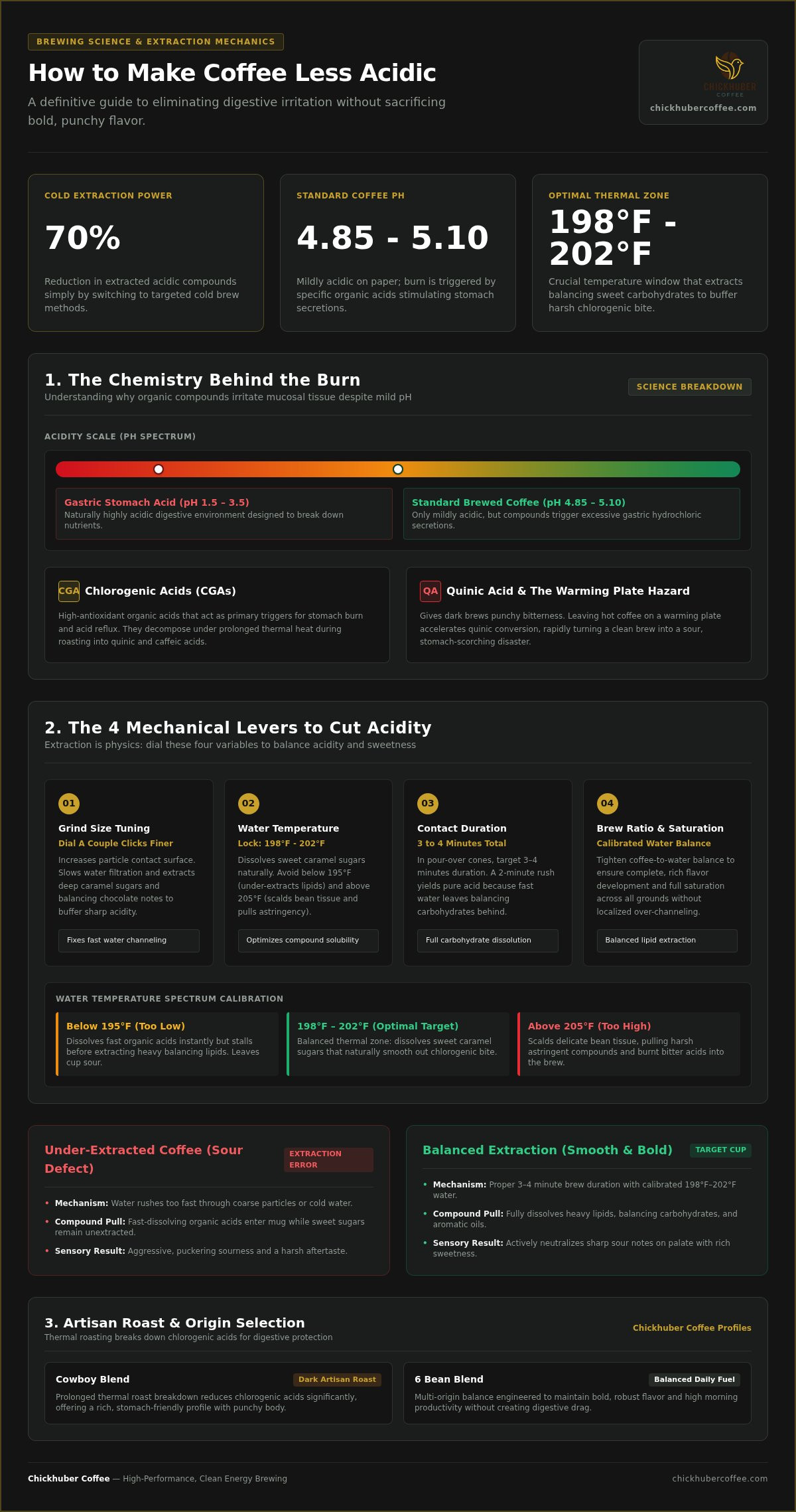
Most standard coffee sits at a pH range between 4.85 and 5.10. That makes it mildly acidic on paper, but your digestive system handles gastric acid at a much lower pH of 1.5 to 3.5. The burn occurs because specific organic compounds stimulate excessive stomach acid production while irritating mucosal tissue. Learning how to make coffee less acidic starts with separating actual chemical compounds from simple extraction mistakes.
Chlorogenic Acid vs. Quinic Acid in Extraction
Chlorogenic acids (CGAs) pack incredible antioxidant power, but they are primary triggers for stomach burn and rapid acid reflux. As beans cook, thermal energy breaks these compounds down. Studying how coffee roasting affects acidity reveals that prolonged heat decomposes CGAs into quinic and caffeic acids. Quinic acid gives dark brews their punchy bitterness, but leaving hot coffee on a warming plate accelerates quinic conversion, turning a clean brew into a sour, stomach-scorching disaster.
Sourness vs. Acidity: Spotting Under-Extracted Brews
Stop blaming the beans when your kettle technique is broken. True acidity brings crisp, refreshing brightness, while under-extraction creates an aggressive, puckering sourness that ruins your morning focus. Knowing how to make coffee less acidic requires spotting this vital difference:
- Under-extracted brews: Water rushes through coarse grounds too fast, pulling fast-dissolving organic acids while leaving sweet sugars behind.
- Balanced extractions: Water fully dissolves heavy lipids, balancing carbohydrates, and aromatic oils, which actively neutralizes sharp sour notes on your palate.
- Mechanical fix: Adjust grind sizing, maintain water temperature, and increase brew saturation before ditching your favorite roast.
Adjusting Your Brew: 4 Mechanical Levers to Cut Acidity
You don't need expensive gear to fix sour coffee. Most mainstream advice tells you to buy specialty powders or give up your morning brew entirely. That is wasted effort. Extraction is pure physics; you control the outcome. Mastering how to make coffee less acidic comes down to calibrating four distinct mechanical variables:
- Grind Size: Dialing finer increases surface contact, allowing water to pull deep, sweet compounds that temper sour front-notes.
- Water Temperature: Keep heat between 198°F and 202°F to balance compound solubility without scorching delicate oils.
- Contact Time: Extend water exposure slightly so heavy carbohydrates dissolve and round out the cup.
- Brew Ratio: Tighten your coffee-to-water balance to ensure complete, rich flavor development.
If you brew through an automatic setup, pairing dialed extraction with the best coffee for drip coffee machine ensures reliable, smooth mornings that keep you moving.
Water Temperature Calibration for Acid Reduction
Temperature dictates what dissolves first. Water boiling past 205°F scalds bean tissue, pulling astringent, bitter compounds alongside harsh acids. Water below 195°F creates the opposite disaster: it dissolves organic acids instantly but stalls out before extracting heavy balancing lipids. Lock your kettle between 198°F and 202°F. This thermal zone extracts sweet caramel sugars that naturally smooth out chlorogenic bite.
Grind Size and Contact Time Synergy
Water always follows the path of least resistance. Grind too coarse, and your brew flows through fast, dragging sharp sour acids into your cup while leaving full body behind. Fine-tune your grinder a couple of clicks finer. This increases particle contact surface, slows water filtration, and pulls out rich chocolate notes to buffer sharp acidity.
Precision execution requires matching this grind consistency to the clock. In a pour-over cone, target a three to four-minute total brew duration. If your draw-down finishes in two minutes, your palate gets pure acid. Slow it down. If you want a setup that delivers consistent, stomach-friendly performance without endless tinkering, try beans from Chickhuber Coffee engineered for bold, clean fuel.
Quick Hacks and Method Comparisons: Cold Brew vs. Additives
Fixing stomach irritation requires speed and strategy. When you need immediate relief without ditching your caffeine hit, choose between two tactical playbooks: thermal manipulation or chemical buffering. Both paths show you how to make coffee less acidic right now, giving you clean energy without digestive downtime.
Cold Extraction: The Definitive Low-Acid Brew Method
Thermal energy drives acid extraction. When you cut hot water out of the equation entirely, you prevent volatile aliphatic and chlorogenic acids from ever dissolving into your cup. Cold water draws out aromatic oils, natural sugars, and pure caffeine over an extended runway while leaving harsh compounds trapped inside the bean fibers.
Cold brewing slashes acidic compounds by up to 70% compared to conventional drip methods. Grind your beans coarse. Steep them in cool filtered water for 16 to 20 hours. Filter the slurry to yield a heavy, velvety concentrate. Craving a hot drink on a crisp morning? Cut that concentrate 50/50 with boiling water. You get rich thermal warmth without the acid penalty. Dive into our complete cold brew guide to master this technique at home.
Kitchen Additives: Baking Soda, Salt, and Plant Milks
If you must brew hot on a tight morning schedule, deploy fast-acting kitchen neutralizers. Sodium bicarbonate, standard baking soda, provides high-alkaline bicarbonate ions that actively neutralize free hydrogen ions in acidic coffee:
- Baking Soda: Add an eighth of a teaspoon per 12-cup pot before brewing. It nudges the pH balance toward 6.0 without degrading bold roast character. Keep measurements precise; too much creates an unpalatable, soapy profile.
- A Dash of Salt: A tiny micro-pinch of sea salt suppresses the tongue's perception of harsh bitterness, smoothing out rough edges instantly.
- Fat Buffers: Whole milk or high-fat oat milk contains lipids and proteins that bind directly to chlorogenic acids. These compounds coat your stomach lining, shielding sensitive tissue from irritation while preserving clean mental clarity.
Choosing Naturally Low-Acid Beans: Roast, Origin, and Elevation
Mechanical tweaks resolve brew errors, but starting with the wrong bean locks you into an uphill battle. If your raw material contains high concentrations of volatile acids, you will struggle to brew a gentle cup. Sourcing naturally mild crops cuts stomach drag before you even touch your grinder. Dialing in how to make coffee less acidic starts at the farm level, tracking elevation, soil chemistry, and roasting duration.
Why Darker Roasts Tame Harsh Acidity
Roasting is chemical transformation under pressure. Green coffee cherries arrive packed with chlorogenic acids, but prolonged thermal exposure breaks down these compounds into pleasant aromatic oils and caramelized sugars. As the roaster pushes beans past second crack into dark territory, internal acid levels drop significantly.
Dark roasts also develop N-methylpyridinium (NMP). Research indicates this specific roasting byproduct signals your stomach's parietal cells to reduce hydrochloric acid secretion. That means dark roasts strike twice: they carry fewer acids into your cup while actively preventing internal gastric burn. You get deep chocolate body and steady morning drive without the sour pit in your stomach.
Origin and Processing Selection Rules
Elevation shapes chemical composition. Coffee plants grown at extreme altitudes above 1,500 meters mature slowly, producing dense seeds loaded with citric and malic acids. Those bright citrus notes delight professional cuppers, but they wreak havoc on sensitive digestions. For everyday gut comfort, focus on low-elevation origins:
- Brazilian & Sumatran Origins: Grown at lower elevations, these beans feature round, earthy, nutty profiles with minimal innate acidity.
- Natural Dry Processing: Drying cherries in the sun allows fruit sugars to soak deep into the seed, tempering sharp brightness far better than washed processing.
- Washed High-Altitude Beans to Avoid: Skip bright East African coffees when hunting for gut-friendly daily fuel. Their prized lemon-lime sharpness comes loaded with raw acid.
Skip the stomach burn entirely and fuel your focus with artisan-roasted selections from Chickhuber Coffee, crafted for maximum smoothness and bold energy.
Your Daily Low-Acid Ritual: Performance Blends That Deliver
Executing a high-output day requires clean fuel. You know the extraction levers; now you must lock down a repeatable morning ritual. Eliminating friction in your routine stops decision fatigue and keeps your digestion settled. Instead of fighting sharp, punishing acidity every morning, choose beans engineered to handle pressure. Multi-origin profiles create natural balance. Reaching for a versatile 6 bean blend unites varied roast depths and origins, delivering deep flavor complexity and rounded body without the sharp acid spikes of single-origin light roasts.
Deploying Cowboy Blend for Low-Acid Immersion
Immersion brewing stands as your frontline defense against stomach drag. When grounds sit fully submerged in water, extraction happens gently and evenly across every particle. This stops the channeled, hyper-sour wash that ruins fast pour-overs. Pair this method with our Cowboy Blend. This dark, full-throttle roast features rich cocoa notes and deep caramelized structure specifically developed to tame chlorogenic bite.
Brew it in a French press using coarse grounds and water heated to 200°F. If your tap water runs soft and acidic, use remineralized alkaline brew water. The added magnesium and bicarbonate ions buffer organic acids instantly, creating a velvety, dense cup that protects your digestive tract during relentless work blocks.
Executing the Complete Clean Extraction Routine
Hardware hygiene dictates final cup quality. If you want to know how to make coffee less acidic consistently, eliminate hidden acid reservoirs throughout your setup:
- Rinse Paper Filters: Flush paper filters with hot water before loading grounds to wash away acidic wood pulps and chemical processing residues.
- Scrub Brewing Gear: Clean carafes, portafilters, and grinders weekly. Spent coffee oils oxidize quickly, turning into rancid, bitter acids that taint fresh extractions.
- Store Beans Airtight: Keep whole beans sealed away from oxygen and light to stop premature lipid degradation and sour flavor decay.
Dial your parameters, trust your gear, and run your morning routine with pure confidence. Smooth, gut-friendly coffee is not an accident; it is the direct result of dialing in your process to fuel peak performance every day.
Lock Down Your Extraction and Eliminate the Burn
You don't have to compromise between peak physical comfort and uncompromising morning fuel. Knowing how to make coffee less acidic is your tactical blueprint for higher daily output. When you dial in your grind consistency, leverage cold water extraction, and select naturally balanced origins, harsh digestive drag disappears. Stop tolerating sour, poorly extracted brews that derail your focus before noon.
Take charge of your ritual with beans built to perform under pressure. Chickhuber Coffee delivers small-batch artisanal precision roasting engineered for maximum smoothness and zero gut drag. With fast national shipping straight to your brewing station, powerful morning clarity is within reach. Upgrade your morning grind with bold, low-acid specialty roasts and attack your daily goals with relentless energy.
Frequently Asked Questions
Does adding milk reduce the acidity in brewed coffee?
Yes, adding milk chemically buffers acidity and cushions digestion. Dairy proteins, particularly casein, bind directly to chlorogenic acids, preventing them from irritating sensitive stomach lining. Calcium also acts as a natural buffer, slightly raising the liquid's pH level. If you tolerate dairy, whole milk offers the strongest buffer due to its natural fats. For plant-based routines, oat milk provides comparable lipid barriers without triggering lactose intolerance.
Is cold brew coffee actually less acidic than hot coffee?
Yes, cold brew significantly reduces acidic compounds compared to hot brewing methods. Steeping coarse grounds in cool water over 16 to 20 hours leaves volatile, heat-soluble acids trapped in the coffee bed. This extraction method yields a velvety concentrate with up to 70% fewer extracted acids. It delivers crisp energy and maximum flavor clarity without the stomach burn typical of hot drip machines.
Can adding baking soda to coffee neutralize stomach acid?
Baking soda neutralizes the acid in your mug rather than your stomach directly. Sodium bicarbonate is an alkaline compound that elevates the brewed liquid's pH toward neutral, blunting harsh hydrogen ions before they enter your gut. Adding an eighth of a teaspoon per pot is a proven hack for how to make coffee less acidic. Measure carefully; exceeding that ratio leaves an unpleasant, soapy aftertaste that ruins your morning cup.
What coffee roast level has the least amount of acid?
Dark roasts contain the absolute lowest levels of organic acid. Prolonged thermal heat inside the roaster causes chlorogenic acids to break down systematically into caramelized sugars and aromatic compounds. In addition, dark roasts develop N-methylpyridinium during extended heat exposure, a beneficial chemical compound that actively curtails gastric acid secretion in your stomach. For zero morning drag, choose dark profiles like Cowboy Blend over acidic light roasts.
Does dark roast coffee have less acid than light roast?
Yes, dark roast coffee consistently contains less acid than light roast coffee. Light roasts retain high amounts of natural chlorogenic, citric, and malic acids because the beans spend far less time in the roaster. Dark roasts undergo extended caramelization, burning off aggressive acids while enhancing deep cocoa and smoky flavor profiles. Switching to dark roast beans is one of the easiest ways for how to make coffee less acidic without altering your morning brewing mechanics.
How does water quality and mineral content affect coffee acidity?
Water chemistry directly dictates how acids extract and taste. Pure distilled or soft water lacks dissolved minerals, allowing extracted acids to dominate your cup with a sharp, sour profile. Moderately hard water rich in bicarbonate and magnesium acts as an active chemical buffer, neutralizing harsh organic acids during extraction. Use filtered, remineralized water with balanced alkalinity to ensure a rounded mouthfeel and prevent aggressive, stomach-churning acidity.
What is the best brewing method for acid reflux sufferers?
Cold extraction and French press immersion are the top two brewing methods for anyone battling acid reflux. Cold brewing prevents volatile acids from extracting into liquid form, while French press immersion allows for coarse grinds and even extraction without channeled sourness. Pair either method with dark, low-altitude beans to produce rich fuel that keeps you sharp, focused, and free from debilitating digestive discomfort.