

How to Make a Tea Latte at Home: An Easy Step-by-Step Guide
The secret to a smooth, flavorful tea latte isn’t fancy equipment. It’s a tea base strong enough to stand up to milk. If your homemade version turns out weak, bitter, or watery, start by adjusting the brew before changing the milk. This guide to how to make a tea latte at home covers a bold tea base, balanced milk, and foam you can make with tools already in your kitchen.
You don’t need an espresso machine or a complicated recipe. Brew tea with about twice the leaves you’d use for a regular cup, then add warm milk and adjust the sweetness to your taste. Keep the tea’s recommended steeping time, since over-steeping can make the base bitter. A concentrated brew helps the tea’s character stay noticeable after you add milk.
Follow the steps below to choose a tea, brew a strong base, and froth milk with a whisk or heat-safe jar. You’ll also find ways to adjust strength, texture, and sweetness to suit the tea and milk you have on hand. Loose leaf tea blends are one option for building a full-flavored cup from scratch.
Key Takeaways
- For how to make a tea latte at home, match the tea style to the flavor you want, from robust black tea to earthy matcha.
- Start with two parts milk to one part concentrated tea, then adjust the ratio to suit your taste.
- Choose a practical way to prepare milk foam, such as whisking, using a heat-safe jar, or warming milk on the stovetop.
- Correct weak, bitter, watery, or overly sweet results by changing one part of the recipe at a time.
- Customize the flavor with different teas, spices, and optional sweetener.
What Is a Tea Latte, and What Makes One Taste Balanced?
A tea latte combines brewed tea and milk, with sweetener added if you like. For a balanced cup, the tea should remain noticeable, the milk should add a smooth texture, and sweetness should complement the flavor rather than cover it. A regular cup of tea with a splash of milk is usually less concentrated, so its tea flavor can fade more easily.
Start with a concentrated tea base, brewed stronger than you’d serve on its own. This gives the milk a bold flavor to meet, rather than letting the finished drink taste thin. Black tea, green tea, chai, and other styles can all work. Loose leaf tea blends give you control over how much tea goes into the brew, so you can adjust the base to your preference.
Tea latte basics: tea, milk, and optional sweetness
Each ingredient has a role. Tea brings the defining flavor; milk softens its sharper edges and adds body. A sweetener such as sugar or honey can round out bitterness, but it’s optional. Taste the drink before adding any, then sweeten gradually. For a spiced example, Masala chai combines tea with spices and is commonly prepared with milk.
A balanced latte doesn’t bury the tea. If the drink tastes mostly like milk, strengthen the brew or use less milk. If it tastes harsh, check the water temperature and steeping time before adding more milk. A small amount of sweetener can soften the taste, but it won’t fix a tea base that has been over-steeped.
Can you make a tea latte without an espresso machine?
Yes. An espresso machine isn’t required. Use a kettle or saucepan to heat water and brew the tea, then strain it into a mug. Warm milk gently in a saucepan, stopping before it boils. A whisk can add light foam, and a heat-safe jar can foam milk too. The texture will vary by method, so use whichever finish you prefer.
For the jar method, warm the milk separately and let it cool briefly before pouring it into the jar. Leave room for the milk to expand, secure the lid, and shake carefully. Open the jar away from your face. Never shake hot liquid in a sealed container. With a few basic tools, how to make a tea latte at home comes down to brewing with enough strength, warming the milk gently, and adjusting the finished cup to your taste.
How to Choose and Brew Tea for a Flavorful Tea Latte
Choose a tea whose flavor you want to taste through the milk, then brew it with enough strength to hold its ground. Black tea is a reliable starting point because its bold, brisk character pairs well with milk. Chai brings warming spices, while matcha makes a different kind of base: whisk the powdered tea with water until smooth instead of steeping and straining leaves.
Which tea works best in a homemade tea latte?
Green tea can make a lighter, fresher latte, but it needs a gentler brew to avoid a harsh or bitter taste. Use water below boiling and a shorter steep, following the tea’s package directions. Loose leaf tea lets you control how much tea goes into the brew, making it easy to build a stronger base before adding milk.
For black tea and chai, start with the recommended water temperature and steeping time on the package. Over-steeping can draw out unwanted bitterness, so strain or remove the leaves promptly and taste the tea before changing the method. Matcha doesn’t steep like loose leaf tea: whisk the powder into water until smooth, then combine it with milk.
How strong should you brew tea for a latte?
Make the tea more concentrated than a regular cup. A practical starting point is about twice the usual amount of loose leaf tea for the same volume of water, while keeping the tea’s recommended steeping time. Leaf size and strength vary, so treat that as a starting ratio, not a rule. For tea bags, follow the package directions and adjust based on taste. If the base tastes too strong on its own, that can be a good sign, since milk will soften it.
Why concentrate it? A stronger tea base keeps the finished latte flavorful after milk is added.
For an example of how brewed tea and milk come together in a latte, explore this tea latte recipe. Then adjust the tea type and strength to suit your cup. Chickhuber Coffee’s loose leaf tea blends offer another tea option to try in your next homemade latte.
How to Froth Milk at Home Without Special Equipment
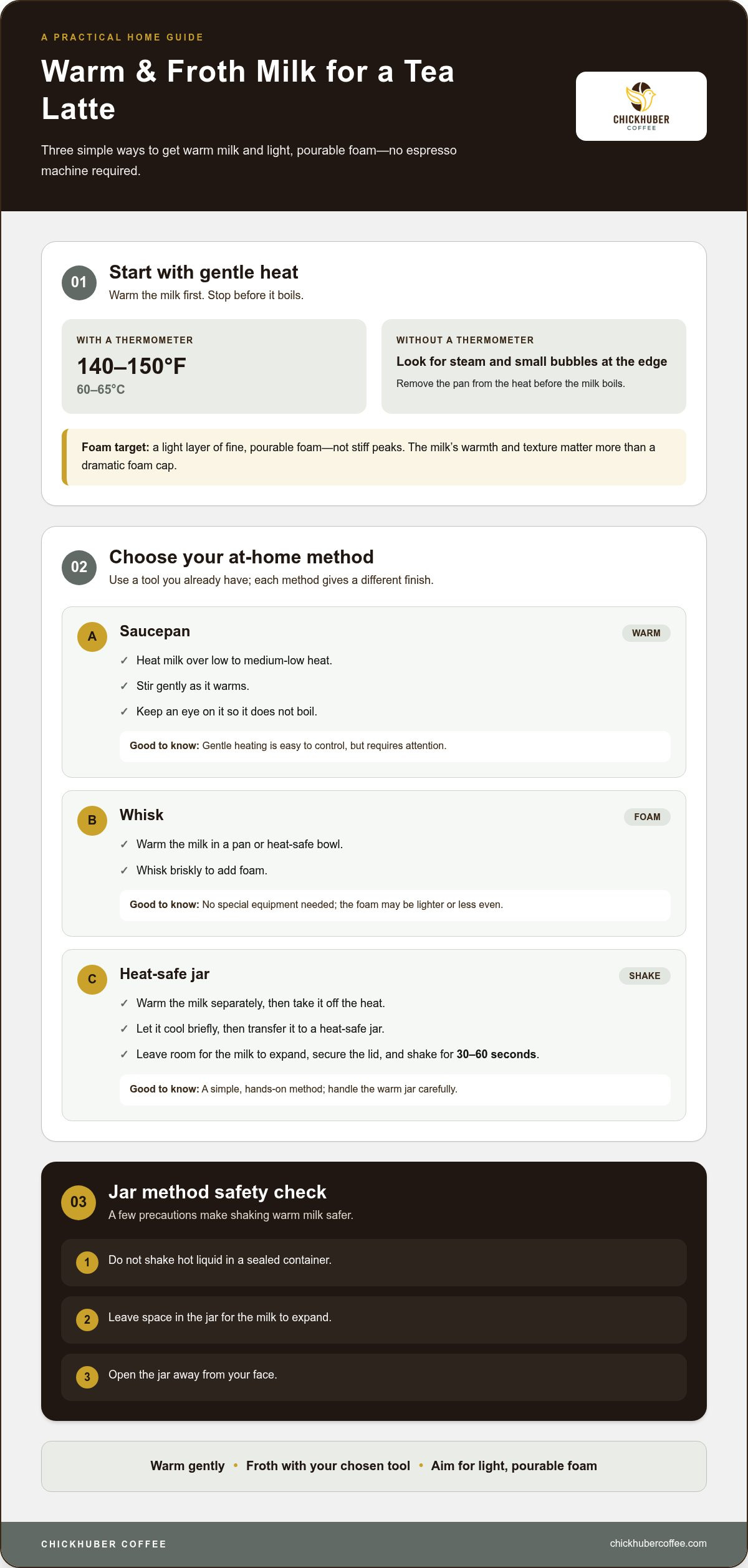
You can make a smooth tea latte without an espresso machine. Aim for warm milk with a light layer of fine, pourable foam, not stiff peaks. Heat it gently, choose a tool you already have, and stop before the milk boils. Foam is a finishing touch: the milk’s warmth and texture matter more than a dramatic layer on top.
Three simple ways to warm and foam milk
Warm milk in a saucepan over low to medium-low heat, stirring gently. If you have a thermometer, aim for 140-150°F (60-65°C). Otherwise, remove the pan once the milk is steaming and small bubbles begin to form at the edge. Don’t let it boil; boiling can affect the milk’s texture and make it harder to foam smoothly.
Pick your method:
| Method | How to do it | Pros and considerations |
|---|---|---|
| Saucepan | Warm the milk gently, stirring as it heats. | Easy to control, but requires attention so the milk doesn’t boil. |
| Whisk | Whisk warm milk briskly in the pan or a heat-safe bowl. | Needs no special equipment, though the foam may be lighter or less even. |
| Heat-safe jar | Warm the milk first, then transfer it to a heat-safe jar. Close securely and shake for 30-60 seconds. | Simple and hands-on, but leave room for the milk to expand and handle the warm jar carefully. |
For the jar method, take the milk off the heat before pouring it into the jar. Don’t shake milk in a jar while it’s on the stove, and open the lid carefully, pointed away from your face. A handheld frother is another option if you already have one, but it isn’t required.
Which milk gives a smooth tea latte?
Milk changes the drink’s richness, sweetness, and foam. Dairy milk and plant-based options can both work, but results vary by product and technique. Try a small serving of the milk you have, then notice whether its flavor complements the tea and whether the foam holds long enough to pour.
Look for a soft, even layer of small bubbles that moves easily when you tilt the cup. If it’s too thin, whisk or shake a little longer. If the foam is stiff or the milk feels overheated, use gentler heat next time. You can make a smooth tea latte at home with texture that suits your cup, no machine required.
How to Make a Tea Latte at Home: A Step-by-Step Recipe
Use this single-serving recipe as a starting point. It makes a tea-forward latte with enough milk for a smooth finish, while leaving room to adjust the strength, sweetness, and texture to your taste.
Ingredients and simple equipment for one serving
- Tea: 1 tablespoon loose leaf black tea, or 2 black tea bags
- Water: ½ cup (120 ml)
- Milk: 1 cup (240 ml), dairy or plant-based
- Sweetener: 1 teaspoon sugar or honey, optional, or adjust to taste
You’ll also need a kettle or saucepan, a mug, and a strainer if you’re using loose leaf tea. This gives you a starting ratio of 1 part concentrated tea to 2 parts milk. For another tea style, follow its package directions for water temperature and steeping time. Matcha is whisked into water rather than steeped and strained.
The preparation method, from steeping to first sip
- Brew the tea. Heat the water and steep the loose leaf tea or tea bags according to the tea’s instructions. For black tea, use hot water and steep until the brew tastes bold and full, not harsh. Strain loose leaves or remove the tea bags.
- Warm the milk. Heat it gently in a saucepan until steaming, without letting it boil. Whisk it as it warms, or foam it using one of the methods in the previous section.
- Build the latte. Pour the concentrated tea into your mug, then add the warm milk. Spoon foam over the top if you like.
- Taste and tune. Try a sip before adding sweetener. If the tea flavor gets lost, use a little less milk or brew a stronger base next time. For a lighter texture, reduce the foam; for a sweeter cup, add sweetener gradually.
Brew tea strong, add warm milk, then adjust sweetness and texture to taste. That’s the core of how to make a tea latte at home: a clear tea flavor, a smooth milk finish, and room to tailor the cup.
To choose a tea base, explore loose leaf tea blends and find a flavor to try in your next latte.
Tea Latte Variations and Fixes for Weak, Bitter, or Watery Results
A tea latte is easy to adjust. Change one thing at a time, then taste again. That makes it easier to tell whether the issue is the tea, the steep, or the balance with milk. Use these quick fixes to bring your next cup back into balance.
How to fix a weak, bitter, or watery tea latte
- Weak tea flavor: Strengthen the tea base before adding more sweetener. For loose leaf tea, try a little more leaf for the same amount of water, while keeping to the tea’s recommended steeping time. You can also add less milk to the finished cup.
- Bitter taste: Check the tea type, water temperature, and steeping time. Green tea can turn harsh if brewed with overly hot water or steeped too long. Follow the brewing directions for the tea and strain or remove the leaves promptly.
- Watery texture: Use less milk or a slightly smaller amount of water for the tea base next time. Adjust in small increments so the tea stays flavorful without making the drink too intense.
- Too sweet: Don’t add more sweetener, and use unsweetened milk next time if that’s an option. When making another serving, taste the tea and milk together before sweetening.
Easy ways to customize your tea latte
Keep the base simple, then change the flavor. Brew chai for a spiced profile, or add a pinch of cinnamon or ginger to another tea. Try a different tea style to shift the cup’s character, and let that flavor guide how much milk you add. Black tea can make a bolder latte, while a lighter tea keeps the result more delicate.
Sweetness is personal. Leave the drink unsweetened to let the tea lead, or stir in a little sugar or honey after tasting. When making a new serving, adjust the quantity gradually rather than masking a weak brew with extra sweetener. If you use loose leaf tea, change the leaf amount or steeping time carefully and note which version you prefer.
For more detail on getting the brew right, use this loose leaf tea brewing guide. To experiment with herbal tea, explore the loose leaf herbal tea guide for more on choosing and preparing those leaves. The same principle applies to how to make a tea latte at home: adjust the brew first, balance it with milk, then finish to taste.
Brew Your Next Cup with Confidence
A balanced tea latte starts with a tea base strong enough to shine through the milk. Choose a tea you enjoy, brew it with care, and warm the milk gently. No espresso machine is needed. A whisk or heat-safe jar can help create a soft layer of foam with simple kitchen tools.
Keep your first cup flexible. Taste before sweetening, then adjust the tea strength, milk, and texture in small steps. If the result is weak, build up the tea base; if it’s bitter, revisit the water temperature and steeping time. That’s the practical rhythm behind how to make a tea latte at home: brew, balance, and make it yours.
Chickhuber Coffee offers loose leaf tea blends through its online store, giving you another tea option to explore for your next latte. Explore loose leaf tea and brew your next tea latte. Choose a tea, trust your taste, and enjoy the cup you made.
Frequently Asked Questions
What tea is best for a tea latte?
The best tea depends on the flavor you want. Robust black tea gives a classic, direct tea-and-milk profile, while chai adds spice. Matcha makes a distinct whisked drink rather than a steeped tea. Green and herbal teas can also work, but their flavors and brewing needs differ. Start with a small serving, brew it according to its specific guidance, and adjust the strength until the tea comes through after you add milk.
How do you make a tea latte taste stronger?
Make the tea base more concentrated before adding milk. Use an appropriate amount of tea for the variety and follow its recommended water temperature and steeping guidance. Taste the brewed base before combining it with milk. If the finished drink still tastes mild, use less milk or brew a stronger base next time. To make a tea latte at home with bold flavor, build strength at the brewing stage.
Can you use loose leaf tea to make a tea latte?
Yes, loose leaf tea works well in a tea latte. Brew the leaves in hot water, then strain them out before adding milk. Choose a tea you enjoy and follow brewing guidance suited to that variety. Make the base concentrated enough to stay noticeable in the finished drink. For more preparation detail, use this loose leaf tea brewing guide and adapt the strength to your taste.
How do you froth milk for a tea latte at home?
Warm milk gently in a saucepan, then whisk it until it reaches the texture you want. A handheld frother is another option, but you don’t need one. A heat-safe jar can work too: remove the milk from the heat, let it cool briefly, then pour it into the jar, secure the lid, and shake. Leave room for expansion and open the jar away from your face. Never shake hot liquid in a sealed container. Different milks produce different foam, and frothing is optional, so serve the milk warmed if you prefer.
Why does my homemade tea latte taste bitter?
A homemade tea latte can taste bitter if the tea steeps too long or the water is too hot for that variety. Brewing guidance differs by tea, so don’t apply one temperature and steeping time to every type. Try a shorter steep, or adjust the water temperature when appropriate. Taste the brewed tea before adding milk. If it already tastes harsh, changing the tea-to-milk ratio may not solve the source of the bitterness.
Can you make a tea latte with plant-based milk?
Yes, you can make a tea latte with plant-based milk. Choose one whose flavor works with your tea, warm it gently, and add it to the brewed base. Sweetness and foam vary by product, so test a small serving before changing the full recipe. If the milk doesn’t foam much, the drink can still be a tea latte. Serve it warm with little or no foam, and adjust the tea-to-milk balance to taste.