

How to Host a Coffee Tasting Party: A Simple Guide for 2026
A coffee tasting party doesn’t need specialist gear, a flavor wheel, or a room full of experts. It’s a guided comparison, not a formal exam. If you’re wondering how to host a coffee tasting party, keep the plan simple and let everyone share their own impressions.
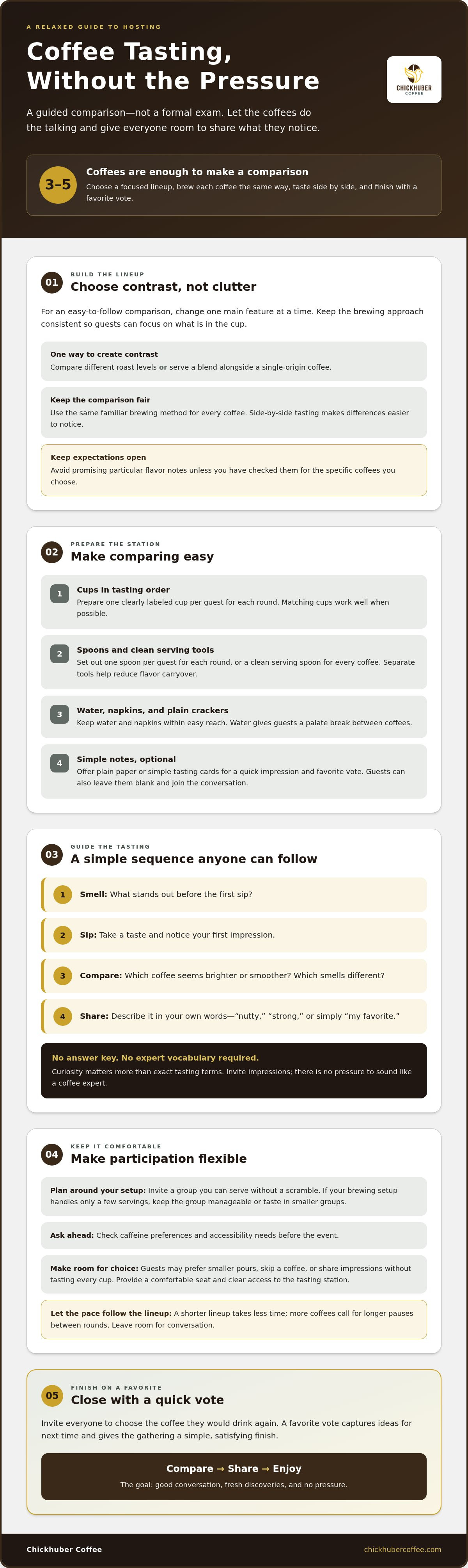
You don’t need a trained palate or a complicated brewing setup. Choose three to five coffees with clear differences, brew them in the same familiar way, and invite guests to smell, sip, and compare. A single-origin sample pack can be an easy way to explore variety, or you can serve coffees you already enjoy. Set out water and plain crackers, then finish with a quick favorite vote. The tasting stays lively without turning into homework.
This guide covers how to choose a flexible lineup, prepare the basics, and lead tasting steps anyone can follow. Expect good conversation, fresh discoveries, and no pressure to sound like a coffee expert.
Key Takeaways
- Learn how to host a coffee tasting party as a relaxed group activity, not a test of expertise.
- Build a focused lineup with enough contrast to make each coffee worth comparing.
- Guide guests through a simple tasting sequence and invite them to describe what they notice in their own words.
- Use a straightforward schedule and finish with a favorite vote to keep the gathering moving and capture ideas for next time.
How to Host a Coffee Tasting Party That Feels Fun, Not Formal
A coffee tasting party isn’t an exam. It’s a chance to compare a few coffees, trade reactions, and discover what each person enjoys. You don’t need specialist equipment, professional vocabulary, or a perfectly trained palate. A good measure of success is simple: guests feel comfortable speaking up and leave with a new favorite or a new impression.
Keep the plan clear and the mood relaxed: choose the coffees, prepare them consistently, taste, compare, and enjoy. Tasting the coffees side by side makes differences easier to notice than serving one after another with no direct comparison. Ordinary cups work well. Use the same brewing method for each coffee so guests can focus on what’s in the cup, rather than wondering whether a change in preparation affected the result.
Curious about the formal method? Professional coffee cupping follows a more structured approach, but you don’t need to recreate it at home. Borrow the idea of careful comparison, then make the gathering your own.
What makes a coffee tasting party different from serving coffee?
The difference is intention. Instead of pouring a cup and moving on, serve the coffees together and give guests time to compare them. Ask open questions: Which one smells different? Which seems brighter or smoother? Which would you choose to drink again? There’s no answer key. Personal descriptions, even “nutty,” “strong,” or “my favorite,” are enough to get the conversation started. Curiosity matters more than exact tasting terms.
Who should you invite, and how long should it last?
Invite a group you can serve without a scramble. Think about how many cups your brewing setup can handle at once. If it’s only a few servings, keep the group manageable or taste in smaller groups. Tell guests how many coffees you plan to serve, then leave room for conversation. A shorter lineup takes less time; more coffees call for longer pauses between rounds.
Ask about caffeine preferences and accessibility needs before the event. Some guests may prefer smaller pours, want to skip a coffee, or need a comfortable seat and clear access to the tasting station. Make participation flexible. No one has to finish every sample, and guests can share impressions without tasting every cup.
Set expectations early: this is a shared experiment, not a performance. A few contrasting coffees, familiar cups, and a consistent brewing approach are enough to get the conversation moving. Keep the structure, lose the pressure, and let the group decide what makes a great cup.
Choose Coffees and Set Up a Simple Tasting Station
Build a lineup with contrast, not clutter. Three to five coffees gives guests enough variety to compare without making preparation feel like a production. For a first tasting, change one main feature at a time, such as roast level or whether a coffee is a blend or single origin. This makes the comparison easier to follow than choosing coffees that differ in every possible way.
How many coffees should you serve, and what kinds should you choose?
Three to five options is a practical starting point. You could compare different roast levels or serve a blend alongside a single-origin coffee. Keep the brewing approach consistent across the lineup so the coffee itself stays at the center of the comparison. Avoid promising guests particular flavor notes unless you’ve checked them for the specific coffees you choose.
If you want ideas for building variety into your lineup, use this coffee variety pack guide as an optional planning resource. A single-origin sample pack is another way to explore different coffees. Many factors can affect how coffee tastes. A University of Queensland thesis examines the compositional basis of coffee flavour.
What belongs on a beginner-friendly tasting station?
Set up before guests arrive. For each round, prepare one clearly labeled cup and one spoon per guest. Add water for palate breaks, napkins, and plain paper or simple tasting cards. Guests can jot down a word or two, mark a favorite, or leave the card blank and join the conversation.
- Cups: Use matching cups where possible, and label each coffee clearly.
- Spoons: Set out one per guest for each round, or provide a clean serving spoon for every coffee.
- Water and napkins: Keep both within easy reach.
- Notes: Offer plain paper with room for a quick impression and a favorite vote.
Use clean equipment and separate serving tools for each coffee to reduce flavor carryover. Keep the station uncluttered, with cups grouped in tasting order. If you’re choosing coffees for the event, single-origin sample packs are one option for adding variety. The aim is to make comparisons easy, not to create a display that needs explaining.
How to Guide Guests Through Each Coffee Without Jargon
Give the group one easy routine and repeat it for every cup: observe, smell, sip, pause, and record. A shared sequence keeps the tasting moving and gives guests a consistent way to compare coffees. Invite everyone to taste in the same order, then hold off on discussion until each person has tried the current option. This gives everyone a chance to form an impression before a confident opinion steers the conversation.
What tasting steps should guests follow?
Start by looking at the coffee. Notice its color or surface, but don’t treat appearance as a score. Next, smell it and name the first impression that comes to mind. Take a small sip, let the flavor register, then pause before writing or sharing a reaction. Guests can consider the coffee’s overall feel, how its qualities fit together, and what impression stays with them after the sip.
Use the same short prompts for each coffee:
- Aroma: What do you notice when you smell it?
- Brightness: Does it seem lively or crisp, or more mellow?
- Body: Does it feel light, rich, or somewhere between?
- Overall preference: Would you choose another sip?
These are conversation starters, not technical tests. Guests may describe the same cup differently, and both impressions can be valid.
How can you make tasting notes easy for beginners?
Keep the tasting card compact. Give each coffee space for three quick notes: aroma, first impression, and favorite or not for me. Guests can write a word, a phrase, or a question. Offer examples such as “soft,” “bold,” “bright,” or “reminds me of breakfast,” but make it clear there’s no required vocabulary. The aim is to capture a personal response, not guess a coffee’s official tasting notes.
For an easy comparison, let everyone taste and jot down their first thoughts before opening the floor. Then invite guests to compare notes: Did anyone notice something others missed? Which coffee felt most balanced? Which would they choose for a regular morning cup? Different answers make the discussion more interesting, not less accurate.
That repeatable rhythm is the practical heart of how to host a coffee tasting party: guide the process, then let the group take it from there. Keep the prompts consistent and the conversation open. No jargon required.
Keep the Coffee Tasting Party Engaging With Pairings and a Simple Schedule
A clear run of show keeps the gathering lively without making it feel tightly managed. Welcome guests, explain the tasting flow, move through the coffee rounds, pause for discussion, and finish with a favorite vote. Offer water between coffees. Those pauses give everyone time to reset and keep the tasting from feeling rushed.
Before the party, ask about caffeine preferences. Smaller pours let guests sample without committing to a full cup. If someone prefers decaf, check that a suitable option is available before including it on the menu. Make skipping a sample easy, too. A good host gives guests choices without drawing attention to them.
What food pairs well with a coffee tasting?
Food is optional. Let guests taste each coffee on its own first, then offer a few simple bites for anyone who wants them. Plain crackers or bread can work as palate breaks; dark chocolate, buttery pastries, or cheese can add contrast. Keep portions modest and flavors straightforward so the food doesn’t take over. No single pairing suits every coffee or palate, so let guests decide what works for them.
How do you keep every guest involved?
Give everyone a tasting card and a quiet moment to note an impression before opening the discussion. Some guests will want to share; others may prefer to listen. Don’t ask anyone to identify expert flavor notes. A simple “Which one stood out to you?” gives everyone an easy way into the conversation.
Try this flexible sequence:
- Welcome: Explain that there are no right answers and point out the order of the coffees.
- Taste: Move through the lineup together, leaving a pause between samples.
- Discuss: Invite reactions after everyone has had time to form an impression.
- Vote: Ask each guest to choose a favorite, privately or with a quick show of hands.
The final vote gives the tasting a natural finish and sparks friendly comparisons. Guests can name a favorite without having to defend it. It’s a simple way to focus on personal preference, which is what makes how to host a coffee tasting party feel welcoming instead of formal.
To compare options as you plan your lineup, browse coffee options for your tasting and build the schedule around the guests and coffees you choose.
Finish Strong: Turn Your Coffee Tasting Into a Repeatable Ritual
Close with a quick round: ask each guest to name a favorite and what shaped that choice. One person might prefer a coffee’s aroma; another might remember its fuller feel or how it tasted as it cooled. Keep the answers personal rather than ranked. The goal is to learn what the group enjoys and use those discoveries to shape the next gathering.
Before everyone leaves, capture a few useful takeaways. Which roast direction drew the most interest? Did guests prefer a particular brewing style? What would they like to compare next time? Save the lineup, preparation notes, and any changes you’d make. Those notes turn how to host a coffee tasting party from a one-time experiment into a format you can repeat and adapt.
What should you do after the tasting?
Share a short recap with guests after the event. Include the coffees you served, the group’s favorite, and a few memorable tasting notes. Then ask what they’d repeat or change, such as serving fewer coffees or leaving more time for conversation. Keep feedback practical. A brief note on what worked and what didn’t is enough to make the next tasting smoother.
Use what you learned to shape the next lineup. If the group gravitated toward blends, the 6 Bean Blend offers another option to consider. Treat it as inspiration, not a required pick; you can build the next tasting around coffees your guests already enjoy.
How can a sample pack help you plan another tasting?
Single-origin sample packs can be one way to explore variety at a future gathering. Check the current product details before choosing a lineup, and don’t plan around a specific selection unless you’ve confirmed it. You can also make the next event a focused comparison using coffees you already have and changing one feature at a time.
Keep the ritual flexible: gather reactions, save what worked, and let the next lineup reflect the group’s preferences. For another coffee option to consider, visit Chickhuber Coffee. The best tasting plan is one that makes it easy to share a cup, compare impressions, and bring everyone back for another round.
Make Your Next Coffee Gathering Easy to Enjoy
A memorable tasting doesn’t depend on specialist gear or expert vocabulary. Choose a small lineup with clear contrasts, use the same simple tasting steps for each cup, and give guests room to share what they notice. A relaxed schedule, optional bites, and a favorite vote make the comparison a lively gathering.
That’s the heart of how to host a coffee tasting party: make it easy to participate, keep the focus on personal preference, and save notes that will help shape your next lineup. You can build around coffees you already enjoy or explore new options together.
Chickhuber Coffee is an online retailer offering coffee blends, single-origin sample packs, and loose leaf tea. Browse the selection for ideas as you plan your gathering: Explore Chickhuber Coffee’s blends and single-origin options. Start with a few coffees, invite good conversation, and let guests find their own favorites.
Frequently Asked Questions
How many coffees should you serve at a coffee tasting party?
Three to five coffees is a practical starting point. If you’re planning how to host a coffee tasting party, choose clear contrasts, such as different roast levels or origins, so guests have something easy to compare. Keep the lineup within your brewing capacity and allow time for each round. For first-time tasters, fewer coffees and simple prompts can make the experience more relaxed and engaging.
Do you need special equipment to host a coffee tasting party?
No. You can use clean brewing equipment you already own. Matching cups, spoons, water, and simple tasting cards are helpful, but a formal cupping setup is optional. The key is to prepare each coffee consistently so guests can compare them fairly. Before inviting everyone, check that your setup can brew and serve the lineup smoothly, without long waits between samples.
How do you taste coffee like a beginner?
Start by smelling the coffee, then take a small sip and pause to notice your overall impression. Consider its aroma, brightness, body, and finish. Brightness means a lively or crisp impression; body describes how light or full it feels. Repeat the same steps for each coffee and jot down a few words before discussing. There’s no single correct description, so trust your own preference.
What food should you serve at a coffee tasting party?
Keep food simple and optional. Plain crackers, bread, or lightly flavored bites can complement the tasting without overpowering the coffee. Let guests taste each coffee on its own before offering food, then invite them to notice whether a pairing changes their impression. Preferences vary, so there’s no universally best match. Check for dietary needs beforehand, and choose portions that keep coffee at the center.
Can you host a coffee tasting party with decaf coffee?
Yes. You can include decaf, regular coffee, or a mix, depending on guest preferences and what’s available. Label each option clearly so guests can make an informed choice. Smaller pours can also help guests manage caffeine across multiple rounds. Check product details before planning around decaf, and don’t assume a particular retailer or sample pack includes it. Guests should be free to skip any sample.
What is the difference between a coffee tasting and coffee cupping?
Coffee cupping is a structured method for evaluating coffee, while a home tasting party can be more flexible and social. You can borrow simple sensory steps, such as smelling, sipping, and comparing, without following a formal protocol. That keeps the gathering accessible to beginners. If you want to use a formal method, check current instructions from a reliable specialist source before setting brewing quantities or parameters.
How do you keep coffee flavors from mixing during a tasting?
Use clean brewing equipment and separate cups or serving tools for each coffee. Keep your preparation and serving approach consistent across the lineup, and rinse spoons between samples if needed. Offer water between coffees so guests can refresh their palates. These simple habits help make comparisons clearer without professional equipment or complicated tasting rules. Organize cups in tasting order to keep serving smooth and avoid mix-ups.