

How to Clean a Coffee Maker with Vinegar: The High-Performance Maintenance Protocol
Your morning mission is being sabotaged by a machine suffocating on its own success. You invest in premium fuel like our 6 Bean Blend because you demand peak mental clarity. A scaled-up brewer delivers nothing but bitter disappointment. Mineral buildup and rancid oils are the enemies of your hustle. Learning how to clean a coffee maker with vinegar is the tactical reset your kitchen needs right now. It's the fastest way to strip away the funk. It's the simplest way to restore intensity. It's the only way to ensure your flavor profiles remain pure.
We know you value efficiency, speed, and results. A slow brew time isn't just a nuisance; it's a bottleneck in your productivity pipeline. You deserve a machine that operates at 100% capacity every single time you hit the start button. This maintenance protocol provides the exact vinegar-to-water ratios and step-by-step instructions required to eliminate scale. We'll master the deep-clean cycle, verify the latest 2026 manufacturer standards, and establish a repeatable schedule. Stop settling for subpar extraction. Start treating your hardware like the professional tool it is. Get your machine back to peak performance today.
Key Takeaways
- Eliminate rancid oils and mineral scale to instantly restore water temperature and brew speed.
- Master the tactical 1:1 ratio to learn how to clean a coffee maker with vinegar for a fast, effective reset.
- Compare budget-friendly white vinegar against heavy-duty commercial descalers to choose the right weapon for your hardware.
- Establish a high-frequency routine with 30-second daily rinses to stop oil buildup in its tracks.
- Protect the integrity of elite fuels like our Organic Honduras Coffee by maintaining a pristine brewing environment.
Stop Sabotaging Your Morning: Why a Dirty Machine Kills Your Grind
Your coffee machine is a precision instrument. Treat it like one. If you're pouring high-performance fuel into a neglected brewer, you're wasting your potential. Leftover residue creates a bitter bottleneck that chokes your morning momentum. It’s time to adopt a tactical maintenance mindset. This isn't about doing chores. It’s about performance optimization. A clean machine is the foundation of every successful day. It’s the difference between a sharp mental edge and a sluggish start.
Mineral scale is the silent enemy of your productivity. It builds up inside the heating elements, creating thermal resistance that drops your water temperature. When the water isn't hot enough, you lose the complex notes in your 6 Bean Blend. You end up with a weak, lukewarm cup that fails to trigger the mental clarity you need. Learning how to clean a coffee maker with vinegar ensures your hardware runs at peak speed and maximum heat. Don't let calcium deposits dictate the quality of your grind.
The Chemistry of the Bitter Brew
Coffee beans are packed with natural oils. These oils are essential for flavor but lethal for equipment longevity. Once they hit the air, they oxidize. They turn into a sticky, flavor-killing film that coats every internal surface. This is a biofilm. It thrives in damp water reservoirs and dark tubes. Over time, these rancid oils mask the bright, sharp descriptors of specialty beans with a funky, metallic aftertaste. Mineral buildup creates thermal resistance in heating elements that forces your machine to work harder for a lower-quality result.
Why Traditional Dish Soap Isn't Enough
Don't reach for the dish soap. Soap is designed for external surfaces, not the intricate plumbing of your brewer. It can't penetrate the internal scale. It often leaves behind a floral residue that ruins your next three batches. You need a powerful household cleaning agent to reach the guts of your machine. Acid is the secret weapon. It dissolves calcium and magnesium deposits on contact. Understanding how to clean a coffee maker with vinegar provides the acidic edge necessary to strip away the buildup that soap simply ignores.
A clean machine is a tactical advantage. It ensures your brew is fast. It ensures your flavor is pure. It ensures you are ready to dominate your schedule. Stop settling for a compromised cup. Reset your hardware. Reclaim your flavor. Your morning mission depends on it.
The Vinegar Protocol: A Tactical Step-by-Step Guide to Descaling
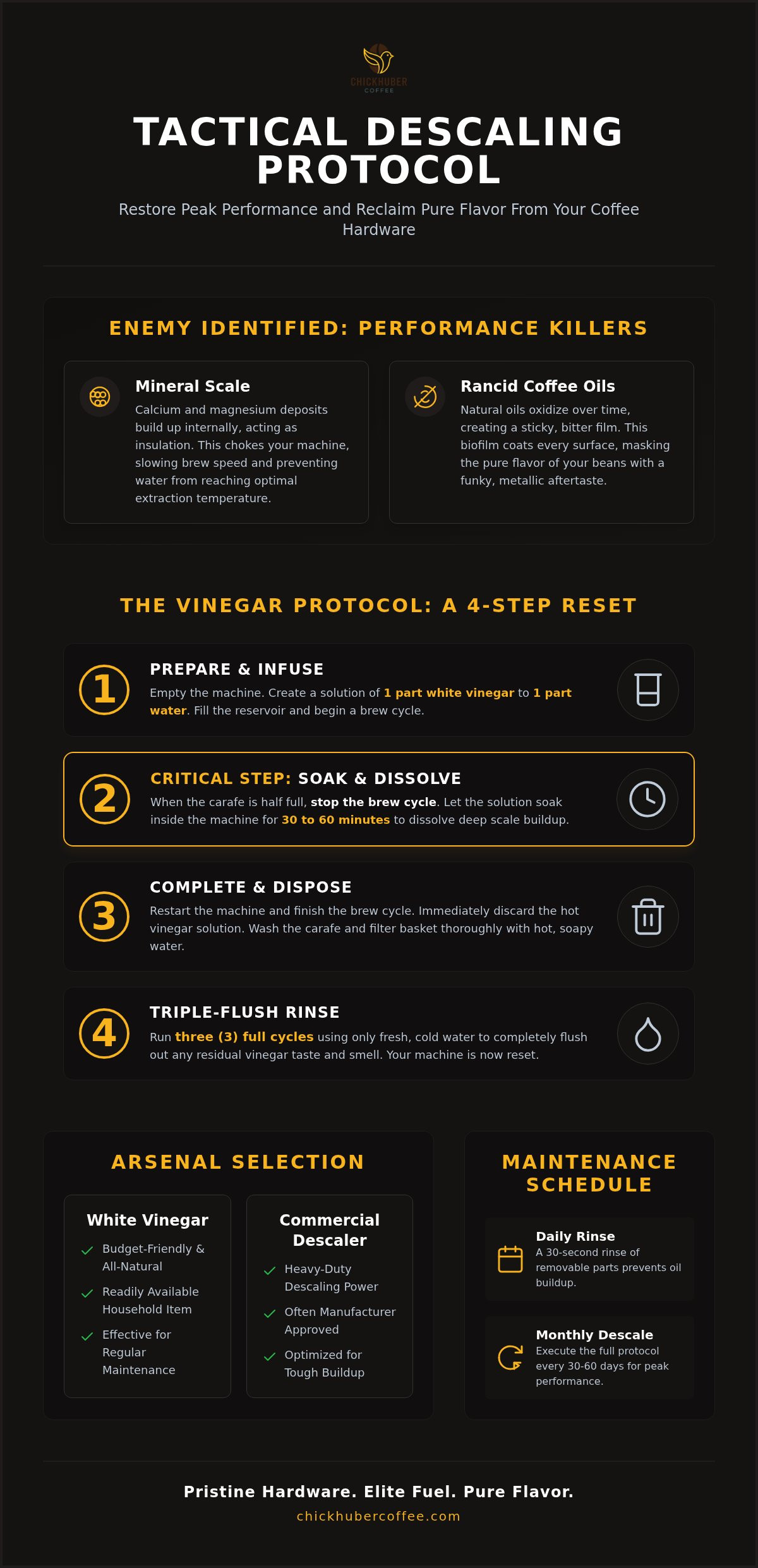
Execute this protocol with military precision. Preparation is the first step to victory. Clear out the old grounds. Rinse the carafe until it shines. Secure a bottle of white distilled vinegar. You are now ready to reset your hardware. The 1:1 ratio is your golden rule. Combine equal parts water and white vinegar. This creates the perfect acidic balance to dissolve stubborn mineral scale without damaging the internal gaskets. It's the most effective strategy for how to clean a coffee maker with vinegar for maximum results. Precision matters. Don't eyeball the measurements. Get it right.
Step 1: The Infusion Phase
Fill your reservoir with the mixture. Hit the brew button. Let the machine run until the carafe is half full, then kill the power. This is the critical 'Half-Way Pause.' You need to let that acidic solution sit in the heating tubes for 30 to 60 minutes. Most guides tell you to run it straight through. They're wrong. This soak time is the most important part of the protocol. It allows the vinegar to penetrate the deep layers of calcium and magnesium that slow your brew. This is how you reclaim your machine's speed.
Step 2: The Disposal and Initial Rinse
Restart the machine once the timer hits 60 minutes. Let the rest of the solution cycle through. Dump that hot vinegar immediately. Don't let it sit; the loosened scale can settle back down. Wash your carafe and filter basket with hot, soapy water. Perform a visual check. If you see white flakes in the carafe, celebrate. That is the scale leaving the system. Your machine is officially breathing again. You've cleared the bottleneck. Now you just need to clear the scent.
Step 3: The Triple-Flush Protocol
Now, you must eliminate the vinegar scent. Fill the reservoir with cold, filtered water. Run three full brew cycles. Filtered water is superior here because it doesn't introduce new minerals during the rinse. Perform the 'Scent Test' after the third cycle. If you can't smell vinegar, your machine is ready for elite fuel. This is the best way to ensure your next cup is pure. Once your hardware is optimized, it's time to reward yourself with a fresh batch of our single origin sample packs to experience true flavor clarity. Understanding how to clean a coffee maker with vinegar isn't just about maintenance. It's about protecting your investment in high-quality beans.
This tactical reset ensures your machine brews at peak speed. No more bitter aftertaste. No more lukewarm coffee. Just pure, high-performance results. You've done the work. Now enjoy the reward.
Vinegar vs. Commercial Descalers: Choosing Your Maintenance Arsenal
Choosing your maintenance arsenal is a tactical decision. You need the right tool for the job. Don't compromise your grind by using the wrong cleaner for your specific hardware. Whether you opt for a budget-friendly powerhouse or a high-intensity chemical solution, the goal remains the same: peak performance. Understanding how to clean a coffee maker with vinegar is the baseline for every home barista, but some situations demand an upgrade to specialized formulas. Select your weapon based on your machine type, your water quality, and your available time.
When to Use White Vinegar
White distilled vinegar is the accessible, budget-friendly champion for standard drip machines. As of August 2026, a 32 fl oz bottle costs approximately $1.79 to $3.16. It is a natural, non-toxic agent that strips away mineral scale without leaving synthetic residues. If you use a standard drip brewer with a glass carafe, vinegar is your primary weapon. It is effective. It is cheap. It is always available. It is the perfect choice for routine monthly maintenance when you want a chemical-free clean that respects your health and your wallet.
When to Upgrade to Commercial Descalers
Standard vinegar isn't always enough for high-end gear. Some espresso machines with sensitive copper boilers require specialized solutions to prevent internal corrosion. If you live in an area with extreme hard water, you may need the concentrated power of a commercial descaler. Products like Active Coffee Machine Cleaner tablets ($18.85 for a 24-pack) or Dezcal Urnex Liquid ($21.95) are formulated for high-intensity descaling. These options are often odor-neutral. They save you time by reducing the need for the extensive triple-flush protocol we established in the previous section. When your schedule is packed and you have zero time for the scent test, commercial powders are the professional's choice.
Always check your manufacturer’s standards before you begin. Different brands have different rules for maintenance. As of 2026, Keurig recommends descaling every 3 months using their specific solution to maintain warranty compliance. Mr. Coffee is more flexible, suggesting a deep clean every 40 to 80 brews. They even provide official instructions on how to clean a coffee maker with vinegar directly on their support pages. Know your hardware. Follow the manufacturer’s lead. Whether you choose the kitchen staple or a premium powder, stay consistent. Your machine's longevity depends on your discipline.
Beyond the Brew: Establishing a High-Frequency Cleaning Routine
Maintenance is a discipline. It’s the difference between a high-performance tool and a failing piece of hardware. You don't wait for your engine to seize before you change the oil. Don't wait for your coffee to taste like burnt rubber before you take action. Establishing a high-frequency routine ensures your morning fuel is always optimized for peak output. This isn't just about cleanliness. It’s about protecting your investment and your mental edge. A disciplined cleaning schedule is the foundation of every elite brewing setup.
Spend 30 seconds every morning. That’s all it takes to prevent oil buildup. Empty the grounds immediately after brewing. Rinse the carafe with hot water. These small wins prevent rancid oils from previous batches from contaminating your fresh grind. Once a week, take it a step further. Pull out the removable parts and scrub the filter basket. Wash the carafe with hot, soapy water to remove the surface-level biofilm that daily rinsing might miss. This weekly deep-clean prevents minor residue from becoming a major bottleneck.
The monthly descaling is your non-negotiable mission. Every 30 days, you must execute the full protocol. If you live in an area with hard water, your frequency might need to increase to every 21 days. Mineral content in local water supplies varies across the country. High calcium levels will choke your machine faster than you realize. Knowing how to clean a coffee maker with vinegar is your secret weapon against the mineral scale that kills water temperature and destroys flavor. Don't ignore the warning signs. If your machine is louder than usual or produces excessive steam, it's time for an emergency reset.
The Daily Hygiene Checklist
Consistency is the foundation of quality. Follow these three steps every morning to maintain a high-performance environment:
- Empty grounds immediately: Wet grounds are a breeding ground for mold and stale, funky odors. Get them out of the machine the moment the brew cycle ends.
- Rinse the carafe: Use hot water to flush out any remaining liquid. Don't let coffee residue dry and harden on the glass or thermal walls.
- Wipe the spray head: Use a clean cloth to remove any stray grounds or oil splashes. This prevents clogs and ensures even water distribution for a balanced extraction.
The Monthly Deep-Clean Schedule
Mark your calendar. Don't leave it to memory. A monthly reset ensures your hardware stays in peak condition for years. If you notice a sudden drop in brew speed or a bitter profile that masks your beans, perform the vinegar protocol immediately. Use our Best Coffee for Drip Coffee Machine guide to ensure you're matching your pristine hardware with the right grind size. A clean machine deserves elite beans. If you aren't descaling at least once a month, you aren't tasting the true potential of your coffee. Master how to clean a coffee maker with vinegar to keep your productivity pipeline flowing without interruption.
Ready to put your clean machine to the test? Grab our 6 Bean Blend and experience the clarity of a professional-grade brew today.
Fresh Machine, Elite Fuel: Optimizing Results with Premium Blends
Hardware without maintenance is a liability. You've mastered the protocol. You know how to clean a coffee maker with vinegar to eliminate the bottlenecks. Now, it's time to deploy the fuel. A pristine brew path is the only way to experience the true profile of high-end beans. When you remove the mineral scale and rancid oils, you unlock a level of flavor clarity that most people never achieve. Precision hardware demands precision fuel. This is where your productivity grind truly begins. Don't waste elite beans on a compromised machine.
Take our Organic Honduras Coffee as the perfect example. This single origin bean is packed with subtle citrus and deep chocolate notes. In a dirty machine, those nuances are buried under a layer of bitter biofilm. A descaled heating element delivers the exact temperature required for specialty extraction. It ensures the water hits the grounds at peak heat, pulling out the sweetness instead of the sourness. Consistency is king. A clean machine delivers the same elite result every single morning. It removes the guesswork from your routine.
The Cowboy Blend requires a similar level of respect. It’s a bold dark roast, but it shouldn't taste burnt. Scale buildup causes erratic water flow and hot spots in your machine. This leads to over extraction and a harsh, carbonized aftertaste. By maintaining your equipment, you ensure your darkest roasts stay smooth, intense, and ready to fuel your hustle. You protect the integrity of the roast. You ensure every sip provides the mental clarity you demand.
Maximizing the 6 Bean Experience
Our 6 Bean Blend is a masterpiece of complexity. It features six different origins balanced for a smooth, high energy finish. If your brew path is choked with calcium, that complexity vanishes. You lose the individual characteristics of each bean. Water flow must be even and unrestricted for a balanced extraction. A clean machine provides the perfect environment for this blend to thrive. It’s the only way to achieve the signature smooth finish that Chickhuber Coffee is known for. Stop settling for a muddled cup. Give your 6 Bean Blend the hardware it deserves. Master how to clean a coffee maker with vinegar to keep that flavor profile sharp.
The Ultimate Productivity Pairing
A clean machine paired with Chickhuber Coffee is the ultimate morning power move. It’s a statement of intent. You value your time. You value your results. You refuse to let poor maintenance sabotage your mental clarity. Taste the difference immediately after your first vinegar clean. The sharpness returns. The bitterness fades. Your morning routine becomes a high speed launchpad for success. Don't wait for your machine to fail. Grab a Coffee Variety Pack to test your machine's new performance levels. Experience the full spectrum of our blends and find the fuel that drives your specific grind.
Reclaim Your Grind: The Path to Peak Extraction
Your machine is now a precision tool. You have the protocol. You have the discipline. By mastering how to clean a coffee maker with vinegar, you've eliminated the flavor-killing bottlenecks that hold you back. You've stripped away the rancid oils. You've dissolved the thermal-resistant scale. Now, the brew path is clear for the high-performance results you demand. Every sip should be a catalyst for mental clarity, not a reminder of neglected hardware.
You've put in the work to reset your gear. Now, it's time to experience what your coffee is actually supposed to taste like. Our beans are roasted for peak performance and delivered with direct-to-consumer freshness. We provide specialty grade single-origin options that require a pristine environment to truly shine. Ready for a fresh start? Fuel your clean machine with our Signature 6 Bean Blend. Don't let a dirty brewer sabotage your morning mission. Keep your hardware sharp. Keep your mind sharper. Get back to the grind.
Frequently Asked Questions
Is it safe to clean my coffee maker with vinegar every month?
It's absolutely safe and recommended for most drip machines. Monthly cleaning prevents the buildup of mineral scale and rancid oils that sabotage your brew speed. If you have extremely hard water, you might even need to execute the protocol every three weeks. Consistency is the foundation of a high-performance routine. Stick to the 1:1 ratio. Your machine will last longer and your coffee will taste sharper. Don't wait for a total breakdown.
How much vinegar do I actually need for a 12-cup coffee maker?
Use exactly 6 cups of white distilled vinegar and 6 cups of filtered water for a 12-cup machine. The 1:1 ratio provides the necessary acidic intensity to dissolve calcium deposits without damaging internal components. Precision matters in every part of your grind. Don't eyeball the measurements. Use a measuring cup to ensure you have the perfect balance. This is how to clean a coffee maker with vinegar for maximum efficiency and speed.
Can I use apple cider vinegar if I don't have white distilled vinegar?
Avoid apple cider vinegar for this protocol. It contains sediments, natural sugars, and a much more aggressive scent that's difficult to flush out. White distilled vinegar is the only tool for the job. It's clear, highly acidic, and rinses cleanly. Using the wrong acid can leave a funky residue that ruins the profile of your specialty beans. Stick to the professional standard. Don't compromise your hardware with common kitchen substitutes. Stay focused on the results.
What should I do if my coffee still tastes like vinegar after rinsing?
Run additional rinse cycles immediately. If the scent persists after three flushes, your machine likely had heavy buildup that trapped the vinegar. Execute two more cycles with cold, filtered water. You can also add a tablespoon of baking soda to the water reservoir for one cycle to neutralize the acid. Never settle for a compromised flavor profile. Keep flushing until the water is completely neutral. Your elite fuel demands a pristine brew path every time.
How do I know if my coffee maker has mineral buildup?
Watch for three red flags: slow brewing times, excessive steam, and loud gurgling noises. These are the sounds of a machine struggling against internal scale. If your 10-minute brew now takes 15 minutes, the bottleneck is real. You might also see white, crusty flakes in the reservoir or on the spray head. Don't wait for a total system failure. Execute the vinegar protocol the moment performance drops to keep your productivity high and consistent.
Will vinegar damage the rubber seals inside my drip machine?
Vinegar won't damage rubber seals when used at the recommended 1:1 ratio for monthly maintenance. Most modern drip machines are built to withstand this level of acidity. However, never use straight vinegar without diluting it. Undiluted acid can be too aggressive for sensitive gaskets over time. Follow the protocol exactly. The 1:1 balance provides the power you need while protecting the longevity of your hardware. Respect your equipment and it'll respect your daily grind.
How long does the entire vinegar cleaning process take?
Budget approximately 90 minutes for the full high-performance reset. This includes the initial 1:1 brew cycle, the critical 60-minute 'Half-Way Pause' for deep penetration, and the final triple-flush rinsing phase. It's a small investment of time for a massive return in flavor and speed. Plan your maintenance during a low-activity window. Once finished, your machine is ready to deliver peak results for the next 30 days. Stay disciplined and stay fast with your routine.
Can I use this same vinegar method for my Keurig or pod machine?
You can use vinegar for pod machines, but check your 2026 manufacturer guidelines first. Brands like Keurig often recommend their own descaling solutions to maintain warranty compliance. If you choose the vinegar route, fill the reservoir with a 1:1 mix and run cycles without a pod. Be aware that some sensors are calibrated for specific chemical cleaners. Learning how to clean a coffee maker with vinegar works across most modern brewing platforms effectively.