

Fresh Coffee Beans: The Ultimate FAQ for Peak Performance in 2026
Stop drinking bitter water and calling it coffee. Freshness isn't a luxury; it is the expiration date on your productivity. If you're grinding stale supermarket dust, you're sabotaging your mental clarity before the day even starts. You feel the mid-day crash. You taste the flat, burnt notes. You want more. You need fresh coffee beans that act as a high-octane tool for daily success. Mediocre fuel leads to mediocre results. You are here to win.
We agree that a standard cup of joe is no longer enough for your 2026 schedule. This article will teach you to master the science of freshness to transform your morning routine into a peak performance ritual. You will learn to decode confusing roast dates, understand the extraction ROI in an $11 billion specialty market, and optimize your setup for maximum mental output. We are diving into the 2026 SCA brewing standards, storage hacks that actually work, and the exact roadmap to finding elite beans. Focus. Energy. Results. It is time to stop settling and start fueling your hustle with purpose.
Key Takeaways
- Pinpoint the 7 to 21-day window. This is the "Goldilocks Zone" where beans deliver maximum mental clarity and flavor.
- Stop the chemical sabotage. Protect your fresh coffee beans from the "Four Horsemen" that turn high-octane fuel into bitter waste.
- Master the static test. Use simple visual cues to verify the potency of your grind before you commit to the brew.
- Kill the freezer myth once and for all. Discover the storage strategies that keep your oils intact and your energy levels stable.
- Leverage the roast-to-order advantage. Learn why complex blends provide the sustained intensity required for a high-performance 2026 lifestyle.
What Exactly Are Fresh Coffee Beans?
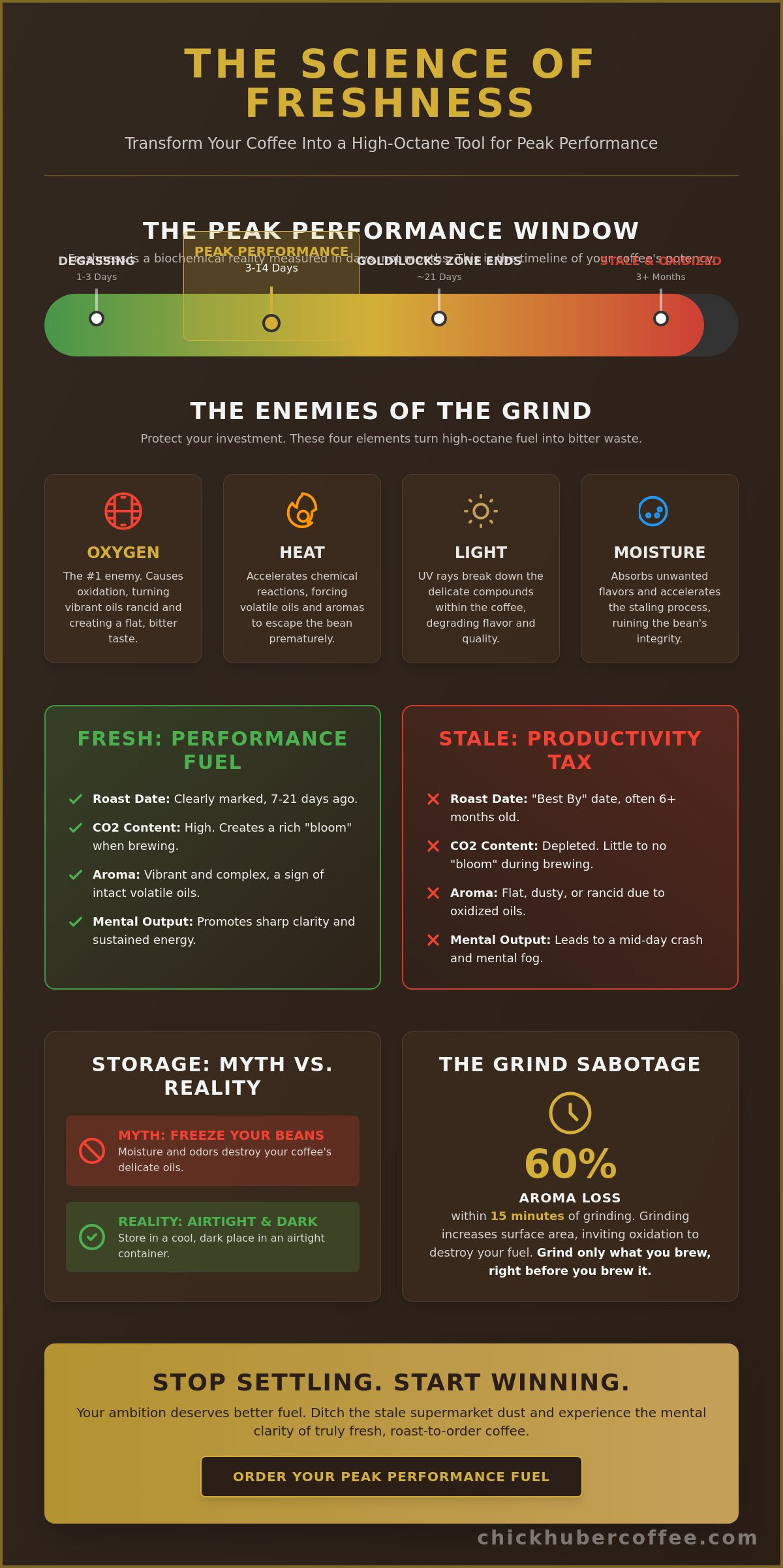
Freshness is not a marketing buzzword. It is a bio-chemical reality. True fresh coffee beans are defined by a specific window: 7 to 21 days after they leave the roaster. This isn't a suggestion; it is a hard requirement for anyone serious about mental output. Freshness is defined by the presence of volatile oils and trapped CO2 within the bean structure. These elements are the soul of your brew. They provide the aroma, the body, and the sharp clarity you crave for a high-intensity day. When you buy from a supermarket, you see "Best By" dates that span years. This is a lie. That coffee is chemically stagnant. It is a shelf-stable product, not a performance tool. Understanding the mechanics of Coffee roasting is the first step toward better energy. This process creates the foundation of specialty coffee. Without freshness, you are just drinking brown water.
The roasting process forces carbon dioxide into the bean's cellular structure. This gas acts as a protective shield, keeping oxygen out and volatile oils in. These oils are the source of the complex acidity and sweetness that define a top-tier cup. Once that CO2 is gone, oxygen rushes in. This is called oxidation. It turns delicate lipids into rancid compounds. You taste it as bitterness. You feel it as a dull, heavy energy. Sourcing fresh coffee beans is the only way to ensure your morning ritual actually serves your goals.
- Fresh Beans: 7-21 days post-roast, high CO2 levels, vibrant aromatic oils.
- Stale Beans: 3+ months post-roast, oxidized, flat flavor profile.
- The Result: Freshness equals mental clarity; staleness equals a persistent mental fog.
The 14-Day Performance Window
The elite zone occurs between day 3 and day 14 post-roast. In the first 48 hours, beans are degassing, purging excess CO2 that can interfere with water contact and extraction. By day 3, the bean enters its prime. This is where caffeine efficiency and flavor profile reach their peak. Peak flavor is the moment when gas release and oil stability intersect. Use this window to fuel your most demanding projects.
Why Supermarket Coffee is Technically 'Dead'
Grocery store beans are a graveyard of flavor. Most were roasted six months ago or longer. They are oxidized, oily, and flat. Even worse, pre-ground options lose 60% of their aroma within 15 minutes of being exposed to air. Stale coffee is a productivity tax. It robs you of the sensory experience and the mental spark required for high-level work. Stop settling for dead beans. Demand fuel that matches your ambition.
The Science of Freshness: Why Your Coffee 'Expires'
Your coffee isn't just a drink. It's a complex chemical system. When you use fresh coffee beans, you're tapping into a volatile package of energy. But the clock is ticking. The second the roast ends, the degradation begins. Understanding the art and science of coffee reveals that freshness isn't a suggestion; it's physics. Heat and pressure during roasting create a delicate balance of lipids and oils. These compounds are responsible for the sweetness and body in your cup. However, they are also highly unstable. Exposure to the elements breaks these molecules down. This isn't just about taste. It's about performance. Stale coffee contains degraded compounds that can trigger stomach acidity and mental lethargy. Stop the rot before it starts.
Carbon dioxide is your primary defense. During the roast, CO2 is trapped inside the bean's pores. It acts as a natural preservative. It literally pushes back against invading oxygen. When you pour hot water over fresh grounds, the gas escapes in a violent rush. This is the "bloom." It is a visual signal of potency. If your coffee doesn't bloom, it's dead. The gas is gone. The oxygen has won. The result is a cup that lacks the chemical complexity required for peak cognitive function. You need that gas to shield the flavor until the moment of extraction.
Oxidation: The Enemy of the Grind
Think of a sliced apple. Leave it on the counter for ten minutes and it turns brown. That is oxidation. The same process kills your coffee. Oxygen attacks the fats and oils inside the bean. This reaction creates peroxides and free radicals. If you use pre-ground coffee, you've already lost the battle. Grinding increases the surface area by thousands of percent. More surface area means more room for oxygen to destroy your fuel. Oxidized oils don't just taste flat. They turn rancid. This leads to that sharp, acrid bitterness that ruins your morning focus. Keep your beans whole until the moment you brew. It's the only way to protect your routine.
The Aroma-Brain Connection
Flavor is a sensory illusion. Science shows that 80% of what we perceive as taste is actually smell. Your nose is the gateway to your brain's performance center. Fresh aromas from high-quality beans trigger immediate dopamine release. It prepares your mind for the work ahead. This sensory spark creates a state of mental readiness before the first sip even hits your tongue. Stale coffee might give you a caffeine hit, but it lacks the aromatic intensity needed for creative flow. You're getting the drug without the delivery system. To experience the full spectrum of these benefits, consider starting your day with a 6 Bean Blend designed for maximum complexity.
How to Identify Fresh Beans Before You Brew
Stop guessing. Start auditing. If you want fresh coffee beans that actually perform, you must become a skeptic. Your focus is too valuable to waste on mystery beans. The first rule is non-negotiable: check the roast date. If a bag lists a "Best Before" date but hides the day it was roasted, put it back. Retailers use vague expiration windows to mask months of shelf-time. You need a specific day, month, and year. No date means no deal. Freshness is a metric, not a vibe.
Watch your grinder for the second clue. Fresh beans retain internal moisture and structural integrity. They produce a consistent, fragrant grind that feels slightly cohesive. Stale beans are brittle. They shatter into inconsistent, jagged dust and create a mess of static electricity. If your grounds look like gray ash and fly everywhere, they're dead. Freshness has weight. Freshness has texture. You can even perform the Ziploc bag test at home. Place a handful of beans in a bag, squeeze the air out, and seal it. If the bag puffs up like a balloon after 24 hours, the beans are still off-gassing CO2. That is the sign of life you need.
Perform a visual audit before you pour. Look at the surface of the bean. A matte finish on a medium roast is a sign of youth. If you see heavy, pooling oil on a light or medium roast, the beans are likely old. The oils have migrated to the surface and begun to oxidize. For dark roasts, oil is expected, but it should look vibrant and wet, not dull or sticky. Use your eyes to filter out the waste before it hits your cup.
The 3-Step Freshness Audit
- Step 1: The Scent Check. Open the bag and inhale. You should get hit with a wall of complex aromatics like dark chocolate, citrus, or toasted nuts. If it smells like a dusty cardboard box or a musty basement, it is oxidized.
- Step 2: The Bloom Test. Hit your grounds with hot water. Fresh coffee will swell and bubble as CO2 escapes. No bloom means no gas. No gas means no freshness.
- Step 3: The Snap Test. Press a bean between your fingers or bite it. A fresh bean snaps with a clean, audible crack. Stale beans are soft or crumble into a powdery mess.
Decoding the Packaging
Look for the one-way valve. This isn't a "scratch and sniff" feature. It is a high-tech exhaust system. It allows CO2 to escape without letting oxygen in. This prevents the bag from exploding while keeping the contents stable. Also, prioritize "Small Batch" labels. This indicates a roaster with high turnover and tighter quality control. Avoid "Packed On" labels that lack a roast date; they are often a trap. If you want to experience this peak state immediately, the 6 Bean Blend is roasted to order to guarantee you never fail the audit.
Maximizing Your Grind: Storage and Buying Strategies
You found the fuel. Now you must protect it. fresh coffee beans are highly vulnerable biological products. They have four primary enemies: air, light, heat, and moisture. These "Four Horsemen" work in tandem to strip away the volatile oils and CO2 that drive your mental clarity. If you leave your bag open on the kitchen counter, you are bleeding performance. Treat your coffee like the high-grade chemical tool it is. Lock it down. Every second of exposure to the elements is a second of lost potential. You don't settle for mediocre work; don't settle for oxidized beans.
Stop putting your coffee in the freezer. It is a productivity killer. Every time you open that freezer door, moisture condenses on the cold surface of the beans. This moisture accelerates staling and destroys the delicate cell structure of the coffee. You want consistency and intensity, not a soggy, freezer-burnt mess. Keep your stash at room temperature in a dark, dry place. Consistency in storage leads to consistency in output. Furthermore, your grind size must adapt to the age of your beans. Fresh beans are packed with gas that resists water flow. You might need a slightly coarser grind for beans at day four post-roast to avoid over-extraction. As they hit day fourteen, tighten the grind. Adapt or fail.
The Ultimate Storage Protocol
Invest in an opaque, airtight container immediately. Look for models with vacuum seals that purge oxygen from the chamber. Your kitchen counter near the stove is the worst possible location; the ambient heat will bake the flavor right out of the bean. Never use clear glass jars because UV light causes rapid chemical degradation and ruins the lipids. Keep your container in a cool pantry or a dedicated coffee station away from direct sunlight.
Strategic Buying: Quantity vs. Quality
Stop buying in bulk to save a few cents. A 5lb bag is a liability, not an asset. By the time you reach the bottom of that sack, the beans are chemically dead. A tactical approach involves buying smaller amounts more frequently. Three 12oz bags delivered over six weeks will always outperform one massive bag sitting in your cupboard. Use a coffee variety pack to maintain high turnover and keep your palate sharp. Rotate your stock. Brew the oldest bag first, but ensure it is still within the 14-day sweet spot for maximum ROI. Ready to optimize your morning? Grab our single origin sample packs and dial in your routine today.
Fuel Your Ambition with Chickhuber’s Fresh-Roasted Blends
You have mastered the science. You know how to spot the fakes. Now it is time to execute. At Chickhuber Coffee, we do not believe in warehouse storage. We do not believe in "best by" dates that span decades. We operate on a strict roast-to-order philosophy. This means your beans are not sitting on a dusty shelf losing their potency. They are roasted, bagged, and shipped directly to your door. This is how you secure fresh coffee beans that actually work. We are the small but mighty underdog in an industry filled with corporate fluff. Our artisanal roasting process focuses on precision, intensity, and results. We provide the fuel. You provide the grind.
Complexity is the ultimate tool for high-intensity days. While others settle for single-note brews, our 6 Bean Blend is engineered for maximum sensory ROI. It combines six distinct origins into a powerhouse of flavor and mental clarity. It is a layered experience that keeps your brain engaged and your energy levels stable. This is not just a drink; it is a strategic advantage. Stop settling for stale, flat fuel that leaves you crashing by noon. Level up your routine with a blend designed for the modern hustle. Your morning ritual is the foundation of your daily success. Build it on a foundation of quality.
Crafted for the Hustle
Every roast we produce has a specific purpose. Our Cowboy Blend offers a rugged, dark intensity that kicks your nervous system into gear immediately. If you prefer a cleaner, more focused spark, our Organic Honduras Coffee delivers bright acidity and sharp mental clarity. We provide transparent roast dates on every single bag we ship. You get direct-to-door speed that bypasses the supermarket graveyard. Our community of high-performers trusts us because we value their time and their output. We do not do fluff. We do momentum.
Your Next Step to Peak Performance
Ditch the supermarket aisle forever. Join the freshness revolution and feel the difference that real chemistry makes in your workflow. If you are not sure where to start, grab our single origin sample packs to find your ideal fuel source. Test the bloom. Perform the snap test. Experience the dopamine hit of a truly fresh aroma before your first meeting. Your ambition deserves better than oxidized dust. Take control of your morning ritual and dominate your day. Get your fresh coffee beans now at Chickhuber Coffee and start winning before the sun comes up.
Master Your Morning Momentum
Your routine is the engine of your success. Don't clog it with oxidized debris. You now know that fresh coffee beans are the only acceptable fuel for a high-performance 2026 lifestyle. You understand the 14-day sweet spot. You've learned to audit your bag for roast dates and gas release. You've ditched the freezer and the supermarket shelf. These aren't just flavor preferences. They are tactical decisions that protect your focus and eliminate the mid-day crash. Every cup is an opportunity to sharpen your edge or dull your potential. Choose sharpness. Choose intensity.
Chickhuber Coffee exists to bridge the gap between your ambition and your energy. We use artisanal small-batch roasting to ensure every bean hits its peak. Our roast-to-order shipping means zero warehouse shelf-time. You get direct-to-consumer speed that guarantees maximum freshness from our roaster to your door. Stop settling for stagnant water. Start fueling your hustle with purpose. Secure your fresh-roasted fuel today at Chickhuber Coffee. The world is moving fast. Make sure you're moving faster.
Frequently Asked Questions
How long do coffee beans stay fresh after roasting?
Peak performance lasts between 7 and 21 days post-roast. This is the window where volatile oils and CO2 levels are perfectly balanced for extraction. Beyond three weeks, the chemical complexity vanishes and the beans begin to taste flat. Use fresh coffee beans during this "Goldilocks Zone" to ensure your morning brew delivers maximum mental clarity. Don't settle for anything less if you want to dominate your daily schedule.
Can I drink coffee that is 3 months old?
You can drink it, but it is dead fuel. Three-month-old coffee is chemically stagnant and lacks the aromatic compounds that trigger dopamine and focus. It provides a basic caffeine hit but robs you of the sensory spark required for high-level work. Treat stale coffee as a productivity tax that slows your momentum. If the roast date is older than 90 days, it belongs in the trash, not your mug.
Is it better to buy whole bean or ground coffee for freshness?
Buy whole bean coffee every single time without exception. Grinding increases the surface area by thousands of percent; this invites oxygen to destroy your fuel in less than fifteen minutes. Whole beans act as a natural vault, protecting essential oils until the moment of extraction. Grind only what you need right before you brew. Protect your investment and your energy levels by keeping the bean intact.
Should I store my coffee beans in the freezer?
Never put your coffee in the freezer. The constant temperature fluctuations and inevitable condensation introduce moisture that destroys the bean's cellular structure. This moisture accelerates staling and creates a dull, papery flavor profile. Keep your stash in a cool, dark pantry in an airtight, opaque container. Stability is the key to consistent results. Avoid the fridge for the same reasons.
What does 'degassing' mean and why does it matter?
Degassing is the natural release of carbon dioxide trapped inside the bean during the roasting process. This gas acts as a protective shield against oxygen for the first few days post-roast. However, brewing too early can result in uneven extraction as escaping gas blocks water from reaching the coffee solids. Wait at least three to five days after the roast date to hit the perfect balance of flavor and stability.
How can I tell if my coffee beans have gone bad or rancid?
Trust your senses. Rancid beans smell like dusty cardboard, musty basements, or old peanuts. If you see dull, sticky oil pooling on the surface of a medium roast, the lipids have oxidized and turned sour. Fresh beans should snap cleanly when bitten and smell intense. If the aroma is gone, the energy is gone. Don't ignore these red flags; they are signs of degraded chemical quality.
Does the roast level affect how fast beans go stale?
Dark roasts go stale significantly faster than light roasts. The longer roasting process makes the beans more porous and brings internal oils to the surface where they meet oxygen instantly. If you choose intense dark blends, consume them quickly to avoid that sharp, acrid bitterness. Light roasts are more structurally dense and hold their peak flavor slightly longer because their protective oils remain tucked inside the bean.
Why does fresh coffee 'bloom' when I brew it?
The bloom is the violent release of CO2 when hot water hits fresh grounds. It is the visual proof that your fresh coffee beans are still potent and full of life. If your coffee doesn't rise and bubble during the initial pour, the gas has already escaped. No bloom means the oils are likely oxidized and the flavor will be flat. A vigorous bloom is the hallmark of high-octane, fresh-roasted fuel.