

Colombian Supremo Coffee Taste: What to Expect in Every Cup
What if “Supremo” tells you more about bean size than the flavor waiting in your cup? It’s easy to read the label as a roast style or a promise of top-tier taste. But Colombian Supremo coffee taste can vary: one cup may seem smooth and sweet, while another comes across brighter or more roast-forward. The name alone can’t predict the whole experience.
That’s why tasting notes can feel vague or inconsistent. Coffee’s flavor depends on more than a grade. Origin, processing, roast, freshness, and brewing all shape what you notice. Supremo refers to a screen-size classification for green beans, not a guaranteed flavor profile or quality score.
Here, you’ll learn what flavors Colombian Supremo may offer, what its grade actually means, and how roast and brewing choices can shift the cup. You’ll also find practical ways to compare coffees, identify what you enjoy, and make your brewing more consistent.
Key Takeaways
- Colombian supremo coffee taste can include balanced sweetness, gentle fruit or citrus, and a rounded body, but each cup can differ.
- “Supremo” identifies bean size, not roast level or a guarantee of superior flavor.
- Origin, processing, and roast each influence the aromas and flavors you notice.
- Brew consistently, then change one variable at a time to spot what shifts the cup.
- Compare single-origin coffees side by side to find your preferred balance of sweetness, brightness, and body.
What Does Colombian Supremo Coffee Taste Like?
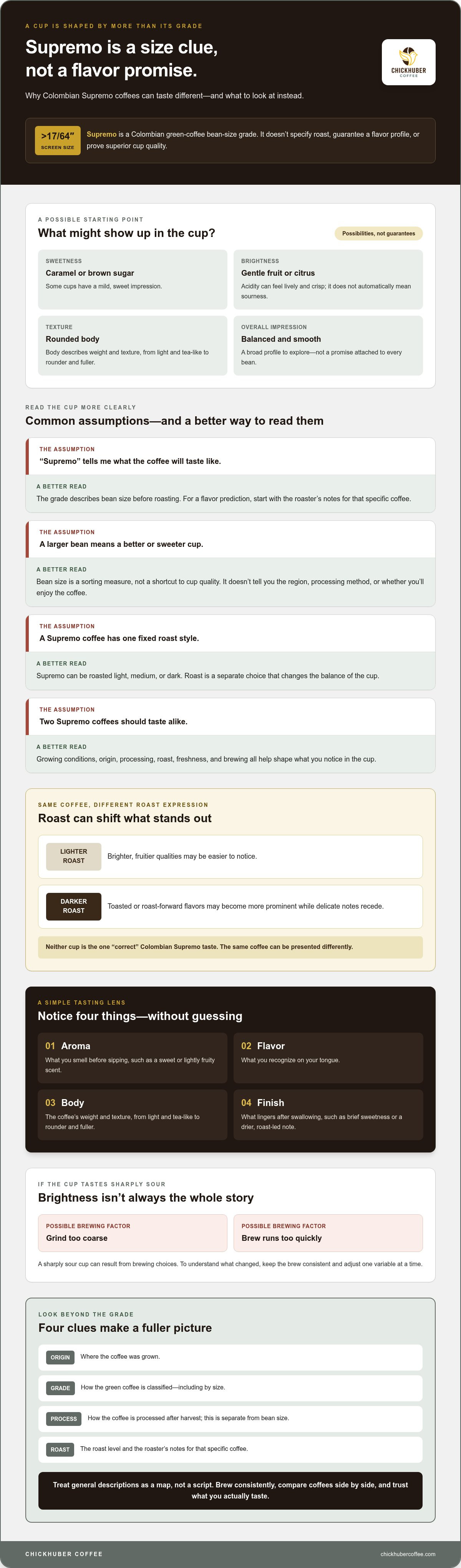
Colombian Supremo may taste balanced and sweet, with gentle fruit or citrus, a rounded body, and a smooth impression. Those are possibilities, not a promise printed into every bean. “Supremo” is a size grade for green coffee, not a tasting note or roast. Under Colombian grading standards, Supremo beans are larger than a 17/64-inch screen. That size doesn’t guarantee a particular flavor or prove that one coffee is better than another.
Think of the broad profile as a starting point, not a verdict. Colombian coffee comes from diverse growing regions, and details such as location and processing help explain why one lot can taste unlike another. The roaster’s notes for a specific coffee are more useful for predicting that coffee than a country-wide description.
Common flavor notes in Colombian Supremo
Some cups show mild sweetness that might remind you of caramel or brown sugar, alongside a light fruit or citrus impression. Acidity means perceived brightness, the lively edge that can make a sip feel crisp. It doesn’t automatically mean sourness. A sharply sour cup can also result from brewing choices, such as a grind that is too coarse or a brew that runs too quickly.
Separate the sensations as you taste. Aroma is what you smell before sipping, perhaps a sweet or lightly fruity scent. Flavor is what you recognize on your tongue. Body is the coffee’s weight and texture, from light and tea-like to rounder and fuller. Finish is what lingers after swallowing, such as a brief sweetness or a drier, roast-led note. These are ways to describe a cup, not guaranteed characteristics of every Supremo.
A typical profile is a useful expectation, not a guaranteed cup experience. Use it to guide your first sip, then trust what you actually taste.
Why two Supremo coffees can taste different
A bean-size grade leaves plenty unsaid. Growing conditions influence how a coffee develops; processing shapes how the fruit is removed and the beans are dried. Roast changes the balance of brightness, sweetness, and roast flavor. Freshness and brewing matter too. Older coffee or a different grind, water temperature, or brew time can shift what stands out.
For example, a lighter roast may make a coffee’s brighter, fruitier qualities easier to notice. Roast the same coffee darker, and toasted or roast-forward flavors may become more prominent while delicate notes recede. Neither cup is the one “correct” Colombian Supremo taste. It’s the same coffee presented differently.
To make a useful prediction, start with the roaster’s notes for the specific lot, then look for its origin, processing method, and roast level. Treat general descriptions as a map, not a script. Brew consistently and pay attention to aroma, brightness, texture, and finish. That gives you a clearer read on the cup than the word “Supremo” alone.
What Does Supremo Mean, and What Does It Not Tell You?
Supremo is a Colombian green-coffee bean-size grade, not a roast level, flavor description, or guarantee of superior quality. Under standards set by Colombia’s National Federation of Coffee Growers (FNC), Supremo beans are larger than a 17/64-inch screen, commonly described as screen size 17/18. The classification tells you about bean dimensions before roasting. It doesn’t tell you how the coffee will taste or whether you’ll enjoy it.
Keep three label clues separate. Origin tells you where a coffee comes from. Grade describes how it’s classified, including by size. Roast describes how the green beans were roasted. Each answers a different question. A Colombian coffee can carry a Supremo grade and still vary in growing conditions, processing, roast, and cup character.
Supremo versus roast level
Roast and grade aren’t interchangeable. A Supremo coffee can be roasted light, medium, or dark; the grade doesn’t dictate the roaster’s choice. Roast can shift the cup’s balance, making brighter qualities more noticeable in a lighter roast or bringing more toasted, roast-led character in a darker one. So don’t read “Supremo” as code for dark, strong, or premium-tasting coffee.
Supremo versus Excelso
Excelso and Supremo are Colombian grading terms associated with bean size. Excelso is a standard export grade, while Supremo identifies larger beans. A coffee may be described as “Excelso Supremo,” combining the terms rather than treating them as flavor categories. These names help explain the coffee’s grade, but neither tells you whether its taste will match your preferences.
Bean size is a useful sorting measure, not a shortcut to cup quality. It doesn’t establish that the beans came from one region or farm, reveal their processing method, or describe the care taken at every stage. A larger bean doesn’t automatically mean a sweeter, more complex, or more enjoyable brew. To understand the colombian supremo coffee taste, look beyond the grade and read the details for the specific coffee, especially its origin, process, roast, and roaster-provided tasting notes.
Processing is one detail that can make a noticeable difference. For example, processing methods and Colombian coffee flavor describes how washed, natural, and honey processing can shape a coffee’s character. That’s separate information from bean size. Use both clues to build a fuller picture, rather than expecting the grade to do all the explaining.
- Origin: where the coffee was grown.
- Grade: how the green coffee is classified.
- Roast and processing: choices and methods that influence the final cup.
Want to compare coffees and sharpen your own preferences? Chickhuber Coffee’s single-origin sample packs offer a way to explore coffees side by side without treating any one grade as a flavor promise.
How Origin, Processing, and Roast Change Colombian Supremo's Flavor
A coffee’s origin, how it’s processed after harvest, and its roast each shape what you notice in the cup. Together, these factors can shift aroma, sweetness, perceived acidity, and body. The final cup is shaped by where the coffee grows, how it’s processed, how it’s roasted, and how it’s brewed. Supremo identifies a size grade, so it can’t tell you those details on its own.
Origin refers to where the coffee was grown, which may include its region, farm, and growing conditions. Processing happens after picking: producers remove the fruit and prepare the beans for drying. Roast comes later, when the green beans are heated to develop flavor. Keep these stages distinct. A coffee’s origin doesn’t dictate one processing method or a fixed taste.
How processing can influence flavor
Washed processing removes the fruit from the coffee before drying. It may result in a cup where clean, distinct flavors are easier to pick out. Natural processing dries the beans with more of the fruit around them, which can sometimes bring a more pronounced fruit impression. These are broad tendencies, not guarantees. Colombian Supremo coffees can use different processes, and growing conditions and roasting still matter.
How roast changes the cup
A lighter roast may make origin character and delicate brightness easier to notice. As roast gets darker, toasted or more roast-forward flavors may take the lead, and perceived brightness can soften. Sweetness and body can also seem different depending on the coffee and how it’s brewed. Use the specific roaster’s description as your guide, not an assumption based on the word “Supremo.”
Here’s a quick comparison. Treat these as possible impressions, not fixed rules for every bean:
| Roast level | Possible impressions |
|---|---|
| Light | Brighter, more delicate, with origin notes easier to notice |
| Medium | A more even impression of sweetness, brightness, and roast character |
| Dark | More toasted or roast-forward, with less perceived brightness |
To put the factors into practice, look for the coffee’s specific origin, processing method, and roast description. Then brew it consistently before judging how those choices show up. If two coffees share a Colombian origin but differ in processing or roast, compare their aroma, brightness, sweetness, and body side by side. If they taste different, that’s useful information, not a contradiction. Colombian Supremo taste isn’t set by the grade; it emerges from the coffee’s full path from growing place to your cup.
How to Taste and Brew Colombian Supremo Coffee
A clear tasting starts with a repeatable brew. Use the same amount of coffee and water, grind, temperature, and method each time you make a comparison. These variables can shift extraction and change how sweet, bright, or full-bodied the cup seems. Keep the setup steady first, then adjust one thing at a time so you can tell what made the difference.
A beginner-friendly tasting sequence
No special equipment or formal tasting language is required. Brew the coffee as usual, let it cool a little, and pay attention in this order:
- Smell: Notice the aroma before sipping. Does it seem sweet, nutty, fruity, or more toasted?
- Sip: Look for sweetness and brightness. Does the cup taste mellow, lively, or sharp?
- Notice the body: Is the texture light and tea-like, or does it feel rounder and heavier?
- Check the finish: After swallowing, notice what lingers and for how long.
- Record it: Write a few everyday words, such as “soft sweetness” or “bright finish.”
Keep the notes simple. Your own words are more useful than a tasting term you don’t understand. If you compare a second cup, keep the coffee and brewing conditions consistent. Otherwise, you won’t know whether the taste changed because of the coffee or the method.
Adjusting the brew to your taste
Start with the preparation guidance on the coffee’s packaging, then make small, controlled adjustments. A finer grind can slow water flow and increase extraction; a coarser grind can speed it up. The result depends on the brewing method and coffee. If a cup tastes too sharp or thin, change one variable and taste again. Avoid changing grind, ratio, and temperature all at once.
Water temperature and coffee-to-water ratio matter, too. A different temperature can alter what gets extracted, while changing the ratio can make a cup taste stronger or lighter. Brew method also shapes the result: a drip machine and other brewing styles may bring out different aspects of the same beans. For method-specific pointers, see this guide to coffee for drip coffee machines.
Quick tasting checklist:
- Did I use the same coffee and method for each cup?
- What did I notice in the aroma?
- Did sweetness, brightness, or texture stand out?
- What taste remained in the finish?
- What single brewing variable will I adjust next?
Use this routine to build your own read on Colombian Supremo coffee taste, not to chase a “correct” answer. Ready to compare coffees and sharpen your preferences? Explore Chickhuber Coffee’s single-origin sample packs and taste coffees side by side.
How to Decide Whether Colombian Supremo Fits Your Coffee Preferences
Use tasting descriptions as clues, not promises. Some Colombian coffees may suit drinkers who enjoy a balanced, approachable cup, with sweetness, gentle brightness, or a rounded feel. But Supremo is a size grade, and the taste of a particular coffee depends on its origin, processing, roast, freshness, and brewing. The Colombian Supremo coffee taste you encounter may differ from a general profile or another coffee with the same grade.
Who might enjoy this style of coffee?
If you like a cup that feels balanced rather than sharply bright or heavily roast-forward, descriptions of sweetness, mild fruit, and smooth body may catch your interest. If you prefer a noticeable dark-roast character, focus on coffees described as bold or toasted. If you want origin character to stand out, look for specific notes and roast details. Let the roaster’s description of that coffee guide your expectations.
Be specific about what you enjoy. “I like sweet coffee” is a start; “I prefer a gentle sweetness with low brightness” gives you a clearer target. Tasting notes are subjective, so treat them as a helpful forecast rather than a guarantee that you’ll identify the exact same flavors.
Use comparison tasting to find your preference
Put two coffees to the test using the same brew method, similar freshness, and consistent coffee-to-water amounts. Taste both before adding milk or sweetener if you want to assess their natural character. Record which cup seems sweeter, brighter, fuller, or more pronounced to you. Your own preference matters more than matching a tasting note word for word.
Keep the comparison focused. If one cup tastes brighter, note that; don’t assume the grade caused the difference. The coffees may have different origins, processing methods, or roasts. Repeat the tasting another day if your first impressions are hard to separate. Single-origin coffees make useful comparisons because you can focus on differences between individual coffees rather than a blend’s combined profile.
For a broader way to think about trying distinct coffees, the coffee variety pack guide can help you plan an exploration around your own preferences. Keep a short tasting record: note the coffee, how you brewed it, and the one or two qualities you liked most. Over time, patterns emerge. You might favor softer sweetness, brighter cups, fuller body, or more pronounced roast notes.
Ready to explore and compare different coffees? Chickhuber Coffee’s single-origin sample packs offer a practical way to discover what you enjoy, one cup at a time.
Make Your Next Cup a Taste Test
Turn curiosity into a simple experiment. Pick one quality you want to notice, such as sweetness, brightness, or body. Brew with a steady method, take a few notes, and use what you learn to guide your next choice. Your preferences become clearer cup by cup, without needing to match anyone else’s tasting vocabulary.
Keep Colombian Supremo coffee taste in perspective: use broad flavor descriptions to decide what sounds appealing, then let the specific coffee and your own palate have the final say. A side-by-side tasting can reveal more about what you enjoy than a label alone.
Chickhuber Coffee sells coffee online across the United States and offers single-origin sample packs for exploring coffees side by side. Explore Chickhuber Coffee’s single-origin sample packs to discover the qualities you want in your next cup. Stay curious, keep tasting, and build your own standard for great coffee.
Frequently Asked Questions
Is Colombian Supremo coffee strong?
It can taste strong, but “strong” may mean bold flavor, a heavier mouthfeel, or more caffeine, and those aren’t the same thing. Roast level and brewing choices influence how intense the cup seems. For a milder result, use a little less coffee relative to the water or add hot water to a finished cup. For more punch, brew a more concentrated serving rather than relying on the Supremo label to predict intensity.
Does Colombian Supremo coffee taste different from other Colombian coffee?
It can, but the grade alone doesn’t create a distinct flavor. Supremo refers to bean size, while other Colombian coffees may have different origins, processing methods, roasts, and freshness. Compare the tasting notes for the particular coffees rather than assuming a Supremo will taste noticeably different. For a practical test, brew both with the same method and serving size, then note which seems sweeter, brighter, or fuller to you.
Is Colombian Supremo coffee acidic?
It may have a bright, lively taste, but acidity varies by coffee and brewing method. Brightness isn’t automatically the same as an unpleasant sour taste. If your cup seems sharply sour, check whether it was brewed too quickly or with a grind that’s too coarse for the method. Adjust one detail and taste again. A darker roast may seem less bright, but the specific coffee and preparation still matter.
Does Colombian Supremo mean the coffee is a dark roast?
No. Supremo describes a bean-size grade, not how dark the beans were roasted. The same graded green coffee can be roasted light, medium, or dark, and the resulting cups may emphasize different qualities. Check the roast information on the bag to understand what to expect. If roast level isn’t specified, use the roaster’s description of the flavor and intended brewing approach rather than treating “Supremo” as a roast cue.
Can Colombian Supremo coffee be used for espresso?
Yes, it can be brewed as espresso if the beans and roast suit your taste and your setup. Espresso is a brewing method, not a bean grade. Start with the coffee’s packaging guidance, then adjust grind and dose to get a balanced shot on your equipment. A finer grind can help slow extraction, but change one variable at a time. Taste the espresso plain first, then decide how it works in milk-based drinks.
Does Colombian Supremo coffee have more caffeine than other coffee?
Not because it’s labeled Supremo. Bean size doesn’t tell you caffeine content, and the grade isn’t a caffeine measure. The amount in your drink depends more on factors such as the coffee used, serving size, and brewing method. For example, a small concentrated serving and a large mug can differ in total caffeine even if they’re made from the same beans. The label alone can’t give you a reliable comparison.
How should I store whole-bean coffee to preserve its flavor?
Keep whole beans in an airtight container in a cool, dry, dark place, away from heat, moisture, and strong odors. A cupboard works better than a sunny counter or a spot beside the stove. Avoid leaving the container open for long stretches, and grind only what you plan to brew so the beans retain more of their aroma. If the coffee came in a resealable bag, close it securely after each use.
What foods pair well with Colombian Supremo coffee?
Pair it with foods that suit the cup’s actual flavor, since roast and origin can change the match. A sweeter, rounder cup may work well with a plain pastry or milk chocolate, while a brighter coffee can complement fruit or a lightly sweet baked good. Darker, roast-forward cups may pair nicely with richer chocolate or toasted nuts. Keep the food simple at first, then notice whether it softens or sharpens the coffee’s flavors.