

Best Way to Store Ground Coffee: Keep Your Daily Grind Fresh in 2026
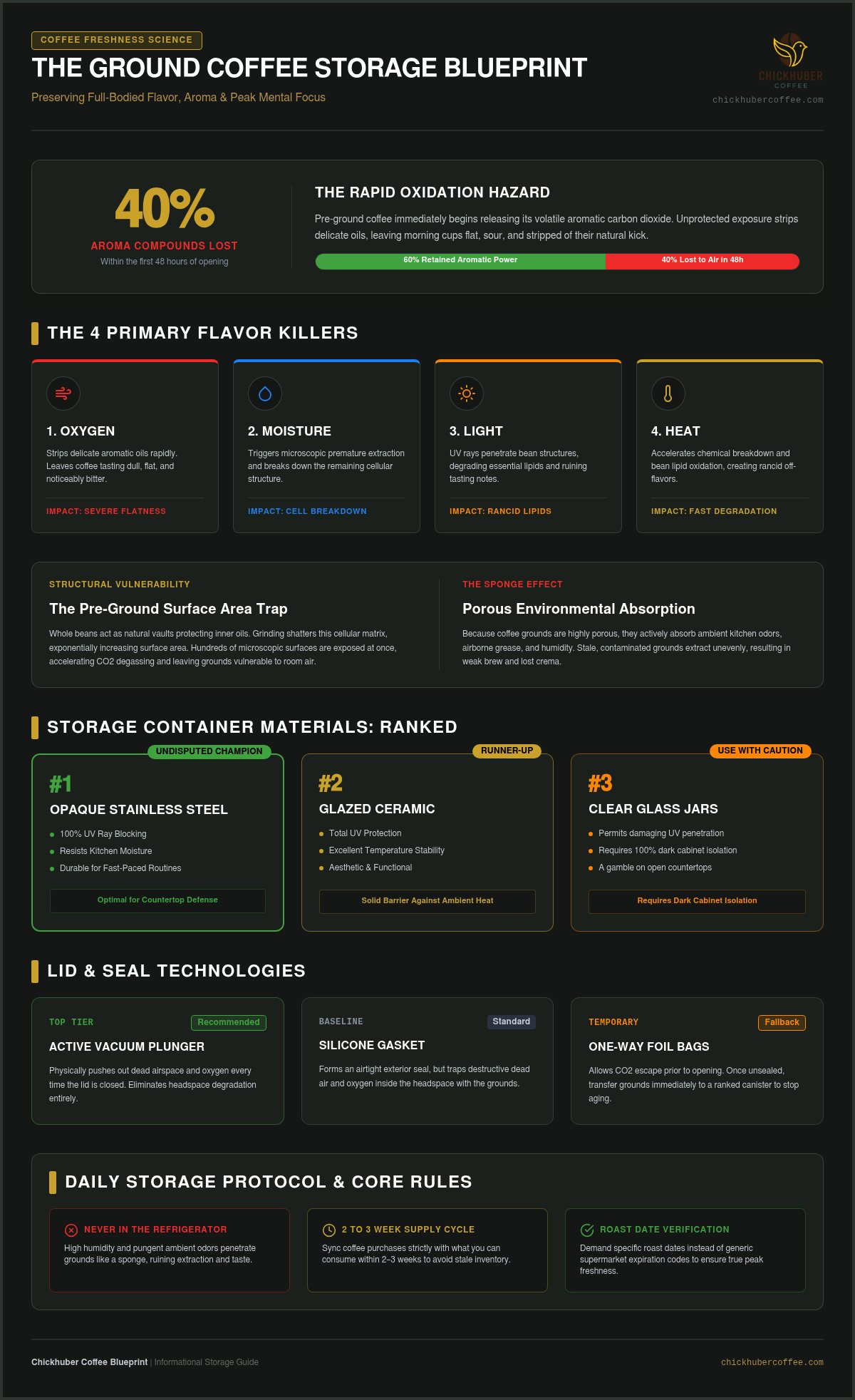
Within the first 48 hours of opening a fresh bag, your coffee can lose up to 40 percent of its volatile aromatic compounds due to oxidation. That means nearly half of your fuel's power vanishes before you even finish the workweek. If you are tired of a morning cup that tastes flat, sour, or stripped of its productivity-boosting kick, you need a radical shift. Finding the best way to store ground coffee isn't just about kitchen organization. It is about protecting your mental edge from the four ultimate flavor killers: oxygen, moisture, light, and heat.
You already know the frustration of conflicting online advice that leaves you guessing between the freezer and the pantry. Stop sacrificing your premium roasts to bad habits. Discover the exact storage rules and gear needed to protect your ground coffee from going stale. We deliver the ultimate blueprint to preserve full-bodied flavor, eliminate oxidized cups, and build a frictionless daily workflow. Lock in the sharpness your grind demands from the first scoop to the last.
Key Takeaways
- Neutralize the four enemies of freshness, oxygen, moisture, light, and heat, to stop flavor degradation instantly.
- Master the best way to store ground coffee by using opaque, vacuum-sealed canisters that kill damaging dead airspace.
- Keep your grounds out of the refrigerator to avoid high humidity and pungent odors that compromise your coffee's intensity.
- Sync your supply with your hustle by purchasing only what you can consume within two to three weeks.
- Demand peak performance by checking specific roast dates instead of generic expiration codes found on supermarket shelves.
The 4 Enemies of Freshness: Why Ground Coffee Degrades Rapidly
Your morning routine demands peak execution. If your fuel is flat, your performance suffers. Open air is the ultimate enemy of high-grade Coffee, launching an immediate assault on your beans the moment they are roasted. To execute the best way to store ground coffee, you must first understand the four environmental forces actively working to destroy your morning cup. Oxygen, moisture, light, and heat are relentless adversaries. They attack your coffee at a molecular level, stripping away the energy you rely on for daily productivity.
Oxygen acts fast. It strips delicate aromatic oils relentlessly, leaving your grounds dull, flat, and noticeably bitter. Moisture triggers premature extraction on a microscopic level, while ambient humidity degrades the remaining cellular structure. At the same time, light and heat break down roasted bean lipids, creating unpleasant, rancid flavors that ruin your morning focus. You cannot afford to let these elements compromise your daily grind.
The Surface Area Trap of Pre-Ground Beans
Whole beans act as natural vaults. They protect delicate inner oils within a dense, protective cellular matrix. Grinding shatters this vault completely, increasing the coffee's surface area exponentially. This structural collapse exposes hundreds of microscopic surfaces to open room air instantly, accelerating oxidation and gas release. Degassing accelerates rapidly, releasing vital aromatic carbon dioxide within hours of exposure. This massive increase in exposed area leaves your coffee entirely vulnerable, turning a premium roast into stale, empty dust if left unprotected on your countertop.
How Environmental Exposure Ruins Morning Extraction
Stale grounds deliver a broken brewing experience that compromises your morning drive. Oxidized grounds fail to produce a balanced crema or unlock nuanced tasting notes during extraction. Because coffee grounds are highly porous, they act like a sponge. They readily absorb strong ambient kitchen odors, airborne grease, and unwanted moisture from the air. This causes stale grounds to extract unevenly, resulting in a weak, uninspiring morning cup that derails your mental clarity. Mastering the best way to store ground coffee locks out these environmental contaminants completely, ensuring your fuel remains pure, sharp, and ready for peak performance.
The Best Containers for Ground Coffee: Materials and Mechanisms Ranked
Elite performance requires elite equipment. You wouldn't run a marathon in flip-flops. Don't store your premium roast in a flimsy plastic bin. The best way to store ground coffee involves selecting a container that acts as a fortress. Your gear must neutralize environmental threats instantly. According to the National Coffee Association, air and light are the primary culprits behind flavor loss. To win the morning, you need hardware that creates a total barrier against these elements.
Canister Materials: Stainless Steel vs Ceramic vs Glass
Opaque stainless steel is the undisputed champion. It completely blocks UV rays. It resists kitchen moisture. It survives the hustle of a fast-paced morning. Glazed ceramic is a powerful runner-up. These containers provide excellent temperature stability and total UV defense. They look sharp and work hard. Glass jars are a gamble. Clear glass allows UV light to penetrate and break down oils. Use glass only if you commit to complete dark-cabinet isolation. For maximum efficiency, choose materials that don't require you to hide them to work.
Lid Technologies: Standard Gaskets vs Active Vacuum Plungers
A tight lid is just the baseline. Standard silicone gaskets create a simple seal, but they trap destructive oxygen inside the headspace. This dead air continues to oxidize your grounds while they rest. Mechanical vacuum plungers are the superior solution. These systems physically displace oxygen every time you close the lid. They push the air out. They lock the freshness in. Always check for food-grade seals. You want a pure extraction, not a cup that smells like synthetic plastic. Invest in a plunger-style canister to ensure your bold specialty blends maintain their intensity until the very last scoop.
Original foil bags are your temporary fallback. Most specialty roasters use bags with functional one-way valves. These allow carbon dioxide to escape without letting oxygen in. They offer solid baseline protection for a few days. However, once you break that seal, the clock starts ticking. Transfer your grounds to a ranked canister immediately to sustain your productivity-focused lifestyle. Buy the right gear. Protect the grind. Win the day.
The Fridge and Freezer Debate: When Cold Storage Fails Ground Coffee
Stop treating your coffee like a gallon of milk. The refrigerator is not a sanctuary. It is a flavor graveyard. Your daily grind is highly porous and sensitive. Storing it in a cold, damp environment is a tactical error that compromises your morning productivity. If you want a cup that fuels your hustle, you must understand why cold storage often does more harm than good. Finding the best way to store ground coffee requires discipline and a rejection of common kitchen myths. Consistency in storage leads to consistency in performance.
Why the Refrigerator Is Coffee’s Worst Environment
Refrigerators are high-humidity zones packed with pungent odors. Ground coffee behaves like a magnet for these smells. It acts exactly like baking soda. It pulls in the scent of onions, garlic, and last night's leftovers. This absorption ruins the nuanced profile of premium roasts. The National Coffee Association guidelines confirm that moisture is a primary enemy of freshness. Every time you open the fridge door, warm air rushes in. This creates internal package moisture. This condensation triggers premature extraction, leading to a sour, flat, and uninspiring brew. Low temperatures don't halt chemical oxidation. They simply mask the degradation until the coffee hits your tongue.
The Strict Rules for Freezing Backup Coffee
Freezing is a tool for long-term reserves, not daily use. You can freeze unopened factory bags to extend their lifespan for several months. However, you must follow a strict protocol to avoid moisture damage. Never open a bag while it is still cold. Bring frozen grounds entirely to room temperature before cracking the airtight seal. This prevents warm kitchen air from condensing instantly on the cold grounds. If you expose cold particles to humid air, they will sweat. This moisture kills flavor clarity immediately. You can't afford that loss when you're gearing up for a big day.
- Freeze strictly unopened, vacuum-sealed bags intended for long-term reserves.
- Never re-freeze coffee after thawing. Temperature cycles destroy cell integrity and shatter flavor profiles.
- Partition large quantities into smaller, vacuum-sealed portions before freezing if you must use them gradually.
The best way to store ground coffee for your daily routine is a cool, dark pantry. Save the freezer for your backup supply of Cowboy Blend. Treat your daily fuel with the respect it deserves. Avoid the cold trap. Keep your grind dry, stable, and ready for peak execution. Your morning results depend on it.
A Step-by-Step Routine to Keep Ground Coffee Fresh Every Day
Knowledge without execution is useless. You know the enemies of freshness. Now, build the daily workflow to defeat them. Establishing a disciplined storage routine protects your investment and secures your morning energy. The best way to store ground coffee requires tactical precision inside your kitchen. Stop buying massive bulk bags that sit exposed for months. Match your purchase quantities directly to your actual household two-to-three-week consumption rate. Speed matters. Freshness wins. Move fast from purchase to protection to extraction.
Optimizing Your Storage Location in the Kitchen
Location dictates product survival. You must audit your kitchen layout immediately to eliminate hidden heat zones. Select a dedicated dry pantry cabinet situated well away from hot appliances. Ovens, stovetops, and microwaves radiate destructive ambient heat that ruins volatile oils. Avoid storage shelves located directly above dishwashers, kettles, or steam-generating appliances. Steam introduces moisture, and moisture kills cell structure fast. Keep ambient pantry temperatures steady between sixty and seventy degrees Fahrenheit. Maintain this climate baseline to secure peak flavor performance every single day.
Managing the Original Coffee Bag Correctly
If you keep coffee in its original packaging, execute proper bag management. Most premium bags contain a built-in defense mechanism. Utilize the one-way degassing valve to expel excess internal trapped air. Squeeze the ambient air out firmly from the bottom up. Roll the bag down tightly past the remaining grounds before sealing. This action eliminates destructive headspace completely. Secure the fold tightly with heavy-duty bag clips to prevent fresh air ingress entirely. Never allow lazy sealing habits to ruin elite craft beans.
Commit to this process every single morning. Transfer your daily grounds into an opaque, airtight canister kept inside your optimized pantry space. Eliminate the variables that compromise your focus. If you are ready to experience the full power of precision-roasted fuel, deploy this storage routine with a fresh bag of our Organic Honduras Coffee today. Protect your grind. Maintain your edge. Dominate your day.
Maximize Flavor and Fuel: Pairing Storage with High-Grade Roasts
Elite gear is useless without elite fuel. You've mastered the mechanics of protection, but the foundation must be solid. Even the best way to store ground coffee cannot resurrect dead beans. Great storage preserves excellence; poor storage ruins even the most prestigious craft roasts. Stop settling for supermarket mediocrity. Those generic expiration codes are designed for shelf life, not flavor life. Always check for a specific roast date. If a bag doesn't tell you exactly when it was roasted, it isn't fresh. Demand transparency to ensure your morning routine delivers the maximum caffeine kick you need for peak productivity. Your hustle depends on the quality of your intake.
Selecting Fresh-Roasted Specialty Fuel
Quality starts at the roaster. Choose freshly roasted profiles that match your ambition, like our complex and bold 6 bean blend. This isn't just a beverage; it is a functional tool for success. Once you secure your beans, dial in your daily execution using our best coffee for drip coffee machine breakdown. A precision grind deserves a precision brew. To keep your palate sharp and your motivation high, rotate fresh origins across your schedule with a structured coffee variety pack. Match your storage habits with high-performance brewing techniques to sustain your daily grind from dawn to dusk. Don't waste elite beans on a sloppy process.
Container Sanitation and Maintenance Protocol
Freshness requires a pristine environment. Don't let old residues sabotage your new bag. Coffee contains volatile oils that turn rancid over time. These oils cling to your canister walls and ruin fresh grounds instantly through cross-contamination. Execute a strict sanitation protocol to protect your investment. Wash your canisters with warm, soapy water between every finished bag. Dry your containers completely before refilling. Even a single residual droplet can trigger mold or premature degradation of your specialty roast. Inspect your silicone lid gaskets periodically. Confirm the airtight seal remains intact and free of cracks. A compromised gasket means a compromised cup. Maintain your gear. Protect your fuel. Win every morning. The best way to store ground coffee is a holistic commitment to quality from the roast date to the final sip.
Dominate Your Morning with Precision Freshness
You now have the exact blueprint to protect your fuel. Stop letting oxidation and moisture steal your morning drive. The best way to store ground coffee is a disciplined combination of high-grade vacuum canisters and strategic pantry placement. Reject the fridge graveyard. Master the daily routine. Every scoop must be a sharp, intense catalyst for your productivity. Your hustle demands nothing less than perfection from the first cup to the last.
Great storage is the shield, but elite fuel is the weapon. Chickhuber Coffee provides the intensity you need to outpace the competition. Our signature roasts are small-batch roasted for peak aromatic potency and a relentless morning drive. We utilize high-barrier sealed packaging to protect every delicate note until opening day. This is fuel engineered for high-output daily routines without bitterness or stale compromise. Don't settle for flat, uninspiring cups that drain your energy. Lock In Peak Performance: Shop Fresh-Roasted Blends at Chickhuber Coffee. Take command of your grind. Stay sharp. Stay fueled.
Frequently Asked Questions
How long does ground coffee stay fresh once the bag is opened?
One to three weeks is the absolute limit for peak flavor. Noticeable degradation starts in just 5 to 7 days as oxidation takes hold. You need to consume your supply quickly to maintain that high-output edge. Small-batch roasts are engineered for immediate performance, so don't let your fuel sit. Buy exactly what you need for a 14-day window. Speed is your primary ally in the fight against flavor loss.
Can I store ground coffee in the original bag it came in?
Yes, but you must manage the bag with tactical precision. Use the one-way degassing valve to purge excess air before rolling the bag down tightly. Secure it with a heavy-duty clamp to block oxygen ingress. While this works for a few days, it isn't the best way to store ground coffee for long-term intensity. A dedicated vacuum canister provides a superior, permanent barrier for your daily grind.
Is an airtight container better than a standard mason jar for coffee?
Vacuum-sealed airtight canisters beat mason jars every single time. A standard jar traps oxygen inside the headspace, which continues to kill your coffee's aromatic potency while it sits. Specialized canisters physically displace that air to protect your focus. If you use clear glass, you must hide it in a dark pantry. Opaque, vacuum-plunger canisters are the professional standard for elite, consistent results.
What happens if you store ground coffee in the refrigerator?
You ruin your coffee instantly through moisture absorption and odor contamination. Porous grounds act like sponges for kitchen smells. Your morning brew will taste like onions or leftovers instead of a clean specialty roast. The refrigerator's high humidity triggers premature extraction, resulting in a sour, weak cup that fails to deliver the mental clarity you need. Keep your fuel in a dry, stable pantry environment instead.
Can you freeze ground coffee to make it last longer?
Freezing works only for unopened, vacuum-sealed bags intended for long-term reserves. Never freeze your daily supply. Temperature fluctuations create condensation that shatters flavor clarity every time you open the door. If you must freeze a backup, bring it fully to room temperature before breaking the seal. One-way trips are fine; repeated cycles are a disaster. Stick to a cool pantry for your active coffee rotation to ensure peak performance.
How do you know if ground coffee has gone bad or stale?
Trust your senses to identify dead fuel. Stale coffee loses its rich, punchy aroma and smells like dusty cardboard or flat wood. The flavor becomes noticeably bitter, sour, or hollow during extraction. You'll miss the vibrant acidity and smooth finish of a fresh roast. If your morning cup lacks its usual intensity and fails to trigger your mental readiness, your grounds are dead. Dump the stale dust and reload.
Does keeping ground coffee in the dark really make a difference?
Darkness is essential for protecting roasted lipids from photodegradation. Light breaks down the oils that carry your coffee's flavor and caffeine kick. Even brief exposure to UV rays compromises the best way to store ground coffee by triggering chemical instability. Opaque containers are your first line of defense against light damage. Shield your fuel from the sun. Maintain a dark, cool storage zone to keep your daily extraction sharp and powerful.