

Best Water Temperature for Brewing Tea: A Clear Guide
The best water temperature for brewing tea depends on the leaves. Boiling water isn’t the right starting point for every tea: pour it over delicate green leaves, and the cup can turn sharp and bitter before you know what went wrong.
If temperature charts have left you second-guessing whether to boil, wait, or guess, you’re not alone. Different guides may give slightly different ranges, and that doesn’t mean one is automatically wrong. The tea and the flavor you prefer both matter.
This guide gives you practical starting temperatures for white, green, oolong, black, pu-erh, and herbal teas, plus simple ways to reach them with basic kitchen equipment. You’ll learn when to cool freshly boiled water, how to spot a cup that tastes under- or over-extracted, and how to adjust temperature and steeping time together. Start with a useful range, taste, then make one small change at a time. That’s how you find a cleaner, more balanced cup without guesswork or specialist gear.
Key Takeaways
- The best water temperature for brewing tea depends on the leaf, so use tea type to choose your starting point.
- Learn how heat affects extraction, and tell bitterness, astringency, and weak flavor apart.
- Use a quick-reference guide to find practical temperature ranges for green, white, oolong, black, and herbal tea.
- Get water closer to your target temperature with a regular kettle, cup, and simple cooling steps.
- Fine-tune temperature and steeping together, then note the combinations that make your favorite teas taste balanced.
Why the Best Water Temperature for Brewing Tea Depends on the Leaf
Conflicting tea advice can make a simple cup feel like a guessing game. One guide says to use boiling water; another says to let it cool. The reason is straightforward: different leaves respond differently to heat, and even teas in the same category can have their own preferences.
The best water temperature for brewing tea is a starting point for drawing flavor and aroma from the leaves. Choose it based on the tea, then adjust temperature and steeping time to suit the cup you enjoy.
What water temperature means for tea brewing
Hot water draws soluble flavor and aroma from tea leaves. The hotter the water, the more quickly those components can enter your cup. Too much heat or too long a steep can make some teas taste harsh; too little heat or too short a steep can leave them tasting faint.
Temperature and steeping time work as a team. If you lower the temperature, you may need to steep longer to get the strength you want. If the cup tastes too intense, try cooler water or a shorter steep. Change one variable at a time so you can tell what made the difference.
Why tea types respond differently to heat
Green, white, oolong, and black teas differ in how they’re processed, while herbal teas are infusions made from ingredients such as herbs, flowers, or spices rather than tea leaves. Those differences shape how each type responds to hot water. As a general rule, delicate green teas often benefit from cooler water, while black tea and many herbal infusions can start hotter.
Heat is not the only factor. Leaf size matters, too: smaller or broken pieces can release flavor faster than larger leaves, so they may need a shorter steep or a lower temperature to avoid an overpowering brew. Personal taste counts just as much. If you prefer a bolder cup, adjust carefully rather than assuming every tea needs boiling water.
Green tea makes the effect easy to understand. Water that’s too hot can draw out more bitter, astringent flavors. The brewing green tea overview describes how brewing temperature affects tannin extraction and flavor. For practical tips on leaf quantity and steeping, explore our loose leaf tea guide.
Use tea type to choose your first temperature, then let the taste guide your next move. The ranges in the next section give you a reliable place to begin, not a rigid rulebook.
How Water Temperature Changes Tea Flavor and Strength
Temperature shapes how quickly flavor moves from leaf to water. Raise the heat, and extraction generally speeds up; lower it, and the cup may develop more gently. But “strong” doesn’t always mean “better extracted.” A brew can taste intense because it’s bitter or drying, while a balanced cup can have plenty of flavor without feeling harsh.
Why overheated water can make some teas taste harsh
Very hot water can make delicate teas taste sharp, bitter, or drying, especially if the leaves steep for too long. It’s a possible outcome, not a rule: the leaf style, temperature, and steep duration all affect the result. Bitterness is a sharp, unpleasant taste; astringency is a drying, puckering sensation; weak flavor is simply a lack of intensity. Identify which one you’re tasting before adjusting your brew.
If a green tea tastes bitter, try slightly cooler water or a shorter steep next time. If your black tea feels drying, shorten the steep before changing several things at once. Small adjustments make the cause easier to spot.
Why cooler water can produce a lighter cup
Cooler water may draw flavor more slowly, so a tea can taste mild or underdeveloped if the steep is too short. If you can’t measure the temperature precisely, use steeping time as a practical adjustment. For example, if a cup brewed with cooled water tastes too light, let the leaves steep a little longer on your next attempt, then taste again. Don’t jump straight to a much longer steep; gradual changes help you avoid overshooting into bitterness or astringency.
Adjust temperature and steeping time together: hotter water extracts flavor faster, cooler water more slowly, and changing steep duration helps balance the cup when your kettle can’t hit an exact temperature.
Visual cues can help you estimate how hot water is as it heats or cools. The Splendid Table’s simple guide to tea temperatures describes cues such as steaming, bubbling, and boiling. Use them as rough signals, then rely on taste to refine your routine. The best water temperature for brewing tea is the one that gives your chosen leaves room to deliver the flavor you want.
For a practical way to put these steps to use, Chickhuber Coffee’s loose leaf tea blends offer options to brew and compare. Note the temperature estimate and steeping time you enjoy for each tea.
Best Water Temperature for Brewing Each Type of Tea
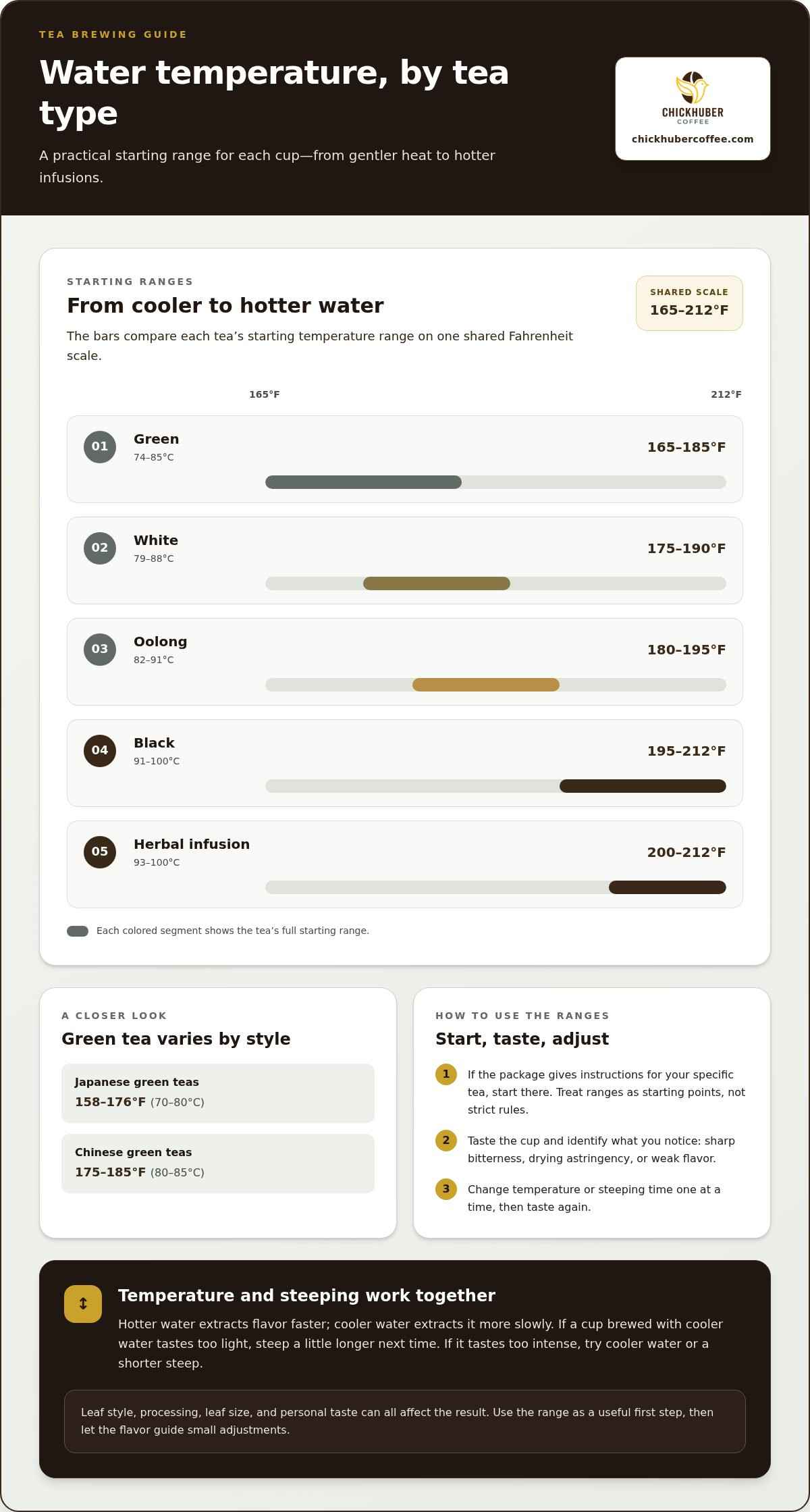
Use these ranges as starting points, not strict rules. Tea style, leaf processing, and personal taste can shift the ideal temperature, even within one category. If the package gives brewing instructions for your specific tea, start there. Then adjust to taste.
| Tea type | Starting temperature |
|---|---|
| Green | 165-185°F (74-85°C) |
| White | 175-190°F (79-88°C) |
| Oolong | 180-195°F (82-91°C) |
| Black | 195-212°F (91-100°C) |
| Herbal infusion | 200-212°F (93-100°C) |
Green, white, and oolong tea starting points
Green tea has a broad range because styles differ. Japanese green teas often start around 158-176°F (70-80°C), while Chinese green teas commonly suit 175-185°F (80-85°C). If your green tea tastes too sharp, try the cooler end of its range. White tea is often brewed at 175-190°F (79-88°C), but its leaf and processing can affect the result. Oolong spans 180-195°F (82-91°C), with the best starting point varying by style.
Follow the package guidance if it recommends a different temperature for your tea. Treat it as a useful first test, then fine-tune based on flavor.
Black tea and herbal infusion starting points
Black tea, made from Camellia sinensis, typically starts between 195-212°F (91-100°C). Herbal infusions are made from other ingredients, such as herbs, flowers, or spices, rather than tea leaves. A common starting range is 200-212°F (93-100°C), but ingredients and blends vary. Don’t assume one exact temperature suits every infusion; use any package directions as your first guide.
The best water temperature for brewing tea is a practical match for the leaves or ingredients in your cup. Choose a point within the range, steep, and taste before changing your approach. If you’re working without a thermometer, the next section shows how to get close using a regular kettle and a few simple steps.
How to Brew Tea Without a Temperature-Controlled Kettle
You can brew a balanced cup without precision gear. A regular kettle, cup, and timer are enough to get started. For a closer temperature reading, use a thermometer; a temperature-control kettle offers the most direct way to set a target.
A simple method for estimating water temperature
- 1. Choose a starting range. Use the guidance for your tea type, and follow package instructions if they give a specific recommendation.
- 2. Heat the water. Bring it to a boil if your tea calls for near-boiling water. For a lower target, let freshly boiled water cool before pouring. Cooling speed varies with the kettle, room, and amount of water, so avoid relying on one fixed wait time.
- 3. Check if you can. Measure with a thermometer if you have one. Without it, use visible cues like steam or bubbles only as rough estimates, not exact readings.
- 4. Add the leaves and start a timer. Keep the amount of tea and steeping time consistent while you test a temperature adjustment.
- 5. Taste and record. Note the water approach, steep time, and result. That gives you a repeatable baseline for your next cup.
The best water temperature for brewing tea is easier to find through small, controlled tests than through guesswork. Keep your setup steady, then change one thing at a time.
Adjusting temperature, steeping time, and taste
Use the flavor as your guide. Make one modest adjustment, brew again, and compare. That way, you can tell which change helped rather than changing both heat and steeping at once.
- Too bitter or harsh? Let the water cool more before brewing, or shorten the steep. Try one change first.
- Too weak? Steep a little longer, or use slightly hotter water if the tea’s recommended range allows it.
- Flat or dull? Check that the water is hot enough for the tea and that you haven’t shortened the steep too much. Adjust one factor, then taste again.
For example, if green tea tastes harsh, try cooling the water further while keeping your usual steep time. If the next cup tastes better but too light, keep that water approach and extend the steep slightly. You’re building a reliable routine, not chasing a perfect number.
Chickhuber Coffee’s loose leaf tea blends give you a way to put the method into practice and compare your preferred brewing approaches.
Fine-Tune Your Tea Temperature for a Better Everyday Brew
A temperature chart gives you a starting point. Your own notes help you repeat the cups you enjoy. Build a simple routine around each tea, then refine it with small changes instead of guessing from scratch every time.
Build a repeatable temperature routine
Start with the tea type and its recommended range. If the package gives instructions for that particular tea, use those ahead of a broad category chart. A specific recommendation accounts for the tea’s style and preparation better than a general starting range can.
Identify the tea, choose a starting temperature, steep, taste, and adjust one variable at a time. That routine keeps each brew easy to compare. If you change both temperature and steeping time together, it’s harder to tell which change affected the cup.
Keep a brief record for teas you brew often. Note the tea type or name, your temperature or cooling estimate, steeping time, and how the cup tasted. A note such as “slightly too bitter” or “balanced, could be stronger” gives you a clear next move. If the brew was too intense, try a shorter steep or cooler water next time. If it was too light, adjust one of those factors modestly and taste again.
Choose loose leaf tea and brew it with intention
Loose leaf teas come in different styles and ingredients, so give each one room to show you what works. Start with the package guidance when available, keep your method consistent, and let taste shape your next adjustment. For herbal options, Chickhuber Coffee’s loose leaf tea guide offers a relevant next read.
The best water temperature for brewing tea isn’t a single setting that suits every cup. It’s a useful starting point paired with a steeping time you can repeat and adjust. Keep your notes close, trust your taste, and make each change deliberate.
Chickhuber Coffee’s tea selection gives you loose leaf options to brew and evaluate with your own routine.
Make Your Next Cup a Better One
The best water temperature for brewing tea starts with the type of tea, but your taste gets the final say. Use the recommended range as a launch point, follow package directions for a specific tea, and adjust temperature or steeping time in small steps. A regular kettle is enough to begin. A quick note about what you brewed and how it tasted can help you repeat the cups you enjoy.
Good brewing is a skill you build cup by cup. Chickhuber Coffee offers loose leaf tea blends, along with a dedicated guide to loose leaf tea brewing to help you get more from your routine.
Explore Chickhuber Coffee’s loose leaf tea blends and put your brewing approach to work. Start with a tea that interests you, trust your taste, and keep refining your cup.
Frequently Asked Questions
Is boiling water too hot for green tea?
Boiling water can taste too aggressive for some green teas, but the right temperature depends on the style. A useful starting range is 165-185°F (74-85°C), while Japanese green teas may suit a cooler range. Treat these as guides, not fixed rules, and follow the package instructions for your tea. Steeping time matters too. If the cup tastes bitter, adjust either the water temperature or steeping time, one variable at a time.
Can I use the same water temperature for every type of tea?
You can use one temperature for convenience, but it won’t suit every tea equally well. Green tea often starts cooler, while black tea and many herbal infusions are commonly brewed with hotter water; white and oolong teas span varied ranges. Check the article’s temperature table for starting points. These ranges aren’t rigid rules, so follow package directions and adjust to your taste for a more balanced cup.
What is the best water temperature for black tea?
A practical starting range for black tea is 195-212°F (91-100°C). The best water temperature for brewing tea depends on more than its broad category: black tea styles and leaf sizes vary, so steeping recommendations can differ too. Start with the package instructions when available. If the cup tastes too strong or harsh, shorten the steep or use cooler water; if it tastes weak, adjust steeping time or temperature modestly.
What temperature should water be for herbal tea?
Herbal infusions contain varied ingredients, so one temperature won’t fit every blend. A general starting range is 200-212°F (93-100°C), but use the package directions when available because ingredients and blends differ. Herbal infusions are made from herbs, flowers, spices, or other ingredients, not tea leaves from Camellia sinensis. If the brew tastes too intense or too light, adjust steeping time gradually and taste again.
How can I tell if water is cool enough for tea without a thermometer?
Bring the water to a boil, then let it cool before pouring over tea that needs a lower temperature. There’s no universal cooling time: the kettle, room, and amount of water all affect how quickly it cools. Use a thermometer or temperature-controlled kettle when available for greater precision. Otherwise, follow the article’s basic brewing method and tea-type chart, then refine your approach by tasting the cup.
Does water temperature affect how strong tea tastes?
Yes. Water temperature and steeping time both affect how much flavor is drawn from tea leaves. A hotter or longer brew may taste stronger, but the result depends on the tea and how it’s prepared. If your cup tastes too light, try a modestly longer steep or slightly hotter water within the recommended range. Change one factor at a time, then taste before making another adjustment.
What should I change if my tea tastes bitter?
First, check whether you used hotter water or a longer steep than the tea’s package guidance recommends. Try lowering the temperature or shortening the steep, then taste again before changing another factor. Bitterness can have more than one cause, so temperature alone isn’t always responsible. Make one adjustment at a time and note the result. That makes it easier to find a brewing approach that suits your tea and taste.