

Best Herbal Tea for Relaxation: Find Your Perfect Cup
What if the best herbal tea for relaxation isn’t the one making the boldest calming claims? Choosing a cup can feel harder than it should when blends promise similar results but differ in ingredients, flavor, and safety considerations. Your best fit depends on what you enjoy drinking, how you want to build it into your evening, and what the available evidence can actually tell you.
This guide compares familiar herbs such as chamomile, lavender, valerian, lemon balm, and passionflower by taste, preparation, and the routines they may suit. You’ll also find practical ways to check labels and consider allergies, medication interactions, and other reasons to ask a healthcare professional. If you prefer to control how you prepare your tea, loose leaf is another format to consider. Chickhuber Coffee offers loose-leaf tea blends, but check current listings for confirmed ingredients. Use the information below to make a thoughtful choice and find a cup that fits your evening.
Key Takeaways
- The best herbal tea for relaxation is a personal fit: start with flavors you enjoy and the kind of evening routine you want.
- Compare chamomile, lemon balm, lavender, and valerian by taste and typical use, while keeping expectations about calming effects realistic.
- Read the full ingredient list, especially if you have allergies or need to avoid particular ingredients.
- Herbal doesn’t automatically mean risk-free. Ask a qualified healthcare professional about possible interactions if you take medication, are pregnant, or have a health condition.
- When choosing loose-leaf tea, review the listed ingredients and preparation guidance, then match the cup to your preferences and safety needs.
Best herbal tea for relaxation: what should you expect from a cup?
A relaxing herbal tea is an infusion made from herbs or other plants, often chosen as a calming drink and usually made without caffeine. That’s a useful starting point, not a promise of a particular effect. The best herbal tea for relaxation depends on its ingredients, your taste, and the routine you want to create. A cup may feel comforting, but experiences differ, and herbal tea isn’t a proven treatment for a medical condition.
Keep the distinction clear: “relaxing” describes why someone might enjoy a tea, not a guaranteed result. A warm drink can become a cue to pause at the end of the day. It can’t, by itself, establish that an ingredient treats anxiety, stress, or insomnia.
Herbal infusion or true tea: what is the difference?
True tea comes from the Camellia sinensis plant and includes green, black, white, and oolong tea. Herbal infusions use other plants, such as flowers, leaves, or roots. The term Herbal teas is commonly used for these infusions, also called tisanes. Some blends combine herbs with true tea, so don’t assume every product labeled herbal is caffeine-free. Check the complete ingredient list and any caffeine information on the package.
Plant-based doesn’t automatically mean safe for everyone. Ingredients can cause allergies or side effects, and some may interact with medication. Treat the label as useful information, not a guarantee that a blend suits your circumstances.
Can a warm tea ritual help you wind down?
A cup may help mark a transition from a busy day to a quieter evening. Notice its warmth, aroma, and flavor, and choose a preparation routine that feels easy to repeat. The ritual itself can feel comforting, even if the tea doesn’t produce a measurable calming effect. Keep expectations grounded and choose a cup you genuinely enjoy.
A supportive tea ritual is not a medical treatment.
Think of the cup as one small part of your evening, not a fix or a test of whether you can relax. If a blend contains caffeine, it may not fit your plans for bedtime. If you’re choosing an infusion for a health concern, or aren’t sure whether an ingredient is appropriate for you, check with a qualified healthcare professional.
Compare popular herbs used in teas for relaxation
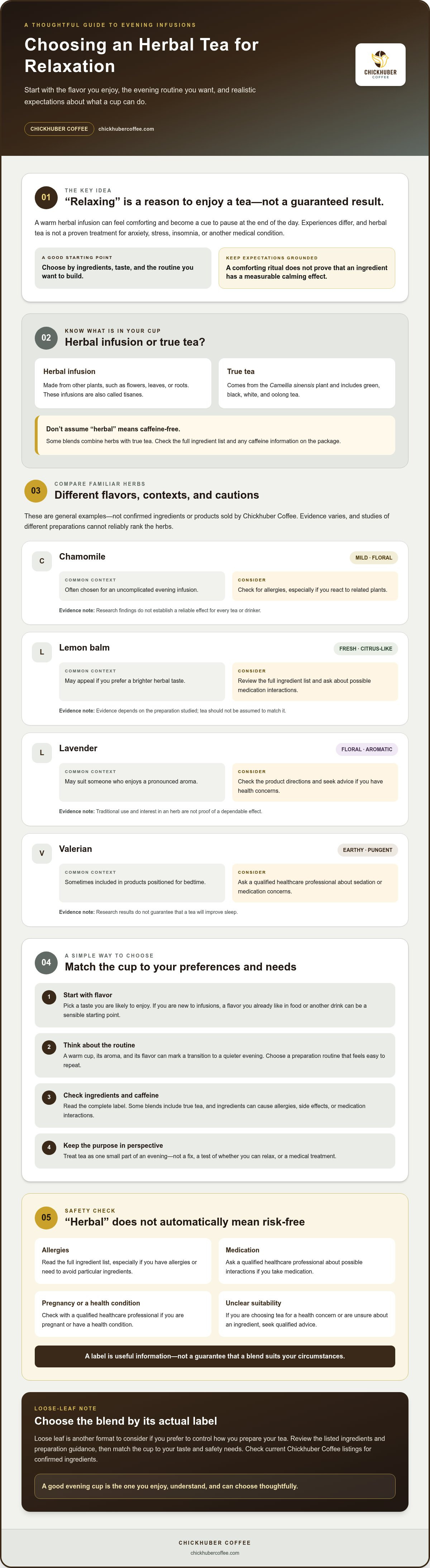
Chamomile, lemon balm, lavender, and valerian often come up in discussions of evening tea, but they aren’t interchangeable. Their flavors, typical uses, and safety considerations differ. The examples below are general information, not confirmed ingredients or products sold by Chickhuber Coffee. Evidence for a relaxing effect varies, and studies of different preparations can’t be used to rank these herbs reliably.
Chamomile, lemon balm, and lavender: flavor and fit
Start with the flavor you’re most likely to enjoy. Chamomile is often described as mild and lightly floral, lemon balm as fresh and citrus-like, and lavender as strongly floral and aromatic. Taste can vary with the plant, blend, and steeping, so use the product’s ingredient list and preparation directions to set expectations. If you’re new to herbal infusions, a flavor you already enjoy in food or other drinks can be a sensible starting point. A gentle flavor may suit a simple evening cup, while a more aromatic one may make the sensory ritual feel more deliberate.
| Herb | Typical flavor | Common use context | Evidence limitations | Safety prompt |
|---|---|---|---|---|
| Chamomile | Mild, floral | Often chosen for an uncomplicated evening infusion | Research findings don’t establish a reliable effect for every tea or drinker. | Check for allergies, especially if you react to related plants. |
| Lemon balm | Fresh, citrus-like | May appeal if you prefer a brighter herbal taste | Evidence depends on the preparation studied; tea shouldn’t be assumed to match it. | Review the full ingredient list and ask about possible medication interactions. |
| Lavender | Floral, aromatic | May suit someone who enjoys a pronounced aroma | Traditional use and interest in an herb aren’t proof of a dependable effect. | Check the product’s directions and seek advice if you have health concerns. |
| Valerian | Earthy, pungent | Sometimes included in products positioned for bedtime | Results from research aren’t a guarantee that a tea will improve sleep. | Ask a qualified healthcare professional about sedation or medication concerns. |
Valerian and other herbs: evidence and cautions
With valerian, pay attention to more than flavor. Its taste can be pronounced, and products containing it may raise questions about drowsiness or interactions, especially alongside medicines or other substances that cause sedation. Don’t assume a tea has the same effects or risks as a different form of the herb.
Traditional use can explain why an herb appears in tea, but it doesn’t establish that the tea treats a health condition. When comparing the best herbal tea for relaxation, weigh taste and routine alongside the ingredient list. If you’re pregnant, take medication, or have a health condition, consult a qualified healthcare professional. If loose leaf suits your preferred brewing style, you can also review loose-leaf tea blends and check current listings for ingredients.
How to choose the best herbal tea for your relaxation routine
Make the choice practical: start with flavor, check caffeine, then consider when and how you’ll drink it. Before buying, read the complete ingredient list, especially if you’re avoiding a particular plant or have a health concern. The best herbal tea for relaxation is the one that suits your preferences and routine, not the one with the boldest promise.
Choose by flavor, caffeine needs, and time of day
Use taste as your first filter. Floral notes may appeal if you enjoy a fragrant cup; grassy flavors feel greener, minty blends taste fresh, and earthy notes are more pronounced. If you’re unsure, choose a profile you already like in food or other drinks. It’s a reasonable place to start, not a guarantee you’ll enjoy every blend.
Next, check the label. An herbal blend may include true tea or another caffeine-containing ingredient, so don’t assume it’s caffeine-free based on its name or packaging. Consider when the cup fits your day as well. Some people prefer tea well before bed; others enjoy it later. Let your own routine guide the timing.
Loose leaf or tea bag: what matters when brewing?
Tea bags can be a straightforward choice for quick, consistent preparation. Loose leaf lets you adjust the portion and experiment with steeping to suit your taste. Neither format is automatically better, and using more tea or steeping it longer doesn’t guarantee a stronger relaxing effect. Start with the product’s brewing directions, then adjust only if the label allows and the flavor suits you.
For a closer look at selecting and preparing a loose-leaf herbal infusion, explore this loose-leaf herbal tea performance guide. For practical brewing considerations, see the loose-leaf tea brewing guide.
- Flavor: Pick a profile you’ll look forward to, whether floral, grassy, minty, or earthy.
- Caffeine: Scan every ingredient, including additions to herbal blends.
- Routine: Choose a time and preparation style you can comfortably repeat.
- Ingredients: Read the full label, not just the front-of-package description.
- Safety: If you take medication, are pregnant, or have a health condition, ask a qualified healthcare professional whether the ingredients are appropriate for you.
Keep the process simple: match the cup to your palate, confirm what’s in it, and brew according to its directions. Chickhuber Coffee sells loose-leaf tea blends, but check current product listings for confirmed ingredients before choosing a blend for a particular routine.
Herbal tea safety: interactions, allergies, and realistic expectations
Herbal teas can be enjoyable, but “natural” doesn’t mean risk-free. Plants may trigger allergies, cause side effects, or interact with medicines. A blend can also contain several ingredients, so checking only its featured herb isn’t enough. Before brewing, read the full ingredient list and preparation directions so you know what’s in the cup and how the product is intended to be prepared.
Use the same care when choosing the best herbal tea for relaxation as you would with any product you consume. Don’t assume an ingredient is suitable for everyone, or that a tea is safe simply because it’s sold as a beverage. If you’re unsure, pause and ask a qualified healthcare professional.
When should you check with a healthcare professional?
Ask before trying a new herbal blend if you take medication, are pregnant or breastfeeding, or have an ongoing health condition. A professional can consider your circumstances and the specific ingredients listed on the product. Bring the package or a clear ingredient list to the conversation, especially if the blend contains multiple herbs or the preparation directions aren’t clear.
Don’t use tea as a substitute for medical care or prescribed treatment. If you’re considering an herbal product to address a health concern, get professional guidance first rather than relying on promotional claims or informal advice.
What can tea realistically do for relaxation?
A cup may offer warmth, flavor, and a familiar pause in your evening. Those can make a tea ritual pleasant and personally comforting, but they don’t guarantee a particular response. One person’s experience doesn’t predict another’s. Follow the product’s preparation directions, and don’t assume a stronger-tasting cup will have a stronger health effect.
Available evidence doesn’t establish that herbal tea reliably treats anxiety, insomnia, or other medical conditions.
If anxiety or sleep difficulties persist, worsen, or affect your daily life, consider seeking support from a qualified healthcare professional. Tea can be part of a routine you enjoy, but it shouldn’t delay care or replace an assessment of ongoing symptoms.
- Check the ingredients: Read the whole list, including components in blends.
- Follow directions: Use the preparation guidance provided for that product.
- Ask when uncertain: Discuss the specific tea with a healthcare professional if you take medication, are pregnant or breastfeeding, or have a health condition.
Choose with care, then keep the ritual simple. To review Chickhuber Coffee’s loose-leaf tea blends, check current product listings for confirmed ingredients and preparation details.
Find a loose-leaf herbal tea that fits your wind-down routine
A good choice starts with fit, not a promise. Consider the flavors you enjoy, whether you want to avoid caffeine, and how much time you want to spend preparing a cup. Then check the product listing and package for ingredients, caffeine information, and brewing directions. These details help you decide whether a tea fits your preferences and routine.
A quick checklist before choosing a tea
- Flavor: Choose a profile you’ll want to drink, from mild and delicate to more pronounced or aromatic.
- Caffeine: Check the full ingredient list and any caffeine information. A product described as herbal may still include other ingredients, so verify rather than assume.
- Ingredients: Read every listed component and consider allergies, dietary preferences, and ingredients you need to avoid.
- Preparation: Look for product-specific instructions, including steeping guidance, so you know how to prepare it as intended.
- Routine: Pick a tea and preparation style that feel realistic for your evenings. You don’t need a complicated ritual to make a cup part of your wind-down.
Loose leaf gives you control over the portion and lets you adjust steeping to suit your taste. That’s a practical advantage, not evidence that the tea will have a stronger calming effect. Let flavor and convenience guide your choice, and be cautious of dramatic health promises. If you have questions about whether an ingredient is right for you, ask a qualified healthcare professional.
Explore loose-leaf tea options from Chickhuber Coffee
Chickhuber Coffee offers loose-leaf tea blends, but specific ingredients and calming properties aren’t confirmed here. Check current product listings before choosing. Review each blend’s ingredient information, caffeine details, and preparation guidance, then compare those details with your preferences and needs. If a listing doesn’t provide information you need, don’t guess; look for clarification before ordering.
The best herbal tea for relaxation is ultimately a personal match: enjoyable flavor, clear ingredients, and a place in your routine. Ready to compare what’s available? Explore Chickhuber Coffee’s current loose-leaf tea selection and review the listing details to find an option that fits your preferences.
Choose your cup and make it your own
The best herbal tea for relaxation is a personal fit, not a guaranteed effect. Let flavor and your evening routine guide you, then check the full ingredient list, caffeine information, and brewing directions. Chamomile, lemon balm, lavender, and valerian differ in taste and use, but research doesn’t make one a universal winner. If you take medication, are pregnant or breastfeeding, or have a health condition, ask a qualified healthcare professional before trying a new blend.
A simple cup can be an enjoyable cue to slow down. Keep expectations grounded, choose ingredients with care, and build a ritual you’ll look forward to. Chickhuber Coffee sells loose-leaf tea blends through its online store. Check current listings before choosing, as specific ingredients aren’t confirmed here.
Explore Chickhuber Coffee’s loose-leaf tea selection, compare the available details, and choose a cup that fits your preferences. Start simple and make it your own.
Frequently Asked Questions
What is the best herbal tea for relaxation?
The best herbal tea for relaxation is the one that suits your taste, ingredient preferences, and evening routine. Chamomile, lemon balm, lavender, and valerian are commonly discussed, but no single option is a proven choice for everyone. Compare flavor and the full ingredient list, check caffeine information, and consider allergies or health concerns. A comforting cup can support a wind-down ritual, but it isn’t a treatment for a medical condition.
Does chamomile tea help you relax?
Chamomile tea may feel relaxing as a warm, familiar drink, but its effects vary from person to person. Research on chamomile preparations doesn’t prove that every cup reliably reduces anxiety or causes sleep. If you enjoy its mild, floral flavor, you might choose it as part of an evening routine. Check the label for other ingredients, and ask a healthcare professional about suitability if you have allergies or health concerns.
Is herbal tea caffeine-free?
Not always. An infusion made only from caffeine-free herbs may contain no caffeine, but blends can include true tea, such as green or black tea, or other caffeine-containing ingredients. Read the complete ingredient list and check the product’s caffeine information rather than relying on words such as “herbal” or “relaxation” on the package. If you need to avoid caffeine and the label isn’t clear, confirm the details with the manufacturer.
Can herbal tea help with sleep?
Herbal tea may be an enjoyable part of a bedtime routine, but it can’t be counted on to improve sleep. A warm drink, familiar flavor, and repeated evening ritual may feel comforting; that isn’t the same as evidence that a particular tea treats insomnia. Check for caffeine-containing ingredients and follow the product’s directions. If sleep problems persist or interfere with daily life, seek guidance from a qualified healthcare professional.
Is it safe to drink relaxing herbal tea every night?
It depends on the ingredients and your individual health circumstances, so there’s no blanket guarantee that nightly use is safe for everyone. Review the full ingredient list and preparation instructions, and don’t assume a natural product is risk-free. If you’re pregnant or breastfeeding, take medication, or have a health condition, ask a qualified healthcare professional before making it a regular habit. Stop and seek advice if you notice an unexpected reaction.
Can herbal teas interact with medication?
Yes, some herbal ingredients may interact with medicines, and a blend can contain several plants. The possibility depends on the specific ingredients and your medication, so don’t rely on a general safety claim or assume a tea is harmless because it’s sold as a beverage. If you take medication, show the full product label to a pharmacist or qualified healthcare professional before trying the tea, especially if ingredient information is incomplete.
How do you brew loose-leaf herbal tea?
Follow the brewing instructions for the specific product, since recommended amounts and steeping guidance can vary by blend. Place the suggested portion of loose leaves in an infuser or suitable brewing vessel, add water as directed, and steep for the stated time. Remove or strain the leaves when instructed. Adjust the next cup to your taste only within the product guidance. More leaves or longer steeping won’t guarantee a stronger calming effect.