

Best Coffee to Wake You Up: Choose Your Morning Fuel in 2026
The darkest roast isn’t automatically the strongest wake-up call. The best coffee to wake you up depends on more than roast color or bold flavor. Bean type, how much coffee you use, and your brewing method all shape the caffeine in your cup.
If you’ve found conflicting advice about dark versus light roasts, you’re not alone. Choosing a morning coffee can feel like guesswork when you’re balancing alertness, flavor, and a routine that won’t disrupt your sleep. A few practical comparisons can help you choose with more confidence.
This guide explains how bean type, dose, roast, grind, and brewing method affect a prepared cup. You’ll learn how to compare drip coffee, espresso, and cold brew, then build a routine that lets you assess your own response while keeping sleep in view.
Key Takeaways
- The best coffee to wake you up suits your preferred serving, brewing style, and morning routine, not just a dark-looking roast.
- Bean species, coffee dose, serving size, and brewing method can all change the caffeine in your cup.
- Drip coffee, espresso, and cold brew differ in preparation and typical serving size. Caffeine can vary within each style.
- Track timing, serving size, preparation, and how you feel. Then make cautious adjustments.
- Consider Chickhuber Coffee’s 6 Bean Blend, Cowboy Blend, and Organic Honduras Coffee by your preferences and the available product details.
What Makes the Best Coffee to Wake You Up?
The best coffee to wake you up is a cup whose caffeine amount and serving size suit your needs and routine. It isn’t automatically the darkest roast, the most bitter brew, or the largest drink. Those qualities can shape how coffee tastes and feels, but they don’t tell you exactly how much caffeine is in the prepared cup.
A useful distinction: caffeine may temporarily support alertness, while taste describes the coffee’s sensory character. A bold, bitter flavor can feel intense without proving that a serving contains more caffeine. To compare cups, consider how much coffee went into the brew, how it was prepared, and how much you drink.
How caffeine can support morning alertness
Caffeine interacts with adenosine signaling, a system involved in sleepiness. In simple terms, caffeine can block some adenosine receptors for a time, which may make you feel more alert. The effect varies from person to person and isn’t guaranteed to overcome poor sleep or make every morning feel effortless. Read more about how caffeine works and its effects in the body.
Why the strongest-tasting coffee may not be strongest in caffeine
Bitterness and roasted, intense flavors are sensory clues, not caffeine measurements. Coffee’s taste reflects several factors, including the beans and brewing choices. Caffeine also contributes bitterness, but it isn’t the only source. A sharp-tasting cup can’t reliably be ranked above a smoother one for caffeine.
Compare like with like. A small, concentrated serving and a large mug of brewed coffee aren’t equivalent, and cup size alone doesn’t reveal the caffeine amount. The amount of ground coffee matters, as do the water-to-coffee ratio, grind, and brew method. Changing one variable can change the cup, making casual comparisons unreliable.
For a practical morning choice, settle on a serving size and preparation you can repeat. Notice how the cup tastes and how you feel afterward. If you want a more precise comparison, use product-specific caffeine information when available. Don’t infer a number from roast color, bitterness, or a “strong” label. The best coffee to wake you up is one you can assess consistently, not a guess based on taste alone.
Which Coffee Factors Change the Caffeine in Your Cup?
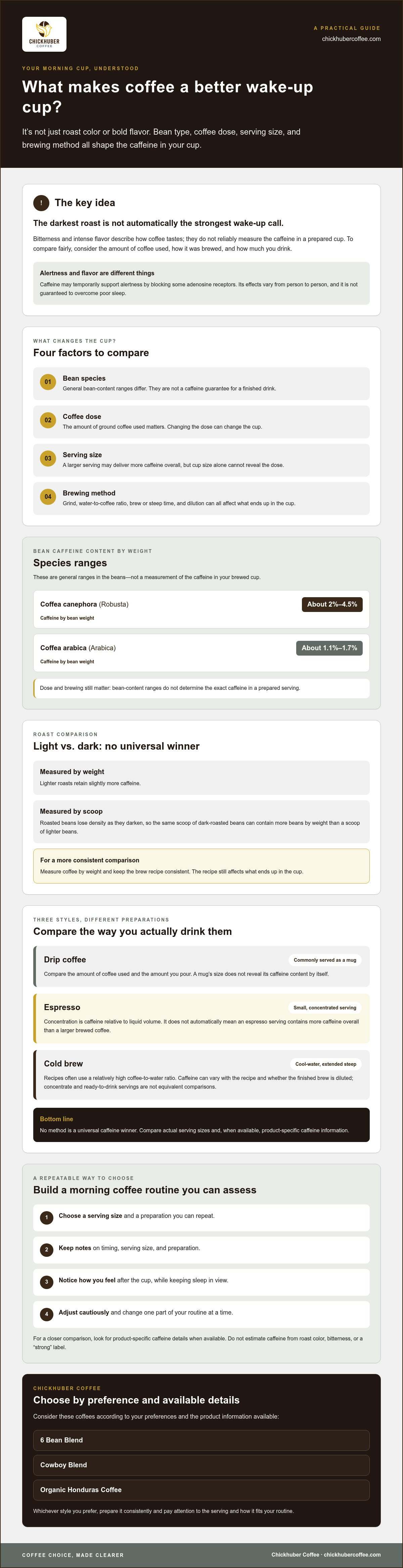
Caffeine in a brewed cup depends on bean species, coffee dose, serving size, and brewing method. No single factor ranks every cup. Track those variables before judging a coffee by its roast label or taste. That gives you a fairer comparison and a more reliable way to find the best coffee to wake you up.
Bean species can make a difference. Research summaries report that Coffea canephora, commonly called Robusta, contains about 2% to 4.5% caffeine by bean weight, while Coffea arabica contains about 1.1% to 1.7%. These are general bean-content ranges, not a caffeine guarantee for a finished drink. The dose used and the way the coffee is brewed still matter.
Start with the amount of coffee, then note the volume you pour. A larger serving may deliver more caffeine overall, but size alone can’t tell you the dose. A concentrated small drink and a larger, more diluted one require different comparisons. To learn more about coffee, explore Harvard T.H. Chan School of Public Health’s overview of the health benefits of coffee.
Does light roast or dark roast have more caffeine?
Neither roast always makes the most caffeinated cup. By weight, lighter roasts retain slightly more caffeine, but roasted beans lose density as they darken. As a result, a scoop of dark-roasted beans can contain more beans by weight than the same scoop of lighter beans. Measure by weight for a more consistent comparison, and remember that the brew recipe still affects what ends up in your cup.
How brewing method and serving size affect the comparison
Drip coffee is commonly served as a mug, while espresso is usually poured in a smaller, concentrated serving. Concentration describes caffeine relative to liquid volume. It doesn’t automatically mean an espresso serving contains more caffeine overall than a larger brewed coffee. Compare actual serving sizes and, where possible, product-specific caffeine information.
Cold brew usually steeps coffee in cool water for an extended time, often with a relatively high coffee-to-water ratio. Its caffeine can vary substantially with the recipe and whether the finished brew is diluted. A strong concentrate and a ready-to-drink glass aren’t equivalent comparisons. For all three styles, dose, grind, water, steeping or brew time, and final serving size can shift the result. No method is a universal caffeine winner.
Want to compare coffees for your routine? Explore coffee options for your morning, then check the available product details and prepare each cup consistently.
Coffee Styles Compared: Find a Morning Cup That Fits
The right morning style needs to work in your cup and in your schedule. Drip coffee, espresso, and cold brew differ in preparation, concentration, and typical serving size, so don’t compare them as if they were equal pours. Taste matters too, but bold flavor or a dark roast doesn’t guarantee more caffeine.
Drip coffee, espresso, and cold brew: what differs?
Use this comparison to choose a starting point. Actual taste and caffeine depend on the beans, recipe, and serving you prepare.
| Brew style | Serving context | Taste preference | Caffeine uncertainty |
|---|---|---|---|
| Drip coffee | Often brewed as a mug or larger pour, making it convenient for a familiar serving. | Adjust the beans and recipe to suit your preferred flavor. | Varies with dose, water, grind, and serving volume. |
| Espresso | Typically served in a small, concentrated shot. | A fit if you enjoy an intense, concentrated coffee experience. | Concentration isn’t the same as total caffeine. Shot size and recipe matter. |
| Cold brew | Steeped in cool water, then served as prepared or diluted, depending on the product or recipe. | Consider it if you prefer coffee served cold. Taste varies with the coffee and preparation. | Steep time, coffee-to-water ratio, dilution, and serving size all affect the cup. |
For a closer look at drip options, see a guide to the best coffee for drip coffee machines. If you want to prepare cold brew yourself, a cold brew brewing guide can help you understand the process. The National Coffee Association also summarizes research on coffee’s health benefits. Treat general research as context, not a promise about how an individual cup will make you feel.
How to choose by taste, routine, and convenience
Start with what you enjoy drinking. Prefer a smaller, concentrated serving? Espresso may suit your routine. Want a mug to sip over breakfast? Drip may be more practical. Like cold coffee or prefer to prepare ahead? Cold brew could fit. These are preparation matches, not caffeine rankings.
Next, consider what you have at home and how much time your morning allows. Choose a serving size, keep your brewing approach consistent, and assess the result over several mornings. Roast and bean species can inform your choice, but neither alone predicts the caffeine in your prepared cup. For the best coffee to wake you up, match taste and convenience first, then use product-specific caffeine details when available.
Build a Morning Coffee Routine That Works for You
A dependable coffee routine is more useful than chasing the strongest cup. Keep the serving and preparation steady, then pay attention to how you feel and whether your sleep stays on track. Aim for a repeatable morning, not a bigger dose by default.
- Choose a serving. Pick a cup size and amount of coffee that feel manageable. If caffeine affects you strongly, start conservatively.
- Brew consistently. Use the same method and similar coffee-to-water proportions so you can compare one morning with the next.
- Assess the result. Over several mornings, note when you drink coffee, the serving size, how alert you feel, and any unwanted effects.
- Adjust cautiously. Change one variable at a time, such as serving size or brew strength. Give yourself time to notice the difference before changing something else.
When should you drink coffee to feel more alert?
There’s no single ideal coffee time for everyone. Your wake-up time, sleep, daily schedule, and sensitivity to caffeine all influence how a cup feels. Try a consistent time that fits your morning, then record when you drink it and how you feel. If coffee seems to affect your sleep, consider adjusting the timing or amount rather than assuming a universal rule will fit.
How to adjust your cup without overdoing it
More isn’t automatically better. Notice signs such as jitters, discomfort, or trouble sleeping, and respond by reducing the serving or changing when you have it. Keep other parts of your routine steady while you test an adjustment. That makes it easier to learn what helps and what doesn’t.
Caffeine sensitivity varies, and health circumstances can affect what’s appropriate for you. If you have concerns about caffeine, symptoms, or how it fits with your health, ask a healthcare professional for advice tailored to you.
Practical rule: Choose a manageable serving, brew it the same way, and track your response. Consistency gives you better information than chasing the strongest cup. That’s how you find the best coffee to wake you up for your routine while keeping alertness and sleep in view.
Ready to find a coffee that fits your morning preferences? Explore Chickhuber Coffee options and compare product details with the routine you want to build.
Choose Chickhuber Coffee for Your Next Wake-Up Cup
You’ve got a practical framework: choose a serving that fits your morning, prepare it consistently, and judge the cup by its details rather than roast color or a bold-sounding name. Chickhuber Coffee’s range includes several options to consider. Product names alone don’t establish caffeine content, flavor, roast, or a guaranteed effect, so check the available product information before deciding.
Explore confirmed Chickhuber Coffee options
The 6 Bean Blend is one blend to consider. For more background before choosing, look for the existing 6 Bean Blend guide. Cowboy Blend and Organic Honduras Coffee are additional options. Their names identify the products, but don’t tell you how much caffeine a prepared serving contains or how it will taste.
Keep your preferences in the lead. Think about how you usually make coffee, the serving size you want, and which product details matter to you. If you’re comparing options, look for relevant information in each product description, such as preparation guidance or details about the coffee. Don’t assume a blend or single-origin coffee will deliver a particular energy effect without specific evidence.
Make your next coffee choice with confidence
Use a quick check before choosing:
- Routine: Does the coffee suit the way you like to prepare and serve your morning cup?
- Serving: Can you make a consistent serving size that works for you?
- Product details: Does the listing provide the information you need to make a considered choice?
- Personal response: After trying it, does the cup fit your alertness goals and sleep routine?
This process keeps taste, convenience, and caffeine in perspective. The best coffee to wake you up isn’t a promise attached to a product name. It’s a coffee you enjoy, can prepare to suit your routine, and can assess based on your own response. If caffeine content is a deciding factor, rely on product-specific information when available rather than guessing from the blend name.
Ready to choose your next morning cup? Explore Chickhuber Coffee’s 6 Bean Blend, Cowboy Blend, and Organic Honduras Coffee, then review the product details and select the option that fits your routine.
Choose Your Morning Cup with Confidence
The best coffee to wake you up isn’t defined by a dark roast or intense taste alone. Bean type, coffee dose, serving size, and brewing method all shape caffeine in the cup. Choose a style that suits your taste and routine, then keep preparation consistent so you can notice how it affects your alertness and sleep.
Start with what you enjoy and what fits your morning. Chickhuber Coffee’s range includes the 6 Bean Blend, Cowboy Blend, and Organic Honduras Coffee, as well as cold brew selections and single-origin sample packs. Check the product details, consider how you plan to prepare your coffee, and choose without expecting an unverified caffeine level or guaranteed energy effect.
Ready to explore your options? Explore Chickhuber Coffee’s blends and find your next morning cup. Make a thoughtful choice and build a routine that works for you.
Frequently Asked Questions
What is the best coffee to wake you up?
The best coffee to wake you up fits your preferred serving, brewing routine, and sensitivity to caffeine. Bean species, the amount of coffee used, serving size, and preparation all affect caffeine in the cup. Don’t choose by bitterness or roast color alone. Pick a coffee you enjoy, prepare it consistently, and notice how you feel and whether it affects your sleep.
Does dark roast coffee have more caffeine?
No, dark roast doesn’t always have more caffeine. By weight, lighter roasts retain slightly more caffeine, but darker beans are less dense, so a scoop may contain more beans than the same scoop of lighter roast. That can make comparisons by volume misleading. Measuring coffee by weight offers a more consistent comparison, though bean type, dose, and brewing method still influence caffeine in the finished cup.
Which coffee has the most caffeine?
There isn’t one coffee that always has the most caffeine in every prepared serving. Robusta beans generally contain more caffeine by weight than Arabica beans, but the final amount also depends on the coffee dose, serving size, and brewing method. Some coffees are marketed as high-caffeine, but compare verified caffeine information for the specific product and serving rather than relying on roast, taste, or a strong-sounding label.
Does espresso wake you up more than regular coffee?
Not necessarily. Espresso is concentrated and usually served in a smaller portion, while drip coffee is often served in a larger mug. Concentration per ounce isn’t the same as total caffeine in the serving. The amount of coffee used and the final volume matter. Compare a specific espresso serving with a specific brewed-coffee serving, and remember that caffeine content varies with the beans and preparation.
Is cold brew stronger than hot coffee?
Not always. Cold brew may be made as a concentrate using a high coffee-to-water ratio, then diluted before serving. Ready-to-drink cold brew and concentrate can therefore differ considerably. Hot coffee varies too, depending on its recipe and serving size. “Stronger” might describe taste or caffeine concentration, so check the serving context and product details before comparing cold brew with hot coffee.
How much coffee should I drink to wake up?
There isn’t a serving size that works for everyone. Start with a manageable cup, keep its size and preparation consistent, and track how you feel over several mornings. Caffeine amounts vary between coffees and brewing methods, so don’t assume a cup equals a set dose. The FDA recommends that healthy adults limit caffeine to 400 mg per day from all sources, but individual sensitivity and health needs vary.
Can coffee affect your sleep even if you drink it in the morning?
Yes, coffee may affect sleep even when you drink it in the morning, particularly if you’re sensitive to caffeine. People process and respond to caffeine differently, and the amount consumed matters. Track when you drink coffee, how much you have, and how well you sleep. If you notice a pattern, consider adjusting the serving or timing. Ask a healthcare professional if you have health concerns or persistent sleep problems.