

Best Coffee for French Press: Fuel Your Daily Grind with High-Performance Brews
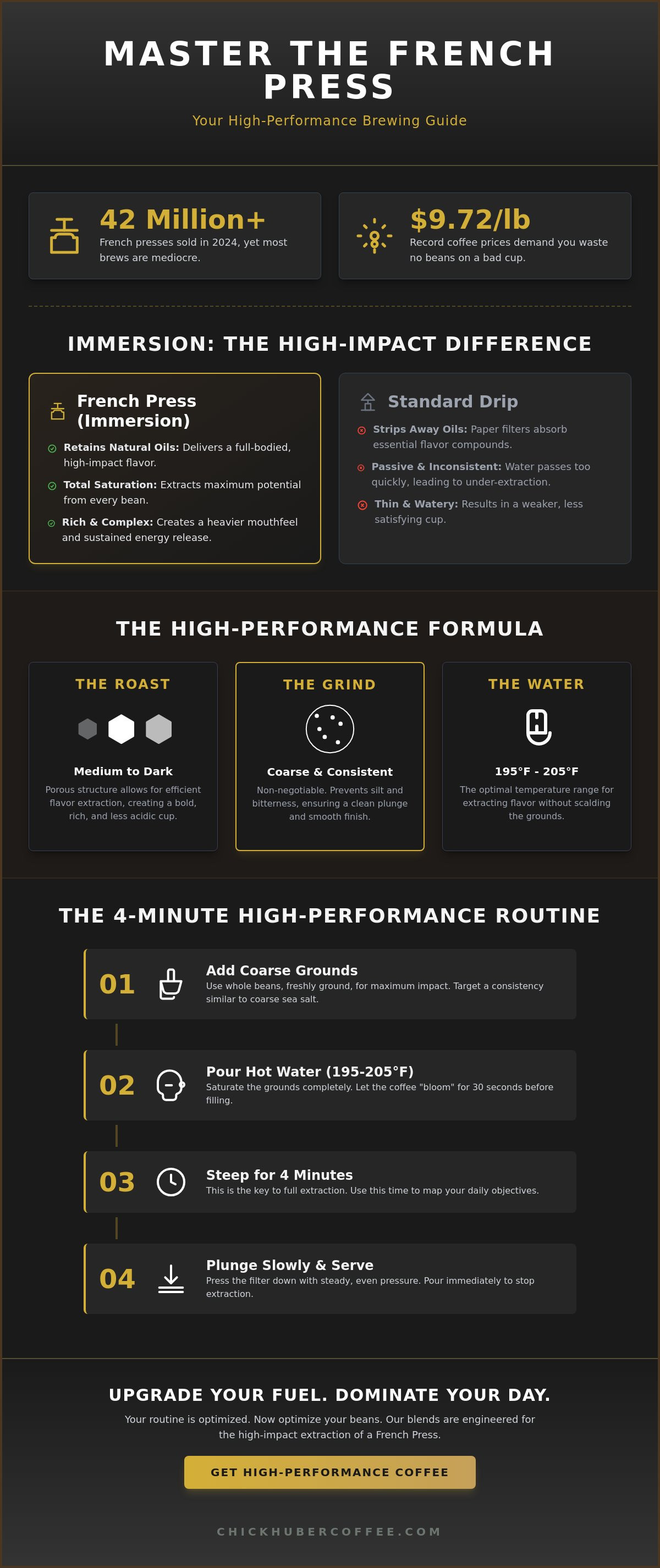
Stop settling for mediocre mornings. Over 42 million French presses were sold in 2024 alone, yet most people still pull a weak, watery cup that fails to ignite their focus. With grocery coffee prices hitting a record $9.72 per pound in April 2026, you can't afford to waste a single bean on a bad brew. Finding the best coffee for french press isn't just about flavor. It's about optimizing your internal engine. You know the frustration of silt at the bottom of your mug. You know the biting bitterness that ruins a sharp workflow. It's time to demand more from your equipment and your beans.
You want a consistent, bold cup. You need fuel that powers you through the toughest tasks. You deserve a morning ritual that acts as a functional tool for success. This guide will show you how to master immersion brewing. You'll learn to select the specific roasts that turn your kitchen into a high-performance lab. We'll explore why a coarse grind is non-negotiable. We'll show you how Latin American origins provide the robust, chocolatey kick you need. From the depth of a 6 Bean Blend to the clean energy of Organic Honduras coffee, you're about to streamline your routine for maximum output. Get ready to fuel your grind. Dominate your day. Brew with purpose.
Key Takeaways
- Harness the power of immersion brewing to retain the natural oils and high-impact body that standard paper filters strip away.
- Discover why medium to dark roasts are the best coffee for french press by understanding the relationship between bean solubility and bold flavor.
- Optimize your extraction by using a coarse grind and whole beans to prevent the silt and bitterness that kill your morning momentum.
- Execute a streamlined 4-minute routine with precise water temperatures between 195°F and 205°F for a consistent, professional-grade result.
- Upgrade your fuel with high-performance options like the Cowboy Blend to ensure your coffee acts as a functional tool for your daily hustle.
Why French Press is the Ultimate Productivity Tool for 2026
Forget the "cozy coffee" aesthetic. You don't have time for slow, soft mornings. You have targets to hit. You have a grind to master. The French Press isn't just a glass carafe; it's a high-output delivery system designed for maximum impact. Unlike drip machines that rely on passive gravity, this is an immersion brewing method. It demands total saturation. It extracts every ounce of potential from your beans. It turns your morning caffeine into a functional tool for success.
The secret lies in the lack of a paper filter. Most coffee makers strip away the natural oils that carry flavor and intensity. They leave you with a thin, watery shadow of a brew. The French Press keeps those oils in the cup. This results in a higher-body, high-impact beverage that provides a sustained release of energy. When you use the best coffee for french press, you're choosing a brew that matches your ambition. It’s heavy. It’s bold. It’s unapologetic. It extracts complex flavor profiles that other methods simply leave behind.
The Mechanics of Immersion vs. Drip
Drip coffee is a game of chance. Water passes through the grounds quickly, taking only what it can grab on the way down. It’s inconsistent and often weak. The French Press operates on a different logic. It relies on time and total contact. By submerging the grounds completely, you extract a significantly higher volume of soluble solids. This creates a "heavier" mouthfeel and a more complex profile. If you're hunting for the best coffee for french press, you want a bean that can handle this level of intense extraction. This method is also exceptionally forgiving. You don't need the precision of a pour-over or expensive hardware. You just need heat, time, and quality beans. It’s the efficient choice for a high-speed schedule.
Maximizing Your Daily Output
Productivity is about routine and consistency. The French Press delivers the same high-performance result every single morning. There are no variables to mess with. There are no complex settings to calibrate. You get a predictable baseline of energy to start your day. Use the four-minute steep time as a strategic pause. Don't scroll social media. Don't waste the moment. Map your day. Review your top three objectives. Execute your first to-do list. By the time you plunge, your mind is as ready as your cup. A robust, full-bodied brew prevents the mid-morning slump common with weaker, filtered alternatives. It keeps your focus sharp. It keeps your momentum high. It keeps you ahead of the competition.
Decoding the Roast: Why Medium-Dark Blends Dominate the Press
Science doesn't lie. Roast level determines solubility. Darker roasts have been through the fire longer. Their cellular structure is broken down. They're porous. They're ready to bleed flavor. In an immersion environment, these beans are the gold standard. They release their payload efficiently. They create that heavy, oil-rich body you need to dominate your day. This is why medium to dark roasts are widely considered the best coffee for french press. They have the structural integrity to withstand a long steep without falling apart.
The magic happens during the Maillard reaction. This is the chemical process where heat transforms sugars and amino acids into complex flavor compounds. It’s what creates the chocolatey, nutty, and smoky notes that define a high-performance brew. Light roasts often miss this window. They stay bright and acidic. In a press, where the water temperature naturally drops over four minutes, light roasts frequently under-extract. The result? A thin, sour cup that lacks the punch you need for a focused morning. The National Coffee Association's guide to French press confirms that achieving the right balance of temperature and roast is critical for a successful extraction.
The Strength of the Blend
Why settle for one dimension? A 6 bean blend is a tactical advantage. Single origins are great for tasting notes, but blends are built for performance. They balance high-altitude acidity with deep, earthy body. One origin provides the initial spark. Another provides the sustained finish. This synergy creates a "round" mouthfeel that coats the palate and lingers. It’s a complete sensory experience. It’s the difference between a solo act and a full orchestra. When you’re pushing through a heavy workload, you want a cup that offers depth and complexity in every sip.
Single Origin Exceptions
Sometimes you need a specific strike. If you prefer the clarity of a single source, look at Organic Honduras Coffee. The key is to hunt for "low acid" descriptors. This ensures a smooth finish even with the intense extraction of a press. Pay attention to the processing method. "Washed" beans offer a cleaner, sharper profile. "Natural" processing brings out fruity, fermented notes. Both can work, but they require a steady hand. If you want a reliable, daily driver that never fails, our Cowboy Blend is the ultimate dark-roast solution for your French Press arsenal. It’s bold. It’s gritty. It’s effective.
Whole Bean vs. Pre-Ground: Choosing Your Speed of Execution
Stop trading results for convenience. If you want the best coffee for french press, you must control the grind. Pre-ground coffee is a compromise. It’s designed for generic drip machines. It’s too fine. It’s often stale. When you force fine grounds into a press, you get a muddy, sediment-heavy cup that ruins your focus. You wouldn't put low-grade fuel in a high-performance engine. Don't do it to your morning ritual. Grinding your own beans isn't a chore. It’s a tactical advantage.
Follow the 15-minute rule. Grinding fresh is the ultimate productivity hack. Once a bean is cracked, it loses its peak potential rapidly. The clock starts immediately. By grinding just before you brew, you capture the full spectrum of energy and flavor. You ensure that every milligram of caffeine is backed by the essential oils that drive mental clarity. It is the difference between a stalling start and a high-speed launch. Execute with precision. Demand more from your beans.
The Science of Freshness
Oxidation is the enemy of your grind. The second a bean is cracked, it starts to die. Pre-ground coffee can lose up to 60% of its aroma before it even hits your kitchen shelf. This is why store-bought bags often taste flat and uninspired. Freshly ground beans provide a "bloom" when they hit hot water. This bubbling reaction signifies active, flavorful compounds. Understanding the science of coffee brewing helps you realize that these aromatics aren't just for show. They trigger mental alertness through your olfactory system before you even take a first sip. It’s a sensory wake-up call that prepares your brain for the day’s hustle.
Grind Size: The Coarse Requirement
Visualize your target. You need a texture similar to coarse sea salt. This specific requirement is non-negotiable for immersion brewing. A coarse grind allows the metal mesh filter to do its job effectively. It ensures a clean, sediment-free pour every single time. If your cup tastes bitter and harsh, your grind is too fine. You're over-extracting. If it tastes sour and thin, it’s too coarse. You’re under-performing. Adjust your settings. Master your equipment. A consistent grind leads to a consistent output. Whether you're using our Cowboy Blend or a single-origin sample pack, the grind size is the final gatekeeper of your success. Control it. Own it. Win the morning.
The 4-Minute Grind: A High-Performance French Press Routine
Execution is the bridge between potential and results. You have the beans. You have the hardware. Now you need a protocol that delivers every single time. High-performance brewing isn't about "feeling it out." It's about precision, timing, and heat management. To extract the best coffee for french press, you must treat your morning brew like a tactical operation. No fluff. No waste. Just pure, functional fuel.
Temperature is your primary variable. Don't use boiling water. It scorches the grounds and invites bitterness. Aim for a window between 195°F and 205°F. This is the sweet spot where you extract the complex oils and sugars without the harsh chemical bite. If you don't have a thermometer, let your kettle sit for 30 seconds after it clicks off. This small adjustment ensures you're working with optimal thermal energy. Precision matters. Your focus depends on it.
Step-by-Step Execution
- Step 1: Preheat the carafe. Swirl hot water in your press and pour it out. A cold carafe kills your temperature stability instantly. Maintain the heat.
- Step 2: Use the Golden Ratio. Add 1 gram of coffee for every 15 grams of water. For a standard 32oz press, that's roughly 60 grams of coffee. Scale up. Stay consistent.
- Step 3: Pour, stir, and time. Start your timer. Pour half your water to saturate the grounds. Wait 30 seconds. Stir gently to break the "crust." Pour the rest. Set the timer for exactly four minutes.
Troubleshooting Your Brew
Analyze your results. If the plunger offers massive resistance, your grind is too fine. You're fighting the physics of the mesh filter. Coarsen it up. If the cup feels watery or thin, your water was too cold or you didn't steep long enough. Fix your variables. For those seeking ultimate clarity, try the Hoffmann Method tweak. After the four-minute mark, break the crust with a spoon and let the silt settle for an extra five minutes before pouring. It requires patience, but it delivers a cleaner, more focused cup.
Don't plunge all the way to the bottom. Stop an inch above the grounds. This prevents you from agitating the sediment and forcing "silt" into your mug. You want the body, not the mud. Keep your fuel clean. Keep your output high. If you're ready to upgrade your morning arsenal, grab our 6 Bean Blend and apply this routine tomorrow. Experience the difference of a high-performance brew. Dominate your day.
The Chickhuber Edge: Why Our Coffee Packs Outperform the Competition
Generic store brands are a liability. They sit on grocery shelves for months. They lose their edge. They fail to deliver the intensity your high-speed schedule demands. At Chickhuber, we roast in small batches to ensure your fuel is fresh, sharp, and ready for action. Finding the best coffee for french press isn't just about the bean; it's about the timing. Freshness is the difference between a sluggish start and a high-performance launch. We deliver directly to your door. No middleman. No stale inventory. Just pure, unadulterated energy designed for the ambitious mindset.
Palate fatigue is a hidden productivity killer. Doing the same thing every day leads to stagnation. Our coffee variety pack is the tactical solution. It allows you to rotate your fuel based on your daily objectives. The Cowboy Blend is a French Press favorite for a reason. Its dark, gritty profile stands up to the intense immersion process. It provides a robust foundation for your heaviest workloads. If you need complexity, the 6 Bean Blend is a masterclass in depth. It reveals new notes with every steep. It keeps your senses sharp and your mind engaged throughout the grind.
Strategic Fuel Selection
Match your beans to your mission. Use a bold, dark roast like the Cowboy Blend for high-pressure Mondays. Pivot to a single-origin sample pack for a focused, analytical Friday. Our coffee tasting kit for beginners helps you build the sensory muscle needed to identify these nuances. "Specialty Grade" isn't a marketing term here. It is a performance standard. It means every bean has passed rigorous quality checks to ensure maximum output. You aren't just drinking coffee. You're executing a strategy. You're optimizing your internal engine for the best coffee for french press experience possible.
Beyond the Bean
Peak performance requires functional recovery. When the high-intensity work is done, transition to loose leaf herbal tea. It provides the reset your system needs after a day of relentless grinding. Chickhuber is more than a supplier. We are a partner in your success. Join a community of innovators and high-achievers who value time, quality, and results. Our direct-to-consumer model ensures you never run out of the fuel you need to stay ahead. Stop settling for mediocre, mass-produced brews. Choose the edge. Fuel your grind. Dominate your day.
Dominate Your Morning: Execute the Perfect Brew
Mastery of the immersion method isn't a hobby. It's a strategic optimization. You've learned that medium-dark roasts provide the solubility required for high-impact flavor. You know that a coarse, sea-salt grind prevents the silt that destroys mental clarity. By following the 4-minute protocol, you transform a simple beverage into a functional tool for success. Finding the best coffee for french press is about more than taste. It's about securing the fuel that matches your ambition. It's about consistency. It's about results.
Chickhuber Coffee provides the edge you need. Our small-batch artisanal roasting ensures that your beans never sit on a shelf losing potential. We deliver direct-to-consumer freshness straight to your door. Experience the complexity of our high-performance 6 Bean Blend or the gritty power of the Cowboy Blend. Don't settle for mediocre, mass-produced excuses for caffeine. Demand results from your equipment and your beans. Fuel your grind with our Signature Coffee Variety Packs today. Your next breakthrough starts with a better brew. Stay sharp. Stay focused. Win the day.
Frequently Asked Questions
What is the best grind size for French Press coffee?
Use a coarse grind. It is a non-negotiable requirement for high-performance brewing. Aim for a texture similar to coarse sea salt. This specific size prevents over-extraction and ensures the metal mesh filter works perfectly. Fine grounds lead to sludge and a muddy cup. Coarse grounds lead to clarity and a clean, professional pour. Control your grind size to control your daily output.
Can I use espresso roast for French Press?
Yes, you can. Espresso roast is simply a dark roast profile. It works exceptionally well in a press because of its high solubility. It delivers the bold, chocolatey punch needed for a high-output morning. Just ensure you adjust your grinder to a coarse setting. Darker roasts like our Cowboy Blend thrive in this immersion environment and provide the heavy body you need for a focused grind.
Why does my French Press coffee taste bitter?
Bitterness is a clear sign of over-extraction. Your grind is likely too fine or your water is too hot. If you use boiling water, you scorch the beans and invite harsh chemical notes. If the grind is too small, the water extracts bitter compounds too quickly. Coarsen the texture. Drop the temperature. Execute with precision to fix the profile and reclaim your morning energy.
Is French Press coffee stronger than drip coffee?
French Press coffee delivers a higher-impact body and a more robust sensory experience. Drip machines use paper filters that trap the natural oils. The French Press retains them. This results in a heavier mouthfeel and a more complete extraction of the bean’s potential. It is widely considered the best coffee for french press when you need a sustained, high-intensity energy release to power through a heavy workload.
How long should I let my coffee steep in a French Press?
Four minutes is the gold standard for immersion brewing. It is the optimal window for total saturation. Less time leaves the coffee weak and sour. More time invites bitterness and ruins the clarity of the cup. Set a timer. Don't guess. Use those four minutes to map your day’s top objectives. Efficiency requires discipline. When the timer hits zero, plunge and pour immediately.
Do I need to use a scale for French Press brewing?
Use a scale if you value consistent results. Eyeballing your measurements leads to erratic performance. A 1:15 ratio is the target for a high-performance brew. Weighing your coffee and water ensures the same bold output every single morning. If you want professional-grade fuel, you need professional-grade measurements. Eliminate the guesswork and treat your kitchen like a lab for success.
What is the best water temperature for French Press?
Aim for a window between 195°F and 205°F. Boiling water is 212°F and it is far too aggressive for quality beans. It destroys the delicate flavor compounds you've paid for. If you don't have a thermometer, let the kettle rest for 30 seconds after it clicks off. This slight drop in temperature protects the profile and ensures the best coffee for french press results every time.
Can I use a French Press to make cold brew?
Absolutely. The French Press is an ideal tool for making high-quality cold brew. Use a coarse grind and room temperature water. Let it steep for 12 to 24 hours before plunging. The built-in mesh filter makes straining the concentrate simple and efficient. It is a versatile piece of hardware for year-round performance. Use our 6 Bean Blend for a complex, cold-extracted fuel that keeps you sharp.