

Best Coffee Beans for the Office: Guide for Busy Teams
The best coffee beans for the office aren’t necessarily the boldest or most expensive. They’re the ones your brewing setup can handle and your team will actually enjoy. Pick the wrong fit, and even fresh beans can leave half the office reaching for something else. Choosing the best coffee beans for the office means balancing brew method, varied tastes, and a practical restocking routine.
Different preferences are normal. Some teammates want a straightforward blend; others prefer flavored or single-origin coffee. What works in a drip brewer may not suit every other brewing method, either. You need a simple way to choose without turning the break room into a coffee debate. This guide compares office-friendly options, including Chickhuber Coffee’s 6 Bean Blend, Cowboy Blend, Organic Honduras Coffee, French Vanilla Flavored Coffee, and single-origin sample packs. You’ll learn how to match coffee to your equipment, choose a crowd-pleasing starting point, and plan quantities and storage to help keep beans fresh.
Key Takeaways
- The best coffee beans for the office are a practical fit for your equipment and team, not simply the most premium-sounding option.
- Use roast, origin, and blend as preference cues, then compare choices without assuming they guarantee a particular flavor.
- Weigh brewing compatibility, preparation effort, and freshness according to your team size and shared-kitchen setup.
- Build a repeatable routine: identify your equipment, gather preferences, trial options, review what works, and reorder.
- Track actual coffee use to guide purchasing, and use sample packs to help the team explore its preferences.
What makes the best coffee beans for the office?
The best coffee beans for the office fit how your team brews, what people enjoy, and how quickly the coffee gets used. Even a carefully selected bean can disappoint if it doesn’t suit the equipment or takes more preparation than your shared kitchen can manage. Office-ready coffee is practical as well as enjoyable: it works with your setup, appeals to a useful range of tastes, and can be stored and used at a pace that helps preserve freshness.
Quality and suitability aren’t the same thing. A coffee may taste different than expected if it’s prepared with an incompatible method or grind. Drip coffee, espresso, French press, and cold brew each use different preparation approaches. For an overview of coffee types and preparation methods, see Coffee. There’s no roast level that wins every palate, either. One teammate may like a lighter cup; another may reach for a bolder one.
Quick answer: Start with three priorities.
- Brew method: Match the coffee’s preparation and grind to your office equipment.
- Preference range: Choose an option your team is willing to drink, rather than assuming there’s one universal favorite.
- Freshness: Set a buying and storage rhythm that suits how quickly your team uses its beans.
Why the office brewing method comes first
Identify the equipment in your kitchen before comparing coffees. A drip brewer, French press, espresso machine, and cold brew setup prepare coffee differently, so the same beans may produce different results across methods. Grind size matters, too: it should suit both the equipment and the brewing approach. Check whether your setup uses whole beans or needs ground coffee, and whether anyone is available to grind and prepare it.
How to account for different coffee preferences
Ask teammates whether they generally prefer lighter, balanced, or bolder-tasting cups. Treat the answers as signals, not a vote that everyone has to agree on. A quick tasting comparison can reveal which options draw interest and which get left behind. Try a small selection before making a regular choice, then note what people actually drink rather than relying only on first impressions.
Keep the process simple. Invite the team to compare two or three options prepared with the office’s usual equipment. Use the same preparation approach for each so the comparison is useful, and ask people to share their preference in plain language. If opinions split, a blend and a single-origin option can give the team different directions to explore without declaring one roast or style the winner.
Finally, consider how quickly the office goes through coffee. Beans opened for a slow-moving break room may sit longer than coffee used throughout a busy day. Keep the supply manageable, store beans in a well-sealed container away from heat, light, and moisture, and base future orders on what the team finishes. A good routine turns a one-time choice into a repeatable office coffee decision.
How roast, origin, and format shape office coffee choices
Once the brewing setup is clear, compare the coffee itself. Roast, origin, and format can help narrow the options, but none guarantees that a coffee will suit every person or machine. For an office, the goal is a choice the team enjoys and can prepare consistently, whether the kitchen runs on drip coffee, espresso, or another method.
Choosing a roast without assuming one is best
Light, medium, and dark describe broad roast levels, not a quality ranking. Lighter roasts are generally less developed by roasting, while darker roasts spend longer under heat; medium sits between those ends. The cup’s character also depends on the coffee and how it’s prepared, so don’t treat roast as a promise of a particular taste. The National Coffee Association USA offers broader coffee information to help teams build their vocabulary and compare preferences.
If opinions differ, run a small tasting with coffees at different roast levels, prepared using the office’s usual method. Ask tasters which they’d choose again instead of declaring a universal winner. This gives your team a useful preference signal without turning one person’s favorite into the default for everyone.
Blend, single origin, and coffee format
A blend combines coffees, while single-origin coffee gives a team a way to explore coffee associated with a particular origin. These are different ways to compare character, not tiers of quality. Chickhuber Coffee’s 6 Bean Blend, Cowboy Blend, and Organic Honduras Coffee give teams named options to evaluate. Use product details and your own preparation to guide the comparison rather than inferring roast level or tasting notes from a name alone.
Format matters, too. Whole beans require a grinder, adding a preparation step while letting the office grind coffee as needed. Pre-ground coffee skips that step, which can simplify a shared routine, but the grind needs to suit the brewing equipment. Match the coffee’s format and grind to your setup before making your choice.
| Choice | Useful office consideration |
|---|---|
| Light roast | Include it in a tasting if the team wants to compare a lighter roast profile. |
| Medium roast | Test it as one option, not an automatic compromise everyone will prefer. |
| Dark roast | Consider it when team members ask for a bolder roast style. |
| Blend | Compare a consistent blend option against the team’s preferences and brew method. |
| Single origin | Use it to explore a coffee from a particular origin without treating it as a quality upgrade. |
| Whole or ground | Balance access to a grinder and preparation time against convenience; match grind to equipment. |
The best coffee beans for the office emerge from a fair comparison, not a label alone. For a team tasting, explore Chickhuber Coffee blends and single-origin options, then compare what works for your equipment and coworkers.
How to compare office coffee beans for your team's setup
Compare candidates against the workday, not just a tasting note or popular trend. A useful scorecard checks whether coffee fits the brewer, satisfies enough people, stays manageable to prepare, and can be used while fresh. Decide what matters most before tasting. Otherwise, the loudest preference or newest option can steer the choice without answering the office’s practical needs.
A simple scorecard for narrowing the options
Rate each candidate from 1 to 5 against the same criteria, with 1 meaning a poor fit and 5 meaning a strong fit. First check compatibility with the actual brewer and preparation routine. Then taste using that setup and collect quick feedback on perceived strength, roast preference, and whether people would choose it again. Keep the comparison fair by using the same brewing approach and rating questions for each option.
| Criterion | What to compare | Small team emphasis | Larger shared kitchen emphasis |
|---|---|---|---|
| Brewing compatibility | Does the format and grind suit the equipment? | Prioritize an easy fit with the one main brewer. | Prioritize repeatability across the shared setup. |
| Preference fit | How do tasters rate strength, roast preference, and repeatability? | Use direct discussion to understand differing tastes. | Look for broad acceptance, while recording split preferences. |
| Preparation effort | How many steps and how much attention does each option need? | Consider who will take responsibility for preparation. | Favor a routine that remains practical during busy periods. |
| Freshness management | Can the team use and store the coffee appropriately? | Match the amount on hand to actual use. | Track consumption so restocking keeps pace with demand. |
A small team can give preference fit more weight because individual opinions are easier to hear. In a larger kitchen, repeatable preparation and freshness management may matter more, since usage and preferences can vary across the group. The International Coffee Organization provides a broader view of coffee production and trade, useful context for teams considering sourcing alongside everyday fit.
When to choose a blend, single origin, or sample pack
Evaluate each route on the same scorecard. A blend may suit a shared routine if its preparation works and the team enjoys it. A single-origin option offers a way to explore coffee from a particular origin. Sample packs let coworkers compare options and discover preferences. None is automatically the winner. Choose based on team feedback, setup, and use.
For example, include a blend, a single-origin coffee, and a sample-led comparison in the trial if they match your needs. Chickhuber Coffee’s 6 Bean Blend, Cowboy Blend, Organic Honduras Coffee, and single-origin sample packs are options to assess without assuming their roast or flavor profiles. Brewing compatibility should outrank a trend: choose coffee your office can prepare well before chasing what’s popular. Explore coffee blends and single-origin options as you build the shortlist.
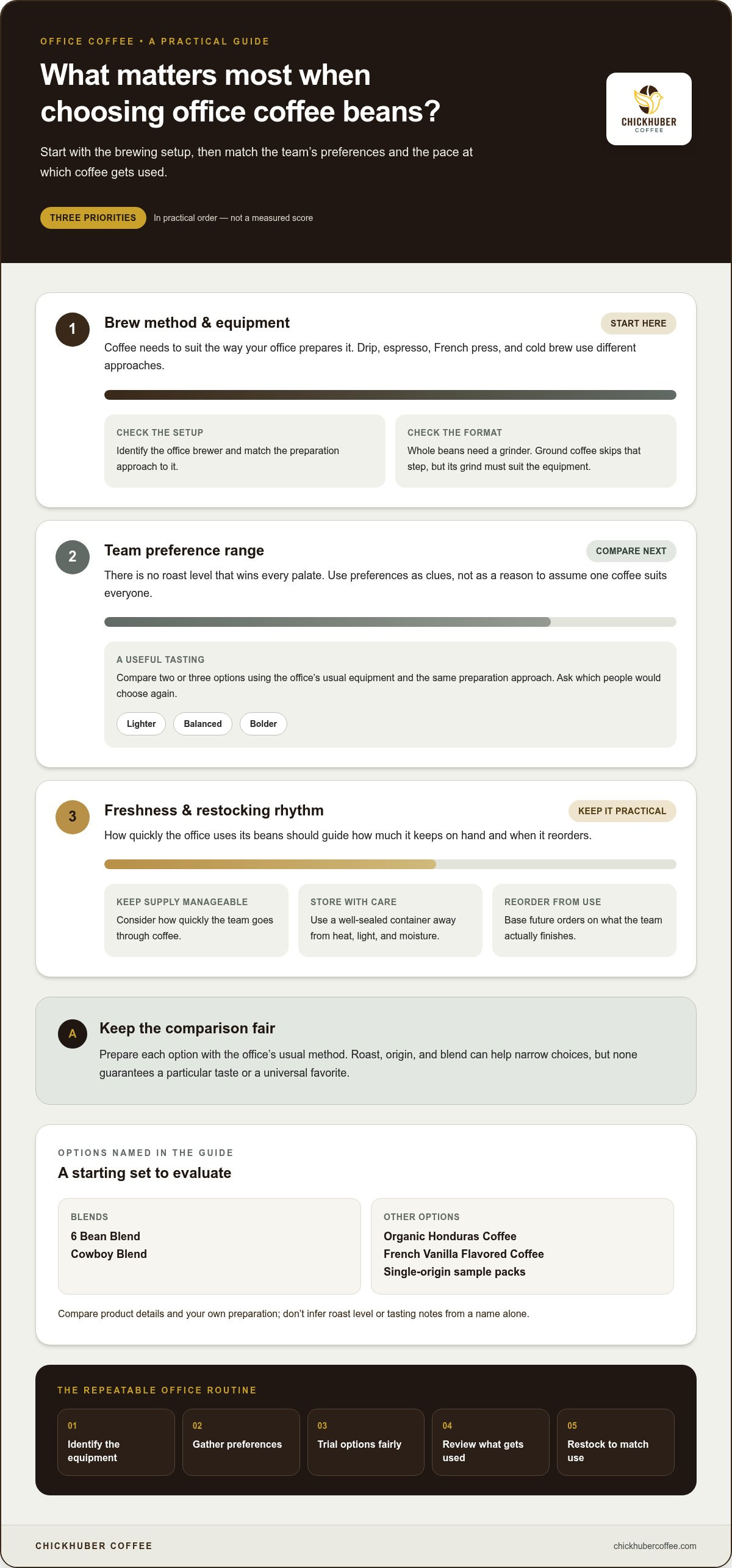
How to set up a practical office coffee routine
A dependable coffee routine doesn’t need a committee or a complicated ordering formula. It needs clear steps, a quick way to gather feedback, and a record of what the team actually uses. A consistent office coffee routine starts with observed use, not guesswork. Let real consumption guide the next order instead of relying on generic serving estimates.
- Identify the equipment. Record what the office uses and how coffee is prepared. This gives you a clear starting point for choosing suitable options.
- Poll the team. Ask for quick preferences, such as lighter or bolder cups, and note different tastes without assuming one answer represents everyone.
- Trial a small set. Compare a few suitable candidates using the office’s regular brewing setup. Keep preparation consistent so feedback reflects the coffee, not a change in method.
- Review what happened. Note which option people chose again, how practical it was to prepare, and whether the group’s preferences were split.
- Reorder based on use. Track how much coffee is opened and used over a consistent period. Use that record, along with changes in attendance, to estimate the next order.
Run a low-friction team tasting
Keep the tasting short and focused. Offer a small set of contrasting candidates, prepare each the same way, and invite coworkers to share a quick preference. Ask two useful questions: “Would you choose this again?” and “Did it work well with our brewer?” If one option suits most people but preferences are divided, make it the regular choice and retain a second option for variety.
Feedback is more useful when it’s easy to compare. A simple shared note can capture the coffee name, preparation method, and brief comments on preference and suitability. Review the notes together before settling on a repeat choice. This small check helps the office avoid reordering based only on one person’s memory or strongest opinion.
Keep beans fresh and reordering predictable
Store coffee in an airtight container in a cool, dry place, away from heat, light, and moisture. Keep the storage area consistent, close the container after use, and rotate stock so older coffee is used first. These habits support orderly handling without relying on a fixed shelf-life promise.
To estimate purchasing needs, record when a bag is opened and when it’s finished. After observing use across your usual work pattern, you’ll have a grounded estimate of how often to restock. Recheck it when attendance or team habits change. The best coffee beans for the office are only part of the system; a simple feedback and reorder loop keeps the routine useful.
Use your tasting notes and equipment list to explore Chickhuber Coffee options for your office and build a shortlist your team can test.
Explore Chickhuber Coffee options for your office
Chickhuber Coffee offers blends, single-origin coffee, flavored coffee, cold brew selections, and loose leaf tea blends, giving office teams several routes to consider. The right starting point depends on your brewer, preparation routine, and the preferences you collected. Use those criteria to compare options, not assumptions based on a product name. The best coffee beans for the office are the ones your team can prepare with its setup and wants to keep drinking.
Match Chickhuber coffees to your team's selection process
Put each candidate through the same practical check: does it suit your brewing method, match a team preference, and fit the effort your kitchen can manage? For example, compare 6 Bean Blend and Cowboy Blend as named blend options, then consider Organic Honduras Coffee as another selection to evaluate. The names alone don’t establish roast, tasting notes, format, or how your team will respond. Let your equipment and tasting feedback lead.
If coworkers are interested in flavored coffee, add French Vanilla Flavored Coffee to the comparison. Prepare each option using the office’s normal method and collect brief feedback on whether people liked it and would choose it again. That way, the shortlist reflects real team preferences rather than guesses. Match the product’s format to your setup when making your choice.
Choose a first order with confidence
Start with the clearest match between team feedback and brewing method. If there’s a shared preference for a blend, compare the named blend options against that preference. If the team wants to explore coffee from a particular origin, consider Organic Honduras Coffee. Single-origin sample packs can help coworkers discover what they like.
Keep the choice focused. A first selection should be easy to prepare with your office equipment, aligned with what coworkers said, and manageable within your usual coffee routine. If preferences are split, the team can compare more than one direction rather than forcing a single style to suit everyone. Chickhuber Coffee’s blends, single-origin choices, French Vanilla Flavored Coffee, and cold brew selections offer categories to consider as you decide.
Choose a first coffee based on your team’s brewer and preferences, then use the results to guide your next selection.
Make your next office coffee choice count
Your office coffee routine doesn’t have to stay fixed. As team preferences or work patterns shift, use what people actually reach for to shape the next choice. Keep feedback simple, make one adjustment at a time, and let the everyday cup earn its place through repeat use. That’s how the best coffee beans for the office become a reliable part of the workday, not another forgotten kitchen purchase.
Give your team room to choose its direction. Chickhuber Coffee offers blends, single-origin coffee, flavored coffee, and cold brew selections. Single-origin sample packs can help coworkers explore variety as preferences take shape. Choose a starting point that fits your office’s routine, then build from what the team enjoys.
Explore Chickhuber Coffee’s blends and single-origin coffees to choose a first coffee that suits your team’s routine.
Frequently Asked Questions
Is whole bean coffee better for an office?
Whole bean coffee can suit an office with a grinder and someone available to prepare it, since beans can be ground to match different brewing methods. Pre-ground coffee can be easier for a busy kitchen where fewer steps matter more than grinding on demand. Neither format is automatically better. Choose based on your equipment, who handles preparation, and how quickly the team uses its coffee after opening.
How much coffee should an office buy?
Track how much coffee your team uses over a representative period, then use that record to shape the next order. Note team size, attendance, and brewing habits; a week with unusual staffing may not reflect a typical pattern. Adjust the order gradually as you learn more. This helps reduce the risk of running short or keeping more beans than the team uses.
Can one coffee bean work for everyone's office coffee?
One option can work if coworkers’ tastes and brewing habits overlap, but there’s no guarantee a single coffee will suit everyone. Ask the team for quick feedback and compare a small number of candidates before settling on a regular choice. If opinions stay divided, keep one shared option for everyday use and rotate in an alternative occasionally. That gives people some variety without making every order a compromise.
What roast is best for office coffee?
There’s no universally best roast for an office. Roast preference is personal, and the team’s preferred cup should be considered alongside the brewer and its preparation method. Compare a few roast styles using the same equipment and recipe, then ask which people would choose again. Don’t assume a roast level from a coffee’s name. Use product details when matching a specific Chickhuber Coffee option to a roast preference.
How do you store coffee beans in an office?
Keep beans in an airtight container in a cool, dry place, away from heat, moisture, and strong odors. Close the container promptly after use, and avoid clear containers exposed to light. For a shared kitchen, label the container with the coffee name and opening date, then rotate stock so older opened coffee is used first. Follow these habits without assuming a specific freshness period applies to every coffee.
Are flavored coffee beans a good choice for an office?
Flavored coffee can be a good option if coworkers enjoy that style, but it may not suit everyone as the only office choice. Take a quick preference poll before making it the shared default. Chickhuber Coffee offers French Vanilla Flavored Coffee, which you can consider alongside the team’s regular coffee. A separate option lets interested coworkers choose flavored coffee without requiring the whole office to switch.
Can office coffee beans be used for cold brew?
Yes, coffee beans can be used for cold brew when they’re prepared with a suitable method and grind size. The equipment and the result your team prefers matter more than whether the coffee is labeled for office use. Chickhuber Coffee offers cold brew selections. If preparing cold brew from beans, match the grind to your brewing process rather than assuming every coffee or grind works the same way.